
10 Best Industrial Vacuum Cleaners for 2026

“Industrial vacuum” covers more ground than most buying guides admit. A janitorial crew running an upright on office carpet all day has different needs than a contractor pulling drywall dust and standing water out of a renovation site. Wet/dry shop vacuums, bagged commercial uprights, backpack units, and HEPA-filtered canisters all get lumped under the same label, but they solve different problems and fail in different ways when mismatched to the job.
Commercial carpet cleaning calls for sustained suction, a wide cleaning path, and a motor rated for hours of daily runtime rather than occasional weekend use. Jobsite and shop cleanup calls for something else entirely: tank capacity, wet pickup, and filtration that can handle sawdust, drywall dust, or metal shavings without clogging. Buying based on price or brand recognition alone tends to leave one of those needs unmet.
The right choice depends on matching motor type, filtration, and capacity to the actual debris and surface you’re cleaning, not on how “industrial” the marketing sounds. A few of these machines are built for daily commercial floor care, others are shop vacs meant for debris and liquids, and one is a residential model that gets included here mainly to show where its limits are.
Best for daily commercial carpet care: Sanitaire SC679K Tradition Upright
Best for lightweight janitorial rounds: Oreck Commercial XL Vacuum
Best for quiet workshop dust and debris: DEWALT STEALTHSONIC 16-Gallon Shop Vac
Best for heavy wet/dry jobsite cleanup: RIDGID RT1600 16-Gallon Wet/Dry Vacuum
Best for stairs, tight spaces, and hard-to-reach areas: Hoover Commercial Shoulder Vac Pro Backpack
Best for hazardous or fine dust collection: Nilfisk Aero 21 HEPA Wet/Dry Vac
Shark Navigator Lift-Away Vacuum, HEPA, Carpet and Pet Hair
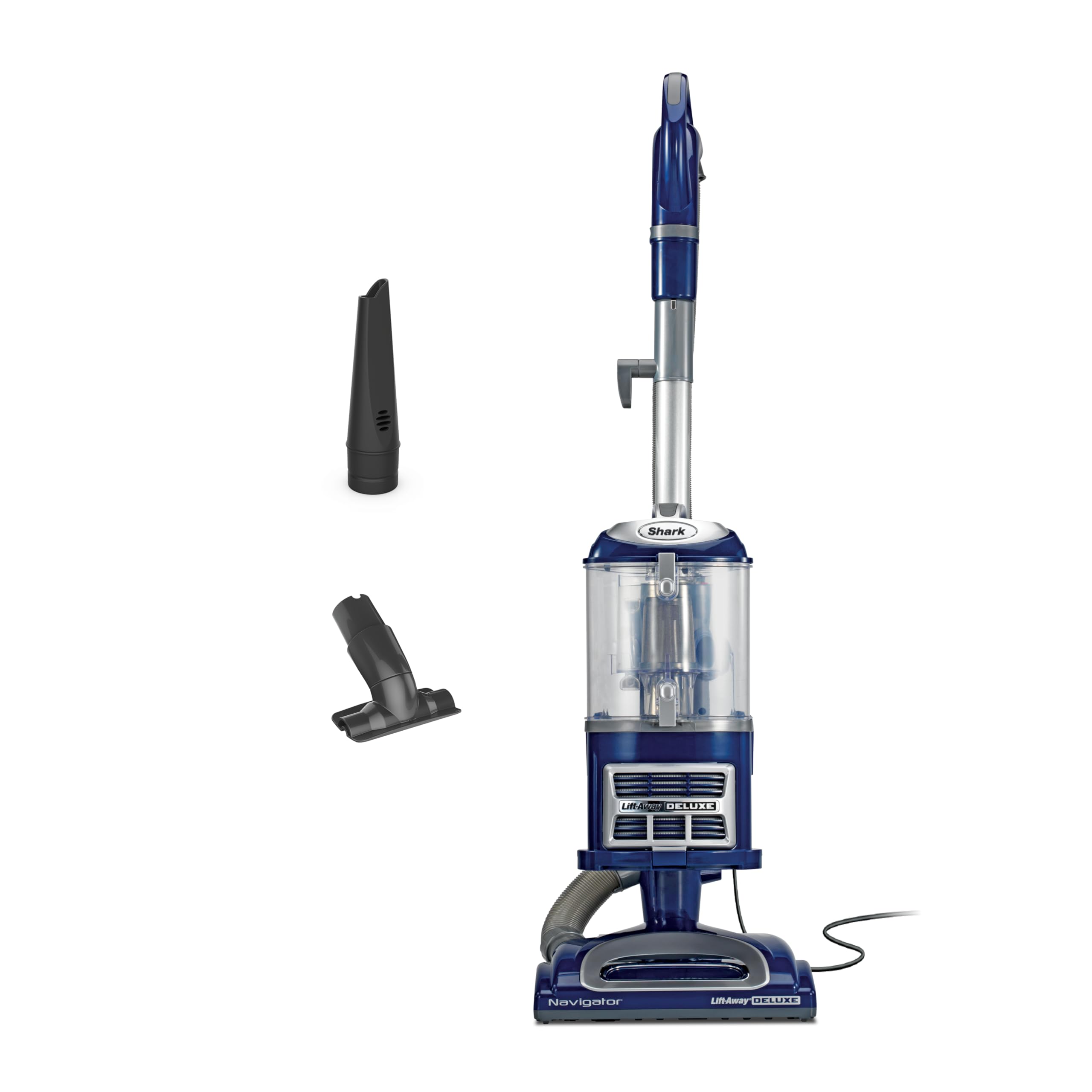
Buy this for a home with pets and area rugs, not for a facility with a daily cleaning schedule.
Pros
- Detachable pod handles stairs and furniture easily
- HEPA filtration with a sealed system
- Lightweight and easy for one person to maneuver
Cons
- 0.9-quart dust cup is too small for commercial volume
- Not rated for continuous daily use
- No wet pickup capability
The Shark Navigator is a capable residential upright, and that’s exactly the problem when it gets shopped alongside true industrial machines. Its motor and dust cup are sized for a house, not a building. Swivel steering and the Lift-Away pod make it genuinely pleasant for pet hair and stairs at home.
Facility managers comparing this to a Sanitaire or Oreck should notice the duty cycle gap immediately. This vacuum was never built for eight-hour shifts or thousands of square feet per day. It belongs in a home closet, not a janitorial cart.
Oreck Commercial XL Vacuum Cleaner

Buy this if your crew needs a lightweight upright that survives daily use across multiple floors and rooms.
Pros
- Just 9 pounds, easy on the arms and shoulders over a shift
- High-speed brush roll agitates carpet effectively
- Long 35-foot cord reduces outlet-switching
Cons
- Bagged system means recurring bag costs
- Noticeably loud at 80 dB
- No wet pickup or attachments for above-floor cleaning
The Oreck XL earns its reputation with janitorial teams for one reason: it’s light enough to carry up stairs all day without wearing out the operator. The bagged design also means less dust kicked back into the air during emptying, a real advantage in office environments.
The trade-off is noise and a narrower feature set. There’s no crevice tool or hose for furniture, and the fixed single speed limits versatility. For straightforward carpet and hard floor rounds, though, it holds up better over time than most bagless competitors.
DEWALT STEALTHSONIC 16-Gallon Wet/Dry Shop Vac
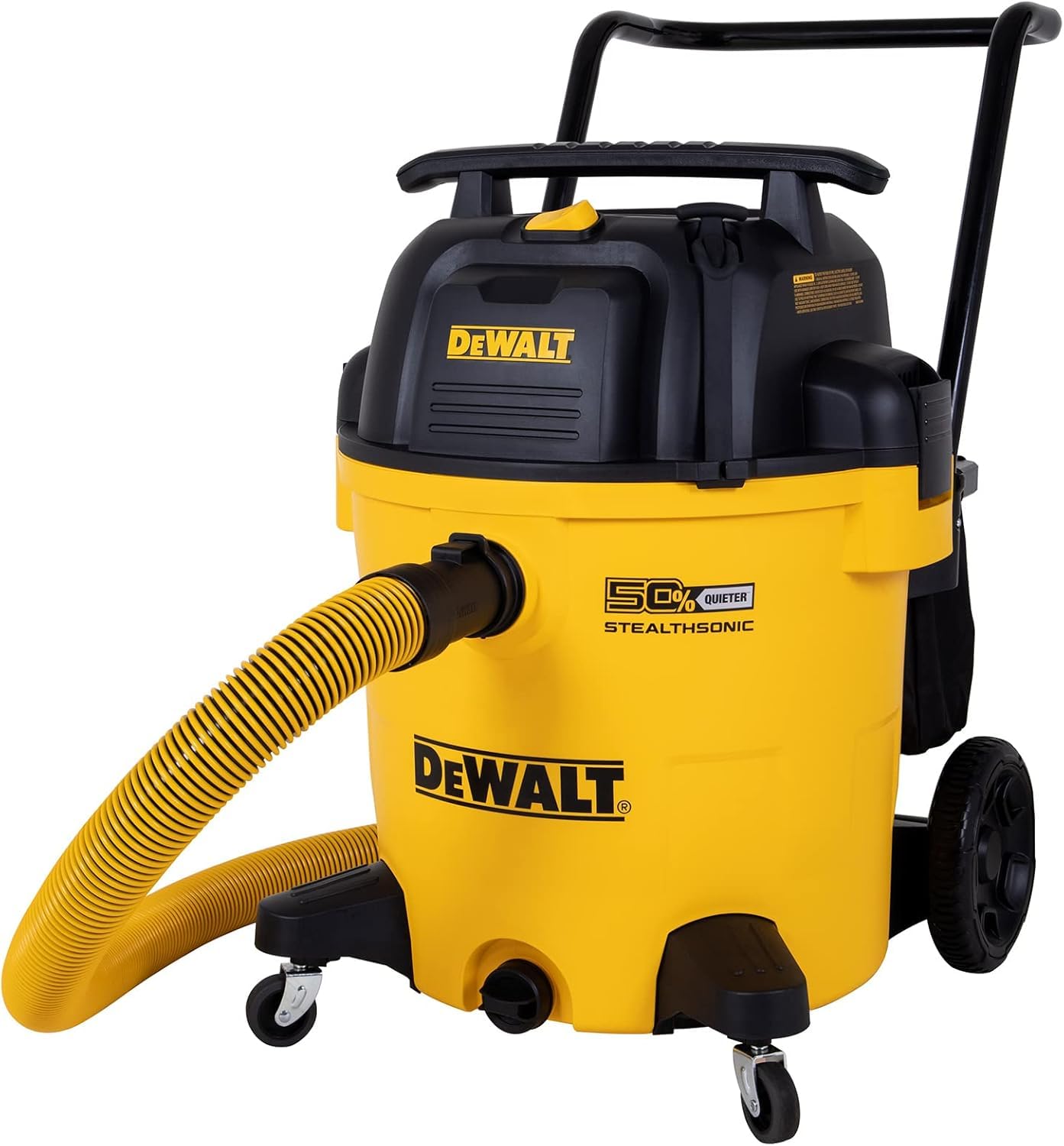
Buy this for workshop or jobsite cleanup where noise complaints have been an issue with standard shop vacs.
Pros
- Meaningfully quieter than typical shop vacs at comparable power
- 16-gallon tank reduces how often it needs emptying
- 6.5 HP motor with 135 CFM airflow handles sawdust and debris well
Cons
- No blower port, unlike some competing shop vacs
- Bulkier than smaller wet/dry units
- Cartridge filter needs regular cleaning to maintain suction
Shop vacs have a reputation for being obnoxiously loud, and the STEALTHSONIC’s main selling point is solving exactly that. Users running it in basements or shared workshop spaces report a real, noticeable drop in noise compared to older units. Suction holds up on drywall dust, sawdust, and general jobsite debris.
The missing blower function will disappoint anyone who used that feature for clearing leaves or drying surfaces. Tank size and weight also make it better suited to a shop with floor space than a van that needs frequent loading and unloading.
RIDGID RT1600 16-Gallon Wet/Dry Vacuum
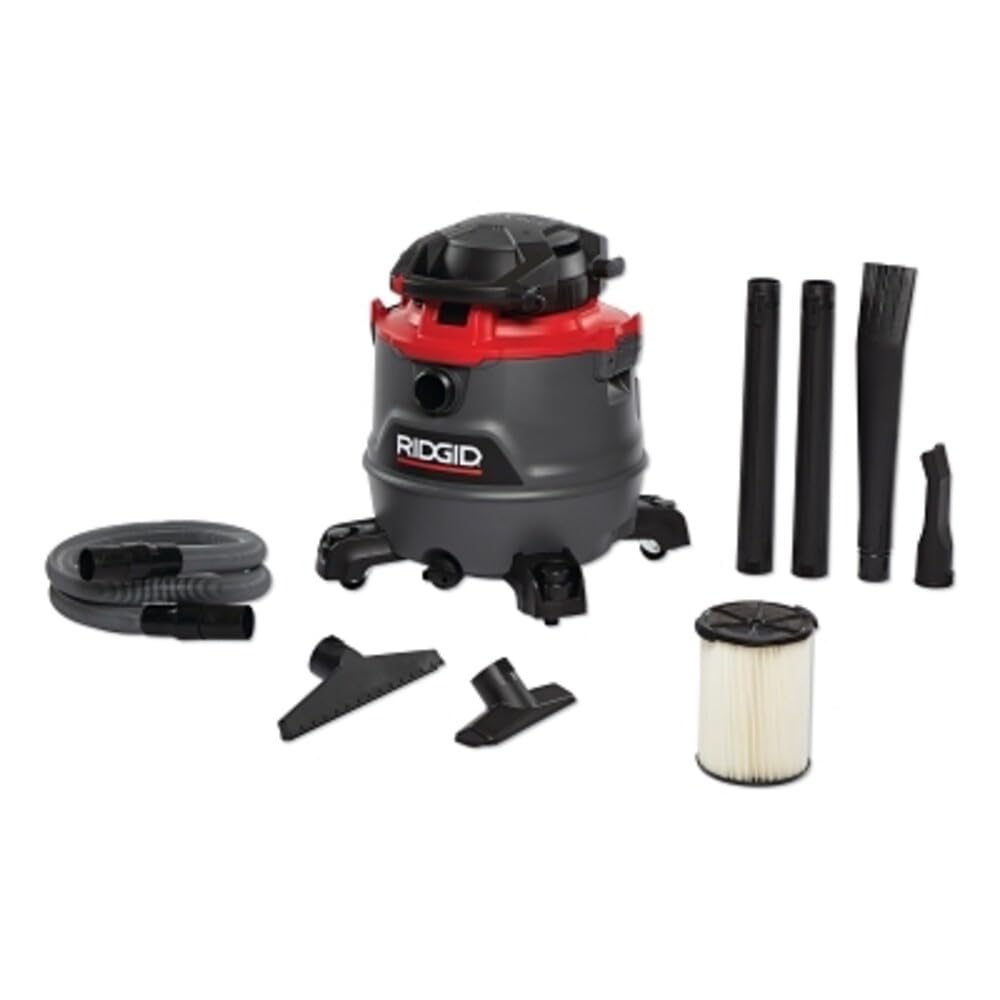
Buy this for contractors who need a rugged, long-lasting wet/dry vacuum with real horsepower behind it.
Pros
- 6.5 peak HP motor with strong suction for debris and liquids
- Detachable blower adds a second function in one machine
- Polypropylene drum construction built for worksite abuse
Cons
- At 27 pounds, it’s heavier than comparable wet/dry vacs
- Hose length is shorter than some competitors at under 8 feet
- Premium price relative to basic shop vacs
RIDGID built a reputation on durability, and the RT1600 backs that up with a two-piece polypropylene drum and a lifetime warranty on the tool itself. Contractors who’ve run these for years past their original hose report that the vacuum motor keeps working long after other components wear out.
The detachable blower is a genuine convenience, turning one purchase into two tools for clearing debris or drying wet areas. Weight is the honest drawback; this is not a vacuum anyone wants to carry up a ladder repeatedly.
Hoover Commercial Shoulder Vac Pro Backpack Vacuum

Buy this for cleaning crews covering large square footage with stairs, tight corners, or cluttered floors.
Pros
- Chiropractor-designed harness reduces strain during long shifts
- 48-foot cord covers wide areas without replugging
- Quiet operation at 66 dB, low for a commercial vacuum
Cons
- Harness buckles are a known wear point on some units
- HEPA media filter, not full sealed HEPA system
- Learning curve for operators unused to backpack-style vacuums
Cleaning businesses that switch to a backpack vacuum from an upright often don’t switch back. The Hoover Shoulder Vac Pro moves through cluttered commercial spaces, hardwood floors, and multi-level buildings faster than pushing a canister or upright around obstacles.
Reviewers running these daily flag the shoulder strap hardware as the weak point over time, worth budgeting for as a maintenance item. For anyone cleaning offices, classrooms, or Airbnb turnovers with a lot of walking involved, the reduced physical strain is the real selling point.
Sanitaire SC679K Tradition Upright Vacuum
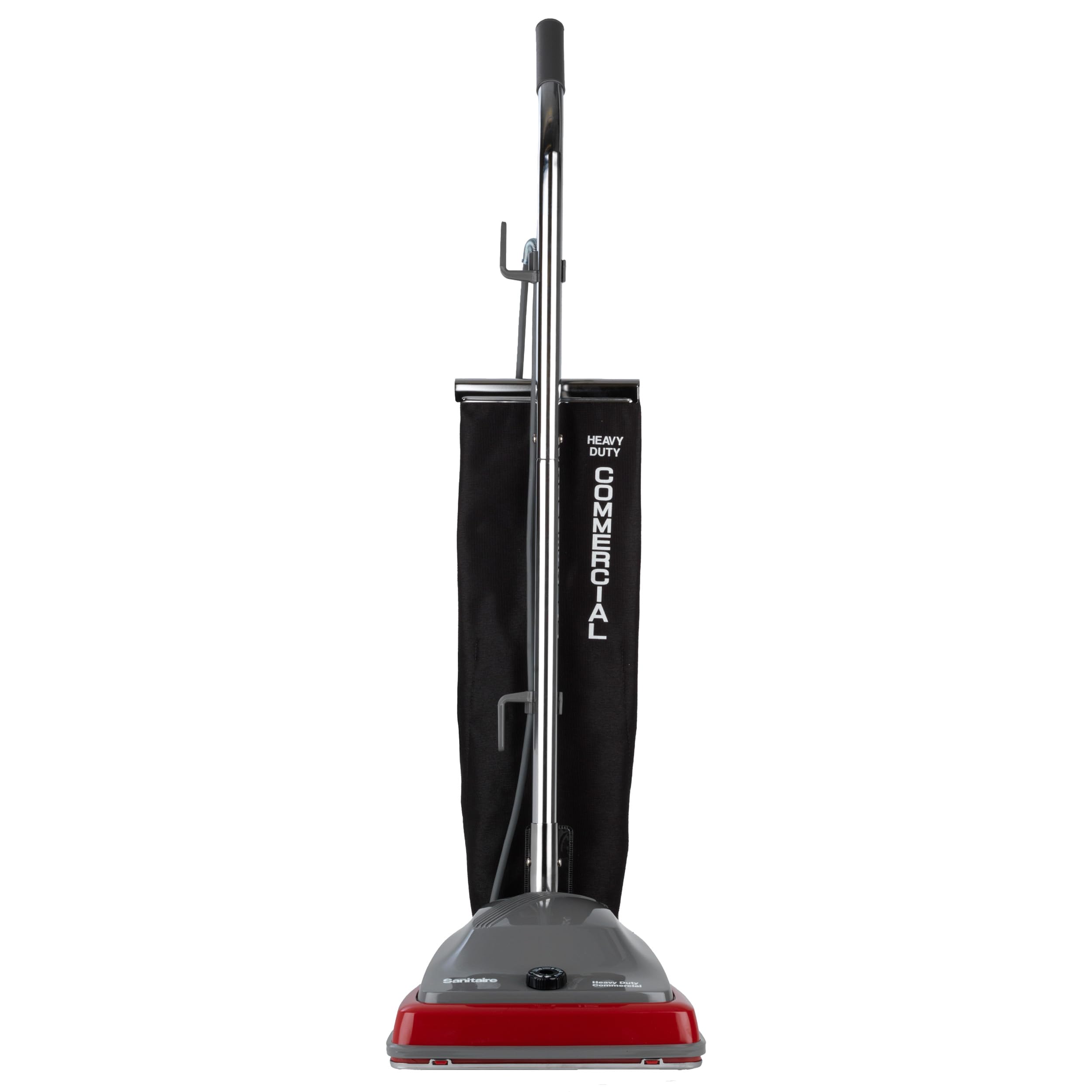
Buy this for commercial carpet cleaning where a motor rated for 500 hours of use matters more than extra features.
Pros
- Motor rated for 500 hours of commercial-grade performance
- Tool-free brush roll and belt replacement
- Just over 12 pounds despite commercial-grade construction
Cons
- Bagged system limited to carpet-focused use
- No attachments for furniture or above-floor cleaning
- Some users report belts wearing out faster than expected
The Sanitaire Tradition has been a janitorial staple for years, and the reasons are practical: tool-free maintenance, a durable polycarbonate hood, and a bag capacity that reduces mid-shift emptying. A 30-foot cord covers a large area before needing a new outlet.
Belt life is the recurring complaint in reviews, with a handful of users needing replacements more often than the 500-hour rating suggests. For straightforward daily carpet vacuuming in offices, schools, or retail floors, it remains one of the most dependable choices in this category.
Farag Janitorial JM773 Industrial Wet/Dry Vacuum
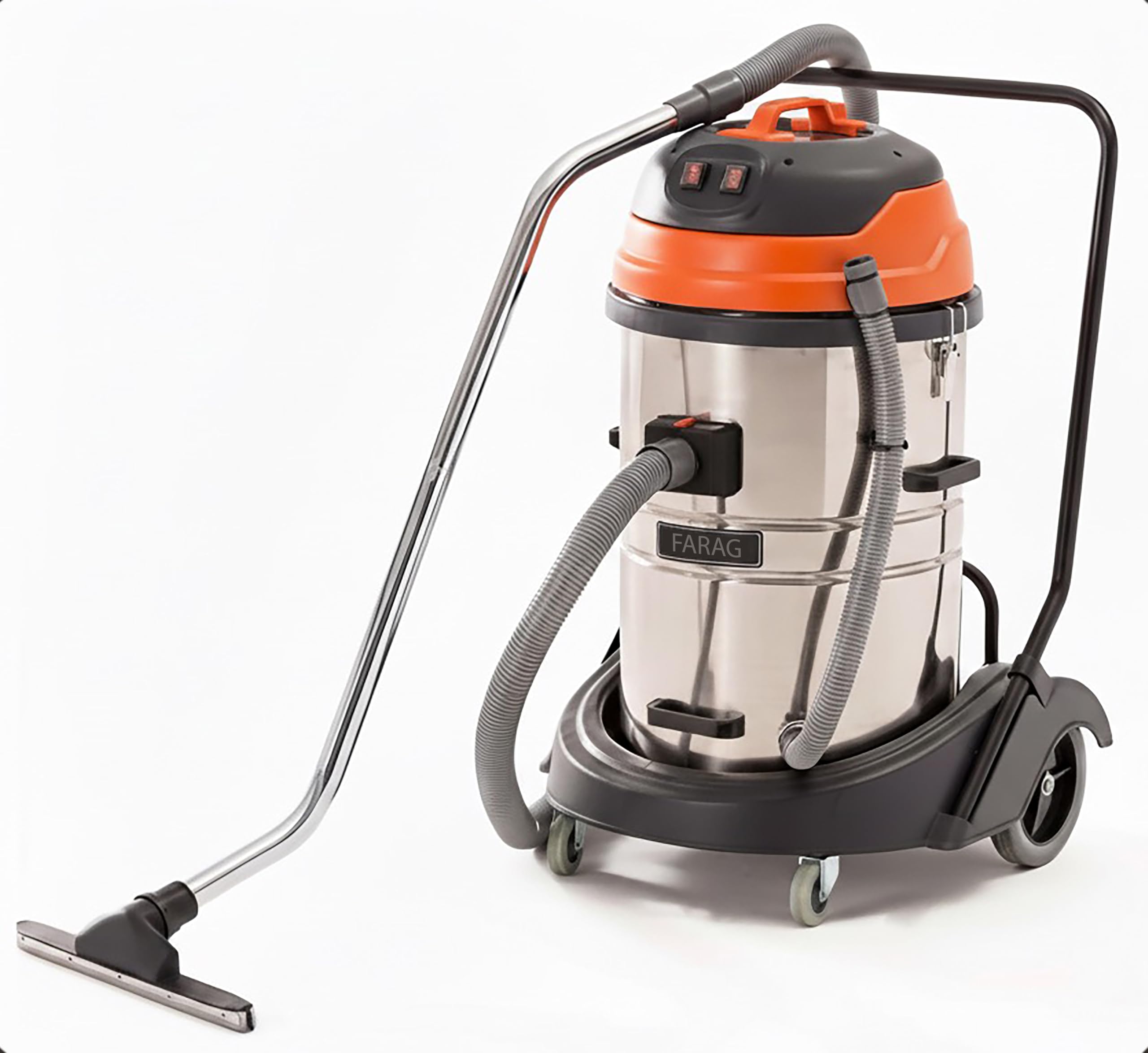
Buy this for heavy-duty debris and liquid pickup where a single motor shop vac isn’t enough.
Pros
- Dual-motor design delivers strong airflow at 225 CFM
- 21-gallon stainless steel tank handles large jobs
- Tilt-to-dump design simplifies water disposal
Cons
- Bulky footprint compared to standard shop vacs
- Cloth filter requires regular cleaning
- Replacement motors, while available, add to long-term cost
This is a genuinely industrial machine, built for insulation removal, weld slag, water extraction, and other jobs that overwhelm a standard shop vac. The dual-motor setup gives it real pulling power, and the stainless tank resists the rust that eventually kills cheaper units.
Size is the trade-off. This vacuum needs storage space and isn’t something to load in and out of a car daily. For fixed-location shop use or large-scale cleanup jobs, the capacity and airflow justify the footprint.
Stanley SL18116P 6-Gallon Wet/Dry Vacuum

Buy this for garage, vehicle, and small jobsite cleanup where portability matters more than tank size.
Pros
- Compact and light at 13.4 pounds
- Blower function adds versatility for clearing debris
- Strong suction for the price point and size class
Cons
- 6-gallon tank fills quickly on bigger jobs
- Suction drops noticeably with extension wands attached
- Casters ship uninstalled, requiring initial assembly
The Stanley SL18116P punches above its size class for basic wet and dry pickup: basement flooding, car interiors, garage debris. The blower port is a genuine bonus for clearing leaves or drying surfaces without buying a separate tool.
Six gallons fills fast on any job beyond routine cleanup, and several users note suction weakens once the extension wands go on. Treat this as a secondary or backup vacuum for smaller tasks rather than a primary jobsite machine.
Bissell Commercial BGU1937T Pro Cup Upright
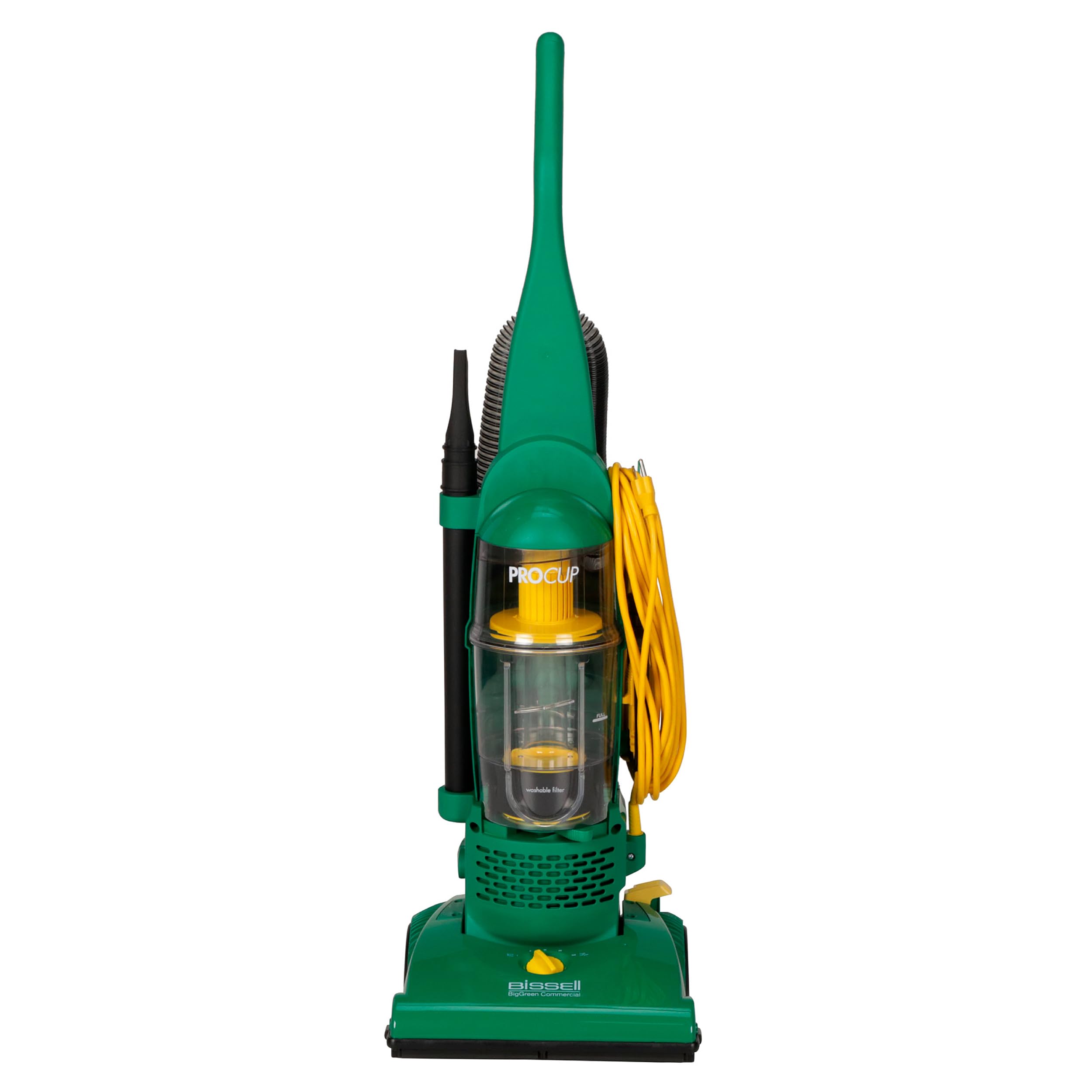
Buy this for offices and janitorial teams that want to skip the recurring cost of vacuum bags.
Pros
- Bagless design eliminates ongoing bag purchases
- 13.5-inch cleaning path covers ground quickly
- Washable filtration system reduces maintenance cost over time
Cons
- On/off switch reliability has been flagged in some reviews
- Emptying the bagless cup mid-shift can be a hassle
- Lower rated overall than several bagged competitors here
The Pro Cup’s bagless system is the whole pitch: no recurring bag expense, and a clear view of debris volume. The 13.5-inch cleaning path and five height settings make it adaptable across carpet types and bare floors.
Switch reliability is the recurring concern in user feedback, along with the mid-cleaning hassle of emptying a bagless cup compared to swapping a bag. For budget-conscious commercial buyers willing to accept a bit more hands-on maintenance, the savings on bags can offset that over a year of use.
Nilfisk Aero 21 5-Gallon HEPA Wet/Dry Vac

Buy this for fine dust and hazardous material collection where certified HEPA filtration is non-negotiable.
Pros
- Certified HEPA filter rated for lead, silica, and asbestos-level particles
- Automatic filter cleaning maintains suction over long sessions
- Quiet at 64 dB relative to other wet/dry vacs
Cons
- Smaller 5-gallon tank limits capacity between empties
- Higher price relative to tank size
- Some users note the handle bend feels tight during use
The Aero 21 solves a specific problem: fine, potentially hazardous dust that a standard shop vac filter lets straight through. Pottery studios, renovation crews handling old drywall, and woodworking shops dealing with fine particulate are the clearest fits. The automatic filter cleaning system keeps suction consistent, which matters when clogged filters usually mean declining performance mid-job.
Capacity is modest next to the 16- and 21-gallon machines in this lineup, so frequent emptying comes with the territory. For anyone prioritizing air quality and particulate safety over raw volume, it remains a purpose-built choice.
Buying Guide
Choosing an industrial vacuum starts with identifying the debris type and environment, not the horsepower number on the box.
Suction and Airflow
Suction (measured in water lift) and airflow (measured in CFM) work together, and neither number alone tells the full story. High water lift with low CFM handles fine dust and carpet; high CFM with strong lift handles bulky debris like wood chips or gravel. Wet/dry shop vacs generally favor CFM, while commercial carpet uprights favor consistent lift across a full bag or dust cup.
Capacity and Emptying Frequency
| Tank/Bag Size | Best Suited For | Emptying Frequency |
|---|---|---|
| Under 2 quarts | Light residential use | Multiple times per session |
| 9-18 quarts | Daily commercial carpet care | Once per shift |
| 5-6 gallons | Small jobsite or garage cleanup | A few times per job |
| 16-21 gallons | Heavy debris, renovation, industrial shop use | Once per large job |
Filtration Type
Standard filters trap larger particles and let fine dust recirculate. HEPA-rated filters, certified to capture 99.97% of particles at 0.3 microns, matter for silica, asbestos, or mold cleanup. Bagged systems generally contain dust better during disposal than bagless cups, which release a cloud when emptied.
Wet vs. Dry Capability
Dedicated wet/dry vacuums use a float shutoff to prevent motor damage during liquid pickup and a separate drain for water disposal. Standard commercial uprights are dry-only and will be damaged by any moisture contact.
Noise and Duty Cycle
Noise levels between 64 dB and 80 dB show up across this category, and the difference is noticeable in shared workspaces or offices during business hours. Duty cycle (the hours a motor is rated to run before service or failure) separates consumer-grade machines from commercial ones; a motor rated for 500 hours of continuous work will outlast one built for occasional home use by a wide margin.
Portability
Weight, cord length, and wheel or harness design determine how much ground a single operator covers per shift. Backpack designs reduce physical strain over stairs and clutter; upright and canister designs offer more stability on open floors.
Editor’s Choice
The Sanitaire SC679K Tradition stands out as the strongest all-around pick for commercial carpet maintenance. Its 500-hour motor rating, tool-free maintenance, and low weight solve the core problem janitorial teams face daily: keeping a vacuum running reliably without constant repair calls.
For wet/dry and jobsite work, the RIDGID RT1600 earns the recommendation. Its horsepower, durable drum, and detachable blower cover most contractor needs in one unit, backed by a warranty that reflects genuine confidence in long-term durability.
Facilities dealing with fine or hazardous dust should look at the Nilfisk Aero 21 instead of either of those. Certified HEPA filtration isn’t a feature to skip when silica or asbestos exposure is a real possibility on the job.
Conclusion
Matching the vacuum to the job saves money and frustration compared to buying on price or brand name alone. Daily carpet care in an office or school calls for a bagged commercial upright built for long duty cycles, not a wet/dry shop vac with excess capacity sitting unused. Jobsite debris and liquid spills call for tank capacity and float shutoffs that a Sanitaire or Oreck simply doesn’t offer.
The Shark Navigator’s presence on this list is a reminder that residential vacuums, however well-reviewed on Amazon, don’t translate to commercial demands. A 0.9-quart dust cup and a motor built for occasional home use will struggle under daily industrial conditions regardless of how well it performs in a living room.
Buyers who identify their primary debris type, required tank size, and filtration needs before shopping tend to end up with equipment that lasts years rather than months.
FAQS
What’s the difference between a commercial vacuum and an industrial vacuum? Commercial vacuums, like the Sanitaire and Oreck models here, are built for carpet and hard floor maintenance in offices, schools, and retail spaces with extended motor life. Industrial vacuums, like the RIDGID and Farag Janitorial units, handle heavier debris, liquids, and jobsite conditions with larger tanks and wet pickup capability.
Can a shop vac replace a commercial upright for daily office cleaning? Not effectively. Shop vacs lack the brush roll agitation needed to lift embedded dirt from carpet fibers, and their canister design is slower to maneuver across open floor space than an upright built for that purpose.
Is HEPA filtration necessary for every industrial vacuum? No. HEPA matters most when fine or hazardous particulate is involved, such as silica, asbestos, or mold. Standard filtration works fine for general debris, water pickup, and routine carpet dirt.
How much tank capacity is enough for a jobsite vacuum? Six gallons suits small cleanup tasks like garage or vehicle detailing. Renovation and larger cleanup jobs benefit from 16 gallons or more to avoid repeated stops for emptying mid-task.
Are bagless vacuums a good choice for commercial use? Bagless systems save on recurring bag costs but release more dust during emptying and sometimes suffer from mechanical issues like switch failures over heavy use. Bagged systems tend to offer more consistent long-term reliability for daily commercial schedules.
