
Can a Dirty Vacuum Spread Dust?

Quick Answer
Yes, a dirty vacuum can spread dust instead of containing it. Clogged filters, overfilled bins, leaking seals, damaged hoses, and poorly fitted bags can reduce effective airflow or let collected particles escape, while vacuuming itself can stir settled dust into the air. The EPA’s indoor particulate matter guidance recommends regular cleaning and suggests HEPA-filtered vacuuming to help control household dust.
Signs your vacuum may be spreading dust
- Dusty exhaust: You see fine particles or a haze near the vacuum’s exhaust.
- Dusty smell: The room smells noticeably dustier while or immediately after vacuuming.
- Weak suction: Dust remains behind despite repeated passes.
- Dirty filter: The filter is heavily coated, overdue for replacement, or incorrectly installed.
- Overfilled container: The bag or dustbin is packed beyond its recommended fill level.
- Visible leaks: Dust appears around hose joints, bin seals, or the bag compartment.
What to do first
- Empty the bin or replace the bag, inspect the filter and seals, then test the vacuum again before continuing.
I’ve had bagless vacuums leave floors looking clean while a beam of sunlight revealed fine dust floating nearby. That usually made me look at the machine’s filtration and maintenance before blaming the room.
A vacuum cleaner should collect household dust, allergens, hair, and debris without releasing a noticeable amount back into your living space. Here’s how to tell when that process is breaking down and what you can do about it.
In This Guide
Why Can a Dirty Vacuum Spread Dust?
A dirty vacuum can spread dust when its airflow, filtration, or containment system stops working as designed. It may also stir settled particles from carpets and floors before capturing them.
Dust spreading from a vacuum means particles become airborne or escape the machine during cleaning instead of remaining safely contained inside its bag, bin, or filtration system.
Some airborne dust during cleaning doesn’t automatically mean the vacuum is defective. Moving a floor head across dusty carpet can disturb particles that were already sitting on the surface.
- Clogged filters: Heavy buildup can restrict normal airflow through the machine.
- Full bags or bins: An overloaded collection chamber can reduce effective pickup.
- Leaking seals: Damaged or poorly seated seals may create unintended escape paths.
- Loose hoses: Gaps around hose connections can reduce suction where you need it.
- Dirty brush rolls: Wrapped hair and debris can interfere with normal floor contact.
- Incorrectly fitted parts: A filter, bag, or bin that isn’t seated correctly may compromise containment.
The exhaust deserves special attention. Every vacuum pulls air into the machine and then returns filtered air to the room.
If dust bypasses the intended filter path, that returning air can carry particles with it. That’s why filtration and sealing matter alongside suction power.
Household dust can contain fibers, soil, pollen, pet material, dust-mite allergens, and other small particles. Vacuuming removes part of that reservoir, but cleaning activity can temporarily resuspend some settled material.
How Can You Tell If Your Vacuum Is Spreading Dust?
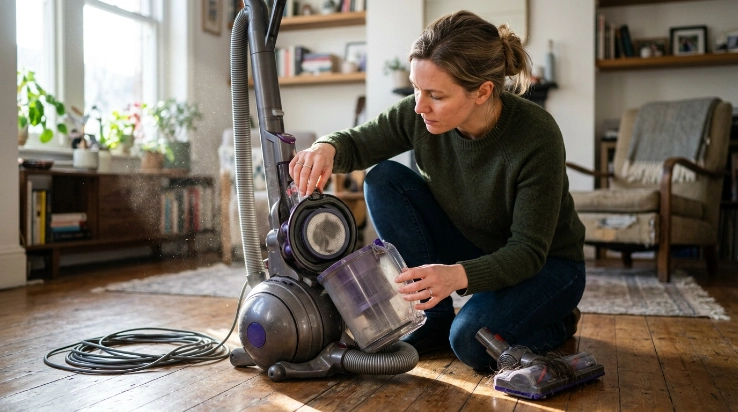
The strongest warning sign is visible dust appearing from the machine itself. Pay attention to the exhaust, bin compartment, hose connections, and floor head while the vacuum runs.
I like to inspect a vacuum in bright side lighting. Fine dust escaping around a seal is much easier to spot when sunlight crosses the room.
Watch for these warning signs
- A visible plume: Fine dust appears near the exhaust or body.
- Dust around seals: Powder collects outside the bin, bag compartment, or filter cover.
- Falling suction: The machine struggles to collect material it previously handled easily.
- Repeated dust trails: Fine debris remains behind or gets pushed across hard flooring.
- Dusty odor: The exhaust smells stale or dusty during operation.
- Rapid filter buildup: A recently serviced filter becomes heavily coated unusually fast.
A dusty smell alone doesn’t prove particles are escaping. Odors can also come from debris, pet hair, moisture, or material trapped inside the machine.
However, smell combined with visible leakage or weak suction deserves investigation. Stop and inspect the vacuum instead of continuing through the entire house.
Try a simple inspection
- Turn the vacuum off and unplug it, or remove its battery.
- Check the bin or bag fill level.
- Inspect the filter for heavy buildup or incorrect seating.
- Check the hose, wand, and floor head for blockages.
- Look around removable seals for trapped debris or damage.
- Reassemble everything according to the manufacturer’s instructions.
Afterward, test the vacuum on a small area. Stop using it if you still see dust blowing directly from the machine.
Where Does Dust Escape From a Vacuum?
Dust can escape from several places, and the exhaust isn’t the only one. The location of the dust often points toward the underlying problem.
| Location | Likely issue | What to check |
|---|---|---|
| Exhaust vent | Filter problem or airflow bypass | Filter condition, installation, housing, and seals |
| Dustbin edge | Poorly seated bin or dirty seal | Latch, gasket, rim, and trapped debris |
| Bag compartment | Full, damaged, or incorrectly fitted bag | Bag collar, tears, fill level, and installation |
| Hose connection | Loose fitting, crack, or blockage | Hose ends, joints, and entire airflow path |
| Floor head | Dust being disturbed before capture | Brush speed, suction, nozzle setting, and technique |
Hard floors make this especially obvious. A fast-moving brush roll can scatter lightweight material before the suction inlet captures it.
Carpet creates a different challenge. Walking and cleaning can resuspend particles stored in fibers, so slower overlapping passes usually make more sense than racing across the room.
*Expert Alert:* Don’t use an ordinary household vacuum for suspected asbestos, lead-contaminated renovation dust, silica, or major mold contamination. Those materials can require specialized containment, equipment, and professional cleanup.
How Do You Stop a Vacuum From Spreading Dust?
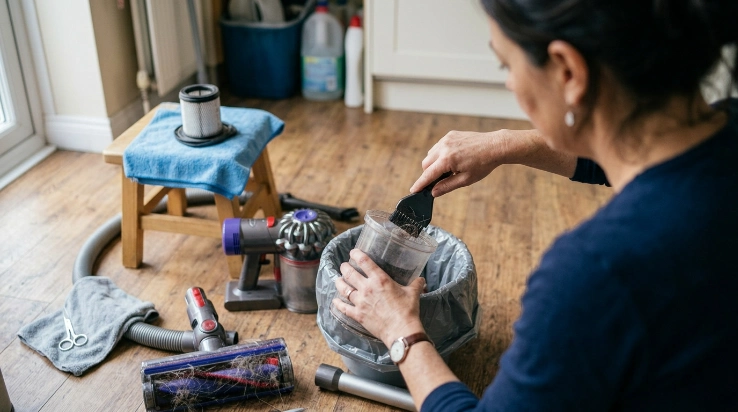
Start with maintenance before buying a replacement vacuum. Many dust problems come from a full container, dirty filter, blockage, or incorrectly fitted component.
1. Empty the bin or change the bag
Don’t wait until the container is packed solid. Follow the manufacturer’s fill line or replacement guidance.
Bagless bins can create a dust cloud during emptying. I prefer emptying them outdoors when practical and keeping the container low inside the trash bag.
2. Check the filter
Remove the filter according to the manual and inspect it. Clean washable filters only when the manufacturer specifically says they are washable.
Never assume a HEPA filter can be rinsed. Some are washable, while others must remain dry and require replacement.
3. Inspect the airflow path
- Check the floor head for packed debris.
- Remove wrapped hair from the brush roll.
- Inspect the wand for blockages.
- Check the hose from end to end.
- Confirm every connection locks firmly into place.
4. Clean around seals
Fine powder can collect where bins, filters, and covers meet. Wipe compatible surfaces carefully so debris doesn’t prevent a proper seal.
Replace damaged gaskets or seals with the correct parts for your machine. Don’t improvise around the motor or electrical housing.
5. Slow down your vacuuming technique
Move the floor head in controlled, overlapping passes. Fast movements can disturb lightweight dust before the airflow captures it.
For dusty hard surfaces, I often follow vacuuming with a slightly damp microfiber cloth or mop when the flooring allows it. That helps collect fine residue without dry sweeping it back into the air.
Does a HEPA Filter Make a Difference?
HEPA filtration can help with particle containment, but the filter isn’t the whole vacuum. The machine’s airflow path and seals also matter.
The EPA defines a HEPA filter as a high-efficiency particulate air filter capable of theoretically removing at least 99.97% of airborne particles measuring 0.3 micrometers under its defined test conditions.
| Filtration setup | Known performance point | What matters in a vacuum |
|---|---|---|
| HEPA filter media | At least 99.97% at 0.3 µm under the HEPA definition | Correct installation and regular maintenance |
| Sealed HEPA vacuum design | Designed to route collected airflow through the final filter | Seals and housings help prevent bypass leakage |
| Non-HEPA filtration | No single universal particle-capture percentage applies | Check the manufacturer’s tested filtration specifications |
A label saying a vacuum “has a HEPA filter” doesn’t automatically tell you how well the entire machine contains particles. Air that leaks around the filtration path doesn’t benefit from the filter media.
This is particularly relevant for households managing allergens. The CDC’s asthma guidance includes regular HEPA-filtered vacuuming among measures for reducing exposure to dust-mite triggers.
That doesn’t mean vacuuming prevents or treats asthma. It means dust control can form one part of a broader trigger-management routine.
How Do You Prevent the Problem From Coming Back?
As of 2026, my basic rule is simple: maintain the complete airflow path, not just the floor head. A powerful motor can’t compensate for a neglected collection and filtration system.
Use this maintenance routine
- Before cleaning: Check the bin or bag if it is already near its recommended limit.
- After heavy cleaning: Inspect the floor head and remove wrapped hair or packed debris.
- Regularly: Check filters according to your owner’s manual rather than waiting for obvious suction loss.
- When suction changes: Inspect hoses, wands, filters, and inlets for restrictions.
- When emptying: Handle collected dust gently and avoid shaking the container indoors.
- After reassembly: Make sure every bin, cover, filter, and hose clicks or seats correctly.
Cleaning technique matters too. The EPA recommends damp dusting because it helps keep settled dust from returning to the air.
Homes with dust-mite concerns may need a broader approach than vacuuming alone. The National Institute of Environmental Health Sciences also recommends measures such as damp cleaning, humidity control, and HEPA or microfilter vacuum filtration.
Protect sensitive household members
If someone has strong dust allergies or asthma, keep them away from the immediate cleaning area when possible. Vacuuming can temporarily stir particles even when the machine itself is functioning normally.
Opening a dirty vacuum indoors can create another exposure point. Bagless models deserve particular care because dumping the container can release a concentrated cloud of collected dust.
A clean vacuum won’t make a home allergen-free. It simply gives you a better chance of removing dust without undoing part of the work through poor containment.
Frequently Asked Questions
Can vacuuming make a room dustier?
Yes, temporarily. Vacuuming can disturb settled particles, especially on dusty carpets and around furniture, while a poorly maintained vacuum may also leak collected dust. Slow cleaning, good filtration, correct seals, and damp dusting afterward can help reduce the problem.
Why does my vacuum blow dust out the back?
Dust coming directly from the exhaust can indicate a dirty, damaged, missing, or incorrectly installed filter. It may also indicate an airflow leak. Stop the vacuum, inspect the filtration system, and follow the manufacturer’s maintenance instructions before using it again.
Can a full vacuum bag cause dust problems?
A bag filled beyond its recommended capacity can reduce normal airflow and cleaning performance. It can also make removal messier. Replace disposable bags according to the vacuum manufacturer’s guidance instead of waiting until they’re compressed completely full.
Can a dirty vacuum filter reduce suction?
Yes. A heavily loaded filter can restrict airflow through many vacuum designs, which may reduce effective pickup. Clean or replace the filter only according to its specific instructions because washing a non-washable filter can damage it.
Is a HEPA vacuum better for dust allergies?
A properly designed and maintained HEPA-filtered vacuum can improve fine-particle containment compared with poorly filtered equipment. However, allergy management involves more than vacuuming, and people with asthma or allergies should follow guidance from qualified healthcare professionals.
How often should I clean my vacuum?
There isn’t one schedule that fits every vacuum. Check the bin, bag, brush roll, and visible airflow path regularly, then clean or replace filters at the intervals specified by the manufacturer. Homes with pets or heavy dust may need more frequent attention.
Should I replace a vacuum that keeps blowing dust?
Not immediately. First check the filter, bag or bin, hoses, seals, blockages, and assembly. If visible dust still escapes after correct maintenance, or the housing is cracked or damaged, professional repair or replacement may make more sense.
The bottom line: A dirty vacuum can spread dust, but the cause is often fixable. Keep the collection chamber, filter, seals, hoses, and floor head maintained so the vacuum collects dust instead of simply moving it around.
If you notice a dust cloud, unusual leakage, or sudden suction loss, stop and inspect the machine first. A few minutes of maintenance can make the next cleaning session much cleaner.
