
What Maintenance Does a Bagged Vacuum Need?

Quick Answer
A bagged vacuum needs regular bag replacement, filter checks, brush-roll cleaning, clog inspection, and basic checks of the hose, seals, cord, and attachments. Your owner’s manual should set the exact schedule, but these basic tasks match established vacuum maintenance guidance.
Quick bagged vacuum maintenance steps
- Check the bag: Replace it before it becomes tightly packed or your vacuum’s bag indicator tells you it is full.
- Inspect the filters: Clean or replace them only according to your model’s instructions.
- Clear the brush: Remove wrapped hair, thread, and fibers before they restrict rotation.
- Check airflow: Inspect the hose, wand, floorhead, and intake whenever suction drops.
- Inspect the seals: Make sure the bag collar, compartment door, and hose connections fit correctly.
- Watch for trouble: Stop using the vacuum if you notice burning smells, abnormal heat, smoke, or electrical damage.
Bagged vacuums are often easy to live with, but they aren’t maintenance-free. A few small habits can protect suction, keep dust contained, and prevent avoidable problems.
I’ve found that the bag itself gets most of the attention. In practice, filters, brush rolls, hoses, and seals deserve just as much checking.
In This Guide
- What maintenance does a bagged vacuum need?
- How often should you change a vacuum bag?
- How do you maintain filters in a bagged vacuum?
- How do you clean the brush roll, hose, and airflow path?
- How do you prevent odors, dust leaks, and overheating?
- When does a bagged vacuum need service or repair?
- Bagged vacuum maintenance FAQ
What Maintenance Does a Bagged Vacuum Need?
A bagged vacuum mainly needs care in five areas: the dirt bag, filters, brush roll, airflow path, and external parts. Maintaining all five helps the machine work as its manufacturer intended.
Definition: Bagged vacuum maintenance is the routine inspection, cleaning, and replacement of serviceable parts that collect dirt, filter airflow, or help move debris through the machine.
The most important maintenance jobs are straightforward:
- Replace the dirt bag before it becomes overloaded.
- Check pre-motor and exhaust filters at the intervals specified in the manual.
- Remove hair and string from rotating brushes.
- Clear blocked hoses and passages when airflow drops.
- Inspect bag seals and connections so dusty air cannot bypass the bag.
- Check the cord, plug, wheels, and attachments for damage or excessive wear.
I also inspect the bag chamber whenever I install a new bag. A surprising amount of trouble starts with a bag collar that hasn’t seated correctly.
Bagged vs. bagless vacuum maintenance
| Maintenance Area | Bagged Vacuum | Bagless Vacuum |
|---|---|---|
| Collected dirt | Replace disposable bag | Empty reusable bin |
| Dust handling | Dirt usually stays inside the removed bag | Loose debris is exposed during emptying |
| Main routine concern | Bag fullness and correct bag seating | Bin level and dirt buildup around the separator |
| Filter care | Still required | Still required |
| Brush and hose care | Required | Required |
Bagged designs reduce the need to empty a dusty bin, but they do not eliminate filter or airflow maintenance. That distinction is easy to miss.
How Often Should You Change a Vacuum Bag?
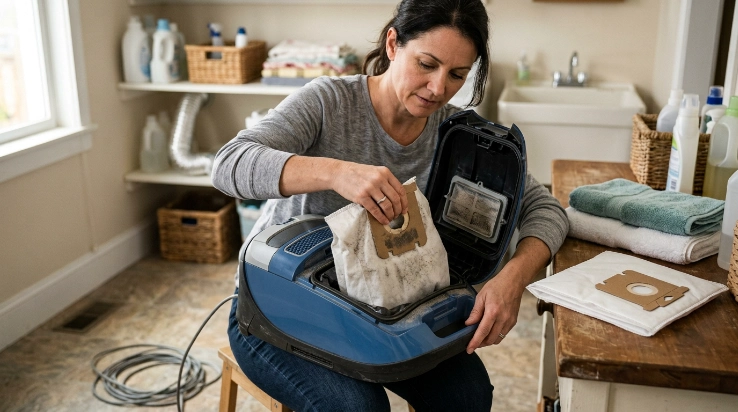
Replace the vacuum bag when your manufacturer’s indicator activates, the bag reaches its recommended fill level, or airflow starts dropping. Don’t rely on one universal number of days.
Bag life changes with the size of the bag and what you vacuum. Pet hair, fine household dust, carpet fibers, and frequent cleaning can all affect how quickly it fills.
Signs that the bag needs changing
- Bag indicator activates: Follow your model’s instructions when the machine reports a full or restricted bag.
- Suction becomes weaker: A heavily loaded bag may restrict airflow.
- The bag feels packed: Don’t keep compressing debris into a disposable bag to gain extra space.
- Dusty odor increases: A loaded bag or another dirty component may be contributing.
- The vacuum runs unusually warm: Check the bag, filters, and airflow path before continuing.
A practical habit is to glance at the bag during regular cleaning and inspect it more closely every few uses. Heavy-use households may need to check more often.
How to change the bag without making a mess
- Switch the vacuum off and unplug it.
- Open the bag compartment using the manufacturer’s release.
- Grip the bag by its collar rather than squeezing the dusty body.
- Close the bag’s built-in shutter or seal if it has one.
- Remove loose dust from the compartment without wetting electrical parts.
- Install the exact compatible replacement bag.
- Seat the collar fully over its inlet or holder.
- Make sure the bag is not pinched before closing the compartment.
Never reuse a disposable vacuum bag unless its manufacturer specifically designed it for reuse. Cutting, shaking, or emptying a disposable bag can damage its material and create a dusty mess.
How Do You Maintain Filters in a Bagged Vacuum?
A bag does not replace the vacuum’s filters. Many bagged machines also use a pre-motor filter, exhaust filter, or both.
The pre-motor filter helps keep debris away from the motor. An exhaust filter helps manage particles in air leaving the machine.
Should you wash a vacuum filter?
Only wash a filter when the manufacturer identifies that exact filter as washable. Some filters can be damaged by water.
- Washable filter: Clean it using the method in the owner’s manual.
- Replaceable filter: Replace it at the specified interval or when its condition calls for replacement.
- HEPA filter: Check the model instructions instead of assuming it can be washed.
- Damaged filter: Replace torn, warped, or poorly fitting filtration components.
Any washable filter must be completely dry before you reinstall it. Moisture doesn’t belong inside the powered airflow system.
If you want to understand the terminology, the EPA provides a useful explanation of HEPA filters and how mechanical filtration works.
Does a better bag reduce filter maintenance?
A well-fitted bag can capture much of the debris before air reaches downstream components. However, no bag means you can ignore the other filters indefinitely.
Check your filter whenever you change the bag if it is easily accessible. That simple habit makes it easier to spot unusual dirt buildup early.
How Do You Clean the Brush Roll, Hose, and Airflow Path?
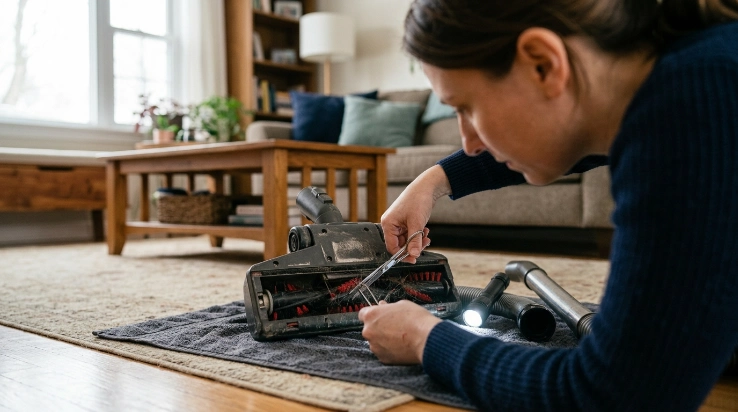
Remove anything that stops air or moving parts from working freely. Hair around the brush and debris inside the hose are two common maintenance problems.
Clean the brush roll safely
- Disconnect the vacuum from power.
- Turn the floorhead over on a stable surface.
- Check the brush roll for hair, thread, string, and carpet fibers.
- Cut tangles carefully without cutting the bristles or belt.
- Remove debris near the roller ends and bearings where accessible.
- Rotate the brush by hand only if your manual allows it.
Homes with long-haired residents or shedding pets may need this check frequently. Waiting until the brush jams can put unnecessary strain on moving parts.
Check the hose when suction suddenly drops
A sudden loss of suction often points to an obstruction, loose connection, loaded bag, or dirty filter. Check those simple causes before assuming the motor has failed.
- Disconnect the hose if your model allows it.
- Look through straight sections toward a light source.
- Check bends, the wand, floorhead neck, and attachment openings.
- Remove accessible debris without puncturing the hose.
- Inspect the hose for cracks, splits, or loose cuffs.
Don’t push sharp metal objects through a flexible vacuum hose. They can puncture the wall or damage internal wiring on powered hoses.
For broader household context, the EPA’s indoor air quality guidance explains why managing indoor particles involves more than one cleaning appliance.
How Do You Prevent Odors, Dust Leaks, and Overheating?
Most preventable bagged-vacuum problems come back to restricted airflow, dirty components, poor seals, or vacuuming material the machine was not designed to collect. Early inspection is easier than troubleshooting a badly stressed vacuum.
Prevent dusty air from leaking around the bag
Check the bag collar whenever you replace the bag. It should fit the inlet exactly as the manufacturer designed.
- Use the correct bag type and size.
- Push the collar fully into its holder.
- Keep the compartment seal free from trapped debris.
- Make sure the bag isn’t folded across the inlet.
- Replace damaged seals or bag holders as required.
If household allergens are a major concern, AAFA’s Asthma & Allergy Friendly certification program is a useful reference when evaluating household cleaning equipment.
The National Institute of Environmental Health Sciences also provides household dust-mite prevention guidance for readers focused on allergen control.
What causes a bagged vacuum to smell?
Odors can come from old debris, pet material, dirty filters, blocked airflow, or something unsuitable that was vacuumed. Start by finding the source rather than masking it with fragrance.
- Replace an old or heavily loaded bag.
- Check the filter condition.
- Remove trapped debris from the brush roll.
- Inspect the hose and floorhead for organic material.
- Clean only removable parts approved for cleaning.
A burning or electrical smell is different. Stop using the vacuum and disconnect it from power.
How do you keep a bagged vacuum from overheating?
Keep airflow unrestricted and stop when the machine behaves abnormally. Continuing to run a struggling vacuum can make the original problem worse.
- Change an overloaded bag.
- Maintain filters correctly.
- Clear blocked hoses and intake passages.
- Remove brush-roll tangles.
- Use the correct height or floor setting when applicable.
Expert Alert: If the vacuum repeatedly overheats, smells electrical, sparks, smokes, or has damaged wiring, stop using it. Have a qualified appliance technician inspect it instead of opening powered components yourself.
When Does a Bagged Vacuum Need Service or Repair?
Routine maintenance should solve simple problems involving bags, accessible filters, tangles, and clogs. Persistent mechanical or electrical problems need a different approach.
As a practical 2026 household maintenance routine, I use inspection triggers rather than pretending every vacuum needs identical service intervals.
| Part or Area | Practical Check | Check Sooner When |
|---|---|---|
| Vacuum bag | During regular use | Indicator activates or suction drops |
| Brush roll | Weekly to monthly | Pets, long hair, thread, or poor rotation |
| Filters | Inspect about monthly | Fine dust, odor, heat, or reduced airflow |
| Hose and wand | About monthly | Sudden suction loss or rattling debris |
| Cord and plug | Before regular use | Cuts, looseness, heat, or exposed wiring |
These are inspection reminders, not manufacturer replacement schedules. Your manual should always take priority.
Signs you may need professional repair
- The vacuum repeatedly shuts itself off.
- A new bag and clean airflow path do not restore suction.
- The brush roll won’t run despite accessible debris being removed.
- The motor makes grinding, screeching, or other abnormal sounds.
- You smell burning insulation or see smoke.
- The cord, plug, switch, or powered hose is damaged.
- Dust escapes despite the correct bag and filters being installed properly.
Don’t keep cycling the power when a fault repeatedly returns. A protective shutdown can be a warning rather than an inconvenience.
Bagged Vacuum Maintenance FAQ
Do bagged vacuums need less maintenance than bagless vacuums?
They need different maintenance, not zero maintenance. You avoid regularly emptying a reusable dust bin, but you still need to replace bags and maintain filters, brush rolls, hoses, seals, and attachments.
Should I change a vacuum bag before it is completely full?
Follow your vacuum’s fill indicator or manufacturer instructions rather than forcing every bag to maximum capacity. If suction falls or the bag becomes tightly packed, inspect it and replace it when appropriate.
Can I reuse disposable vacuum bags?
Not unless the manufacturer specifically identifies the bag as reusable. Emptying or modifying a disposable bag can damage its material, create dust exposure, and prevent it from sealing as designed.
Do bagged vacuums still have filters?
Many do. A bagged vacuum may have pre-motor, exhaust, HEPA, or other filters in addition to the dirt bag, so check your owner’s manual for their locations and maintenance requirements.
Can I wash the filter in my bagged vacuum?
Wash it only when your manufacturer’s instructions say that specific filter is washable. Never assume a HEPA, paper, felt, foam, or other filter can be washed simply because it looks removable.
Why has my bagged vacuum suddenly lost suction?
Start by checking the bag, filters, hose, wand, floorhead, and other accessible air passages. A loose hose connection or blocked airway can also reduce suction even when the bag is not full.
Why is dust collecting inside the bag compartment?
A small amount of residual dust can appear over time, but heavy buildup deserves attention. Check whether the bag collar is seated correctly, the bag is damaged, or a compartment seal is dirty or worn.
A bagged vacuum lasts longer and works more consistently when you treat the entire airflow system as one unit, not just the disposable bag.
Check the bag regularly, follow the filter instructions, remove brush tangles, and investigate sudden changes in suction or heat. Those few habits cover most routine maintenance without turning vacuum care into another major household chore.
