
How Do You Clean a Vacuum After Pet Hair?

Quick Answer
To clean a vacuum after pet hair, unplug it first, empty the bin or check the bag, remove wrapped hair from the brush roll, inspect the hose and attachments, and maintain the filters exactly as the manufacturer recommends. If pet allergies are a concern, the Asthma and Allergy Foundation of America pet-allergy guidance also recommends regular vacuuming and HEPA filtration.
Quick Vacuum Cleaning Steps
- Disconnect power: Unplug a corded vacuum or switch off a cordless model before touching moving parts.
- Empty the debris: Remove pet hair, dust, and loose dirt from the bin or replace a full disposable bag.
- Clear the brush: Cut or pull wrapped fur and threads away from the brush roll without damaging its bristles.
- Check airways: Look through the hose, wand, floor head, and attachment openings for compacted fur.
- Maintain filters: Wash only filters specifically labeled washable, and let them dry completely before reinstalling them.
- Wipe surfaces: Clean removable plastic parts with a slightly damp cloth, then dry them before reassembly.
One Important Rule
- Never rinse a filter, motor housing, electrical connector, or powered floor head unless your vacuum’s manual specifically allows it.
Pet hair doesn’t disappear once it enters your vacuum. It wraps around rollers, collects near air passages, and mixes with fine household dust inside the machine.
I’ve found that a five-minute cleanup after a heavy pet-hair session can prevent a much bigger maintenance job later. This guide covers the complete process without risking the vacuum’s filters, motor, or electrical parts.
In This Guide
- Why Should You Clean a Vacuum After Pet Hair?
- How Do You Clean a Vacuum After Pet Hair Step by Step?
- How Do You Remove Pet Hair From the Brush Roll, Hose, and Tools?
- How Do You Clean the Bin and Filters Safely?
- How Often Should You Clean a Vacuum Used for Pet Hair?
- Frequently Asked Questions
- Final Takeaway
Why Should You Clean a Vacuum After Pet Hair?
Pet hair can restrict moving parts and airflow when enough of it accumulates. The most common trouble spots are the brush roll, floor-head inlet, hose bends, bin screens, and filters.
Definition: Cleaning a vacuum after pet hair means removing accumulated fur, dust, and debris from the vacuum’s collection system, rotating components, air passages, attachments, and manufacturer-approved washable parts.
Hair wrapped tightly around a powered roller can make it harder for the roller to turn. A thick fur-and-dust plug inside a hose can also reduce the open path available for airflow.
Fine pet-related material matters too. Pet allergens can remain in household dust, carpets, furniture, and other surfaces rather than existing only in visible fur.
The National Institute of Environmental Health Sciences notes that pet allergens can spread through the air and remain in carpets and furniture. You can read its pet allergen guidance for additional exposure-reduction information.
- Visible hair: Often collects around rollers, wheels, and intake openings.
- Fine fur: Can gather on screens, filters, and narrow air passages.
- Threads and human hair: May combine with pet fur into tighter tangles.
- Dust: Can cling to accumulated hair and make deposits denser.
- Pet dander: May be present even when you can’t see obvious fur.
A clean vacuum is also easier to inspect. You can spot damaged bristles, cracked hoses, worn belts, loose seals, or blocked openings before the next cleaning session.
How Do You Clean a Vacuum After Pet Hair Step by Step?
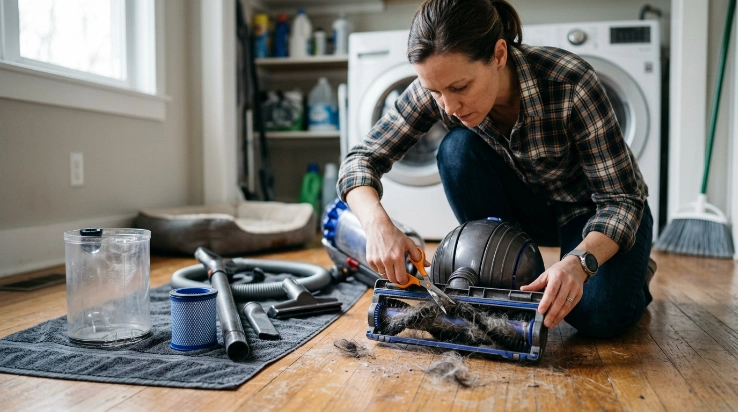
Start with the debris-collection parts and work toward the air pathway. This keeps loose hair from falling back into areas you’ve already cleaned.
1. Disconnect the vacuum from power
Unplug corded machines before opening covers or touching the brush roll. Switch cordless vacuums off and remove the battery first if the manufacturer recommends battery removal for maintenance.
2. Empty the bin or check the bag
Take a bagless vacuum to a well-ventilated area before opening the dust container. Empty it carefully instead of shaking the bin aggressively.
For bagged vacuums, replace the bag when required by your model. Don’t try to reuse a disposable bag unless its instructions say it is reusable.
3. Remove loose hair from the floor head
Turn the floor head over and inspect its intake opening, wheels, brush roll, and side channels. Pull away loose clumps with your fingers while the machine remains disconnected.
4. Cut wrapped hair from the brush roll
Long pet hair can wind tightly around a rotating roller. Work along the roller rather than pulling one large tangle from a single point.
- Locate a brush-roll cleaning groove if your vacuum has one.
- Use the manufacturer’s cleaning tool or small scissors carefully.
- Cut across the hair without cutting the roller bristles.
- Pull loosened strands away in small sections.
- Check both roller ends for hair near bearings or end caps.
If the brush roll is removable, follow the manual before taking it out. Some powered heads contain wiring or drive components that shouldn’t be disturbed.
5. Inspect the hose and wand
Detach removable hoses and wands as instructed by the manufacturer. Look through them toward a light source to identify fur plugs or larger debris.
Use an approved cleaning method instead of forcing sharp metal objects through a flexible hose. A punctured hose can create an air leak.
6. Clean the attachments
Pet tools and upholstery attachments can collect surprising amounts of fur. Check bristles, narrow channels, pivot points, and intake openings.
7. Maintain the filters
Remove filters only after checking which type your vacuum uses. Some foam filters can be rinsed, while pleated or specialty filters may require dry cleaning or replacement.
Never assume a dirty filter is washable. Follow the manufacturer’s care instructions for each individual filter.
8. Reassemble only when everything is dry
Any washed component should dry completely before it goes back into the vacuum. Moisture inside a filter compartment or electrical area can cause problems.
Section Takeaway: The safest sequence is power off, empty debris, clear the roller and airways, maintain approved filters, dry everything fully, and then reassemble.
How Do You Remove Pet Hair From the Brush Roll, Hose, and Tools?
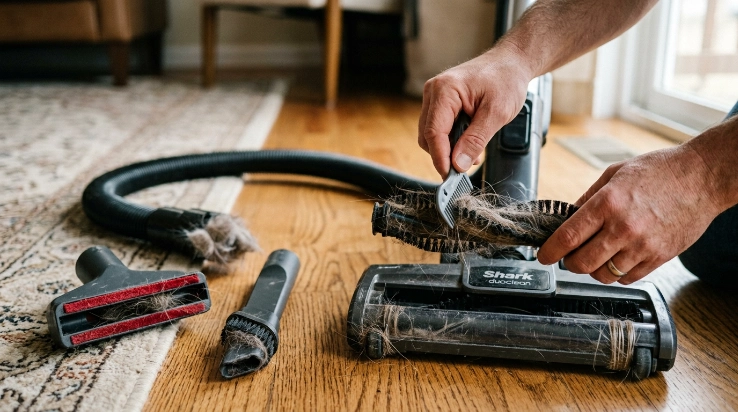
The brush roll usually needs the most hands-on attention because rotating parts grab long fur. Hoses and attachments are more likely to collect compacted clumps at narrow openings and bends.
| Vacuum Part | Typical Pet-Hair Problem | Best First Step | What to Avoid |
|---|---|---|---|
| Brush roll | Hair wound around roller | Cut and pull away small sections | Cutting bristles or belts |
| Floor-head inlet | Dense fur clumps | Remove loose debris by hand | Pushing debris deeper |
| Hose | Fur plug at a bend | Detach and inspect visually | Sharp objects that can puncture it |
| Upholstery tool | Hair caught in bristles | Comb or pull hair free | Soaking powered attachments |
| Crevice tool | Compacted lint and fur | Clear the narrow opening | Forcing a hard object inside |
I pay special attention to both ends of the brush roll. Hair can disappear behind an end cap even when the middle of the roller looks clean.
Check wheels too. Fine hair can wind around small wheel axles and make the floor head harder to move.
Expert Alert: If a powered brush head smells burnt, sparks, has damaged wiring, or keeps stopping after you’ve removed visible tangles, stop using it and have the electrical or motor issue checked by a qualified repair professional.
How Do You Clean the Bin and Filters Safely?
Empty the bin gently and maintain every filter according to its own instructions. Don’t wash the entire dust-bin assembly unless the manufacturer identifies the relevant pieces as washable.
Should you wash a vacuum filter?
Only wash a filter that is specifically labeled washable. A filter that looks like washable material may still contain layers, coatings, or construction that water can damage.
If you do wash an approved filter, use the method in the manual and let it dry fully. Never reinstall a damp filter just because its surface feels dry.
HEPA means high-efficiency particulate air. The EPA explains that a true HEPA filter is designed to capture at least 99.97% of particles at 0.3 microns under the filter’s specified test conditions; see the EPA’s HEPA filter explanation.
That number describes the filter medium, not every vacuum’s total real-world containment. Seals and the overall airflow design also matter when you’re trying to keep collected dust from leaking back out.
How should allergy-sensitive households empty the vacuum?
Avoid creating a dust cloud when you empty a bagless bin. Take it outside when practical and open it close to the trash container rather than shaking it from shoulder height.
The EPA recommends frequent cleaning and notes that vacuuming can stir dust into the air. Its indoor particulate matter guidance also advises people with asthma or allergies to avoid the area while vacuuming when possible.
- Bagless model: Empty gently and wipe only manufacturer-approved surfaces.
- Bagged model: Remove the bag carefully and close or seal it as designed.
- Washable filter: Clean at the stated interval and dry fully.
- Disposable filter: Replace it instead of rinsing it.
- Motor housing: Keep water and cleaning sprays away from electrical components.
How Often Should You Clean a Vacuum Used for Pet Hair?
There isn’t one schedule that fits every vacuum or pet. A heavy-shedding dog on carpet can load a brush roll much faster than a short-haired cat in a mostly hard-floor home.
As of 2026, I prefer a condition-based schedule rather than waiting for obvious suction loss. Frequent quick checks make deeper cleaning easier.
| When | What to Check |
|---|---|
| After heavy pet-hair vacuuming | Bin, floor-head opening, visible brush-roll hair |
| About weekly in shedding homes | Wrapped hair, roller ends, wheels, attachments |
| Every few weeks | Hose, wand, screens, seals, hidden air passages |
| Manufacturer’s stated interval | Filter washing or replacement |
| Whenever performance changes | Full airflow path, roller rotation, unusual noise or heat |
Don’t wait for the calendar if your vacuum starts behaving differently. A suddenly louder machine, weak pickup, difficult roller movement, or repeated clogging deserves an immediate inspection.
Cleaning frequency should increase during seasonal shedding. Homes with several pets may also need more frequent bin, roller, and attachment checks.
Frequently Asked Questions
Should I clean my vacuum every time I pick up pet hair?
You don’t usually need a full teardown after every use. Check the bin, brush roll, and floor-head opening after heavy pet-hair cleaning, then perform deeper maintenance when needed or according to the manufacturer’s schedule.
Can pet hair damage a vacuum cleaner?
Pet hair can contribute to maintenance problems when it wraps around rollers or builds up in air passages. Regular removal helps prevent dense tangles and makes it easier to notice mechanical problems early.
Can I wash the vacuum hose to remove pet hair?
Only wash a hose if your vacuum manufacturer specifically says it is washable. Some hoses contain electrical wiring for powered attachments, and trapped moisture can also create problems after reassembly.
How do I remove pet smell from a vacuum?
Start by emptying the bin or replacing the bag, removing trapped hair, and maintaining the filters as directed. Clean approved removable parts and allow them to dry fully rather than spraying fragrance or liquid into the motor or airflow system.
Why does my vacuum still smell after I remove the pet hair?
Odor may remain in dirty filters, a dust bag, the bin, attachments, or debris hidden inside the hose. A persistent burning or electrical smell is different and should be treated as a repair warning.
Should I use a HEPA vacuum if I have pets?
HEPA filtration can be useful when fine-particle containment matters, especially in allergy-sensitive households. However, consider the vacuum’s complete filtration and sealing design rather than judging it only by the word “HEPA.”
What should I do if my vacuum loses suction after cleaning pet hair?
Check the bin or bag first, then inspect the filter, brush-head inlet, hose, wand, and attachments for restrictions. If airflow remains poor after accessible clogs are cleared, follow the troubleshooting instructions for your specific model.
Final Takeaway
The best way to clean a vacuum after pet hair is to deal with fur before it becomes a dense tangle. Empty the debris, clear the brush roll, inspect the airflow path, and maintain filters exactly as your manufacturer recommends.
Make the quick inspection part of your normal pet-cleaning routine. Your next vacuuming session will be easier, and you’ll spot clogs or mechanical problems before they become harder to fix.
