
How Do You Stop a Vacuum From Smelling?

Quick Answer
To stop a vacuum from smelling, empty the bin or replace the bag, remove trapped hair and food debris, clean approved filters and washable parts, clear clogs, and let every damp component dry completely. Good vacuum maintenance also limits accumulated household dust, which is why the EPA recommends regular cleaning and appropriate vacuum filtration.
Quick steps to remove vacuum odor
- Empty debris: Remove old dirt, pet hair, crumbs, and other material from the bin or bag.
- Check filters: Clean washable filters or replace disposable ones according to your vacuum’s manual.
- Clear the brush: Remove hair, thread, and trapped debris from the brush roll and floorhead.
- Inspect airflow: Check the hose, wand, intake, and accessible passages for hidden clogs.
- Dry everything: Never reinstall a washed bin, filter, hose, or attachment while it is damp.
- Stop for burning smells: Switch the vacuum off if the odor smells electrical, rubbery, or like melting plastic.
One thing not to do
- Don’t spray perfume, essential oils, or liquid deodorizer into the motor, filter, vents, or other unapproved parts to hide the odor.
A vacuum that smells bad usually has a source you can remove. In my experience, covering the smell rarely works because warm moving air keeps carrying the odor back into the room.
The fix depends on whether you’re dealing with dusty debris, pet hair, moisture, a dirty filter, or something overheating. This 2026 guide shows you how to identify the smell and fix it safely.
In This Guide
Why Does My Vacuum Smell Bad?
A vacuum usually smells because odor-producing debris has collected somewhere in its dirt or airflow system. Heat and moving air then make that smell easier to notice while you vacuum.
A smelly vacuum is a vacuum cleaner that releases an abnormal odor from accumulated debris, moisture, restricted airflow, overheated components, or another contaminated part.
Organic debris is a common source
Pet hair, food crumbs, dust, hair, and tiny bits of household debris can remain inside a bin or bag. Material trapped for days or weeks may develop a stale or unpleasant odor.
Pet households can notice this sooner. Hair and dander can collect around the brush roll, filter, bin, cyclone, hose, and attachments.
The filter can hold odors
A loaded filter can trap fine particles and smells. Restricted airflow may also make the vacuum run hotter, which can make existing odors more noticeable.
Never assume that a filter is washable. A paper, pleated, HEPA, foam, felt, or cartridge filter may require different care depending on the vacuum.
Dampness can create a musty smell
Moisture inside a bin, hose, filter, or attachment can create a stale or musty environment. This often happens after a washable part is reinstalled before it has dried completely.
Vacuuming damp debris with an ordinary dry vacuum can cause similar problems. A household dry vacuum shouldn’t pick up water unless its manufacturer specifically allows wet pickup.
Section Takeaway: Bad vacuum smells usually start with debris, filtration, moisture, or restricted airflow. Find the source instead of trying to perfume the exhaust.
How Do You Stop a Vacuum From Smelling?
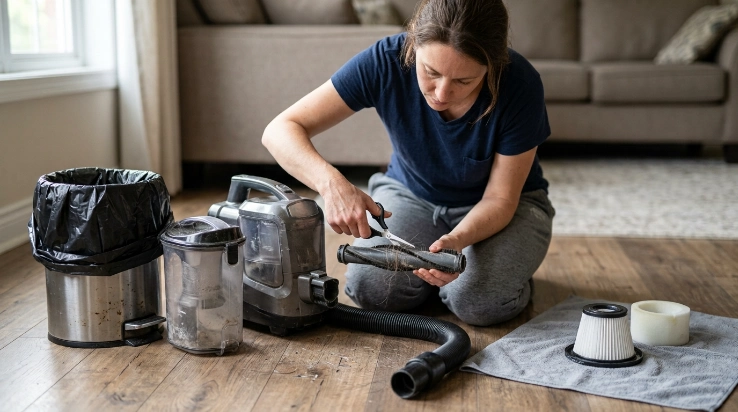
The best way to stop the smell is to clean the vacuum from the dirt container toward the floorhead. Work only on parts your manufacturer identifies as user-serviceable.
- Disconnect the power. Unplug a corded vacuum or switch off the cordless unit before opening it. Remove the battery only when your model’s instructions allow it.
- Empty the bin or change the bag. Dispose of old debris before cleaning other parts. A full bag or packed bin can hold a surprising amount of odor.
- Remove wrapped hair. Check the brush roll, wheels, mini tools, and accessible rotating parts. Cut hair carefully without damaging belts, bristles, wiring, or seals.
- Inspect the airflow path. Check the floorhead, wand, hose, intake, and accessible passages. Remove clumps without pushing sharp objects through flexible hoses.
- Service the filter correctly. Wash only filters specifically marked or documented as washable. Replace filters that your manufacturer treats as disposable.
- Clean approved washable parts. A removable plastic bin or plain attachment may tolerate mild soap and water, but verify this first.
- Dry everything completely. Air-dry washed pieces for the full period required by your manufacturer. Don’t guess based only on whether the surface feels dry.
- Reassemble and test. Make sure filters, bins, hoses, seals, and covers are seated correctly before switching the vacuum on.
I like to smell-check the empty bin, filter area, hose, and floorhead separately before reassembly. That simple step often reveals which component was holding the odor.
If the smell disappears after cleaning, you probably found the source. If it immediately returns, investigate a hidden clog, damaged component, overheating problem, or contamination you couldn’t reach safely.
Section Takeaway: Remove the source, restore airflow, and eliminate moisture. Those three actions solve more vacuum odors than adding any scented product.
What Does Each Type of Vacuum Smell Mean?
Different odors point toward different parts of the machine. The smell alone cannot diagnose every fault, but it gives you a useful starting point.
| Smell | Likely First Checks | Best First Action | Urgency |
|---|---|---|---|
| Dusty or stale | Bin, bag, filter, hose | Empty and inspect debris system | Routine maintenance |
| Pet-like odor | Brush roll, bin, filter, upholstery tool | Remove hair and clean approved parts | Routine maintenance |
| Musty or damp | Filter, bin, hose, wet debris | Stop, clean, and dry approved parts | Investigate moisture |
| Hot rubber | Brush roll, belt, jammed moving parts | Switch off and inspect safely | High |
| Electrical or melting plastic | Cord, battery, motor, electrical system | Stop using the vacuum | Immediate |
Is a burning smell dangerous?
A persistent burning, electrical, melting-plastic, or hot-rubber odor should never be treated like a normal dirt smell. Switch the vacuum off and disconnect power when it is safe to do so.
Expert Alert: Smoke, sparks, battery swelling, damaged wiring, repeated overheating, or persistent electrical odors need manufacturer support or a qualified appliance-repair professional. Don’t open sealed electrical or motor components to diagnose them yourself.
Section Takeaway: Dusty and pet odors often call for cleaning. Burning, electrical, or chemical odors call for caution and may require repair.
Which Vacuum Parts Should You Clean or Replace?
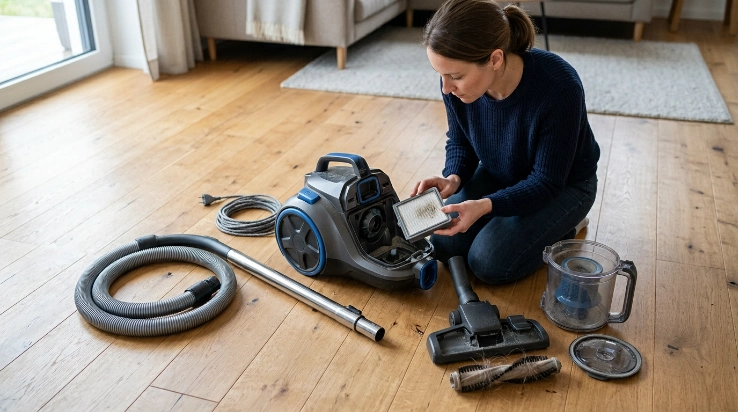
Focus first on parts that touch debris or carry airflow. These components are more likely to hold the material causing the smell.
Dustbin or bag
Empty a bagless bin before dirt becomes tightly packed. Wipe or wash the removable container only if your manufacturer approves that cleaning method.
For bagged machines, install the correct replacement bag. Check that it seats properly and does not leave dirt around the bag compartment.
Vacuum filter
Inspect filters for heavy dust, damage, or obvious contamination. Follow the exact cleaning or replacement instructions for your model.
- Washable filter: Rinse only by the approved method and let it dry fully.
- Non-washable filter: Keep it dry and replace it as directed.
- HEPA filter: Don’t assume HEPA means washable because construction varies by model.
- Damaged filter: Replace torn or deformed media rather than trying to repair it.
Brush roll and floorhead
Hair wrapped tightly around a roller can trap dirty material and create friction. Remove thread, hair, lint, and visible debris after disconnecting power.
Pay attention to the roller ends and small wheels. Those areas often hide compacted hair that is easy to miss during a quick inspection.
Hose, wand, and attachments
A clog may contain food, pet debris, or damp material. Remove the hose and tools only by the method shown in your manual.
Don’t automatically rinse a hose. Some powered hoses contain wiring, electrical contacts, or components that should remain dry.
Section Takeaway: Clean dirt-contact parts first, but let the owner’s manual decide what can be washed. Water in the wrong component can turn an odor problem into an appliance problem.
How Do You Fix Pet, Musty, and Damp Vacuum Odors?
Pet and musty smells deserve extra attention because they can involve organic debris or moisture. Cleaning the vacuum without addressing the surrounding source may allow the smell to return.
For pet odors
Remove pet hair from the brush roll, mini motorized tools, wheels, bin, and accessible air passages. Check the filter because fine hair and dander can accumulate beyond the visible dirt container.
The Asthma and Allergy Foundation of America recommends regular vacuuming as one part of controlling indoor allergens. It also notes that vacuum quality and filtration matter because cleaning can disturb settled particles.
If one pet bed or rug repeatedly makes the vacuum smell, clean the source material as well. Otherwise, the machine simply picks up the same odor again.
For a musty vacuum
Check whether a washable filter, dustbin, hose, or attachment was stored while damp. Remove approved washable pieces and let them dry fully before reassembly.
A persistent musty smell can also point to a moisture problem outside the vacuum. The CDC’s mold guidance recommends addressing visible or musty mold conditions and correcting the moisture source.
The EPA’s mold and moisture guide likewise emphasizes moisture control. If mold is growing in the home, cleaning the vacuum alone will not solve the underlying problem.
Expert Alert: If you discover extensive mold, contaminated water, widespread water damage, or mold inside electrical sections of the vacuum, don’t attempt deep remediation yourself. Use an appropriately qualified professional for the underlying moisture or remediation problem.
Should you put baking soda in a vacuum?
I don’t recommend pouring loose baking soda directly into a vacuum unless the manufacturer explicitly allows it. Fine powder can load filters, enter unintended areas, or create extra cleanup.
The same caution applies to carpet powders and powdered deodorizing products. Check both the vacuum manual and floor-care instructions before using them.
Section Takeaway: Pet odor requires debris removal, while musty odor requires moisture investigation. In both cases, fix the source outside the vacuum if it keeps contaminating the machine.
How Can You Keep a Vacuum Smelling Fresh?
Prevention is easier than repeatedly deep-cleaning a smelly vacuum. A short maintenance routine keeps odor-producing material from sitting inside the machine.
Use this practical maintenance routine
- After use: Check the bin or bag and remove obvious clumps of hair or debris.
- Regularly: Inspect the brush roll for wrapped hair, thread, or fibers.
- When suction changes: Check the filter, hose, floorhead, wand, and intake for restriction.
- After washing parts: Let every approved washable component dry completely.
- At the manufacturer interval: Clean or replace filters and bags according to the model’s instructions.
- Before storage: Empty debris and make sure the vacuum is clean and dry.
There’s no single filter schedule that fits every vacuum. A small cordless vacuum used around shedding pets can load with debris faster than a large bagged vacuum used lightly.
Use performance as an extra clue. If your vacuum suddenly needs more passes, sounds different, becomes unusually hot, or develops an odor, inspect it before continuing normal use.
Should you add fragrance to a vacuum?
Fragrance may hide an odor temporarily, but it doesn’t remove the source. It can also be unpleasant for people sensitive to scented products.
If your manufacturer sells or specifically approves a scent product, follow those directions. Otherwise, I prefer a clean bin, open airflow, dry components, and properly maintained filters.
Section Takeaway: A fresh-smelling vacuum is usually a clean, dry, unrestricted vacuum. Prevent debris and moisture from sitting inside it between cleaning sessions.
Vacuum Smell FAQ
Why does my vacuum smell even after I empty it?
The smell may be coming from the filter, hose, brush roll, cyclone, attachments, or debris trapped around the floorhead. Check each accessible part separately and follow your manual before washing anything.
Why does my vacuum smell like a dog?
Pet hair, dander, and debris can collect throughout the vacuum rather than only in the bin. Clean the brush roll, dirt container, approved filters, attachments, and accessible airflow path, then address any pet bedding or carpet that keeps transferring the odor.
Can I put essential oils in my vacuum filter?
Don’t add essential oil directly to a filter unless your vacuum manufacturer specifically approves it. Oil can affect filter material, seals, plastics, or airflow, and strong fragrance can be irritating to some household members.
Why does my vacuum smell musty?
A musty smell often suggests damp debris or a component that was stored before drying completely. Inspect washable filters, bins, hoses, and attachments, and also check your home for a continuing moisture source if the odor keeps returning.
How often should I clean my vacuum to prevent smells?
Check the dirt container and obvious debris after regular use, then inspect filters and airflow components routinely. Your manufacturer’s maintenance schedule should always override a generic timetable, especially for filter washing or replacement.
Can a clogged vacuum cause a bad smell?
Yes. A clog can trap odor-producing debris and restrict airflow, which may also make the machine run hotter than normal.
Should I use a vacuum that smells burnt?
No. Switch it off if you notice a persistent electrical, melting-plastic, burning-rubber, smoky, or chemical odor, especially when the machine is unusually hot or making a new sound.
Final takeaway: To stop a vacuum from smelling, remove old debris, clean the correct parts, restore airflow, and eliminate moisture. Don’t mask an unexplained odor with fragrance, and stop using the machine when the smell suggests overheating or an electrical problem.
A few minutes of routine inspection can prevent most ordinary vacuum odors from becoming stubborn. Keep the machine clean and dry, and let the owner’s manual guide every filter, washing, battery, and repair decision.
