
Why Is My Vacuum Making Loud Noises? Causes, Fixes, and Warning Signs

Quick Answer
A vacuum usually becomes unusually loud because of a clogged hose, jammed brush roll, dirty filter, trapped debris, air leak, damaged belt, or worn motor component. Start with the simple airflow checks first, following safe vacuum cleaner care guidance, and stop using the machine if you hear harsh grinding or notice smoke, sparks, or a burning smell.
Common noises and what they suggest
- Whistling: Check for a clogged hose, poorly seated filter, damaged seal, or air leak.
- Rattling: Look for hard debris inside the floorhead, hose, bin, or brush area.
- Grinding: Stop and inspect the brush roll, belt area, bearings, and motor before continuing.
- Pulsing: A restricted airflow path or clogged filter is often the first thing to check.
- High-pitched squeal: A slipping belt, struggling brush mechanism, or worn moving component may be responsible.
- Sudden roar: Check whether the hose, bin, filter, or another air-path component has come loose.
Before troubleshooting
- Turn the vacuum off, unplug a corded model or remove the battery when possible, and let moving parts stop before inspecting them.
A vacuum cleaner normally makes plenty of sound, but you quickly notice when that familiar hum changes into a rattle, whistle, grinding noise, or angry roar. I’ve had vacuums sound as if the motor was failing when the problem was only a tightly packed clog near the floorhead.
The sound itself gives you useful clues. This 2026 guide explains what different vacuum noises mean, what you can safely check yourself, and when continuing to run the machine could turn a small problem into an expensive repair.
In This Guide
Why Is My Vacuum Suddenly So Loud?
A suddenly loud vacuum usually means something changed in its airflow or a moving component. Common causes include blockages, dirty filters, jammed brush rolls, loose parts, damaged seals, belts, or internal mechanical wear.
A vacuum airflow restriction happens when air cannot move normally through the cleaner head, hose, wand, bin, bag, filter, or exhaust path. The motor may sound different as the machine struggles with that restriction.
A clogged hose or airway
Clogs are among the first things I check. A sock, paper scrap, clump of pet hair, or dense dust buildup can partially block a narrow bend without completely stopping suction.
Some manufacturers specifically associate unusual or pulsing sounds with airflow restrictions. That makes a blockage check a sensible starting point before assuming the motor has failed.
- Check the floorhead: Look inside the intake opening for compacted debris.
- Inspect the wand: Disconnect it and look through the entire tube.
- Check the hose: Look through both ends and inspect bends where debris can lodge.
- Examine the bin inlet: Hair and fluff can collect where the dirt enters the container.
A full bin or vacuum bag
A packed dustbin or overfilled bag can interfere with airflow. The sound may become deeper, harsher, or more strained while cleaning performance drops.
Empty the bin before dirt reaches the manufacturer’s maximum line. Replace disposable bags according to the instructions for your specific machine.
A dirty or incorrectly installed filter
Filters trap particles before air leaves different parts of the vacuum. When airflow through a filter becomes restricted, the machine may sound different and lose suction.
Only wash a filter if its manufacturer identifies it as washable. A damp filter should never go back into the vacuum before it has dried completely.
The EPA explains that HEPA means high-efficiency particulate air. HEPA filtration is particularly relevant to controlling fine particles, but the entire vacuum still needs proper airflow and sealing.
Section Takeaway: A sudden change in sound often points to airflow first. Check the bin or bag, filters, hose, wand, and intake before assuming an expensive component has failed.
What Does Each Vacuum Noise Mean?
The type of noise can narrow your search. Whistling generally points you toward airflow, while grinding demands more caution around moving mechanical parts.
| Noise | Likely Area to Check | Quick Test | Urgency |
|---|---|---|---|
| Whistling | Hose, seals, filters, connections | Check for leaks or restrictions | Inspect soon |
| Rattling | Floorhead, bin, hose | Look for hard trapped debris | Inspect before continuing |
| Pulsing | Filter and airflow path | Remove attachments and check blockages | Inspect promptly |
| Grinding | Brush, bearing, belt, motor | Turn off and inspect moving parts | Stop using |
| Squealing | Belt or rotating assembly | Inspect for slipping or resistance | Inspect promptly |
| Metallic knocking | Loose or damaged internal component | Stop and inspect accessible parts | Stop using |
Why does my vacuum whistle?
A whistle often occurs when air is forced through a smaller opening than normal. A partially clogged hose, poorly seated seal, loose fitting, or damaged hose can create that effect.
Dyson’s troubleshooting guidance, for example, associates whistling with a blockage or damaged or missing seal. Other designs can behave differently, so your model manual remains the final reference.
Why does my vacuum rattle?
Hard debris can make a surprisingly violent sound. Small stones, coins, beads, screws, or dried debris may bounce around the floorhead or bin.
Switch the machine off before searching. Remove accessible debris rather than allowing it to keep striking rotating parts.
Why is my vacuum pulsing?
Pulsing can be a machine’s way of reacting to restricted airflow. Some cordless models deliberately change their sound or power behavior when a blockage is detected.
Remove accessories one at a time and inspect each airway. That helps isolate whether the restriction is in the tool, wand, hose, bin inlet, or main machine.
Section Takeaway: Listen to the character of the noise, not only its volume. Whistling and pulsing often justify airflow checks, while grinding or metallic knocking deserves immediate attention.
What Should You Check First When a Vacuum Gets Loud?
Start with parts you can inspect without opening the motor housing. This reduces risk and solves many ordinary vacuum noise problems.
- Turn the vacuum off. Unplug it or disconnect the battery when your model allows.
- Empty the bin or check the bag. Remove packed dirt before testing again.
- Inspect the cleaner head. Look for hair, string, paper, stones, or objects around the intake.
- Check the brush roll. Remove wrapped hair and fibers according to the manual.
- Inspect the hose and wand. Clear visible restrictions without damaging the tubing.
- Check the filters. Clean or replace them only as the manufacturer directs.
- Reconnect everything securely. Loose bins, hoses, seals, and covers can alter airflow.
- Test briefly. Listen for the original sound before resuming normal cleaning.
Try isolating the noisy component
I use a simple elimination test when a vacuum suddenly gets loud. I remove detachable accessories and reconnect them one at a time, provided the manufacturer’s instructions allow that type of test.
If the sound disappears after removing the floorhead, the problem is probably closer to that assembly. If it remains in the main unit, further investigation may be necessary.
Do not keep running a vacuum that is overheating
A clog can restrict airflow while a jammed brush can increase mechanical resistance. Either situation deserves attention when the machine also feels unusually hot or repeatedly shuts itself down.
Shark’s official support guidance notes that some models use a protective thermostat during overheating. Exact shutdown and cooling behavior varies by model, so follow your own manual.
Expert Alert: Stop using the vacuum if you notice smoke, sparks, melted plastic, a burning electrical smell, damaged wiring, or repeated breaker trips. Have the appliance inspected by a qualified repair professional rather than opening electrical or motor components yourself.
Can the Brush Roll or Belt Make a Vacuum Loud?
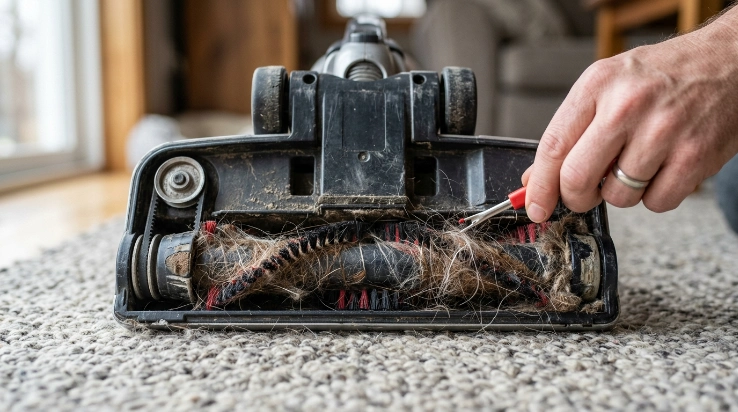
Yes. Brush rolls and belt-driven floorheads contain rapidly moving components, making them common sources of rattling, squealing, clicking, and grinding.
Hair wrapped around the brush roll
Long hair, pet fur, thread, and carpet fibers can wind tightly around a brush roll. The buildup may resist rotation or collect near the end caps.
Turn the vacuum off before touching the brush area. Follow the manual for removing hair because some floorheads are designed to open while others are not.
- Look along the full roller: Hair may be hidden underneath bristles.
- Check both ends: Fibers often collect near the end caps.
- Inspect the intake: Debris can lodge behind the roller.
- Rotate only as directed: Never force a brush mechanism that feels jammed.
A belt may be slipping or damaged
Some upright and canister floorheads use belts to drive their brush rolls. A worn, stretched, displaced, or damaged belt may produce squealing or irregular brush movement.
Not every modern vacuum uses a user-serviceable belt. Check the parts diagram or owner’s manual before dismantling the cleaner head.
Brush bearings and end caps can wear
A brush that remains rough or noisy after hair removal may have wear around its bearings or end supports. This can create a repetitive grinding sound as speed increases.
A replaceable brush assembly may solve the issue on some models. Internal repairs should be left to a technician when the component is inaccessible.
How Do You Know if the Vacuum Motor Is Failing?
Motor trouble becomes more likely when loud mechanical noise remains after you have eliminated accessible clogs, dirty filters, loose attachments, and brush-roll problems. Burning odors, abnormal heat, smoke, or intermittent operation make the situation more serious.
Do not diagnose a motor by sound alone. Airflow problems can make a healthy motor sound strained, so basic maintenance checks still come first.
Warning signs that deserve professional attention
- Persistent grinding: The noise remains when accessible attachments and debris are eliminated.
- Burning odor: You smell hot wiring, insulation, rubber, or melting plastic.
- Visible smoke: Shut the vacuum off immediately.
- Sparks: Stop using the appliance and disconnect power safely.
- Repeated shutdowns: The vacuum keeps stopping after obvious blockages are removed.
- Major vibration: The main unit shakes much more than it previously did.
A motor contains components that operate at high speed. Bearings, fans, electrical connections, or other internal parts can eventually wear or become damaged.
Opening a mains-powered vacuum without the right knowledge can expose electrical hazards. It may also affect warranty coverage.
Expert Alert: Motor housings, mains wiring, circuit boards, batteries, and damaged electrical connections are not good beginner DIY repairs. Use an authorized service center or qualified appliance technician.
Section Takeaway: A noisy motor is a diagnosis of exclusion. Rule out airflow and accessible rotating parts first, but stop immediately when the noise comes with heat, smoke, sparks, or an electrical burning smell.
How Can You Prevent Loud Vacuum Noises?
Regular vacuum maintenance helps stop ordinary clogs and brush jams from becoming bigger problems. The right schedule depends on your model and household.
Empty dirt before airflow becomes restricted
Do not wait until a bagless bin is tightly packed. Use the manufacturer’s fill line rather than squeezing in one more cleaning session.
Bagged machines also need timely bag changes. A full bag can reduce useful airflow through the system.
Keep the brush roll free of hair
Homes with long hair or shedding pets may need more frequent brush inspection. A 30-second visual check can catch fibers before they form a dense wrap.
Maintain filters exactly as instructed
Filters are not interchangeable in their care requirements. Some can be washed, while others require replacement.
Consumer Reports also notes that vacuum filters require periodic cleaning or replacement. Your model manual should determine the method and schedule.
Watch what goes into the vacuum
Household vacuums are designed for particular debris and surfaces. Picking up unsuitable objects can create instant blockages or damage moving parts.
- Pick up coins, screws, toy pieces, and large paper scraps by hand.
- Do not vacuum liquids with a dry-only machine.
- Avoid hot ash or embers.
- Use appropriate equipment for heavy renovation or construction debris.
- Keep cords, shoelaces, and loose fabric away from rotating brushes.
Keep household dust under control
Vacuum maintenance also connects with broader home hygiene. The EPA’s indoor particulate matter guidance recommends regular cleaning and notes that HEPA-filtered vacuuming can help reduce dust buildup.
A HEPA filter does not repair a noisy vacuum. However, good filtration, maintained correctly, helps prevent collected fine particles from simply becoming another household dust problem.
Section Takeaway: Prevention comes down to airflow, debris control, and maintenance. Empty the vacuum on time, keep filters and brush rolls clean, and investigate new sounds before continuing a long cleaning session.
Vacuum Noise FAQs
Why is my vacuum louder than usual but still has suction?
A vacuum can remain functional while developing a partial blockage, air leak, dirty filter, brush-roll obstruction, or loose connection. Check the accessible airflow path and rotating floorhead components before continuing to use it normally.
Why does my vacuum sound like a jet engine?
A sudden roaring or jet-like sound can happen when airflow changes sharply. Check whether the hose, dustbin, filter cover, seal, or other connection has come loose, and inspect the air path for restrictions.
Why does my vacuum make a high-pitched whistling sound?
Whistling commonly points to air moving through a restricted opening or leak. Inspect hoses, connections, filters, seals, and narrow air passages for blockages or damage before assuming the motor is responsible.
Why is my vacuum making a grinding noise?
Turn it off rather than continuing to clean. Grinding can come from trapped hard debris, a jammed brush roll, worn brush components, belt-related problems, or internal mechanical damage that requires professional inspection.
Can a clogged filter make a vacuum noisy?
Yes. A heavily restricted filter can change normal airflow and make some vacuums sound strained or unusual. Clean only washable filters and replace non-washable filters according to your model’s instructions.
Can a vacuum explode if it makes a loud noise?
An unusual sound alone does not mean a vacuum will explode. However, smoke, sparks, battery swelling, severe overheating, electrical odors, or damaged wiring are serious warning signs, so disconnect the appliance and arrange professional service.
Should I replace a vacuum that suddenly becomes noisy?
Not automatically. Many noise problems come from clogs, dirty filters, trapped objects, or brush-roll buildup. Replacement becomes more reasonable when major internal repairs are uneconomical, parts are unavailable, or the vacuum has broader reliability problems.
Final Takeaway
If your vacuum is making loud noises, begin with the easiest explanation: something may be restricting airflow or interfering with the brush roll. Empty the dirt container, inspect filters, check the hose and wand, and remove accessible debris while the machine is safely powered off.
Pay more attention when the sound becomes grinding, metallic, or accompanied by heat, smoke, sparks, or a burning smell. Those symptoms justify stopping the vacuum rather than trying to finish the room.
I’ve learned not to ignore a vacuum simply because it still picks up dirt. A new noise is often the earliest warning you get, and catching the cause early can save the brush head, belt, motor, or the entire machine.
