
How Do You Maintain a HEPA Vacuum? Complete 2026 Guide

Quick Answer
To maintain a HEPA vacuum, empty its bin or replace its bag before airflow becomes restricted, clear hair from the brush roll, inspect hoses for clogs, and maintain every filter according to the manufacturer’s instructions. Never assume a HEPA filter is washable simply because it looks reusable; the U.S. Environmental Protection Agency also emphasizes correct HEPA-vacuum operation and maintenance.
Quick HEPA Vacuum Maintenance Steps
- Disconnect power: Unplug the vacuum or safely remove its battery before opening or cleaning it.
- Empty debris early: Empty the bin or change the bag before dirt becomes tightly packed.
- Check every filter: Wash only filters that your exact vacuum manual identifies as washable.
- Clear airflow: Inspect the nozzle, wand, hose, and intake openings for blockages.
- Clean the brush: Remove hair, thread, and fibers wrapped around the roller.
- Inspect seals: Make sure filter covers, bins, bags, and gaskets fit correctly before use.
Most Important Rule
- Your vacuum’s owner manual always overrides a generic cleaning schedule, especially for HEPA filter washing and replacement.
A HEPA vacuum is easy to neglect because most of its important filtration parts are hidden. I prefer checking the filter system before suction drops or dust starts appearing around the exhaust.
This guide explains how to maintain a HEPA vacuum without damaging the filter, restricting airflow, or creating avoidable repair problems. It also covers practical maintenance schedules for normal household use in 2026.
In This Guide
- What Does HEPA Vacuum Maintenance Involve?
- How Do You Maintain a HEPA Vacuum Step by Step?
- How Should You Clean a HEPA Vacuum Filter?
- How Often Should You Maintain a HEPA Vacuum?
- What HEPA Vacuum Maintenance Mistakes Should You Avoid?
- When Does a HEPA Vacuum Need Professional Service?
- HEPA Vacuum Maintenance FAQ
What Does HEPA Vacuum Maintenance Involve?
HEPA vacuum maintenance means keeping the vacuum’s filtration, airflow, dirt collection, and moving parts working as the manufacturer designed them. Maintaining only the visible HEPA filter isn’t enough.
A HEPA vacuum is a vacuum designed to use high-efficiency particulate air filtration as part of its dust-control system. HEPA describes filtration performance, but it does not automatically mean the filter is washable or permanent.
- Filtration: Keep approved filters clean or replace them when required.
- Airflow: Prevent packed bins, full bags, clogged hoses, and blocked nozzles.
- Brush system: Remove hair and fibers that restrict brush-roll movement.
- Sealing: Check that bins, filter covers, bags, and gaskets sit correctly.
- Exterior parts: Keep attachments, wheels, charging contacts, and sensors clean.
The filter is only one part of the system. Air that bypasses a poorly seated filter or damaged seal can undermine the purpose of high-efficiency filtration.
Consumer Reports also recommends regular attention to filters, dirt containers, brush rolls, and airflow paths. Those simple checks can prevent many common performance problems.
| Component | What Maintenance Does | Common Warning Sign |
|---|---|---|
| HEPA filter | Maintains filtration and airflow when serviced correctly | Heavy visible loading or manufacturer replacement indicator |
| Pre-filter | Captures debris before it reaches finer filtration | Visible dust buildup or reduced airflow |
| Bin or bag | Maintains room for collected debris and airflow | Full indicator, max line reached, or packed dirt |
| Brush roll | Keeps carpet agitation and pickup working properly | Wrapped hair, slow rotation, or unusual noise |
| Hose and wand | Keeps the air path open | Sudden suction loss or visible blockage |
Section Takeaway: HEPA vacuum maintenance is whole-machine maintenance. The filter, seals, dirt container, hose, and brush system all need attention.
How Do You Maintain a HEPA Vacuum Step by Step?
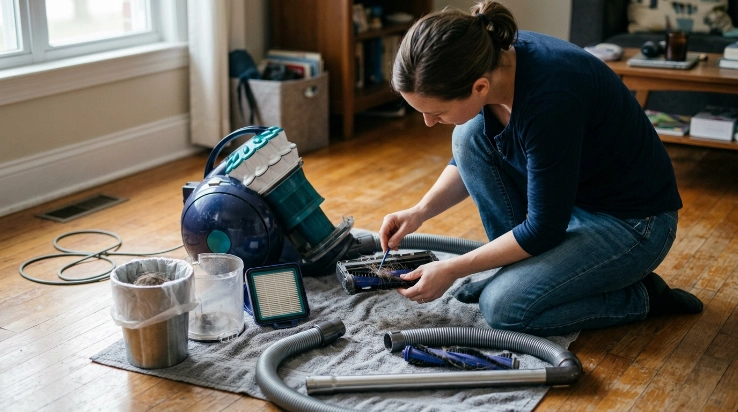
Start with the parts that affect airflow most directly. You usually don’t need special equipment for routine maintenance.
1. Disconnect the vacuum from power
Unplug a corded vacuum before removing filters, brush rolls, or hoses. For cordless models, switch the machine off and remove the battery when the manufacturer allows it.
2. Empty the bin or inspect the bag
Don’t wait until debris becomes tightly packed. Empty a bagless bin before it exceeds its marked fill line.
For bagged models, replace the bag according to the manufacturer’s indicator or instructions. Disposable bags shouldn’t be emptied and reused unless specifically designed for that purpose.
3. Inspect the filter system
- Find every removable filter listed in the manual.
- Check the pre-filter for visible dust loading.
- Identify whether the HEPA filter is washable or replace-only.
- Check that each filter sits squarely in its housing.
- Inspect covers and seals before closing the machine.
4. Remove hair from the brush roll
Turn the floor head over and look for hair, thread, carpet fibers, or string. Wrapped material often collects near the roller ends where it’s less visible.
Use the removal method approved for your machine. Avoid cutting belts, bristles, wiring, or soft roller surfaces.
5. Check the hose, wand, and intake
A partial blockage can cause weak pickup even when the filter looks clean. Inspect removable air passages with the vacuum disconnected from power.
- Floor nozzle opening
- Hose connections
- Extension wand
- Dustbin inlet
- Attachment openings
6. Reassemble everything carefully
Make sure filters, covers, hoses, bags, and bins click or lock into their normal positions. A loose connection can change airflow or allow dust to escape.
I always do a short visual check before restarting the vacuum. It takes seconds and catches incorrectly seated bins surprisingly often.
Section Takeaway: Work from the dirt container through the filters, brush roll, and airflow path. Correct reassembly matters as much as cleaning.
How Should You Clean a HEPA Vacuum Filter?
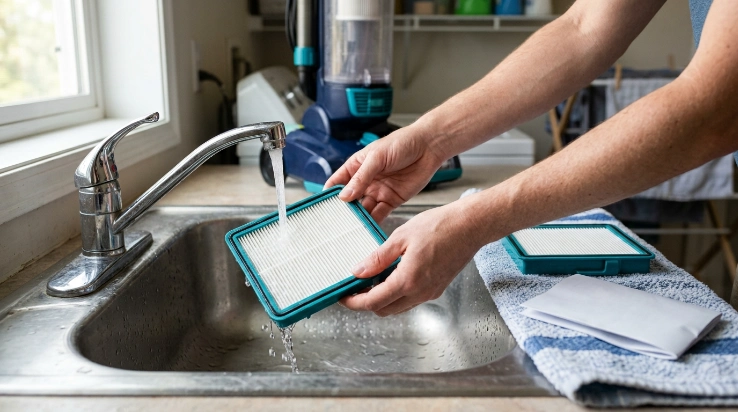
Clean a HEPA filter only when the manufacturer explicitly says it is washable. Otherwise, follow the specified dry-cleaning or replacement procedure.
This is one of the most important HEPA vacuum maintenance rules. Washing the wrong filter can damage its filter media or structure.
Washable HEPA filter vs. non-washable HEPA filter
| Filter Type | Use Water? | Correct Approach |
|---|---|---|
| Manufacturer-approved washable HEPA filter | Yes, only as directed | Rinse using the approved method and air-dry completely |
| Non-washable HEPA filter | No | Clean or replace according to the manual |
| Unknown filter | Don’t assume | Check the model manual or manufacturer support information first |
How to wash an approved washable filter
- Disconnect the vacuum from power.
- Remove the filter according to the manual.
- Remove loose surface dust only as directed.
- Rinse using the manufacturer’s approved water temperature and method.
- Avoid detergent unless the manufacturer specifically allows it.
- Leave the filter to air-dry completely.
- Reinstall it only after no moisture remains.
Don’t speed drying with an oven, microwave, hair dryer, or strong direct heat unless the manufacturer specifically approves that method. Heat can distort filter components.
Never run the vacuum with a damp HEPA filter. Moisture inside a machine designed for dry pickup can create further problems.
When should you replace instead of clean?
Replacement makes sense when the manual specifies a replacement interval, the filter is damaged, or approved cleaning no longer restores its condition. Tears, warped frames, deteriorated seals, and permanent damage shouldn’t be ignored.
Section Takeaway: “HEPA” does not mean “washable.” Identify the exact filter type before putting water anywhere near it.
How Often Should You Maintain a HEPA Vacuum?
There is no universal maintenance interval for every HEPA vacuum. Usage, filter design, pets, flooring, and household dust levels all change how quickly parts become dirty.
The schedule below is a practical inspection baseline, not a replacement for your manual.
| Part | Practical Check | Check Sooner If |
|---|---|---|
| Bin or bag | During or after regular use | The fill line is reached or suction drops |
| Brush roll | Weekly in high-hair homes; otherwise regularly | Hair or thread is visibly wrapped around it |
| Filters | Inspect about monthly during regular use | The home has heavy dust, pets, or frequent vacuuming |
| Hose and wand | Inspect monthly or when performance changes | Suction suddenly becomes weak |
| Seals and filter covers | Check whenever filters are serviced | Dust appears around connections or covers |
Homes with shedding pets usually need more brush-roll attention. Fine household dust can also load filters faster than large crumbs.
The National Institute of Environmental Health Sciences includes HEPA-filtered vacuuming among strategies used to reduce exposure to household dust-mite allergens. That makes proper vacuum maintenance especially relevant when dust control is a priority.
Section Takeaway: Inspect often enough to catch buildup early, but use the manufacturer schedule for actual filter washing and replacement.
What HEPA Vacuum Maintenance Mistakes Should You Avoid?
The biggest maintenance mistakes usually come from treating every filter and vacuum as if they were identical. Model-specific instructions matter.
- Washing a replace-only filter: Water can damage filter materials not designed for rinsing.
- Reinstalling damp parts: Filters and washable components should be fully dry before reassembly.
- Ignoring the fill line: An overloaded bin can interfere with airflow.
- Running with missing filters: Never operate the vacuum with required filtration removed.
- Forgetting filter seals: A poorly seated filter can leave an unintended airflow path.
- Ignoring brush-roll hair: Wrapped fibers can restrict roller movement.
- Vacuuming unsuitable debris: Standard household vacuums may not be designed for liquids, fireplace ash, construction debris, or hazardous dust.
Another mistake is assuming HEPA filtration replaces good cleaning habits. Filtration works best as one part of a broader dust-control routine.
The Asthma and Allergy Foundation of America provides broader household allergen-reduction guidance for people concerned about dust and allergy triggers.
Expert Alert: Don’t open the motor housing or attempt electrical repairs unless you’re qualified to do so. Damaged wiring, burning smells, repeated overheating, or electrical faults need professional attention.
Section Takeaway: Most HEPA vacuum damage is avoidable when you follow the manual, keep parts dry, maintain airflow, and avoid unsuitable debris.
When Does a HEPA Vacuum Need Professional Service?
Routine cleaning can fix many airflow problems, but it can’t repair every fault. Persistent symptoms after basic maintenance deserve closer attention.
- Repeated overheating or automatic shutdowns
- A burning or electrical smell
- Sparking or visible cord damage
- Unusual grinding or motor noises
- A brush roll that won’t operate after accessible debris is removed
- Persistent weak suction after filters and airways are checked
- Damaged filter housings or seals
- Visible dust escaping from areas that should be sealed
Start with the safe maintenance jobs described above. If the problem remains, check the warranty and manufacturer support options before dismantling internal components.
Professional diagnosis is often a better choice when repairs involve motors, circuit boards, internal wiring, sealed filtration assemblies, or inaccessible moving parts.
HEPA Vacuum Maintenance FAQ
Can you wash a HEPA vacuum filter?
You can wash a HEPA vacuum filter only when the manufacturer identifies that exact filter as washable. Some HEPA filters are designed for rinsing, while others must remain dry or be replaced. Check the model manual before using water.
How often should I replace a HEPA vacuum filter?
Replacement intervals vary by vacuum and filter design, so there is no reliable universal schedule. Follow your manufacturer’s specified interval and inspect the filter sooner when you vacuum frequently, have pets, or notice unusually heavy dust loading.
Should I clean my HEPA vacuum after every use?
You don’t need to deep-clean the machine after every session. However, checking the bin or bag, brush roll, and intake takes little time and helps catch buildup before it becomes a larger airflow problem.
Why does my HEPA vacuum have weak suction?
Common causes include a full bin or bag, dirty filters, a blocked hose, a clogged floor head, or an incorrectly fitted component. Inspect the entire airflow path before assuming that the motor has failed.
Does a HEPA filter make any vacuum a HEPA vacuum?
Not necessarily. Effective high-efficiency filtration depends on the vacuum’s overall design, including how air passes through the filter and how well the system is sealed. Simply adding a compatible-looking filter does not guarantee identical whole-machine performance.
Can I use my household HEPA vacuum for renovation dust?
Don’t assume a normal household vacuum is suitable for construction, lead, asbestos, fireplace ash, or other hazardous fine dust. Those jobs may require specialized equipment and containment procedures. Follow applicable safety guidance and use qualified professionals when hazardous materials are involved.
What is the easiest way to keep a HEPA vacuum working well?
Keep airflow unrestricted. Empty debris before it becomes packed, remove brush-roll hair, inspect hoses, maintain filters exactly as directed, and reinstall every component correctly. A short routine is usually easier than troubleshooting a badly neglected machine.
Final Takeaway: Maintaining a HEPA vacuum is mostly about protecting filtration and airflow. Keep the machine clean, never guess whether a filter is washable, and follow the maintenance instructions written for your exact model.
Make those checks part of your normal cleaning routine, and you’ll be more likely to catch clogs, filter loading, and damaged parts before they become bigger problems.
