
How Do You Clean a Paper Vacuum Filter?

Quick Answer
To clean a paper vacuum filter, unplug the vacuum, remove the filter, and gently tap off loose dust over a trash can. Use a soft brush only if needed, and never rinse a paper or paper-like filter unless its manufacturer specifically says it is washable. Consumer Reports also recommends checking your vacuum’s manual because filter-care instructions vary by model.
Quick Cleaning Steps
- Disconnect power: Unplug the vacuum or switch off the cordless model before opening it.
- Remove the filter: Take it out carefully without bending or crushing the paper pleats.
- Tap off dust: Gently tap the filter against the inside of a trash container.
- Brush lightly: Use a clean, soft brush for stubborn surface dust if the manufacturer allows it.
- Keep it dry: Do not rinse a paper filter unless its instructions clearly identify it as washable.
- Replace if damaged: Torn, warped, clogged, or deteriorating filter media should be replaced.
Safest Rule
- When unsure: Treat a paper vacuum filter as non-washable until the manual or manufacturer confirms otherwise.
A dusty paper vacuum filter can look like something that belongs under a faucet. In many cases, that’s exactly what you should avoid.
I’ve found that gentle dry cleaning is usually the safest approach for paper and paper-like pleated filters. This guide explains how to clean one, when washing is safe, and when replacement makes more sense.
In This Guide
What Is a Paper Vacuum Filter?
A paper vacuum filter is a dry filter that uses paper or paper-like fibrous media to capture dust as air moves through the vacuum. Many designs fold the material into pleats to create more filtering surface area.
Definition: A paper vacuum filter is disposable or reusable dry filtration media that traps particles while allowing airflow through its porous material.
You may see these filters in upright, canister, handheld, robot, shop, and wet/dry vacuums. Their appearance varies, so the material alone does not tell you how to maintain them.
Some filters look like ordinary paper but use reinforced synthetic fibers or special coatings. A manufacturer may approve certain versions for washing while requiring visually similar versions to stay dry.
- Flat paper filters: Common in some smaller appliances and specialized vacuum designs.
- Pleated cartridges: Use folded media to increase filtration area.
- Paper-like exhaust filters: May sit near the vacuum’s air outlet.
- HEPA filters: Often use pleated media, but a HEPA label does not tell you whether the filter is washable.
HEPA means high-efficiency particulate air. The U.S. Environmental Protection Agency explains HEPA filtration, but washability remains a separate manufacturer-specific feature.
That distinction matters. A filter can have excellent particle filtration and still be damaged by water.
Section Takeaway: Paper describes the filter material or appearance, not its approved cleaning method. Check the filter label, manual, or official manufacturer instructions before exposing it to water.
How Do You Clean a Paper Vacuum Filter Step by Step?
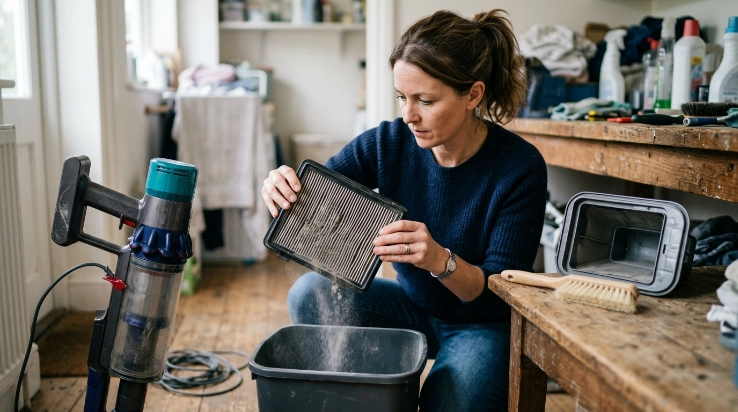
Clean a non-washable paper vacuum filter with gentle, dry methods. The goal is to remove loose surface dust without tearing, crushing, soaking, or deforming the filtration media.
1. Turn off and disconnect the vacuum
Unplug a corded vacuum before opening the filter compartment. Switch off a cordless model and remove its battery when the manual recommends doing so.
Never service a filter while the vacuum is running. Moving parts and electrical components should remain isolated during maintenance.
2. Remove the filter carefully
Open the filter housing according to your owner’s manual. Hold the filter by its frame or reinforced edges rather than pulling on delicate pleats.
I like to note which direction the filter faces before removing it. A quick phone photo can make correct reinstallation much easier.
3. Take the filter outdoors when practical
Paper filters can release a surprising cloud of fine dust when tapped. Cleaning over an outdoor trash can keeps more of that debris outside your living space.
If outdoor cleaning isn’t practical, place the filter deep inside a large trash bag before tapping it. Move slowly so you don’t send dust back into the room.
4. Gently tap away loose dirt
Hold the frame securely and tap it lightly against the inside wall of the trash container. Rotate the filter as needed so loose debris can fall from different sections.
- Use light taps, not hard blows.
- Never slam the filter against a wall or floor.
- Do not crush pleats to release dust.
- Stop if the filter begins cracking or shedding material.
5. Use a soft brush for remaining surface dust
A clean, soft-bristled brush can loosen debris sitting on the outer surface. Brush in the direction of the pleats rather than pushing across them.
Don’t force bristles deep between folds. That can puncture thin media or push contamination deeper into the filter.
6. Inspect the filter before reinstalling it
Hold the filter under good lighting and inspect its pleats, frame, edges, and seals. Cleaning isn’t worthwhile when the filtration material is physically damaged.
- Look for tears or holes.
- Check for crushed or separated pleats.
- Inspect rubber or foam seals.
- Watch for warping or cracking.
- Check for heavy dirt that remains embedded.
7. Reinstall it in the correct position
Return the filter to its original orientation and close the housing securely. Don’t force a filter that no longer fits correctly.
Run the vacuum briefly afterward and listen for unusual airflow sounds. Persistent weak suction may point to another clog or a filter that needs replacement.
Section Takeaway: The safest general method is disconnect, remove, tap gently, brush lightly, inspect, and reinstall. Avoid water unless the exact filter is documented as washable.
What Is the Best Way to Remove Stubborn Dust?
For stubborn dust, start with the least aggressive method possible. More force does not necessarily make a paper filter cleaner.
| Cleaning Method | Paper Filter | Main Risk | Best Practice |
|---|---|---|---|
| Gentle tapping | Usually suitable | Cracking from excessive force | Tap lightly over a trash container |
| Soft brushing | Often suitable | Tearing pleats | Brush only surface debris gently |
| Water rinsing | Usually avoid | Swelling, weakening, deformation | Use only when explicitly approved |
| Compressed air | Manufacturer-dependent | Damaged media or airborne dust | Use only when instructions permit it |
| Hard scrubbing | Avoid | Torn or distorted media | Replace heavily contaminated filters instead |
One lesson I’ve learned from maintaining dusty vacuum filters is that “clean-looking” isn’t the goal. Preserving the filter’s shape and integrity matters more than removing every speck of discoloration.
If light tapping and brushing leave the filter heavily packed, replacement may be the sensible option. A consumable filter isn’t meant to last forever.
Can You Wash a Paper Vacuum Filter?
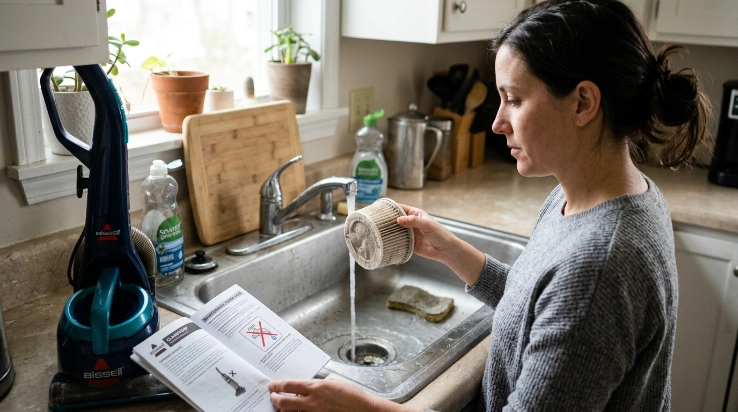
Usually, you should not wash a paper vacuum filter. Water can soften fibers, distort pleats, damage adhesives, or change how the filter fits and seals.
The exception is a filter whose manufacturer clearly identifies it as washable or rinseable. In that case, follow the instructions for that exact part number.
Why water can damage paper filter media
Dry filter media depends on stable pore structure and intact pleats. Soaking material that wasn’t designed for water can alter that structure.
A filter may look normal after drying yet still be warped or weakened. That’s why appearance alone isn’t a reliable test.
What about a washable HEPA filter?
Some HEPA filters are washable and others aren’t. The HEPA designation describes filtration performance, not cleaning instructions.
Check the manual before rinsing any pleated HEPA filter. If the documentation does not clearly permit water, keep it dry.
What if you accidentally got the filter wet?
Don’t immediately put a wet paper filter back into the vacuum. Check your manufacturer’s instructions before deciding whether it can be dried and reused.
If a non-washable paper filter becomes soaked, distorted, separated, or soft, replacement is usually the safer choice. Never run the vacuum with required filtration removed just to avoid waiting for a replacement.
Section Takeaway: Never use “it looks washable” as your test. Water is safe only when the manufacturer explicitly approves washing that exact filter.
Should You Clean or Replace a Dirty Paper Filter?
Clean a paper filter when it is structurally sound and has removable surface dust. Replace it when dirt is deeply embedded, the media is deteriorating, or cleaning no longer restores normal condition.
As of 2026, there is still no universal replacement interval for every vacuum. Usage, filter design, household conditions, and manufacturer recommendations all affect timing.
Signs cleaning may be enough
- Loose surface dust: Most debris falls away with gentle tapping.
- Intact pleats: The filter retains its original shape.
- Good seals: Rubber, foam, or plastic sealing surfaces remain undamaged.
- Normal airflow: Suction returns after routine maintenance and clog checks.
Signs you should replace the filter
- Torn material: Holes or splits can let particles bypass the media.
- Crushed pleats: Permanent deformation can affect airflow and filtration.
- Heavy clogging: Dust remains embedded after approved dry cleaning.
- Damaged seals: Air may travel around rather than through the filter.
- Persistent odor: Unpleasant smells remain despite normal vacuum maintenance.
- Scheduled replacement: The manufacturer says the filter has reached its service interval.
Don’t focus only on the filter if suction remains poor. A full bag, packed dust bin, blocked hose, clogged floorhead, or tangled brush roll can create similar symptoms.
Filter maintenance is one part of whole-machine care. Regular attention can help the vacuum move air as its design intended.
Section Takeaway: Clean an intact filter with removable dust, but don’t keep trying to rescue damaged or permanently clogged media. Replacement is often cheaper than risking poor filtration or airflow.
What Mistakes Should You Avoid When Cleaning a Paper Filter?
The biggest mistake is treating every vacuum filter the same. Foam, felt, paper, synthetic pleated, cartridge, pre-motor, and exhaust filters can all have different instructions.
- Don’t rinse automatically: Paper and paper-like filters often need dry cleaning only.
- Don’t use detergent: Soap is unnecessary unless the manufacturer specifically requires or permits it.
- Don’t scrub aggressively: Hard brushing can tear delicate filter media.
- Don’t crush the pleats: Bent folds may not return to their original shape.
- Don’t use high-pressure air casually: Follow manufacturer directions if compressed-air cleaning is mentioned.
- Don’t reinstall damaged filters: A clean tear is still a tear.
- Don’t run without required filtration: Wait for the proper replacement filter.
What if household dust bothers your allergies?
Cleaning a dirty filter can release trapped dust into the air. If you’re sensitive to airborne dust, handle the filter outdoors when practical and avoid shaking it aggressively indoors.
The Asthma and Allergy Foundation of America offers indoor-allergen control guidance, including recommendations related to vacuuming and household dust.
The National Institute of Environmental Health Sciences also discusses dust-mite reduction and the role of vacuum filtration within broader household allergen control.
What if the filter smells musty or looks moldy?
Don’t try to aggressively scrub or chemically treat contaminated paper media. Check the manufacturer’s replacement instructions and inspect the vacuum for the moisture source.
Expert Alert: If extensive mold contamination has spread inside inaccessible vacuum components or follows significant household water damage, consider professional remediation rather than dismantling electrical or motor components yourself.
Section Takeaway: Gentle handling protects both the filter and your indoor environment. Treat unfamiliar, wet, damaged, or contaminated filters conservatively rather than experimenting with aggressive cleaning.
Frequently Asked Questions
Can I rinse a paper vacuum filter with water?
Usually not. Keep a paper vacuum filter dry unless the manufacturer specifically labels that exact filter washable or rinseable. Water can weaken fibers, deform pleats, affect adhesives, or alter the filter’s fit.
Can I clean a paper vacuum filter with a brush?
Yes, a clean soft-bristled brush can help remove loose surface debris when the manufacturer’s instructions allow dry cleaning. Brush gently along the pleats and avoid forcing bristles into the filtration material.
Can I use compressed air on a vacuum filter?
Only when the filter manufacturer permits it and provides instructions. Strong air pressure may damage delicate pleats, spread fine dust, or force particles deeper into some filter materials.
How often should I clean a paper vacuum filter?
Follow the schedule in your vacuum’s manual because there is no universal interval. Inspect the filter more often when you vacuum frequently, have pets, collect fine dust, or notice reduced airflow.
How do I know when my paper filter needs replacing?
Replace it when you see tears, holes, crushed pleats, damaged seals, severe clogging, permanent deformation, or deterioration. Replacement is also appropriate when the manufacturer-specified service interval has been reached.
Is a paper HEPA filter washable?
Not automatically. HEPA describes filtration performance and does not mean a filter tolerates water. Wash a HEPA vacuum filter only when its manufacturer explicitly identifies it as washable.
Why does my vacuum still have low suction after cleaning the filter?
The filter may be permanently clogged, or another part of the airflow path may be blocked. Check the bag or bin, hose, wand, floorhead, brush roll, and other filters before assuming the motor is the problem.
The bottom line: clean a paper vacuum filter gently and dry unless its manufacturer clearly says otherwise. When the filter is torn, deformed, deeply clogged, or uncertain after getting wet, replacement is usually the safer choice.
Before your next cleaning session, check your vacuum’s model number and filter instructions. That one-minute check can prevent an unnecessary filter replacement or an expensive maintenance mistake.
