
What Happens If You Install a Wet Filter?

Quick Answer
If you install a washable vacuum filter while it is still wet, airflow can become restricted, damp dust can stick to the filter, and moisture may reach areas that were designed to stay dry. Some manufacturers warn that reinstalling a wet filter may even damage the motor, which is why vacuum filter-care instructions commonly require complete air-drying before reinstallation.
What can happen with a damp filter?
- Reduced airflow: Moist filter media may restrict the normal movement of air through the vacuum.
- Dust buildup: Dry dirt can stick to damp media and create a thick layer more quickly.
- Musty odors: Trapped moisture and dirty debris can create unpleasant smells if they remain damp.
- Possible motor risk: Some vacuum manufacturers specifically warn that moisture in a reinstalled filter can damage the motor.
- Filter damage: A non-washable filter that becomes soaked may lose its intended structure or require replacement.
Safest next step
- Switch the vacuum off, remove the damp filter, and let an approved washable filter air-dry completely before using the machine again.
If you’ve just washed a vacuum cleaner filter and put it back too early, don’t panic. This is a common home-hygiene maintenance mistake, especially with foam, pre-motor, and washable HEPA-style filters.
The important question is what kind of filter you installed. A filter that is accidentally still damp is different from a purpose-built wet filter used in some wet/dry vacuums.
In This Guide
What Does a Wet Filter Mean?
In this guide, a wet filter means a vacuum filter that still contains moisture when it is installed. This usually happens after someone washes a reusable filter and doesn’t allow enough drying time.
That definition matters because the phrase can mean something else in a wet/dry vacuum.
Damp washable filter vs. purpose-built wet filter
A washable household vacuum filter is designed to be rinsed only when the manufacturer approves it. It normally needs to be completely dry before going back into the vacuum.
A purpose-built wet filter is different. Some wet/dry vacuums use washable foam filters specifically designed for liquid pickup.
- Damp household filter: A normally dry filter that was reinstalled before drying completely.
- Wet-application filter: A filter specifically designed for liquid or waterborne debris.
- Non-washable filter: Filter media that should not be soaked or rinsed unless the manufacturer says otherwise.
- Washable HEPA filter: A HEPA filter that its manufacturer specifically approves for water cleaning.
HEPA means high-efficiency particulate air. The U.S. Environmental Protection Agency’s HEPA guidance explains the filtration term, but a HEPA label alone does not tell you whether a filter can be washed.
Always check the filter label or owner’s manual before adding water.
What Happens If You Put a Wet Filter in a Vacuum?
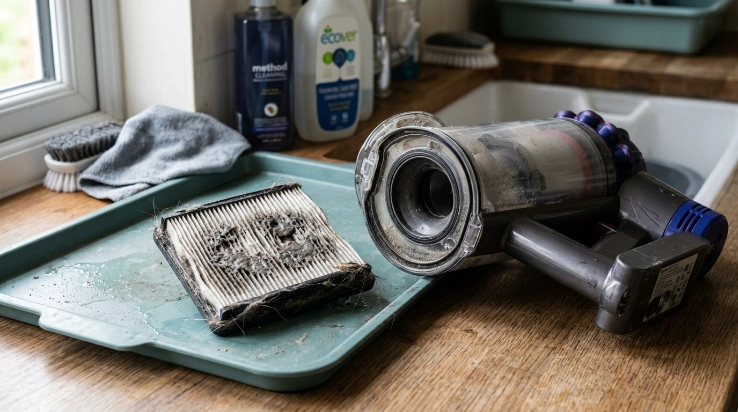
A wet or damp filter can interfere with normal filtration and airflow. The exact result depends on the vacuum, filter construction, and how much moisture remains.
Several problems can appear at the same time.
Airflow may drop
Vacuum cleaners depend on air moving through the intake, dirt collection system, filters, motor area, and exhaust. A damp filter can create extra resistance to that airflow.
You may notice weaker suction, unusual pulsing, or a change in the sound of the machine.
Dust can stick to the damp filter
A slightly wet filter can behave like a sticky surface when you start collecting dry household dust. Fine particles, pet hair, lint, and debris may cling instead of releasing easily.
- Fine dust can form a paste-like coating.
- Pleats may become packed with damp debris.
- Foam filters may hold dirty moisture deeper inside.
- Airflow can fall further as buildup increases.
This is one reason I never judge a washed filter by the outside surface alone. Thick foam can feel dry on the edges while the center still feels cool or damp.
You may notice a musty smell
Moisture combined with household debris can create an environment where unpleasant odors develop. The risk increases if the filter stays damp inside an assembled vacuum for a long period.
The CDC’s mold guidance explains that mold grows where moisture is present, which is another reason household cleaning equipment should not remain unnecessarily damp.
| Filter condition | Typical concern | Safest action |
|---|---|---|
| Washable filter, completely dry | Normal use when installed correctly | Reinstall according to the manual |
| Washable filter, still damp | Restricted airflow, dirt sticking, possible appliance damage | Remove and air-dry completely |
| Non-washable filter that became wet | Filter media may be damaged | Check replacement instructions |
| Approved wet/dry vacuum foam filter | Designed for wet pickup on compatible models | Follow the wet-pickup setup exactly |
Can a Wet Vacuum Filter Damage the Motor?
Yes, it can on some vacuum designs. Dyson’s current filter-care instructions specifically state that its supported washable filters must be completely dry before reinstallation because moisture could damage the motor.
This does not mean every damp filter automatically destroys a vacuum. It means manufacturers take the risk seriously enough to require complete drying.
Why the filter location matters
Many vacuums use a pre-motor filter to help keep dust away from the motor. If that filter holds water, moisture is sitting close to an area designed around moving air and electrical components.
A post-motor or exhaust filter has a different position, but it still needs the care method specified for that model.
- Pre-motor filter: Protects the motor area from dirt in many vacuum designs.
- Post-motor filter: Filters air after it has passed through the motor area.
- Foam filter: May be washable, depending on the exact vacuum.
- Pleated filter: May be washable or non-washable depending on its construction.
Bissell’s support instructions for several washable vacuum filters specify complete air-drying before reinstallation. Some current models list a drying period of 24 to 48 hours.
You can review the manufacturer’s Bissell support resources for model-specific instructions rather than applying one drying rule to every machine.
Expert Alert: If water entered the motor housing, battery compartment, electrical contacts, switch area, or power connection, stop using the vacuum. Do not open or repair electrical components unless you are qualified to do so; contact the manufacturer or a qualified appliance technician.
What Should You Do After Installing a Wet Filter?
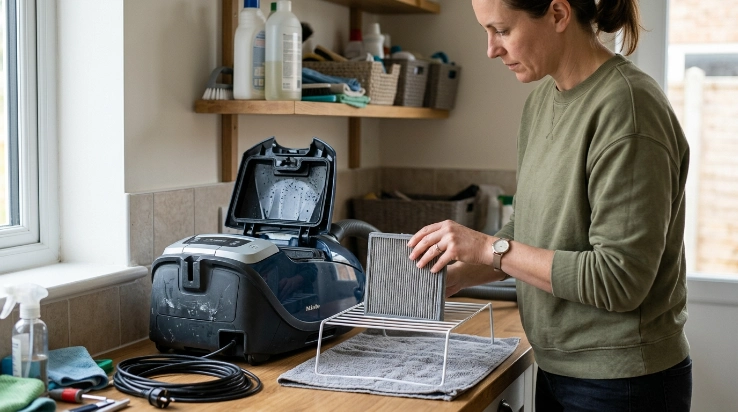
If you realize the filter was still wet, switch the vacuum off. Disconnect a corded model from power, or follow the battery-removal instructions for your cordless model.
Then deal with the filter before continuing your cleaning job.
- Remove the filter. Take it out according to the manufacturer’s instructions.
- Check how wet it is. Look for visible water and feel thicker areas for hidden moisture.
- Inspect the vacuum. Look for moisture where the filter sits, without opening sealed electrical components.
- Dry accessible surfaces. Wipe only areas the manual allows you to access and clean.
- Let the filter air-dry. Place an approved washable filter in a ventilated area.
- Inspect for damage. Replace filters that are torn, distorted, deteriorated, or no longer seal correctly.
- Reinstall only when dry. Follow the manual’s orientation and locking method.
What if you only ran the vacuum for a few seconds?
Turn it off once you notice the mistake and let the filter dry properly. A brief run does not prove damage occurred, but there is no benefit in continuing to operate the machine with a damp filter.
After the filter is completely dry, watch for unusual behavior when you restart the vacuum.
- Unexpected shutdowns
- Unusual electrical or burning smells
- Persistent pulsing
- Abnormally weak suction
- Error lights or filter warnings
- Sounds that were not present before
If those symptoms persist after correct filter installation and basic maintenance, use the manufacturer’s troubleshooting process.
How Long Should a Vacuum Filter Dry?
There is no universal drying time for every vacuum filter. Your manufacturer’s stated drying period is the correct one for your specific model.
As of 2026, Dyson tells users to leave supported washable vacuum filters drying for at least 24 hours and to confirm that they are completely dry before reinstalling them.
Some Bissell support instructions specify 24 to 48 hours for particular washable filters. Humidity, filter thickness, airflow, and the amount of water trapped in the material can affect actual drying time.
How can you tell whether the filter is dry?
Don’t rely on the clock alone. Check the whole filter before putting it back.
- Touch the center: Thick foam may stay damp internally after the surface dries.
- Check the pleats: Inspect folds, seams, and recessed areas.
- Smell the filter: A persistent damp or musty odor can mean moisture remains.
- Use airflow: Dry the filter in an open, ventilated location.
- Wait longer if unsure: Extra air-drying is safer than reinstalling too early.
Avoid ovens, clothes dryers, direct flames, or intense heat unless the manufacturer specifically approves that method. Excess heat can deform foam, plastic frames, seals, or filter media.
My own routine is simple: I wash filters when I know I won’t need the vacuum immediately. That removes the temptation to reinstall one because it feels “mostly dry.”
Are Wet/Dry Vacuum Wet Filters Different?
Yes. A manufacturer-approved wet-application filter is specifically designed for wet cleanup, so it should not be confused with an ordinary vacuum filter that happens to be damp.
This distinction is especially important with shop vacuums and wet/dry vacs.
Purpose-built foam filters
Shop-Vac states that a foam sleeve is its preferred filter option for wet pickup on compatible models. The foam helps stop debris suspended in the water from traveling farther into the vacuum.
You can check the company’s wet-pickup filter guidance before configuring a compatible Shop-Vac.
RIDGID also sells washable foam wet-application filters designed for waterborne debris on compatible wet/dry vacuums. Its instructions say the filter should completely dry before storage or later reuse.
The company’s wet filter cleaning guidance also warns against using excessive water pressure while rinsing the filter material.
Never copy another vacuum’s setup blindly
Wet/dry vacuum filtration varies by model. One machine may use a foam sleeve, while another may allow a particular cartridge filter or require a different setup.
- Confirm the vacuum is rated for liquid pickup.
- Remove dry-only collection bags when required.
- Install the exact filter configuration specified for wet pickup.
- Keep plugs, outlets, batteries, and electrical connections dry.
- Clean and dry washable components after the job.
Section Takeaway: A true wet-application filter is designed for wet pickup. A household vacuum filter that is accidentally still damp is a different situation and should normally be dried before use.
Frequently Asked Questions
Can I use my vacuum if the filter is slightly damp?
It’s safest to wait until the washable filter is completely dry. Even slight moisture can make dry dust stick to the filter, restrict airflow, and conflict with manufacturer instructions that require complete drying.
Will one use with a wet filter ruin my vacuum?
Not necessarily. Turn the vacuum off, remove the damp filter, dry it completely, and inspect accessible areas for moisture before trying again.
If the machine develops unusual smells, shutdowns, noises, or persistent errors, contact the manufacturer or a qualified repair professional.
Can I dry a vacuum filter with a hair dryer?
Avoid forced high heat unless your vacuum manufacturer specifically allows it. Air-drying in a well-ventilated location is the safer general method because excessive heat can damage foam, seals, plastic supports, or delicate filter media.
What happens if a non-washable filter gets wet?
Check the manufacturer’s instructions before reusing it. Water can damage some paper, pleated, bonded, or specialized filter media, so a non-washable filter may need replacement rather than drying and reinstalling.
Can a wet filter cause mold?
Moisture can support mold growth when suitable material and enough time are present. The EPA and CDC both emphasize moisture control as an important part of preventing indoor mold problems, so filters and vacuum components should not remain unnecessarily damp.
Is every HEPA vacuum filter washable?
No. HEPA describes filtration performance, not washability.
Only wash a HEPA vacuum filter when the manufacturer specifically identifies that exact filter as washable or rinseable.
Can I vacuum water with my regular household vacuum?
Do not collect standing water with an ordinary dry household vacuum unless its manufacturer specifically rates it for liquid pickup. Use a correctly configured wet/dry vacuum for liquid cleanup and keep electrical connections away from water.
The Bottom Line
If you install a wet filter in a normal household vacuum, the safest move is to stop using the machine and let the filter dry completely. Continuing to vacuum can restrict airflow, make dirt stick to the filter, create odors, and potentially expose moisture-sensitive parts to water.
The exception is a manufacturer-approved wet-application filter used in a compatible wet/dry vacuum. In every case, the owner’s manual should decide whether a filter can be washed, how it should dry, and whether it is suitable for wet or dry pickup.
For good home hygiene, I use one simple rule: if a normally dry filter still feels damp, it isn’t ready to go back into the vacuum.
