
How Do You Remove Odors From a Vacuum?

Quick Answer
To remove odors from a vacuum, unplug it, empty the bag or dust bin, remove trapped debris, clean permitted washable parts, and service the filters according to the manufacturer’s instructions. Let everything dry completely before reassembly. The EPA’s home filtration guidance also explains why particle filtration and odor-removing media perform different jobs.
Quick odor-removal steps
- Disconnect power: Unplug the vacuum or remove its battery when the design allows.
- Empty the debris: Replace a dirty bag or empty the dust bin, preferably outdoors.
- Find trapped dirt: Inspect the brush roll, hose, floor head, and attachments.
- Check filters: Wash only filters specifically identified as washable.
- Dry completely: Never reinstall damp filters, bins, hoses, or attachments.
- Check the smell: Stop using the vacuum if you detect burning plastic, wiring, or hot rubber.
One thing I avoid
- Don’t pour fragrance, essential oils, baking soda, or deodorizing powder into the motor or filter housing unless the manufacturer permits it.
A smelly vacuum cleaner usually has a source problem, not a fragrance problem. Old dust, pet hair, food crumbs, moisture, and dirty filters can all make the exhaust smell unpleasant.
When I troubleshoot vacuum odor, I work through the airflow path instead of trying to cover the smell. That method makes it much easier to find what needs cleaning or replacement.
In This Guide
Why Does My Vacuum Cleaner Smell Bad?
A vacuum usually smells because debris, moisture, or overheating is affecting part of its airflow system. Common trouble spots include the dust container, bag, filters, hose, brush roll, and floor head.
Definition: A vacuum cleaner odor is an unwanted smell coming from collected debris, moisture, contaminated filtration, overheated components, or material trapped in the vacuum’s airflow path.
Pet hair and dander
Pet hair can hold skin oils, dust, moisture, and other household debris. That mixture may develop a stale or animal-like smell after sitting inside a warm vacuum.
In homes with pets, I usually inspect the roller ends early. Hair can wrap tightly around those areas while looking almost clean from above.
- Brush roll: Look beneath and around wrapped hair.
- Floor head: Check corners and narrow air channels.
- Dust bin: Remove hair clumps stuck above the fill line.
- Hose: Look for fur mixed with crumbs or damp dirt.
Old dust and food debris
Household dust contains more than dry dirt. A vacuum may collect fibers, crumbs, pet debris, pollen, hair, and fine particles from several rooms.
- Sour smell: Look for food crumbs or damp organic material.
- Stale smell: Inspect the bag, bin, and filters.
- Pet smell: Check hair in the roller, hose, and collection area.
- Musty smell: Look for moisture or parts stored before drying.
Moisture inside the vacuum
A standard dry vacuum should not collect liquids unless its manufacturer specifically permits wet pickup. Moist dirt can stick inside filters, hoses, bins, and hidden passages.
A musty smell also deserves attention because mold grows where moisture is available. The CDC’s mold guidance recommends addressing both visible mold and the moisture problem behind it.
Dirty filters
A dirty filter can hold dust, pet debris, and odors directly in the exhaust path. Filter care varies widely between vacuum models.
HEPA means high-efficiency particulate air filtration. It describes particle filtration, while activated carbon media may be included in some appliances to adsorb certain gases and odors.
Section Takeaway: Vacuum odor usually points to something that needs removal, cleaning, drying, replacement, or repair. Find the source before reaching for a deodorizer.
How Do You Remove Odors From a Vacuum Cleaner?
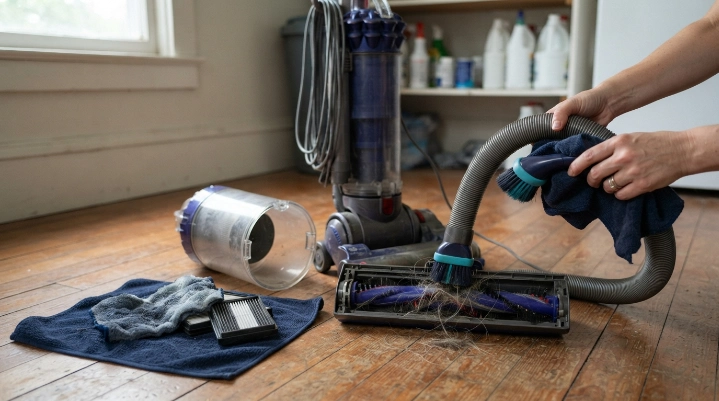
The most reliable method is to clean the vacuum from the collection chamber through its removable airflow components. Disconnect electrical power before opening covers or touching a powered brush.
1. Empty the bag or dust bin
For a bagless vacuum, take the bin outdoors when practical. Empty it directly into a trash container and avoid shaking dust around unnecessarily.
Replace a smelly disposable bag rather than trying to wash or perfume it. Also inspect the bag compartment for loose debris.
2. Clean the dust bin if it is washable
Check the manual before putting any vacuum part in water. Remove the bin completely from powered components before washing it.
- Remove all loose debris.
- Separate the washable container from electrical parts.
- Wash it only by the approved method.
- Rinse away residue when permitted.
- Leave it open to air-dry completely.
- Reinstall it only when no moisture remains.
Never immerse the motor housing, powered floor head, battery, charging contacts, or electrical connectors. Vacuum designs from Dyson, Shark, and other manufacturers can differ substantially.
3. Remove hair and debris from the brush roll
Turn the disconnected vacuum over and inspect the roller carefully. Cut away hair or thread without damaging the belt, bristles, wiring, or roller.
- Check both ends: Hair often packs around roller end caps.
- Inspect behind it: Crumbs can become trapped inside the floor head.
- Clear the intake: Remove visible debris from the air channel.
- Watch the belt: Cracks, melting, or hot-rubber odor need attention.
4. Check the hose and attachments
Disconnect removable tools and shine a flashlight through accessible hose sections. A small piece of damp food can create a surprisingly persistent smell.
Use a soft, non-sharp tool only when your vacuum instructions allow it. A screwdriver or other sharp object can puncture a flexible hose.
5. Service the filters correctly
Never assume a dirty filter can be rinsed. Some foam filters are washable, while other pre-motor, exhaust, or HEPA filters must stay dry.
If the filter is washable, clean it exactly as directed and give it enough time to dry completely. Replacing a disposable filter is safer than experimenting with water.
The National Institute of Environmental Health Sciences also recommends HEPA filtration or double-layer microfilter bags as part of household dust-mite control.
6. Reassemble and test
Check every cleaned component for remaining moisture. Then reinstall the filters, bin, hose, floor head, and attachments correctly.
Run the vacuum briefly on a clean, dry surface. A normal dusty or pet odor should disappear once its source has been removed.
Section Takeaway: Emptying the bin may not be enough. A complete odor cleanup checks the filters, hose, brush roll, attachments, collection chamber, and every manufacturer-approved washable part.
Which Vacuum Parts Should You Clean or Replace?
Each vacuum component needs different treatment. Washing the wrong filter or powered part can damage the machine and create a new odor problem.
| Part | Common odor source | Best response | Wash with water? |
|---|---|---|---|
| Disposable bag | Old dust, food, pet debris | Replace | No |
| Bagless bin | Residue on walls and seals | Empty and clean as directed | Only when approved |
| Pre-filter | Loaded dust or moisture | Clean or replace by manual | Only if washable |
| HEPA/exhaust filter | Fine debris and stale odor | Maintain or replace as specified | Only if explicitly washable |
| Brush roll | Hair, fibers, pet debris | Remove wrapped material | Depends on design |
| Activated carbon media | Spent odor-adsorbing material | Replace as instructed | Usually no unless specified |
The EPA distinguishes particle filters from media designed for gases and odors. That is why a HEPA label alone does not mean a vacuum filter is designed to remove smells.
For a 2026 cleaning routine, I use one rule above every shortcut: the manufacturer decides what gets wet. Filter appearance alone cannot tell you whether washing is safe.
What Does Each Vacuum Smell Mean?
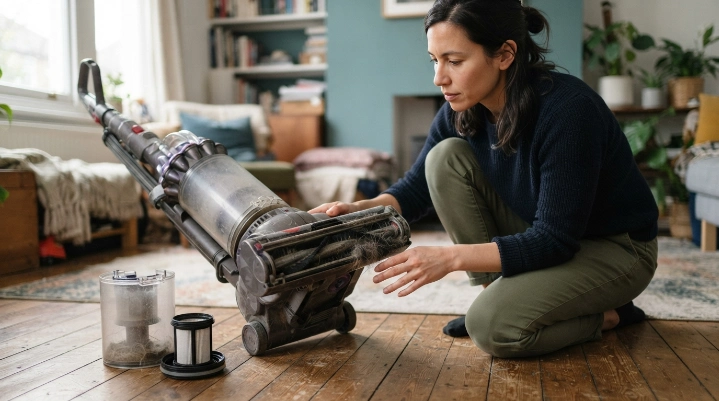
The character of the odor can narrow your search quickly. A dusty smell needs a different response from electrical or burning-rubber odor.
| Smell | Likely areas to check | First action |
|---|---|---|
| Dusty or stale | Bag, bin, filters | Empty debris and inspect filtration |
| Pet-like | Brush roll, bin, hose | Remove hair and trapped debris |
| Sour | Hose, bin, floor head | Find food or damp organic material |
| Musty | Filter, hose, bin | Stop and investigate moisture |
| Burning rubber | Belt, roller, floor head | Disconnect power immediately |
| Electrical or melting plastic | Motor or electrical system | Stop using the vacuum |
Don’t treat every smell as dirty dust. A stalled roller, damaged belt, overheating motor, or electrical fault needs inspection instead of deodorizing.
Musty odor is different again. If moisture keeps returning, cleaning the vacuum alone will not correct a leak, flood, or other household moisture source.
How Can You Keep a Vacuum From Smelling?
Preventing vacuum odor is easier than removing an established smell. The goal is to keep wet or organic debris from sitting inside the machine.
Empty collected debris before it becomes stale
Check the bag or dust bin during routine cleaning. Pet-heavy homes and kitchens may load a vacuum with odor-producing material faster than low-traffic rooms.
- Check the fill level: Don’t pack debris beyond the manufacturer’s limit.
- Remove food quickly: Crumbs can create sour smells when left inside.
- Inspect after pet cleaning: Hair and dander can lodge around roller ends.
- Avoid damp pickup: Use a dry vacuum only for material it is designed to collect.
Keep filters on the correct maintenance schedule
Check filters often enough to catch visible buildup before airflow suffers. Use the replacement or washing interval specified for your exact model.
Never reinstall a washed filter because it merely feels dry on the surface. Moisture can remain deeper in thick foam or pleated material.
Be careful with fragrance, powders, and essential oils
I prefer source removal over scenting the exhaust. Fragrance does not remove trapped hair, damp dust, or an overheated belt.
Some household fragrances and cleaning products can release volatile organic compounds, or VOCs. The EPA’s VOC guidance recommends following product directions and using household chemicals with appropriate ventilation.
- Essential oils: Keep them out of motors, filters, batteries, and unapproved plastic surfaces.
- Baking soda: Don’t intentionally vacuum fine powder unless your manufacturer permits it.
- Deodorizing beads: Use only products specifically approved for your vacuum.
- Vinegar: Use it only on compatible removable surfaces when the appliance instructions allow it.
Section Takeaway: A fresh-smelling vacuum comes from clean, dry airflow components. Routine debris removal works better than masking odor with fragrance.
When Should You Stop Using a Smelly Vacuum?
Stop using the vacuum immediately when the smell suggests excessive heat, burning insulation, melting plastic, or a damaged belt. Ordinary dust odor should not smell electrical.
- Smoke or sparks: Disconnect power and do not restart the machine.
- Electrical smell: Stop using the vacuum until it is inspected.
- Hot-rubber smell: Check for a jammed roller or belt problem.
- Damaged cord: Keep the vacuum unplugged.
- Repeated overheating: Check accessible clogs and arrange service if the problem continues.
Expert Alert: Don’t open a mains-wiring compartment, motor, battery pack, or other electrical assembly unless you are qualified to repair appliances. Use the manufacturer’s service network or a qualified appliance technician.
A strong musty odor also deserves caution after flood cleanup or significant mold contamination. A normal household vacuum should not replace proper remediation equipment or moisture repair.
Expert Alert: If mold covers a significant area, follows major water damage, or repeatedly returns, deal with the moisture source and consider qualified remediation rather than relying on vacuum cleaning alone.
Frequently Asked Questions
Why does my vacuum smell even after I empty it?
The odor may remain in the filters, hose, brush roll, floor head, or residue on the dust-bin walls. Inspect the complete airflow path and clean only components your manufacturer identifies as washable.
How do I get a dog smell out of my vacuum?
Empty the debris, remove wrapped pet hair from the roller, inspect the hose, and check the filters. Pet hair can hold skin oils, dust, and moisture, so removing the trapped material usually matters more than adding fragrance.
Can I put baking soda in my vacuum to make it smell better?
I would not deliberately vacuum baking soda unless the manufacturer says the machine can handle fine powder. Fine particles can load filters quickly and may enter areas that were not designed for deodorizing products.
Can I wash my vacuum HEPA filter?
Only wash a HEPA filter when the manufacturer specifically labels that filter washable. HEPA describes filtration performance, not water resistance, so some HEPA filters can be rinsed while others require dry maintenance or replacement.
Why does my vacuum smell musty?
A musty smell can indicate damp dust, a wet filter, moisture inside the hose, or contaminated debris. Stop using the vacuum until you find the moisture source and fully dry all approved washable components.
Why does my vacuum smell like burning rubber?
A burning-rubber odor can point to a jammed brush roll, slipping belt, or another overheated moving part. Disconnect the vacuum immediately and inspect accessible components according to the manual before using it again.
Will a HEPA filter remove vacuum odors?
A HEPA filter primarily captures particles. Odor and gas control requires different media in many designs, such as activated carbon, so check the specifications for your exact vacuum rather than assuming HEPA filtration removes smells.
Final takeaway: The best way to remove odors from a vacuum is to remove whatever is producing them. Empty the debris, clean approved parts, inspect the entire airflow path, service filters correctly, and let washable components dry completely.
Once the smell is gone, small maintenance sessions can prevent it from returning. If you smell burning, electrical insulation, or melting plastic, stop using the vacuum and address the safety problem first.
“`
