Why Does My Vacuum Smell Bad?

Quick Answer
Your vacuum usually smells bad because dirt, pet hair, food crumbs, moisture, or a dirty filter is trapped inside its airflow path. A burning or electrical smell is more serious and means you should stop using the machine until you find the cause. For musty odors, remember that EPA mold guidance emphasizes moisture control, so damp vacuum parts should be cleaned and dried completely.
Common vacuum smells and causes
- Dusty or stale: Check an old bag, packed dust bin, clogged filter, or dirty hose.
- Pet-like: Look for hair and dander around the brush roll, bin, hose, and attachments.
- Sour or rotten: Search for food crumbs, damp debris, or other organic material.
- Musty: Inspect filters, bins, hoses, and stored parts for moisture.
- Burning rubber: Unplug the vacuum and inspect the brush roll, belt, and floor head.
- Electrical or hot plastic: Stop using the machine and have the fault checked before restarting it.
Fastest way to confirm the source
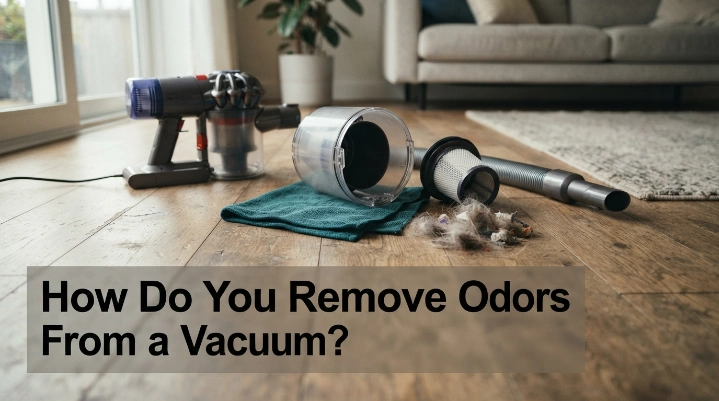
- Unplug the vacuum, empty it, inspect each removable component, and identify whether the odor comes from debris, moisture, or the powered section.
A bad-smelling vacuum can turn a normal home hygiene routine into something unpleasant fast. The good news is that most ordinary vacuum odors come from debris or maintenance problems you can find without taking the motor apart.
I prefer diagnosing the smell before reaching for any deodorizer. Once you know whether you’re dealing with stale dust, dampness, pet debris, or overheating, the correct fix becomes much clearer.
In This Guide
Why Does My Vacuum Smell Bad?
A vacuum smells bad when material inside the machine produces an odor that gets carried through its airflow and exhaust. The source is usually somewhere between the floor head and the exhaust outlet.
Definition: Vacuum cleaner odor is an unwanted smell caused by debris, moisture, contaminated components, or overheated parts inside the vacuum’s collection or airflow system.
Old dirt and dust
A vacuum collects more than visible dirt. Its bag or bin may contain skin flakes, textile fibers, pollen, crumbs, hair, fine dust, and material carried indoors on shoes.
Leaving that mixture inside the machine can create a stale smell. The odor often becomes strongest when airflow starts moving through the debris again.
Pet hair and dander
Pet households can develop a recognizable animal-like vacuum odor. Hair can hold oils, dust, moisture, and other debris while wrapping tightly around the brush roll.
- Brush roll: Check around the roller and its end caps.
- Dust bin: Remove compacted hair stuck near cyclones or screens.
- Hose: Look for clumps lodged at bends or connections.
- Attachments: Inspect pet tools and upholstery brushes closely.
For homes concerned about allergens, the National Institute of Environmental Health Sciences recommends a double-layer microfilter bag or HEPA filter when vacuuming for dust-mite control.
Damp dirt or a wet filter
Moisture changes the diagnosis. A filter washed and reinstalled before it dries can produce a musty smell and introduce unwanted moisture into the vacuum.
Damp debris accidentally collected from a floor can cause a similar problem. Bagged machines may require a new bag rather than an attempt to save contaminated material.
Section Takeaway: Most everyday vacuum smells begin with debris, pet material, or moisture somewhere in the dirt and airflow path.
What Does Each Vacuum Smell Mean?
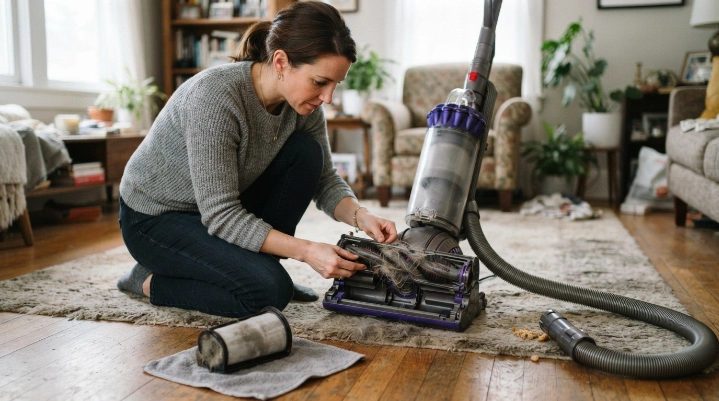
The odor itself gives you useful clues. A stale-dust smell deserves a different response from burning rubber or hot plastic.
| Smell | Likely Area to Check | First Action | Urgency |
|---|---|---|---|
| Dusty or stale | Bag, bin, filter | Empty and inspect | Routine |
| Pet-like | Brush roll, hose, bin | Remove trapped hair | Routine |
| Sour or rotten | Hose, bin, bag | Find organic debris | Prompt |
| Musty | Filter, bin, hose | Check for moisture | Prompt |
| Burning rubber | Belt, roller, floor head | Unplug immediately | High |
| Electrical or hot plastic | Motor or electrical system | Stop using | High |
What does a musty vacuum smell mean?
A musty odor suggests you should investigate moisture rather than cover the smell with fragrance. Check anything recently washed and any debris collected from a damp surface.
The CDC’s mold cleanup guidance treats moisture control and safe cleanup as important when mold is present in the home. Don’t assume every musty vacuum contains mold, but don’t ignore persistent dampness either.
Expert Alert: If you find substantial mold growth outside the vacuum, extensive water damage, or contamination beyond a small household cleanup, use qualified remediation help instead of spreading the material with your vacuum.
What does a burning smell mean?
A burning-rubber odor can occur when a brush roll cannot rotate freely or a belt is slipping. Hair, thread, carpet fibers, or another obstruction may be responsible.
An electrical, melting-plastic, or persistent motor smell deserves more caution. Turn the vacuum off, disconnect power, and don’t keep running it merely to see whether the smell disappears.
Section Takeaway: Ordinary dirt odors call for cleaning. Burning or electrical odors call for immediate shutdown and inspection.
How Do I Find Where the Smell Is Coming From?
Start at the dirty end of the machine and work toward the exhaust. This keeps troubleshooting simple and reduces the chance of opening components unnecessarily.
- Disconnect power. Unplug a corded vacuum or remove the battery if your model allows it.
- Smell-check the bag or bin. Dispose of old debris instead of trying to deodorize it.
- Inspect the brush roll. Remove hair, thread, and fibers that restrict movement.
- Check the floor head. Look for trapped food, pet debris, or foreign objects.
- Inspect the hose and wand. Pay attention to bends where damp material or clogs can lodge.
- Examine the filters. Check whether they are dirty, damaged, incorrectly fitted, or damp.
- Check the exhaust last. A hot smell that appears only while powered may indicate a mechanical or electrical problem.
Don’t confuse filtration with deodorizing
A HEPA filter is designed for particles, not as a universal odor remover. As of 2026, EPA guidance still distinguishes particle filtration from gas and odor control.
The EPA’s home air-cleaner guidance explains that filters designed for particles and filters designed for gases serve different purposes. The same principle helps explain why a clean-looking particle filter doesn’t automatically solve every smell.
Section Takeaway: Trace the complete airflow path before blaming the motor. Most removable odor sources can be found without dismantling powered components.
How Do I Get Rid of a Bad Vacuum Smell Safely?
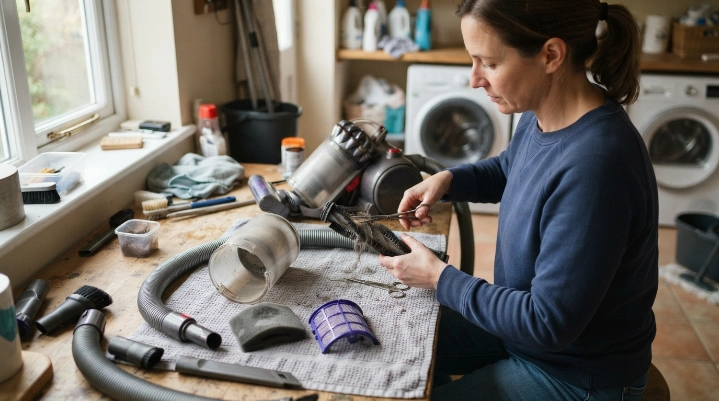
Remove the source rather than masking it. Cleaning the dirt path is more reliable than adding perfume to contaminated debris.
1. Empty the vacuum
Dispose of the contents of a bagless bin and replace a bag that smells stale, sour, or damp. Avoid shaking dusty material around your living space.
The Asthma and Allergy Foundation of America notes that vacuuming can help control allergens while poorly contained dust can return to the air. Sensitive households may prefer to empty dusty containers outdoors when practical.
2. Clean the brush roll and floor head
- Cut away wrapped hair without cutting the bristles.
- Remove string from the roller ends.
- Inspect air openings for packed debris.
- Check that the roller turns as its design intends.
A floor head that smells hot after only a short run deserves attention. Continued friction can make a rubbery odor worse.
3. Inspect the hose and attachments
A small food item lodged inside a hose can make the whole machine smell. Flexible hoses also hide debris around curves that you can’t see from either end.
Wash a hose or attachment only when your manufacturer permits it. Some powered tools contain wiring and should never be submerged.
4. Maintain the filters correctly
Never assume a vacuum filter is washable because it looks like foam or fabric. Check the manual for your exact model.
- Washable filter: Clean it using the manufacturer’s method and let it dry completely.
- Disposable filter: Replace it when required rather than washing it.
- Damaged filter: Replace torn, warped, or poorly fitting filtration components.
5. Let every washable component dry
This step matters most after a deep clean. Putting a damp filter or bin back inside an enclosed machine can bring the musty smell straight back.
Drying time varies with the component, airflow, humidity, and manufacturer instructions. Don’t use one universal number when your manual specifies something different.
Expert Alert: Do not open a motor housing, repair mains wiring, or work on damaged electrical components unless you are qualified to do so. Persistent electrical odors need professional service or replacement.
Section Takeaway: Empty, inspect, clean, and dry the vacuum in that order. Don’t use fragrance to hide a source that still remains inside the machine.
Why Does My Vacuum Still Smell After I Clean It?
If the odor returns immediately, you probably missed part of the airflow path or the smell is coming from a component you shouldn’t service yourself. Recheck what changed when the vacuum starts running.
A hidden clog is still inside
Debris can remain behind a hose cuff, under the floor-head cover, or near an intake transition. A visual inspection from only one end may miss it.
The filter was reinstalled damp
A filter can feel dry on its outer surface while holding moisture deeper inside. Follow the manufacturer’s required drying instructions before reassembly.
The bag or filter needs replacement
Some porous parts hold odors after cleaning. Disposable bags and non-washable filters should be replaced according to the manufacturer’s instructions.
The problem is outside the vacuum
A vacuum may pick up odor from a damp carpet, pet accident, fireplace debris, spoiled food, or another contaminated area. If the smell returns only after cleaning one location, investigate that surface.
EPA guidance says controlling moisture is central to preventing indoor mold growth. A recurring musty smell from carpet, upholstery, or building materials therefore deserves investigation beyond the vacuum itself.
Section Takeaway: When cleaning the vacuum doesn’t solve the odor, investigate missed airflow components and the surface being vacuumed before adding deodorizing products.
How Can I Prevent Vacuum Odors From Coming Back?
Prevention mainly comes down to keeping damp or decomposable debris from sitting inside the machine. Frequent small checks are easier than a major odor cleanup.
- Check the bin regularly: Don’t let collected debris sit indefinitely between cleaning sessions.
- Replace bags when needed: Follow the fill indicator and manufacturer’s instructions.
- Remove wrapped hair: Pet hair and long fibers can trap dirt around the brush roll.
- Inspect filters: Follow the exact cleaning or replacement schedule for your model.
- Avoid wet debris: Don’t use a dry vacuum on damp messes unless it is designed for them.
- Dry washed parts fully: Never rush reassembly after cleaning.
- Store it dry: Keep the vacuum away from damp basements, leaks, and wet utility areas.
- React to heat: Investigate unusual hot, rubbery, or electrical smells immediately.
Should I put baking soda or fragrance in my vacuum?
I don’t recommend putting powders, perfume, or essential oils into a vacuum’s motor area, filter housing, or airflow path unless the manufacturer specifically approves that use. Fine powders can behave differently across vacuum designs.
The safest deodorizing method is still source removal. Emptying old debris and cleaning approved components tackles the cause rather than covering it.
Section Takeaway: A clean, dry airflow path is the best odor prevention. Your vacuum’s manual should always override generic cleaning advice.
Vacuum Smell FAQ
Why does my vacuum smell like a dog?
Pet hair, dander, oils, and dirt can accumulate around the brush roll, bin, hose, and filters. Remove wrapped hair, empty the dirt container, inspect the hose, and maintain filters according to your vacuum’s instructions.
Why does my vacuum smell musty?
A musty smell often points to moisture somewhere in the machine or debris path. Check recently washed filters, the dust bin, hose, bag, and anything damp that you may have vacuumed.
Why does my vacuum smell like burning rubber?
Burning rubber can suggest excessive friction around a belt or brush roll. Unplug the vacuum, remove tangled hair or string, and inspect the floor head before using it again.
Why does my vacuum smell like it’s burning?
Stop using it if the odor resembles hot wiring, melting plastic, smoke, or an overheating motor. Disconnect power and have the machine professionally inspected if routine external checks don’t reveal a simple obstruction.
Can a dirty vacuum filter cause a bad smell?
Yes. A filter can trap dust, pet debris, and other material that contributes to stale odors. A damp filter can also produce a musty smell, so wash only approved filters and dry them completely.
Can I put air freshener in my vacuum?
Only use a fragrance or deodorizing product if your vacuum manufacturer specifically says it is compatible with that model. Don’t place liquids, essential oils, powders, or fragrance directly into electrical areas or filters without approval.
How do I know if the smell is coming from my vacuum or carpet?
Empty and clean the vacuum, then test it briefly on a clean, dry surface. If the odor appears mainly after vacuuming one carpet or room, investigate that flooring or area for moisture, pet contamination, or other odor sources.
Final Takeaway: Most bad vacuum smells are maintenance clues, not mysteries. Start with the bag or bin, follow the airflow through the brush roll, hose, and filters, and treat burning or electrical odors as a reason to stop using the machine.
If your vacuum smells fresh again, keep it that way with regular debris removal, dry storage, filter care, and quick attention to unusual odors. A few minutes of preventive maintenance can make every cleaning session much more pleasant.