Does Vacuum Maintenance Improve Suction?

Quick Answer
Yes, vacuum maintenance can improve suction when dirty filters, full bins, clogged hoses, or blocked air passages are restricting airflow. Regular maintenance also helps prevent performance loss; for example, Dyson’s filter-care guidance says particle buildup can reduce performance on its cordless vacuums.
Maintenance jobs that can improve performance
- Empty the bin: Keep debris below your vacuum’s stated maximum fill line.
- Maintain filters: Clean or replace filters exactly as the manufacturer specifies.
- Clear the hose: Remove blockages from hoses, wands, floorheads, and intake passages.
- Clean the brush: Remove wrapped hair so the roller can agitate flooring properly.
- Check for leaks: Cracked hoses and poorly seated seals can reduce effective airflow.
One important distinction
- A clean brush roll may improve dirt pickup even when the vacuum’s actual suction pressure has not changed.
Does vacuum maintenance improve suction? In many cases, yes, and the reason is simple: a vacuum cleaner needs an open airflow path to work properly.
I’ve also learned that “weak suction” does not always mean the motor is failing. In everyday home hygiene use, a packed filter or hidden clog is often worth checking first.
In This Guide
What Does Vacuum Maintenance Mean?
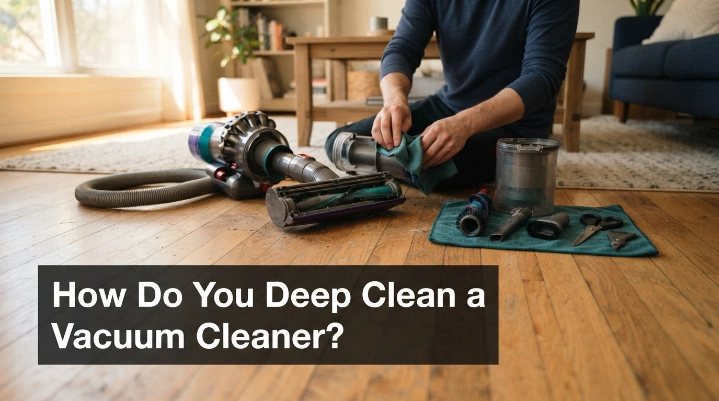
Vacuum maintenance means keeping the machine’s airflow path, filtration system, dirt container, floorhead, and moving parts in usable condition. It is preventive care rather than a major repair.
A vacuum maintenance routine is regular inspection and cleaning that removes restrictions before they noticeably reduce airflow or floor-cleaning performance.
Air enters through the floorhead or attachment. It then travels through passages such as a wand or hose before reaching the dirt-separation and filtration system.
Anything that restricts this path can affect performance. That includes compacted debris, excessive filter loading, or an object lodged inside a narrow bend.
- Dust bin or bag: Stores collected debris and must not be overloaded.
- Filters: Trap particles while allowing air to continue through the machine.
- Hose and wand: Carry debris and air toward the collection chamber.
- Brush roll: Agitates carpet and helps lift hair and embedded dirt.
- Seals and connections: Help prevent unwanted air leaks.
The exact maintenance procedure varies by vacuum type. Upright, canister, stick, handheld, and robot vacuums can use very different filter and brush designs.
Always treat the owner’s manual as the final authority. A filter that is washable on one model may be permanently damaged by water on another.
Why Does Vacuum Maintenance Improve Suction?
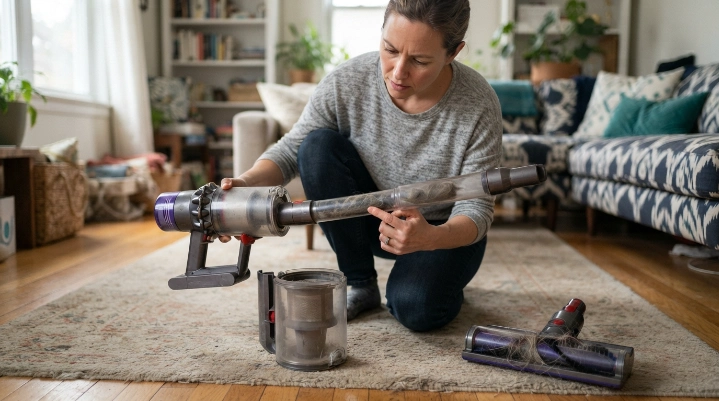
Maintenance improves suction when it removes a restriction that is limiting airflow through the vacuum. Clearing that restriction lets the machine move air closer to its intended operating condition.
The important word is airflow. A vacuum must pull air through the cleaning head, debris path, collection chamber, filters, and exhaust system.
What happens when a filter gets dirty?
A loaded filter creates more resistance to airflow. Some machines may then feel weaker at the floorhead or begin showing other performance symptoms.
Dyson specifically states that particle buildup can reduce performance in its cordless vacuum filters. Its guidance recommends washing applicable filters at least monthly.
Can a clogged hose reduce suction?
Yes. A blockage in the hose, wand, intake neck, or floorhead can dramatically restrict the amount of air moving through that pathway.
Sometimes the blockage is obvious. Other times, a wad of hair and lint sits inside a bend where you cannot see it.
- Sudden loss of suction can point to a blockage.
- A rattling object may indicate trapped debris.
- Normal hose suction but poor floorhead pickup can narrow the problem to the cleaning head.
- Weak airflow everywhere can point toward filters, a major clog, or another system-wide issue.
Does a dirty brush roll reduce suction?
A tangled brush roll usually affects dirt pickup more directly than suction. That difference prevents a common troubleshooting mistake.
On carpet, the brush agitates fibers and frees embedded material. Heavy hair wrap can stop the bristles from contacting the carpet effectively.
You may therefore believe suction has dropped because debris remains behind. Cleaning the roller can improve cleaning performance even if motor airflow stays similar.
Section Takeaway: Maintenance helps most when airflow is restricted. Brush-roll care can also improve pickup without changing the vacuum’s actual suction pressure.
Which Maintenance Tasks Improve Suction the Most?
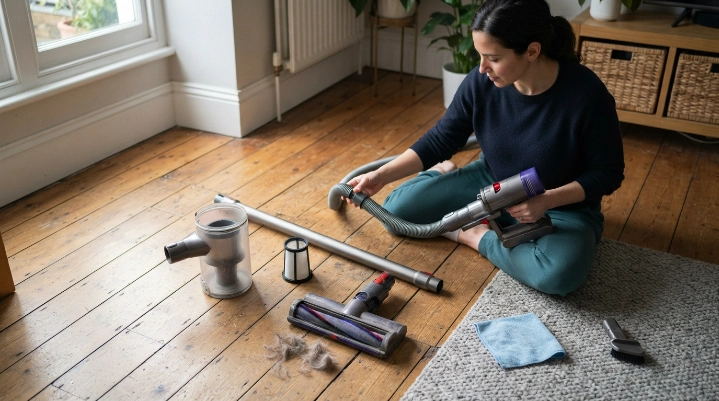
Start with the simplest airflow checks. They solve many common performance problems without opening the motor housing.
- Empty the dirt container or check the bag. Stay below the manufacturer’s maximum fill level.
- Inspect the filters. Clean washable filters or replace disposable filters only as directed.
- Check the hose and wand. Look through accessible sections for compacted debris.
- Inspect the floorhead. Remove hair, string, and material blocking the intake opening.
- Clean the brush roll. Cut away wrapped fibers without damaging bristles or electrical components.
- Check connections. Make sure hoses, bins, filters, and covers are seated correctly.
How much difference can filter maintenance make?
There is no honest universal percentage. Vacuum designs, filter loading, motor control systems, and clog severity vary too much.
That is why I avoid claims such as “cleaning your filter restores 30% more suction.” Without testing a specific machine, that number would be guesswork.
| Maintenance Area | What It Can Affect | Useful Checkpoint | Safe Response |
|---|---|---|---|
| Filter | Airflow and filtration | Dyson recommends monthly washing for applicable cordless filters | Follow the exact manufacturer procedure and drying time |
| Bin or bag | Debris flow and available air path | Manufacturer fill line or bag indicator | Empty or replace before overfilling |
| Hose or wand | Direct airflow | Check when suction drops suddenly | Remove accessible debris without sharp tools |
| Brush roll | Carpet agitation and pickup | Inspect after heavy hair or thread pickup | Remove wraps with power disconnected |
| Hose seals and connections | Effective suction at the cleaning end | Check after cleaning if suction remains weak | Reseat parts and replace damaged components as specified |
Why does filtration maintenance also matter for home hygiene?
Vacuum maintenance is not only about picking up crumbs. Household dust can contain pollen, pet material, mold particles, and other fine debris.
The EPA’s indoor particulate matter guidance recommends regular vacuuming and notes that HEPA filtration can help limit some dust escaping from a vacuum.
A HEPA filter is a high-efficiency particulate air filter. The EPA’s HEPA explanation defines the filtration standard rather than promising that every product labeled “HEPA” performs identically as a complete vacuum system.
For dust-mite control, the National Institute of Environmental Health Sciences also recommends vacuums using HEPA filtration or double-layer microfilter bags.
Research has also examined repeated HEPA vacuuming on contaminated carpets. One NIH-indexed carpet-cleaning study found substantial reductions in measured dust and dust-mite allergen loading after intensive HEPA vacuuming.
That research does not mean vacuum maintenance treats allergies. It shows why effective dust collection and filtration matter within a broader cleaning routine.
Section Takeaway: Prioritize filters, the dirt container, hose passages, and the floorhead. These parts directly influence airflow or the machine’s ability to remove debris.
How Can You Tell Whether Maintenance Fixed the Problem?
The easiest test is a controlled before-and-after comparison. Use the same attachment and the same operating mode each time.
Do not judge performance only by motor sound. Some vacuums change motor speed automatically, while others can sound normal despite a restriction.
- Turn the vacuum off and disconnect power before maintenance.
- Empty the bin or check the bag.
- Inspect approved filters and airflow passages.
- Reassemble every component correctly.
- Test the same hose, floorhead, or attachment again.
- Compare debris pickup and airflow with the earlier result.
I like to test the hose separately when the vacuum design allows it. Strong hose airflow with weak floorhead pickup points me toward the head, brush, or head connection.
If suction improves immediately after removing a clog, you have found a likely cause. If nothing changes, keep troubleshooting instead of repeatedly cleaning the same part.
What signs suggest suction has improved?
- Loose debris enters the floorhead more readily.
- The machine needs fewer passes over the same area.
- Hose airflow feels stronger under the same operating setting.
- Pulsing caused by a restriction disappears on models that use that warning behavior.
- The brush roll turns normally after hair removal.
As of 2026, manufacturer-specific guidance remains more useful than a universal cleaning schedule. Filter designs and warning systems differ considerably between vacuum models.
When Will Maintenance Not Restore Vacuum Suction?
Maintenance cannot repair every suction problem. A clean filter and open hose will not fix a failed motor, damaged impeller, electronic fault, or badly leaking component.
You should investigate further when basic maintenance makes no meaningful difference. Persistent overheating, burning smells, sparks, or abnormal electrical behavior deserve extra caution.
- Split hose: Air enters through the crack instead of only through the cleaning head.
- Damaged seal: A loose or torn gasket can create an unwanted air leak.
- Motor problem: Mechanical or electrical failure can reduce airflow.
- Broken floorhead: A damaged powered head may clean poorly despite normal hose suction.
- Incorrect assembly: A filter, bin, hose, or cover may not be seated properly after cleaning.
Expert Alert: Stop using a vacuum that sparks, smells like burning insulation, repeatedly overheats, or exposes damaged wiring. Have a qualified appliance technician inspect electrical or internal motor problems.
Can over-maintenance cause problems?
Yes. Washing a non-washable filter, reinstalling damp parts, or forcing tools through a hose can create new problems instead of solving suction loss.
Never assume a HEPA filter is washable. “HEPA” describes filtration performance, not whether the filter material can safely contact water.
- Do not wash parts unless the manual permits it.
- Let washable filters dry completely before installation.
- Do not puncture hose clogs with knives or screwdrivers.
- Keep water away from powered floorheads and electrical connectors.
- Use replacement filters and bags that meet your model’s requirements.
Section Takeaway: If normal maintenance does not restore performance, look for leaks, component damage, incorrect assembly, or a mechanical fault instead of cleaning repeatedly.
Frequently Asked Questions
Does cleaning a vacuum filter increase suction?
It can if the filter was dirty enough to restrict airflow. Clean only filters your manufacturer identifies as washable, and replace disposable filters as directed. If the filter was not restricting airflow, cleaning it may produce little noticeable suction change.
Can an overfilled vacuum lose suction?
Yes, an overloaded dirt container or bag can interfere with airflow on some vacuum designs. Empty a bagless container before exceeding its fill line, and replace bags according to the vacuum’s indicator or manufacturer instructions.
Why does my vacuum still have weak suction after cleaning the filter?
The problem may be elsewhere in the airflow path. Check the hose, wand, floorhead, intake passages, bin installation, and seals. If those areas are clear and correctly assembled, the vacuum may have a damaged component or internal fault.
Does cleaning the brush roll make a vacuum more powerful?
Cleaning the brush roll usually improves floor pickup rather than increasing motor suction. Removing wrapped hair lets the roller rotate and agitate carpet more effectively, which can make the vacuum seem substantially stronger during normal cleaning.
How often should I maintain my vacuum for good suction?
Use the manufacturer’s schedule as your main guide. Check the bin, brush roll, and obvious air passages regularly, and inspect sooner when suction drops. Filter-cleaning intervals vary, so do not apply one brand’s monthly schedule to every vacuum.
Can a vacuum have good suction but still clean poorly?
Yes. A worn or tangled brush roll, incorrect height setting, damaged floorhead, or unsuitable attachment can reduce debris pickup despite good airflow. Testing hose suction separately from floorhead performance can help identify which part of the cleaning system needs attention.
Final Takeaway
Vacuum maintenance can improve suction when dirt, filter loading, or a blockage is restricting airflow. It can also prevent many avoidable performance problems from developing.
Start with the bin or bag, filters, hose, wand, intake, and floorhead. Then check the brush roll and connections if cleaning performance still feels weak.
The key is to troubleshoot systematically rather than assume the motor has failed. A few minutes of safe maintenance can sometimes restore the performance you thought your vacuum had permanently lost.
Keep your model’s manual nearby, especially before washing filters or opening powered components. Good maintenance protects both your vacuum cleaner and the home hygiene routine you rely on it to handle.
“`