What’s the Best Way to Store a Vacuum Cleaner?

Quick Answer
The best way to store a vacuum cleaner is to empty and clean it first, let washable parts dry, secure the cord and attachments, and place the machine upright in a clean, dry indoor space. Avoid damp basements, extreme garage temperatures, leaking plumbing, and anything that can crush the hose or damage the vacuum. For broader household cleanliness guidance, you can also review the U.S. Environmental Protection Agency.
Quick Vacuum Storage Steps
- Empty it: Remove dirt from the bin or replace a full disposable bag before storage.
- Clean it: Remove hair, threads, and debris from the brush roll, wheels, hose, and tools.
- Dry it: Let washable filters, bins, and other cleaned parts dry completely.
- Protect the cord: Wrap it loosely around the vacuum’s cord hooks without pulling it tight.
- Choose a dry spot: Use an indoor closet, utility room, or other protected storage area when possible.
- Keep it accessible: Store the vacuum where you can remove it without moving heavy boxes first.
One Extra Tip
- Keep small attachments together so the crevice tool or upholstery brush doesn’t disappear between cleaning sessions.
I used to think vacuum storage meant finding any empty corner and pushing the machine into it. That worked until I started dealing with tangled cords, bent hoses, missing attachments, and vacuums stored with dirty filters.
Now I treat storage as part of normal vacuum cleaner maintenance. A few simple habits keep the machine cleaner, safer to handle, and ready for the next job.
In This Guide
- What does proper vacuum cleaner storage mean?
- What should you do before storing a vacuum?
- Where is the best place to store a vacuum cleaner?
- Does storage change by vacuum type?
- How should you store cords, hoses, and attachments?
- What vacuum storage mistakes should you avoid?
- Frequently asked questions
What Does Proper Vacuum Cleaner Storage Mean?
Proper vacuum storage means keeping the machine clean, dry, stable, and protected when you’re not using it. The storage spot should also prevent unnecessary stress on the cord, hose, battery, and attachments.
A vacuum cleaner storage area is a dedicated place that protects the appliance from moisture, extreme temperatures, impacts, crushed parts, and household clutter while keeping it easy to access.
You don’t need a custom cabinet. A utility closet, laundry-room cupboard, pantry section, or clean storage room can work well.
The important part is the environment around the vacuum. I prefer a location where the machine can stand naturally without having boxes pushed against it.
Why storage matters
A vacuum has several parts that are easy to damage when stored carelessly. Flexible hoses can get crushed, plugs can get bent, and plastic attachments can crack under heavy objects.
- Physical protection: Stable storage lowers the chance of the vacuum falling or being hit.
- Cleaner components: Emptying dirt before storage prevents old debris from sitting inside the machine.
- Better organization: Keeping tools together means less time hunting for attachments.
- Easier cleaning: An accessible vacuum is quicker to grab for everyday messes.
- Moisture control: Dry storage keeps damp filters and wet surroundings away from the appliance.
Vacuum storage also matters in homes where dust and allergens are a concern. The Asthma and Allergy Foundation of America provides broader information about household allergens and asthma triggers.
What Should You Do Before Storing a Vacuum?
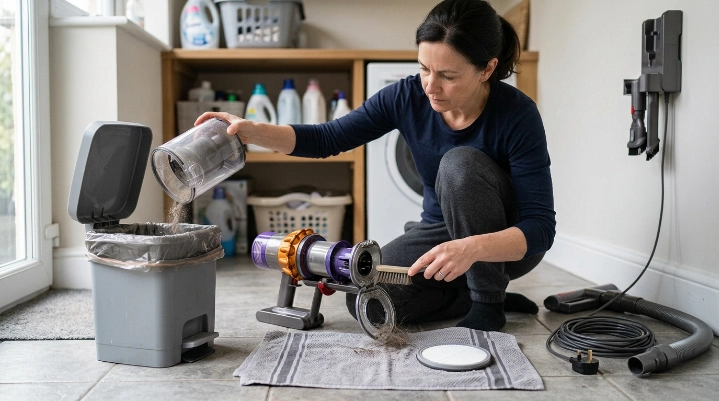
Empty the vacuum, remove obvious debris, inspect the cleaning head, and make sure any washed parts are completely dry. I do this before putting the machine away for more than a quick overnight break.
1. Empty the bin or check the bag
For a bagless vacuum, empty the dustbin before storage if it contains substantial debris. Don’t leave pet hair, crumbs, and fine household dust sitting inside longer than necessary.
With a bagged vacuum, follow the manufacturer’s fill indicator or replacement guidance. You don’t need to throw away a nearly empty bag every time you store the machine.
2. Check the brush roll
Hair and thread can wrap tightly around a rotating brush. I check the floor head before storage because removing a small tangle is easier than dealing with a heavily wrapped brush later.
- Turn the vacuum off and unplug it first.
- Check the brush roll for hair and thread.
- Inspect the wheels for trapped debris.
- Look at the intake opening for obvious blockages.
- Follow the manual before removing covers or brush components.
3. Deal with filters correctly
Not every vacuum filter is washable. Check the manufacturer’s instructions before putting any filter under water.
If you wash an approved washable filter, let it dry fully before reinstalling it. Storing a vacuum with damp components is a mistake I avoid completely.
4. Check for unusual damage
Look at the power cord, plug, hose, floor head, battery, and charging connections. Stop using the vacuum if you notice serious electrical damage or overheating.
Expert Alert: A damaged power cord, scorched plug, exposed wiring, swollen battery, leaking battery, or repeated electrical smell needs qualified service or appropriate disposal guidance. Don’t open or repair electrical or lithium-ion battery components yourself.
Where Is the Best Place to Store a Vacuum Cleaner?
A clean, dry indoor closet is usually the easiest storage choice. The location should stay protected from leaks, standing water, major temperature extremes, and falling objects.
I also look at accessibility. A perfect-looking storage spot becomes frustrating if I have to move five boxes every time I want the vacuum.
Good vacuum storage locations
- Utility closet: Convenient for upright, stick, or compact canister vacuums.
- Laundry area: Useful when the floor stays dry and plumbing leaks aren’t an issue.
- Hall closet: Good for frequently used household machines.
- Dedicated cabinet: Keeps the vacuum hidden and attachments organized.
- Climate-controlled storage room: Useful for spare or seasonal machines.
What about a basement or garage?
A basement can work only when it stays dry and protected from leaks. I wouldn’t place a vacuum beside a damp wall, floor drain, sump area, or plumbing connection that has leaked before.
For information about moisture and mold in homes, the Centers for Disease Control and Prevention offers public household health guidance.
Garages deserve extra caution because their temperatures can vary more than indoor rooms. This matters most for cordless vacuums because batteries have model-specific temperature and storage requirements.
| Storage location | Suitability | Main concern | What to check |
|---|---|---|---|
| Indoor closet | Usually excellent | Crowding | Keep heavy items away from the vacuum |
| Utility room | Usually good | Plumbing leaks | Keep the machine away from water sources |
| Dry basement | Conditional | Humidity and water entry | Check for dampness and condensation |
| Garage | Conditional | Temperature changes | Follow appliance and battery limits |
| Outdoor shed | Often poor | Moisture, heat, cold, pests | Use only if conditions suit the manufacturer guidance |
Section Takeaway: A dry indoor area is the safest default. Accessibility and protection from water, heat, and physical damage matter more than hiding the vacuum completely.
Does Storage Change by Vacuum Type?
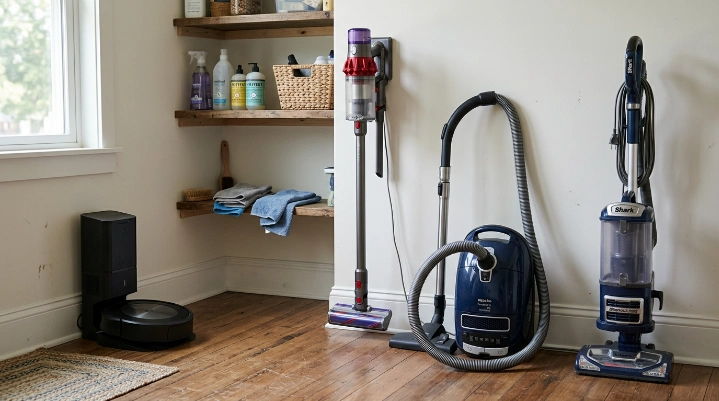
Yes. The clean-and-dry rule applies to every household vacuum, but upright, canister, cordless, and robot models need slightly different handling.
Upright vacuum
Store an upright vacuum in its normal locked position when the manufacturer’s design allows it. Make sure it can’t tip into a doorway or fall when another item is removed.
- Wrap the cord on its built-in hooks.
- Keep the floor head flat and stable.
- Don’t hang heavy bags from the handle.
- Keep attachments clipped securely or stored nearby.
Canister vacuum
The hose is the part I protect most carefully on a canister vacuum. Avoid trapping it behind boxes or folding it into a sharp bend.
Store a detachable hose in a relaxed curve. Keep the wand and floor head where they won’t fall or be stepped on.
Cordless stick vacuum
A wall dock can make cordless storage neat and convenient when it is installed correctly. Use only mounting hardware and charging arrangements appropriate for your model.
Battery storage instructions vary. Follow the manufacturer instead of using a universal charge percentage or temperature rule.
Robot vacuum
Keep the robot and charging dock on a dry, level surface with enough clearance for normal docking. Don’t store the dock beside water bowls, wet floors, or areas where cords can be damaged.
If the robot will be unused for a long period, check its manual for battery and shutdown instructions. Different brands handle extended non-use differently.
How Should You Store Cords, Hoses, and Attachments?
Keep cords loose, hoses uncrushed, and attachments together. These small details are what make a vacuum easy to use when you take it out again.
Wrap the cord without pulling it tight
Use the cord hooks provided on the vacuum when possible. Leave enough slack to avoid putting constant strain near the plug or where the cord enters the machine.
For retractable cords, use the rewind system according to the manual. Don’t force a damaged or jammed cord back into the housing.
Protect the hose
- Avoid sharp bends: Let flexible hoses rest in a natural curve.
- Prevent crushing: Never stack heavy storage boxes on a vacuum hose.
- Check connections: Make sure detachable hose ends aren’t under sideways pressure.
- Keep it dry: Don’t store a hose containing moisture or wet debris.
Keep accessories in one place
I like a small labeled container or washable bag for loose accessories. It prevents the classic problem of finding the vacuum but losing the tool needed for the job.
- Crevice tool
- Upholstery attachment
- Dusting brush
- Pet-hair tool
- Extension wand
- Spare approved bags
- Approved replacement filters
- Charging adapter or dock accessories
If anyone in the home is particularly sensitive to household dust, general health information is also available from the National Institutes of Health.
What Vacuum Storage Mistakes Should You Avoid?
The biggest mistakes involve moisture, crushing, dirty components, electrical damage, and inaccessible storage. Most are easy to prevent once the vacuum has a dedicated spot.
Don’t store a wet vacuum
Never put away a normal household vacuum with a damp washable filter or wet bin. Wet-capable vacuums also need their tanks cleaned and dried according to the manufacturer’s directions.
Don’t pile things on top of it
Boxes, tools, and household supplies can crack plastic or flatten hoses. Keep enough clearance around the machine to remove it without pulling other items down.
Don’t wind cords as tightly as possible
A tighter wrap isn’t automatically a better wrap. I prefer the built-in cord hooks and a relaxed loop that doesn’t tug on the plug.
Don’t ignore the battery
Cordless vacuum batteries need manufacturer-specific care. Avoid improvising storage rules, especially for a machine that will sit unused for months.
Don’t hide a dirty vacuum for months
- Empty collected debris.
- Remove hair from moving parts.
- Clear obvious blockages.
- Check approved filters.
- Dry anything you washed.
- Store tools with the machine.
Section Takeaway: Good storage isn’t complicated. Put away a clean, dry, undamaged vacuum in a stable location where its cord, hose, tools, and battery remain protected.
Frequently Asked Questions
Can I store a vacuum cleaner in a closet?
Yes. A clean, dry indoor closet is one of the most practical places to store a vacuum, provided the machine fits without being crushed by other items and remains easy to remove.
Can I store a vacuum cleaner in the garage?
You can if the garage conditions meet the vacuum manufacturer’s storage requirements. Pay special attention to temperature changes, moisture, pests, and battery guidance for cordless models.
Should I empty my vacuum before storing it?
It’s a good habit, especially when the bin contains a meaningful amount of dust, food debris, or pet hair. For bagged models, follow the manufacturer’s bag-full indicator or replacement recommendations.
Can I store an upright vacuum lying down?
Many upright vacuums are easiest to store in their normal upright position. If space requires another position, check the manual and make sure no hose, handle, connector, or floor-head component carries unwanted pressure.
Should I cover my vacuum cleaner in storage?
A clean, breathable dust cover can help keep settled dust off a machine stored for a long period. Don’t tightly seal a vacuum that contains damp parts or trapped moisture.
How do I store a cordless vacuum battery?
Follow the instructions for your exact vacuum and battery. Storage charge, charging frequency, and acceptable temperatures can differ between manufacturers, so a single percentage or routine doesn’t fit every model.
Where should I keep vacuum cleaner attachments?
Use built-in attachment clips when available, or keep loose accessories in one labeled container beside the vacuum. This protects small tools and makes them much easier to find.
Final Takeaway: The best way to store a vacuum cleaner is to put it away clean, dry, stable, and protected. Give the cord and hose room, keep accessories together, follow battery instructions, and choose a dry indoor location whenever possible.
Once I gave my vacuums a dedicated storage spot, everyday cleaning became simpler. Set up one practical space now, and your vacuum will be much easier to grab, use, and put away.