How Often Should You Clean the Brush Roll? A Complete Home Maintenance Guide

Quick Answer
You should clean your vacuum cleaner brush roll every one to two weeks if you have pets or long hair, or every three to four weeks for average households. Regular maintenance prevents motor strain, reduces foul odors, and ensures your vacuum maintains optimal cleaning performance on carpets and hard floors.
Standard Cleaning Schedule
- Every single use: Check for large debris blockages if you vacuumed heavy litter or dense pet hair.
- Every two weeks: Cut away wrapped human hair, threads, and carpet fibers tangled around the bristles.
- Monthly inspection: Remove the entire brush roll housing to clear hidden dust and bearing buildup.
- Every six months: Wash removable brush components thoroughly and let them dry completely before reinstallation.
Quick Inspection Checklist
- Turn off and unplug the vacuum before touching any moving parts.
- Use blunt scissors or a seam ripper to slice through tight hair wraps without damaging bristles.
Keeping your floors clean is a daily routine for most homeowners, but we rarely stop to think about the tool doing the heavy lifting. When your vacuum starts losing suction or leaves behind stray crumbs, your first thought is usually a clogged bag or a dirty filter.
More often than not, the real culprit is a neglected brush roll packed tight with hair and carpet fibers. As someone who has tested dozens of upright, stick, and robot vacuums in a home prone to heavy shedding, I learned the hard way that a tangled brush roll can cripple an expensive machine.
In This Guide
- Why Cleaning Your Vacuum Brush Roll Matters
- The Ideal Cleaning Schedule for Every Household Type
- Signs Your Brush Roll Needs Immediate Attention
- Step-by-Step Guide: How to Clean a Vacuum Brush Roll Safely
- Comparing Vacuum Brush Roll Designs
- Preventative Maintenance Tips to Cut Down Cleaning Time
- Frequently Asked Questions
Why Cleaning Your Vacuum Brush Roll Matters
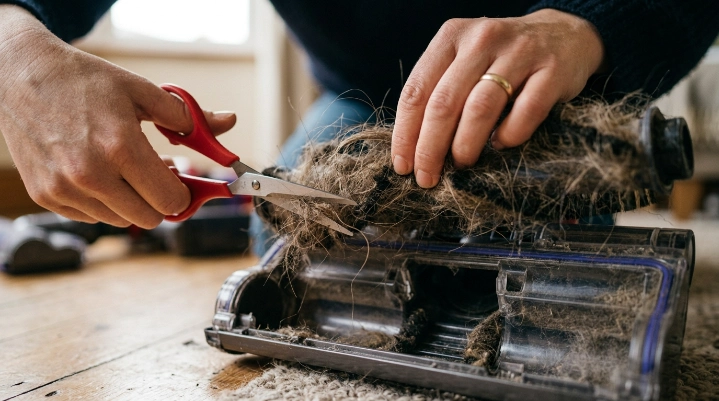
A vacuum brush roll is a rotating cylindrical agitator designed to flick up embedded dirt, pet dander, and hair from deep within carpet fibers. When hair and threads wrap tightly around this cylinder, they form a thick, felted barrier that prevents the bristles from contacting your floors.
This buildup creates massive friction against the drive belt and internal bearings, forcing the motor to work twice as hard to turn the cylinder. Over time, this extra strain causes premature motor burnout, melted plastic housings, and snapped belts.
Beyond mechanical failure, a dirty brush roll impacts your indoor air quality. Trapped organic matter like pet dander, skin cells, and mold spores begin to decay inside the dark floor head, releasing musty odors every time you turn the appliance on.
Maintaining a clean brush roll ensures your machine operates at peak efficiency, protecting both your investment and your home hygiene. Regular upkeep also prevents fine dust from escaping into your living space, supporting a healthier environment for allergy sufferers.
The Ideal Cleaning Schedule for Every Household Type
How often you should clean your vacuum brush roll depends entirely on your household traffic, flooring types, and who (or what) lives in your home. A single person living in a hardwood apartment will have very different maintenance needs than a family with three long-haired dogs.
Homes with heavy shedding pets or family members with long hair require a bi-weekly brush roll inspection to prevent heavy tangling. Standard households with mixed flooring can typically get away with a thorough check once a month.
Low-traffic homes or dedicated hard-floor spaces where traditional roller brushes are turned off may only need maintenance every two to three months. Consistency is key, as removing a light layer of hair takes two minutes, while cutting away a compacted year-long wrap can take twenty.
Signs Your Brush Roll Needs Immediate Attention
Your vacuum will usually tell you when its agitator bar is in distress long before it stops working entirely. Recognizing these warning signs early saves you from costly repairs or buying a replacement vacuum prematurely.
Listen closely to the sound your vacuum makes when operating on carpets versus hard floors. A high-pitched squealing noise or a sudden drop in pitch usually indicates that hair has wrapped tightly around the end bearings, restricting rotation.
Noticeable changes in cleaning performance also point directly to the brush head. If your upright vacuum leaves visible lines of pet hair or large debris behind in a single pass, the bristles are likely buried under a blanket of tangled fibers.
Burning smells are another critical red flag that require you to shut off the machine immediately. When a brush roll jams completely, the drive belt keeps spinning against the locked plastic cylinder, creating friction heat that melts components.
Step-by-Step Guide: How to Clean a Vacuum Brush Roll Safely
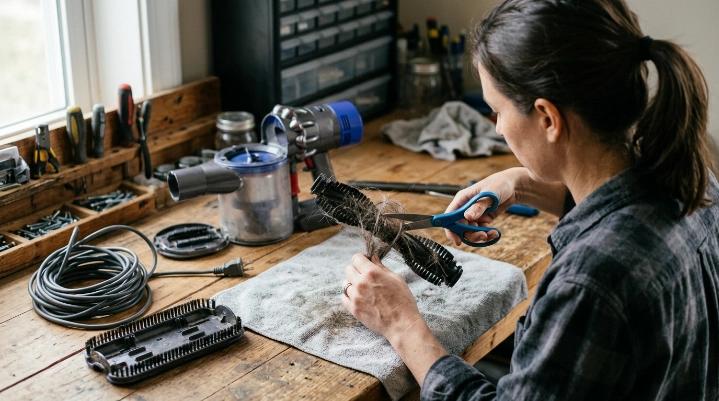
Cleaning a vacuum brush roll is a straightforward process, but safety and patience are essential to avoid damaging delicate bristles or belts. Follow this methodical approach to restore your appliance to like-new condition.
First, always disconnect your vacuum from the wall outlet or remove the battery pack before performing any maintenance. This eliminates any risk of accidental startup while your fingers are near the moving agitator bar.
Flip the vacuum over to access the floor head and inspect the underside for release tabs or screws holding the bottom plate in place. Remove the protective cover plate and set it aside in a safe spot.
Carefully lift or pull out the brush roll from its housing slots, noting how the end caps and drive belts are seated. Take a pair of blunt-tipped scissors or a seam ripper and slide the blade along the designated groove running parallel to the roller.
Slice through the bundled hair and threads, pulling them away in sections rather than trying to yank them off. Once the roller spins freely, wipe down the internal cavity with a damp microfiber cloth to remove trapped fine dust.
Reinstall the brush roll securely, ensuring the end caps snap back into alignment and the drive belt rests properly on its track. Secure the bottom plate and spin the roller manually by hand to verify smooth rotation before powering on the machine.
Comparing Vacuum Brush Roll Designs
Different vacuum brands use unique brush roll technologies to minimize hair wrap and improve cleaning efficiency. Understanding your vacuum’s specific design helps you tailor your cleaning technique.
| Brush Roll Type | Common Brands | Tangle Tendency | Cleaning Frequency |
|---|---|---|---|
| Standard Bristle Bar | Traditional uprights | High | Every 2 weeks |
| Anti-Wrap Fin Brush | Shark, Dyson | Low | Every 4 to 6 weeks |
| Soft Roller (Fluffy) | Cordless stick models | Moderate | Monthly wash |
| Rubber Paddle Roll | Roborock, Roomba | Very Low | Every 1 to 2 months |
Traditional bristle bars feature stiff nylon tufts that capture deep dirt but easily trap long strands of hair. Anti-wrap models incorporate silicone fins or built-in combs that actively deflect hair into the dust bin during operation.
Soft roller brush heads designed for hard floors rely on plush woven nylon instead of bristles, requiring gentle washing rather than cutting. Rubber paddle rolls found in many modern robot vacuums resist hair wrapping almost entirely, making them exceptionally low-maintenance.
Preventative Maintenance Tips to Cut Down Cleaning Time
Proactive habits can drastically reduce how often you have to hack away at tangled messes on your vacuum cleaner. Simple adjustments to your cleaning routine protect your equipment from unnecessary wear.
Pre-sweep heavy hair accumulations in bathrooms or dressing areas with a rubber broom before running your main vacuum. This keeps massive clumps of hair off the brush roll entirely.
Empty your dust canister frequently to maintain optimal airflow inside the cleaning head. When airflow is strong, hair and debris are pulled directly into the bin instead of swirling around the spinning roller bar.
Store your vacuum in a dry, clean environment away from damp basements where moisture can mix with residual dust inside the brush housing. Keeping the appliance clean and dry ensures longevity and prevents unpleasant household odors.
Expert Alert:
If your vacuum features an internal electronic motor housing failure, electrical burning odors originating from the switch, or cord damage, stop using the unit immediately. Contact a certified appliance technician rather than attempting DIY electrical repairs.
Frequently Asked Questions
Can I wash my vacuum brush roll with water?
It depends on the manufacturer specifications for your specific model. Removable soft rollers and rubber paddles can typically be washed with mild soap and water, but you must let them dry completely for at least 24 hours before reinstalling. Never submerge motorized brush heads or electrical components in water.
What tools work best for removing tangled hair?
A seam ripper or blunt-tipped crafting scissors work best for slicing through tight hair wraps without cutting the bristles. Avoid using sharp utility knives or razor blades, as they easily slice through nylon bristles and scratch the plastic roller housing.
Why does hair keep wrapping around my brush roll?
Hair wrapping is a natural byproduct of using rotating agitators on floors, especially in homes with pets or long-haired family members. Choosing an appliance with anti-tangle fin technology or rubber paddle rolls can significantly minimize how often this buildup occurs.
Does a dirty brush roll affect vacuum suction?
Yes, indirectly. While a tangled brush roll doesn’t block the suction channel directly, it prevents the bristles from agitating carpet fibers and lowers the roller rotation speed. This forces the vacuum to leave behind embedded dirt that requires multiple passes to clean.
How do I know if my vacuum belt needs replacement?
If your brush roll fails to spin even when the motor is running, or if you notice a slipping rubber smell, your belt is likely stretched or snapped. Check the belt track beneath the bottom plate and replace it with the exact manufacturer-specified part number.
Takeaway: Dedicating five minutes every couple of weeks to clear your vacuum brush roll prevents costly motor repairs and keeps your home cleaning efficient. Make brush maintenance a regular part of your household routine to extend the lifespan of your appliance.