How Do You Clean a Vacuum Hose?

Quick Answer
Cleaning a vacuum hose requires disconnecting it from the unit, inspecting for stubborn clogs, and rinsing the interior with warm water and mild dish soap to remove trapped dust, hair, and indoor allergens. Let the hose dry completely for at least 24 hours before reattaching it to prevent mold growth inside the appliance.
Step-by-Step Cleaning Process
- Power down: Unplug your vacuum cleaner completely from the wall outlet before starting any maintenance.
- Detach completely: Remove both ends of the hose from the vacuum body and the wand attachment.
- Clear debris: Push a long broom handle or flexible wire through the tube to dislodge packed hair and dust clumps.
- Wash interior: Run warm water mixed with a few drops of mild dish soap through the hose in your bathtub.
- Dry fully: Hang the damp hose vertically over a shower rod or door to air dry for a full 24 hours.
I have spent years testing upright, canister, and stick vacuums in my own home, and nothing kills suction faster than a blocked or filthy hose. When that musty, sour odor hits you the moment you turn on the machine, you know trapped dust, pet hair, and hidden mold spores are breeding inside the plastic coils.
This comprehensive guide walks you through the exact steps to deep-clean your vacuum hose safely, restore maximum suction power, and keep your home allergen-free.
In This Guide
What Are the Signs Your Vacuum Hose Needs Cleaning?
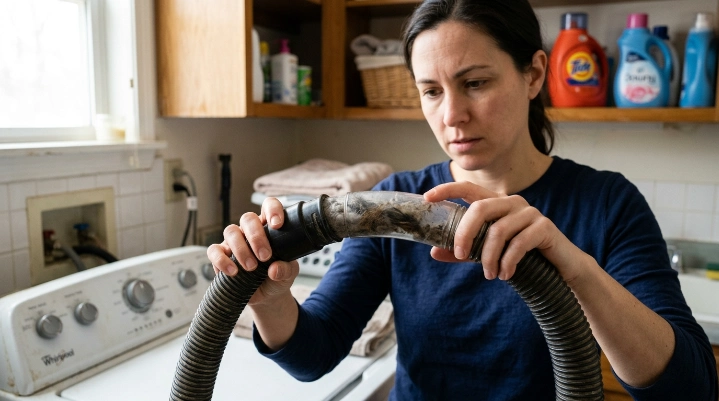
How do you know if the issue is inside the hose rather than the dust bag or canister? You will usually notice a distinct drop in performance accompanied by sensory warning signs.
A foul, sour, or musty smell blowing out of the exhaust vent is the most common indicator of internal organic buildup. When pet dander, moisture, and food crumbs sit in a dark hose, bacteria and mold multiply rapidly.
Reduced airflow at the cleaning tip is another classic symptom. If you place your hand near the end of the hose and feel weak suction despite an empty dirt bin, a partial clog or heavy lining of dust is choking the airflow.
Visible debris trapped in transparent hoses or fuzzy grey rings forming around the cuffs also signal that a deep wash is overdue. Ignoring these signs forces the motor to work harder, which can lead to overheating and premature appliance burnout.
Regular maintenance keeps your vacuum running efficiently and prevents foul odors from circulating through your living spaces during every cleaning session.
What Tools and Supplies Do You Need for the Job?
Cleaning a vacuum hose does not require expensive commercial chemicals or specialized plumbing tools. Most items are already sitting in your kitchen and bathroom.
Gather a mild liquid dish soap, a clean bucket or a bathtub, and a long flexible cleaning brush or microfiber cloth. Avoid harsh chemical solvents or bleach, as they can degrade the flexible plastic and rubber gaskets.
A blunt broom handle or a length of flexible plumber’s snake works wonders for pushing out compacted pet hairballs. Make sure you have plenty of clean, dry towels ready for the drying phase.
Here is a quick checklist of the items required for a thorough and safe hose washing session:
- Mild dish soap: Cuts through grease and trapped grime without damaging plastic.
- Warm water: Loosens stubborn dirt without melting or warping flexible hose coils.
- Flexible brush: Reaches deep inside long canister vacuum hoses safely.
- Microfiber cloth: Wipes down exterior plastic fittings and removes surface dust.
- Broom handle: Serves as a safe pushing tool to clear out physical blockages.
Having the right supplies on hand makes the process fast, mess-free, and safe for your vacuum investment.
How Do You Clean a Vacuum Hose Step-by-Step?
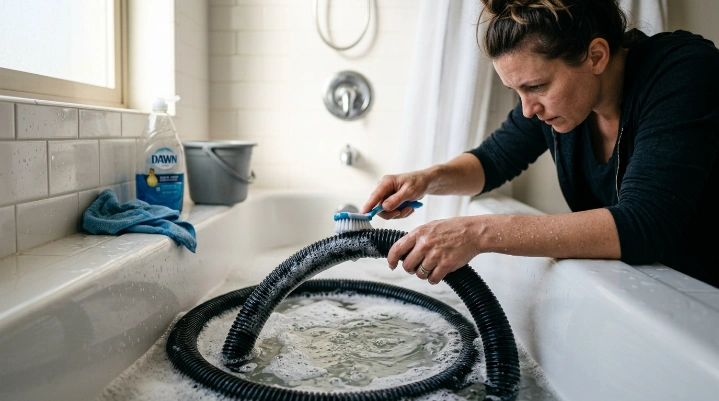
Executing the cleaning process properly ensures you do not accidentally flood the motor or ruin the electrical wiring found in powered hoses. Follow these sequential steps for optimal results.
Start by unplugging your vacuum and detaching the hose completely from both the machine body and any metal extension wands. Look closely at the ends to check if your model features integrated electrical pins for a motorized power brush.
If your hose has electrical connections, you must never submerge it in water or wash the wired ends. For standard non-electric hoses, you can safely proceed with a full water rinse.
Mix a few drops of dish soap into a bucket of warm water, or run a gentle stream of warm water in your bathtub. Pour a small amount of the soapy water directly into one end of the hose while holding the other end over the drain.
Gently swing the hose back and forth in a sweeping motion to let the soapy water slosh through the entire length. This dislodges trapped dust cakes, pet hair mats, and hidden allergen buildup clinging to the ridges.
Rinse the interior thoroughly by running clean tap water through the hose until the output runs completely clear and soap-free.
Following a systematic approach prevents accidental water damage to motorized components while guaranteeing a deeply sanitized interior.
How Do You Unclog Stubborn Blockages in a Vacuum Hose?
Sometimes a simple rinse is not enough to dislodge a dense mass of hair, coins, or paperclips wedged tightly in the middle of a corrugated hose.
Lay the detached hose out completely flat on the floor or a large table to inspect it for rigid lumps or hard bends. Shine a flashlight down one end while looking through the opposite end to locate where the obstruction sits.
Take a long, blunt tool like a broom handle or a flexible nylon plumbing snake and gently push it into the hose from the wider end. Never use sharp metal screwdrivers or knives, as they can easily puncture the thin plastic wall of the hose.
Work the tool carefully through the blockage using gentle twisting motions until the trapped debris pops out of the opposite opening. Shake the hose vigorously to rattle loose any remaining dust fragments before proceeding to wash it.
If the clog consists of damp, compacted hair and lint, running warm water through the hose while working the snake can help dissolve and lubricate the mass.
Clearing physical blockages before washing prevents water from backing up and ensures cleaning solutions reach every internal surface.
How Should You Dry the Hose and Prevent Future Mold Growth?
Drying is the most critical phase of vacuum hose maintenance because trapped moisture creates an ideal breeding ground for mold and mildew. Reattaching a damp hose guarantees that your vacuum will blow fungal spores straight into your room air.
Shake out as much excess water as possible right after rinsing, swinging the hose in a controlled circular motion outside or over a tub. Hang the hose vertically over a shower rod, a tall door, or a balcony railing to let gravity pull out remaining droplets.
Allow the hose to air dry undisturbed for a minimum of 24 to 48 hours in a well-ventilated room. You can place a small desk fan nearby to accelerate airflow through the corrugated interior channels.
Never use a hairdryer, heat gun, or tumble dryer to speed up the process, as excessive heat will warp, melt, or crack the flexible plastic coils.
Test the interior by passing a dry tissue or a flashlight through the tube to verify zero moisture remains before snapping it back onto your vacuum.
Ensuring complete interior dryness stops mold spores from colonizing your cleaning equipment and protects your indoor air quality.
| Hose Type | Washable with Water? | Drying Time | Best Cleaning Method |
|---|---|---|---|
| Standard Canister Hose | Yes (Fully submersible) | 24 Hours | Warm water flush with mild dish soap |
| Powered/Electric Hose | No (Wipe exterior only) | N/A | Damp microfiber wipe, snake for clogs |
| Handheld Stick Vacuum Tube | Yes (Rigid plastic wand) | 12–24 Hours | Bottle brush scrub with soapy water |
Frequently Asked Questions
Can I put my vacuum hose in the dishwasher?
No, you should never put a vacuum hose in the dishwasher. The extreme heat cycles will warp the plastic, melt the internal wire helix support structure, and destroy the rubber end fittings.
How often should I clean my vacuum hose?
You should inspect your vacuum hose monthly and perform a deep water wash every three to six months. Homes with heavy pet shedding or allergy sufferers should clean the hose more frequently.
Why does my vacuum hose smell like burning dust?
A burning smell usually indicates a severe clog restricting motor airflow, causing the machine to overheat. Turn off the vacuum immediately, clear the hose obstruction, and check your filters.
Can I use vinegar to disinfect a vacuum hose?
Yes, mixing equal parts white vinegar and warm water is an excellent way to neutralize sour odors and cut through grease inside a standard non-electric vacuum hose safely.
How do I know if my vacuum hose has electrical wires inside?
Check the ends of the hose for metal prongs or a specialized connector plug that snaps into the vacuum body. If your power brush head requires electricity to spin, your hose is electric and cannot be submerged.
What is the best way to clean a ridged hose interior?
A long flexible bottle brush combined with warm soapy water works best. The bristles scrub the inside grooves where pet hair and fine dust particles tend to anchor themselves.
Closing Takeaway
Maintaining a clean vacuum hose takes just a little bit of time, but it pays off with stronger suction, zero unpleasant odors, and a healthier home environment. By inspecting your equipment regularly, washing non-electric hoses safely, and ensuring complete dryness, you will extend the lifespan of your vacuum cleaner for years to come.