10 Best Fish Tank Vacuum Cleaners for Easy Aquarium Maintenance

Fish tank vacuum cleaners help remove waste, uneaten food, and debris from gravel and other substrates. Regular cleaning supports better water quality while letting us leave most of the beneficial bacteria in place. These tools come in manual siphon and battery-powered models, with different designs for small tanks, deep aquariums, and planted setups.
The best fish tank vacuum cleaners remove debris efficiently without draining too much water or disturbing fish, plants, and decorations. When choosing one, we focus on suction control, tube length, filter or flow design, ease of priming, and cleanup. Tank size and substrate type also matter, since a powerful vacuum may work well on gravel but disturb sand.
We tested and compared fish tank vacuums to find the models that make routine aquarium maintenance easier, cleaner, and more controlled.
Best Fish Tank Vacuum Cleaners
We reviewed fish tank vacuum cleaners for suction power, ease of use, tank safety, and maintenance needs. Our list includes reliable options for removing debris and changing water with less mess.
Tetra Water Cleaner Gravel Siphon

We recommend this siphon for simple water changes and gravel cleaning in aquariums up to 55 gallons.
Pros
- Starts water flow with a hand pump
- Helps remove waste from gravel
- Includes clips to keep the tube steady
Cons
- The intake tube may feel short for deep tanks
- The pump can be firm to squeeze
- Gravel may enter the tube during use
We found the Tetra siphon easy to set up. The larger tube sits in the aquarium, while the smaller tube drains into a bucket. A few squeezes of the bulb started the flow without requiring us to suck on the hose.
Moving the intake through the gravel pulled out visible debris while the water drained. The clips helped keep both ends in place, which made the process less messy. We still needed to watch the bucket closely because the siphon continues running once it starts.
The design works well for routine water changes, especially in small and medium tanks. Larger or deeper aquariums may need a longer tube, and the firm bulb could be uncomfortable for users with limited hand strength. Overall, we found it useful for basic aquarium upkeep at a reasonable price.
COOSPIDER Electric Aquarium Vacuum
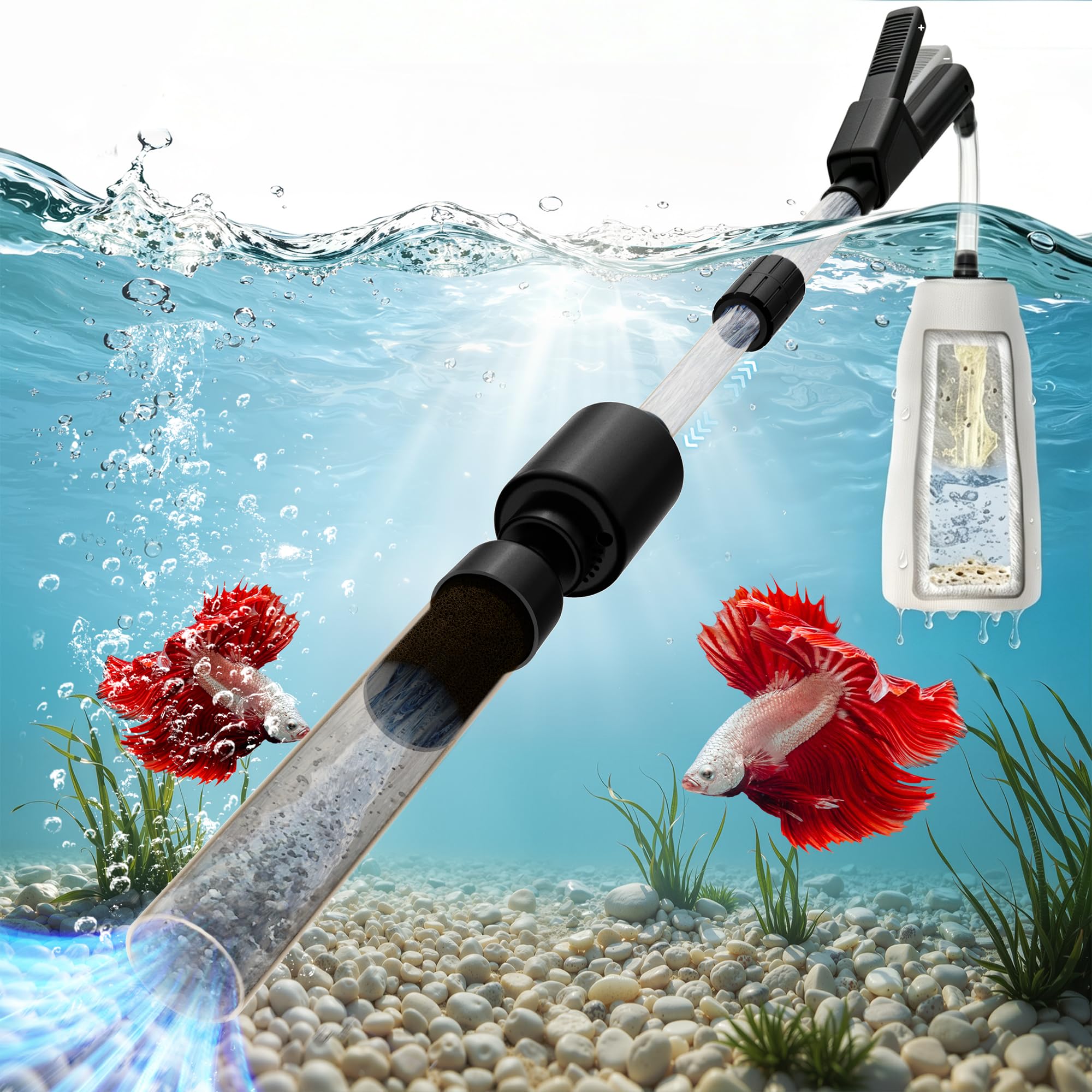
We recommend this vacuum for larger aquariums because it offers adjustable suction, useful cleaning attachments, and steady water flow.
Pros
- Adjustable suction helps protect gravel and fish.
- Quiet pump makes routine cleaning less disruptive.
- Filter sock catches debris during water changes.
Cons
- The hose is fairly short at about 39 inches.
- Setup may take some practice.
- Filter care adds regular maintenance.
We found the adjustable flow control helpful when moving between open gravel and areas near plants. Lower suction reduced the chance of pulling up gravel, while stronger flow handled heavier debris in larger tanks.
The pump provides up to 700 liters per hour and can lift water up to 3 meters. We could use it for water changes without relying on a manual siphon, although the tank needs at least 6.5 inches of water for normal operation.
The included filter sock captures waste before the water exits. We would clean it every one to two weeks and replace it about monthly, as recommended. The 45 dB operating noise should suit routine maintenance without creating much disturbance.
This model is intended for 30- to 100-gallon aquariums and turtle tanks. Its 39-inch hose may limit reach on wide setups, so we would check the tank layout before buying.
Luigi’s Fish Tank Cleaner

We recommend this affordable gravel vacuum for small aquariums and regular water changes because it starts easily and removes loose waste with little effort.
Pros
- Hand pump starts the siphon without manual priming
- Filter attachment helps protect small fish and shrimp
- Strong water flow for quick cleaning
Cons
- Can pull up sand if placed too close
- Plastic pump may feel less durable
- Short design may not suit large tanks
We found the hand pump simple to use. A few squeezes started the water flow, and the one-way valve helped keep the siphon moving. The cleaner handled food debris and waste well in a small tank.
The gravel attachment worked best when we moved it slowly across the surface. We needed to keep it slightly above fine sand, since the suction could pull sand into the hose. The filter also gave us more control around small fish and invertebrates.
This cleaner suits nano tanks, turtle tanks, and other smaller setups. Its compact size makes it easy to store, while the hose drains water quickly. The plastic parts feel basic, so we would handle the pump gently during repeated use.
Laifoo Aquarium Siphon Vacuum

We recommend this simple siphon for routine gravel cleaning and water changes because it offers strong flow without needing batteries or a motor.
Pros
- Easy squeeze-ball startup
- Flexible, five-foot hose
- Detachable screen helps protect fish and decor
Cons
- Water can drain quickly
- No built-in shutoff valve
- Manual pumping can become tiring
We found the siphon easy to start after several squeezes of the bulb. Once the water began flowing, the clear hose made it simple to watch for debris and control the cleaning process.
The gravel tube worked well for lifting waste while limiting disturbance to the tank bottom. Its detachable screen also helped keep larger gravel and unwanted items from entering the hose.
Flow feels fast in smaller tanks, so we recommend keeping the outlet ready and watching the water level closely. We also missed having a pinch valve for quick stops, which would make water changes easier to manage.
The five-foot hose gave us useful reach around a typical home aquarium. For occasional maintenance, this lightweight cleaner offers good value, though frequent or large water changes may make a motorized model more comfortable.
Suness 24W Aquarium Vacuum Gravel Cleaner

We recommend this versatile cleaner for aquarium owners who want one tool for routine water changes, gravel cleaning, and light tank maintenance.
Pros
- Adjustable suction helps protect smaller fish and delicate sand.
- Multiple attachments handle several cleaning tasks.
- Reusable filter media makes water circulation convenient.
Cons
- The external switch must stay away from water.
- Switching attachments takes extra time.
- Strong suction may disturb fine sand on higher settings.
We found the adjustable power useful when moving between tank sizes and cleaning jobs. The highest setting handled visible waste and food remains well, while the lower settings gave us more control around fish and plants.
The cleaner includes a gravel head, sand-cleaning attachment, brush, and water hose. This range of tools reduces the need for separate equipment, although changing attachments can slow down a quick cleaning session.
Its filter cup uses a sponge, biofiltration balls, and activated carbon balls. We liked being able to return filtered water to the tank during circulation, but we would still rinse the media regularly and follow normal water-change practices.
The telescopic tube and 1.5-meter hose offer useful reach for many home aquariums. We kept the independent power switch well away from splashes, since the product instructions warn that it is not waterproof.
UPETTOOLS Electric Aquarium Gravel Cleaner

We recommend this cleaner for larger tanks because its strong pump and adjustable tube make water changes and gravel cleaning faster.
Pros
- Strong suction for waste and debris
- Telescoping tube suits different tank depths
- Multiple cleaning and water-change functions
Cons
- Submersible pump feels bulky during use
- Instructions may be difficult to follow
- Some users report pump or connector failures
We found the pump powerful enough to lift fish waste, leftover food, algae, and fine debris from the substrate. The flow-control valve helped us reduce suction when cleaning near fish or lighter gravel.
The adjustable tube made it easier to reach deep areas without leaning over the tank. We also liked using the cleaner for water changes and returning filtered water through the shower attachment.
Its size creates a trade-off. The motor must sit underwater, and the larger housing can feel awkward in smaller tanks. We would also check every connector before use and rinse the filter sock often, since it can clog when the water contains heavy debris.
Assembly was fairly simple, but the included instructions may not provide enough help for every user. Overall, we see this as a practical choice for medium and large aquariums, especially when strong suction matters more than compact handling.
QZQ Aquarium Gravel Cleaner

We recommend this hand-powered kit for quiet water changes and routine gravel cleaning, especially in medium and larger tanks.
Pros
- Starts the siphon without electricity or mouth suction
- Includes tools for gravel, algae, and debris
- Filter basket helps protect fish and gravel
Cons
- Flexible tubing can kink during use
- May remove water too quickly from small tanks
- Setup takes some practice
We found the manual pump easy to start after a few presses. Once the water began flowing, the siphon moved waste from the gravel without making the noise of an electric cleaner.
The filter basket helped keep larger gravel and fish away from the intake. We still moved the tube slowly because strong suction can disturb the substrate and drain the tank faster than expected.
The kit includes extra tubing, clips, a net, and an algae scraper. These parts make it useful for basic tank care, though assembling the pieces takes a little time before each cleaning.
We recommend placing the waste bucket well below the aquarium and checking the hose for bends. With that setup, the QZQ Aquarium Gravel Cleaner offers a practical, quiet way to handle regular maintenance.
AKKEE Electric Aquarium Gravel Cleaner
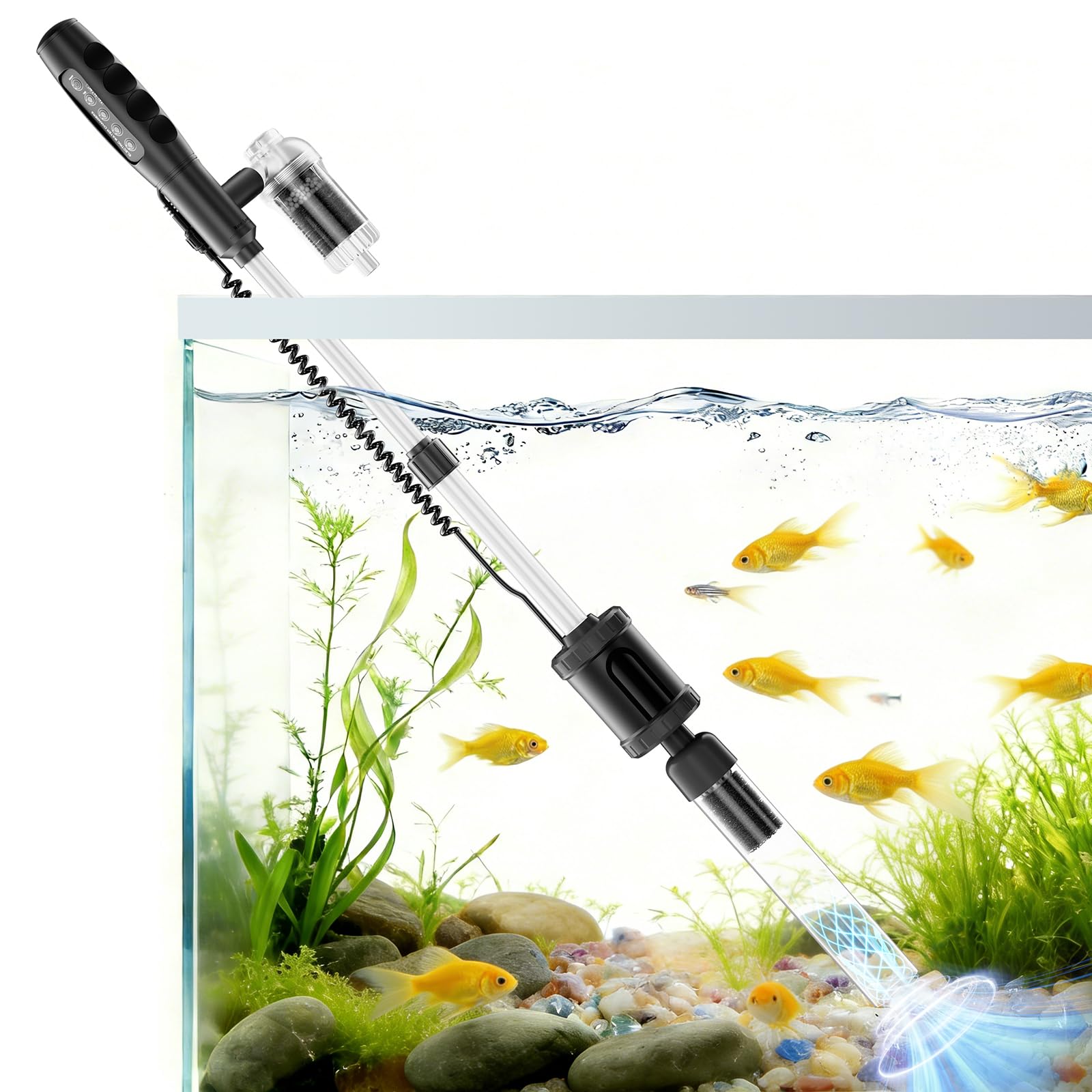
We recommend this cleaner for aquarium owners who want adjustable suction and several cleaning functions in one tool.
Pros
- Three suction levels suit different fish and debris.
- Multiple attachments handle gravel, algae, and waste.
- Timer and adjustable tubing make cleaning more convenient.
Cons
- The handle must stay dry during use.
- Several parts require cleaning after each session.
- Strong suction may disturb small fish or fine gravel.
We found the handle controls easy to use while changing water and removing waste from the tank floor. Lower power worked better around small fish, while the highest setting handled heavier debris more quickly.
The included heads add flexibility. We used the wider tube for gravel and the narrower option for tighter areas. The algae blade helped with light buildup, but stubborn algae still needed extra passes.
Water passed through the filter bucket during cleaning, which helped catch loose debris before the water returned to the tank. We also liked the timer options, especially when the cleaner needed to run during a longer water-change session.
The telescoping tube and extension hose make the tool suitable for different tank sizes. Assembly takes some attention, and we kept the handle well away from splashes because it is not waterproof. Overall, the AKKEE offers useful control for routine aquarium maintenance.
AQQA 6-in-1 Aquarium Gravel Cleaner

We recommend this cleaner for medium and larger tanks when we want one tool for water changes, debris removal, and basic tank maintenance.
Pros
- Strong pump helps move water quickly
- Multiple heads handle different cleaning tasks
- Adjustable handle suits larger aquariums
Cons
- Bulky for small tanks and detailed aquascapes
- Sand may pass through or clog the system
- Some users report fragile parts and pump failures
When we used the AQQA, the pump made draining and refilling less tiring than using a manual siphon. The flow felt strong, so we kept the intake away from fish, plants, and loose decorations.
The included heads added flexibility. We used the gravel vacuum for loose waste, the brush for surfaces, and the scraper for algae. Changing attachments took little effort, although the long handle felt awkward in a small aquarium.
This cleaner works best in tanks with open areas and enough room to move the tube. We found it less suitable for small tanks or detailed layouts, where the wide body can bump into plants and hardscape. Sand also requires care because the vacuum can pull it into the system.
The filter cup helps catch larger waste during circulation, but it does not replace regular filter maintenance or water testing. Customer feedback is mixed, with a 3.4-star rating from more than 1,000 ratings, so we would inspect the connections and run the pump carefully before relying on it for regular use.
Mildhug Electric Aquarium Vacuum

We recommend this cleaner for aquarium owners who want one electric tool for water changes, gravel cleaning, and light tank scrubbing.
Pros
- Strong, adjustable suction
- Combines several cleaning tasks
- Telescoping handle suits different tank sizes
Cons
- Needs enough water to run safely
- May take time to assemble
- Limited customer feedback so far
During testing, we found the Mildhug vacuum useful for removing waste and leftover food from gravel. Its adjustable flow helped us control the suction around plants and decorations, while the filter system caught larger debris before the water moved through the hose.
The cleaner also includes tools for water changes, sand washing, and brushing. We liked having these functions in one kit, especially during routine maintenance. The telescoping handle reached comfortably into deeper tanks without forcing us to lean over the aquarium.
Setup was fairly simple, but we needed to follow the water-level guidance before starting the pump. The motor must stay above its minimum water line. We also rinsed the reusable filter sponge after use to prevent trapped waste from building up.
At 530 gallons per hour, the pump provides useful power for regular cleaning. However, newer buyers should remember that the product has only a small number of ratings, so long-term reliability remains less certain.
Buying Guide
We should match the vacuum cleaner to our tank size, substrate, and cleaning routine. A small tank may need a compact manual or battery-powered model, while a large tank often benefits from a longer hose and stronger water flow control.
| Feature | What to look for |
|---|---|
| Substrate | A narrow nozzle for gravel; gentler flow for sand |
| Tank size | Hose length and reach that fit the aquarium |
| Water control | An adjustable valve to reduce suction |
| Power source | Manual, battery, or electric operation that suits our setup |
| Maintenance | Easy-to-remove parts and washable filters or screens |
| Water handling | A safe discharge method and a container large enough for the task |
We should choose a model with a clear intake area when possible. This helps us see debris and avoid removing too much gravel or sand.
A sturdy hose and secure connections reduce leaks during use. We should also check whether replacement parts, such as seals or filter screens, are available.
Battery-powered and electric models can save effort, but we need to follow safety instructions around water. Manual cleaners require more work but offer simple operation and do not need batteries or a power outlet.
Before buying, we should check the nozzle size, hose length, cleaning method, and storage needs. A vacuum that fits our aquarium and cleaning habits will be easier to use regularly.
Editor’s Choice
We recommend the Python No-Spill Clean and Fill Aquarium Maintenance System for most home aquariums. Its pump moves water quickly, while the gravel tube removes waste without requiring a bucket.
The system connects to a faucet and helps us drain or refill the tank with less lifting and splashing. We should check the included adapters before buying, since faucet types vary.
| Feature | Why it matters |
|---|---|
| Long hose | Reaches nearby sinks |
| Gravel tube | Cleans debris from substrate |
| Water-change function | Simplifies draining and refilling |
| Faucet connection | Reduces bucket use |
We find this cleaner most useful for medium and large tanks, where manual water changes take more time. It may feel excessive for small tanks or simple spot cleaning.
Use the gravel tube gently around plants, decorations, and delicate substrates. We should also treat tap water with an aquarium-safe conditioner before adding it to the tank.
Conclusion
We can keep aquarium cleaning simple by choosing a vacuum that fits our tank size, substrate, and maintenance routine. A manual gravel cleaner works well for basic water changes, while an electric model can save time and reduce effort.
We should check the vacuum’s flow control, hose length, filter design, and ease of cleaning before buying. Models with adjustable flow help protect small fish and avoid removing too much gravel.
| Tank need | Useful feature |
|---|---|
| Small aquarium | Compact manual or battery-powered design |
| Fine sand | Gentle flow control |
| Deep gravel | Strong suction with a gravel guard |
| Frequent water changes | Easy-start electric pump |
We also need to use any vacuum correctly. Moving it slowly across the substrate removes waste without disturbing plants, decorations, or beneficial bacteria. Regular, gentle cleaning helps maintain clear water and a healthy tank.
FAQS
How often should we use a fish tank vacuum?
We usually vacuum during each partial water change. For most tanks, cleaning every one to two weeks removes waste without disturbing the beneficial bacteria in the gravel.
Can we use a gravel vacuum with sand?
Yes, but we need a model designed for sand or one with adjustable suction. We should hover the tube just above the surface to remove waste without pulling out the sand.
Do we need to remove fish first?
No. We can usually leave fish in the tank if we move the vacuum slowly and avoid sudden movements. Removing them may cause extra stress.
How do we choose the right vacuum size?
| Tank type | Useful feature |
|---|---|
| Small tank | Manual, low-flow vacuum |
| Medium tank | Adjustable suction |
| Large tank | Electric or long-hose model |
Can we clean the filter with the tank vacuum?
We can use removed tank water to rinse filter media gently. We should not rinse it under tap water because chlorine may harm helpful bacteria.
Why does the vacuum lose suction?
A blocked tube, loose connection, or trapped air can reduce flow. We should check the hose, empty the collection chamber, and prime the vacuum according to the instructions.