When Should You Replace a Vacuum Bag? Signs, Timing, and Tips

Quick Answer
You should replace a vacuum bag when the bag-full indicator activates, debris reaches the manufacturer’s maximum fill line, or suction drops because airflow through the bag is restricted. Change it sooner after collecting lots of fine dust, even when the bag does not look completely full. Keeping the vacuum working properly also supports the regular cleaning practices described in EPA guidance on indoor particulate matter.
Replace the bag when you notice:
- Full-bag warning: Follow the indicator or maximum fill mark provided by your vacuum manufacturer.
- Reduced suction: A packed or clogged bag can restrict airflow and weaken pickup.
- Fine-dust pickup: Flour, plaster dust, sawdust, and similar particles can clog bag material before the bag looks full.
- Bulky hair or fluff: Pet hair and carpet fibers can physically fill a bag while some airflow indicators still look normal.
- Persistent odor: A loaded bag can hold pet hair, food crumbs, and other debris that develops an unpleasant smell.
Best rule to remember
- Don’t rely on a fixed number of days. Check the indicator, airflow, bag condition, debris type, and your owner’s manual.
Knowing when to replace a vacuum bag sounds simple, but waiting too long can leave you with weak suction and frustrating cleaning sessions. I prefer to judge the bag by airflow, debris type, and the machine’s own warning system rather than a calendar.
That matters even more in homes dealing with dust, pet dander, pollen, or other indoor particles. Here’s how to recognize the right replacement point without throwing away half-empty bags unnecessarily.
In This Guide
- What is a vacuum bag, and why does replacement timing matter?
- When should you replace a vacuum bag?
- What signs mean your vacuum bag needs changing now?
- Does the type of debris change replacement timing?
- How do you replace a vacuum bag with less dust?
- What if suction stays weak after changing the bag?
- Frequently asked questions
What Is a Vacuum Bag, and Why Does Replacement Timing Matter?
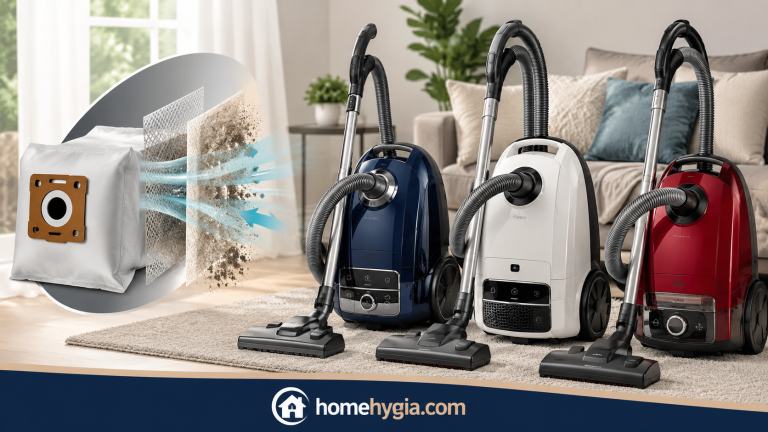
A vacuum bag is a disposable collection bag that holds dirt and debris pulled into a bagged vacuum cleaner. Depending on the machine and bag design, the bag may also form an important part of the vacuum’s filtration and airflow system.
Air must continue moving through the collection system while you vacuum. As debris builds up, resistance through the bag can increase.
- Collection: The bag stores dust, hair, crumbs, fibers, and other vacuumed debris.
- Airflow: Air must pass through the bag or collection system so the vacuum can keep pulling debris from the floor.
- Containment: A properly fitted bag helps keep collected debris contained during normal operation and disposal.
A bag does not always need replacement simply because some dirt is visible inside it. The important question is whether the bag has reached its designed capacity or is restricting airflow.
Vacuuming itself can disturb settled household dust, which may contain pollen, mold spores, pet dander, dust-mite material, and other particles. The EPA recommends regular cleaning and notes that high-efficiency vacuum filtration can help reduce dust escaping back into the room.
For people concerned about allergens, the Asthma and Allergy Foundation of America’s indoor allergen guidance also recommends regular vacuuming and choosing equipment designed to contain allergens effectively.
When Should You Replace a Vacuum Bag?
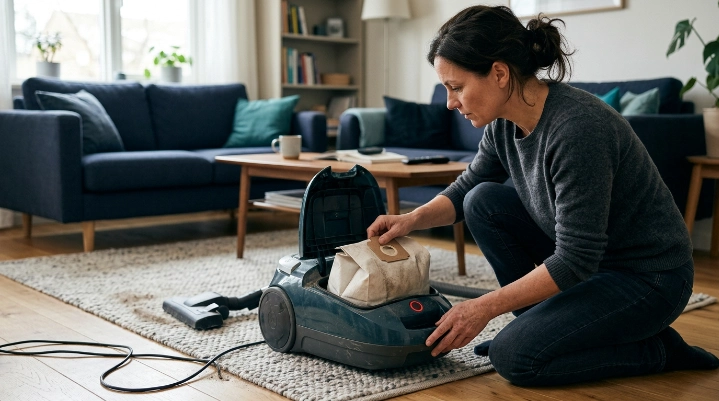
Replace the vacuum bag when your machine’s bag-full indicator or maximum fill line says it is time. Replace it sooner if airflow drops noticeably after collecting fine material.
There is no dependable universal schedule such as every 30, 60, or 90 days. Two households can fill the same vacuum bag at completely different rates.
Follow the vacuum’s bag-full indicator first
Many modern bagged vacuums use an airflow or pressure-based indicator. When that indicator reaches its specified full position, stop and inspect the machine according to the owner’s manual.
Don’t assume the warning always means the bag is physically packed from top to bottom. Some indicators also respond to restricted airflow caused by fine dust, dirty filters, or a clog.
Use the maximum fill line when your bag has one
Some vacuum bags have a printed maximum line or another visible capacity marker. Once debris reaches that point, install a fresh bag rather than forcing more material into the old one.
Overpacking can leave less room for airflow and may make removing the bag messier. It can also make lightweight bags harder to seal without squeezing debris toward the opening.
Don’t use calendar timing alone
A lightly used vacuum in a small apartment may go much longer between bag changes than a vacuum cleaning a large pet-friendly home. Renovation dust, sand, fireplace debris, and heavy shedding can shorten the interval dramatically.
- Check the bag after unusually dirty cleaning jobs.
- Inspect it when suction changes unexpectedly.
- Look at the indicator before large cleaning sessions.
- Keep spare bags available instead of stretching the current one.
- Follow model-specific instructions when they differ from general advice.
My practical rule is simple: trust the machine and the debris, not the date on the calendar.
What Signs Mean Your Vacuum Bag Needs Changing Now?
The clearest signs are a full-bag warning, debris at the fill line, or noticeably reduced airflow. Odor and poor pickup can provide additional clues, but they can also indicate other maintenance problems.
1. The bag-full indicator activates
Treat the indicator as a prompt to inspect the vacuum immediately. Check the bag first, then investigate the hose and filters if a new bag does not clear the warning.
2. Suction becomes noticeably weaker
If the vacuum suddenly leaves crumbs, grit, or pet hair behind, airflow may be restricted. A loaded bag is one possible cause.
Don’t automatically blame the bag. A blocked hose, tangled brush roll, dirty filter, or poorly fitted bag can create similar symptoms.
3. The bag has reached its marked capacity
If your bag includes a maximum fill line, don’t pack debris beyond it. Capacity markings are more useful than trying to guess whether the bag “looks full enough.”
4. You notice a stale or dusty odor
Vacuum bags can hold hair, crumbs, soil, organic debris, and other odor-producing material. A fresh bag may help when the smell clearly comes from accumulated debris.
A smell that remains after replacement deserves more investigation. Check the filters, brush roll, hose, and any material trapped around the floor head.
5. The bag is difficult to remove cleanly
A bag packed tightly with debris is harder to handle without compressing it. Replacing before that point can make disposal cleaner and easier.
- Avoid squeezing a loaded bag.
- Use the bag’s sealing flap or cap when supplied.
- Keep the opening facing upward during removal.
- Dispose of single-use bags rather than emptying and reinstalling them.
Does the Type of Debris Change Replacement Timing?
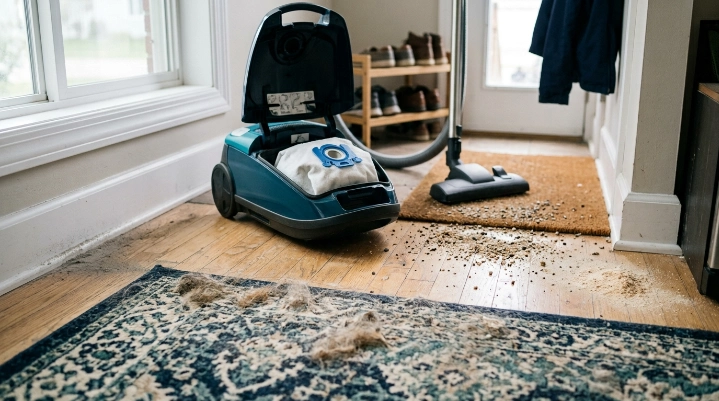
Yes. What you vacuum can matter as much as how much you vacuum. Fine dust can restrict airflow before a bag looks physically full, while fluffy material can occupy lots of volume without immediately triggering some airflow indicators.
| Debris type | What can happen | Best replacement approach |
|---|---|---|
| Normal household dust | The bag usually fills gradually during routine cleaning. | Follow the bag-full indicator or manufacturer fill mark. |
| Fine dust such as flour, plaster dust, or sawdust | Small particles may restrict airflow through the bag before it looks full. | Change earlier when the warning appears or suction drops. |
| Pet hair, wool, and carpet fluff | Bulky material can occupy much of the bag while remaining relatively air-permeable. | Visually inspect the bag instead of relying only on an airflow warning. |
| Heavy sand and tracked-in grit | The bag may become heavy before it looks unusually bulky. | Inspect after intensive cleaning and avoid overloading the bag. |
This explains why fixed rules such as “change it every month” are unreliable. The same bag may behave differently after cleaning carpet fluff than after collecting fine renovation dust.
Fine construction debris deserves special caution. Standard household vacuums may not be designed for every type of construction, hazardous, or extremely fine dust.
Expert Alert: If you’re dealing with lead dust, asbestos-containing material, hazardous mold contamination, or another potentially dangerous substance, don’t rely on an ordinary household vacuum. Follow applicable professional remediation guidance.
How Do You Replace a Vacuum Bag With Less Dust?
Unplug the vacuum, open the bag compartment gently, and handle the bag by its rigid collar or designated grip. Seal the opening before disposal whenever the bag design allows it.
- Unplug the vacuum. Don’t service or open the collection compartment while the machine is connected to power.
- Open the bag compartment. Follow the release mechanism shown in your owner’s manual.
- Grip the bag correctly. Hold the cardboard or plastic collar rather than squeezing the soft body of the bag.
- Seal the opening. Close the built-in shutter, cap, or flap if your replacement system provides one.
- Remove the bag slowly. Keep it upright and avoid shaking it.
- Install the correct replacement. Seat the new bag firmly on the holder or inlet according to the manufacturer’s instructions.
- Check the compartment. Make sure the bag is not pinched before closing the housing.
If someone in the household is especially sensitive to dust, minimizing disturbance during bag removal is sensible. The EPA notes that cleaning and vacuuming can stir settled particles into the air.
You can review broader household dust-control practices in the EPA’s indoor air quality guide.
What If Suction Stays Weak After Changing the Bag?
If a new vacuum bag does not restore suction, don’t keep replacing bags. The restriction may be somewhere else in the airflow path.
Start with the parts you can safely inspect without disassembling electrical components.
- Hose: Check for paper, toys, hair clumps, or other blockages.
- Wand: Shine a light through removable tubes where practical.
- Floor head: Remove visible debris around the air channel.
- Brush roll: Cut away wrapped hair or thread while the vacuum is unplugged.
- Pre-motor filter: Clean or replace it only as the manufacturer directs.
- Exhaust filter: Check its maintenance schedule and condition.
- Bag connection: Confirm that the replacement bag is fully seated and compatible with your model.
A bag-full light that remains active with a new bag can also indicate a clog or dirty filter on some machines. That’s why the owner’s manual should always outrank generic maintenance advice.
If the motor makes an unusual mechanical noise, smells electrically hot, repeatedly shuts down, or has visible electrical damage, stop using the vacuum.
Expert Alert: Don’t open the motor housing or attempt electrical repairs unless you’re qualified to service the appliance. Have a vacuum repair technician inspect faults beyond routine bag, filter, hose, or brush maintenance.
Frequently Asked Questions
How often should I replace a vacuum cleaner bag?
There is no universal replacement interval. Replace the bag when the manufacturer’s bag-full indicator activates, when debris reaches the marked capacity, or sooner when fine dust restricts airflow and reduces suction.
Should I wait until a vacuum bag is completely full?
No. “Completely full” is not a useful universal target because bag designs and indicators work differently. Follow your vacuum’s stated fill indicator or bag warning instead of trying to pack in as much debris as possible.
Can a vacuum bag need replacing when it still looks half empty?
Yes. Fine particles can clog the bag’s porous material and restrict airflow before the bag looks physically full. If suction drops or the bag warning activates after cleaning fine dust, the bag may need replacement.
Why does my vacuum bag fill so quickly?
Heavy pet shedding, carpet fibers, large amounts of tracked-in soil, and infrequent cleaning can fill bags faster. Rapid filling combined with poor suction may also justify checking the hose, filters, brush roll, and bag installation.
Can I empty a disposable vacuum bag and reuse it?
Don’t reuse a single-use bag unless its manufacturer explicitly says it is reusable. Emptying a disposable bag can damage its material or sealing system and exposes you directly to the collected dust.
Does a full vacuum bag reduce suction?
It can. As debris restricts airflow through the collection system, pickup performance may decrease. A clogged hose or dirty filter can cause the same symptom, so check those components if installing a fresh bag does not help.
Should allergy sufferers replace vacuum bags more frequently?
The best approach is careful maintenance rather than an arbitrary shorter schedule. Use the correct high-quality bag for your machine, avoid overfilling it, minimize dust during removal, and follow the manufacturer’s filter-maintenance instructions.
The takeaway: In 2026, the safest general answer to “when should you replace a vacuum bag?” is still to follow your vacuum’s actual capacity or airflow warning instead of a calendar. Fine dust, pet hair, household size, and cleaning frequency can all change the timing.
Check your bag today if suction has dropped, the warning indicator is active, or you’ve recently vacuumed an unusually dusty area. A two-minute inspection can tell you more than guessing how many weeks the bag has been installed.