
How Often Should You Clean a Vacuum Cleaner?

Quick Answer
For most homes, give your vacuum cleaner a basic check after each use and a more thorough cleaning about once a month. Empty the bin as needed, remove hair from the brush roll regularly, and clean or replace filters according to your model’s manual; vacuum filter maintenance is especially important because dirty filters can restrict airflow.
A Simple Vacuum Cleaning Schedule
- After each use: Check the dust bin, bag level, intake opening, and brush roll for obvious debris.
- About weekly: Remove wrapped hair and threads if your household produces a lot of them.
- About monthly: Inspect filters, attachments, the brush roll, hose, wand, seals, and air passages.
- Heavy-use homes: Inspect everything more often if you have shedding pets, long hair, heavy carpet use, or frequent fine dust.
- Manufacturer first: Never wash a filter or part unless your vacuum’s instructions specifically say it is washable.
Most Important Rule
- Clean sooner whenever suction drops, the vacuum smells unusual, the brush stops turning freely, or the machine begins running hotter than normal.
A vacuum cleaner spends its life collecting dust, hair, crumbs, pollen, and other household debris. That means the machine doing the cleaning eventually needs cleaning too.
I’ve found that waiting until a vacuum loses suction makes maintenance harder. A short routine done regularly is much easier than trying to rescue a packed filter, tangled brush roll, and blocked hose all at once.
In This Guide
How Often Should You Clean Your Vacuum Cleaner?
Most household vacuums benefit from a thorough inspection and cleaning about once a month. Smaller maintenance jobs should happen much more often.
A vacuum cleaning schedule is simply a routine for emptying debris, checking airflow, removing wrapped hair, and maintaining filters before dirt begins affecting performance.
The exact frequency depends on your machine and your home. A cordless stick vacuum used twice daily will collect debris faster than a canister vacuum used once a week.
| Vacuum Part | Practical Baseline | Clean or Check Earlier When |
|---|---|---|
| Bagless dust bin | After use or before reaching the fill line | Suction falls or fine dust packs around the cyclone |
| Vacuum bag | Follow the bag indicator or manual | Airflow weakens or the bag becomes heavily loaded |
| Brush roll | Inspect weekly; clean thoroughly about monthly | Hair, thread, or carpet fibers wrap around it |
| Washable filter | Inspect monthly and follow the manual | The machine handles fine dust or sees heavy use |
| Hose and wand | Inspect about monthly | Suction suddenly drops or debris rattles inside |
| Attachments | Wipe or clean monthly | Pet hair, grease, lint, or sticky debris accumulates |
This schedule is a starting point, not a replacement for your manual. For example, Dyson currently advises cleaning applicable cordless vacuum filters at least once a month.
Other manufacturers and filter designs may use different intervals. Some filters are washable, while others must stay dry and eventually be replaced.
Section Takeaway: Use monthly cleaning as a practical baseline, but let usage, visible dirt, and your manufacturer’s instructions determine the final schedule.
Which Vacuum Parts Need Cleaning Most Often?
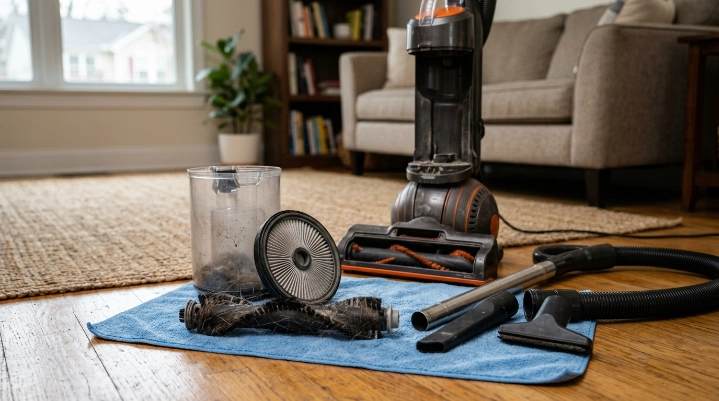
The dust container, brush roll, and filters usually need the most attention. These components directly affect debris storage and airflow.
The Dust Bin or Bag
A bagless bin works best when debris has room to move and air can pass through the system. Don’t keep vacuuming after dirt has reached the machine’s maximum fill line.
Bagged vacuums work differently. Replace the bag according to the indicator or manufacturer instructions rather than forcing it to hold more debris.
The Brush Roll
The brush roll is a magnet for long hair, pet fur, yarn, and thread. Wrapped material can stop the brush from rotating freely.
- Short hair households: A weekly glance may be enough.
- Long hair households: Check the roller after several cleaning sessions.
- Shedding pets: Inspect it frequently during heavy shedding periods.
- Carpet-heavy homes: Watch for fibers collecting near bearings and end caps.
The Filters
Filters capture fine particles before they move farther through the vacuum or back into the room. As they load with dust, airflow can become restricted.
Consumer guidance from the U.S. Environmental Protection Agency on indoor particulate matter also notes that household dust can become airborne during activities such as vacuuming.
That makes filter care especially relevant in homes concerned about dust and allergens. However, never assume a HEPA filter can be washed just because another filter in the same machine can.
The Hose, Wand, and Attachments
These parts usually need less frequent deep cleaning. They still deserve a monthly inspection because hidden clogs can develop gradually.
Crumbs, paper, hair clumps, and small objects often lodge at bends or connection points. A partial blockage can reduce suction long before airflow stops completely.
How Do You Clean a Vacuum Cleaner Properly?
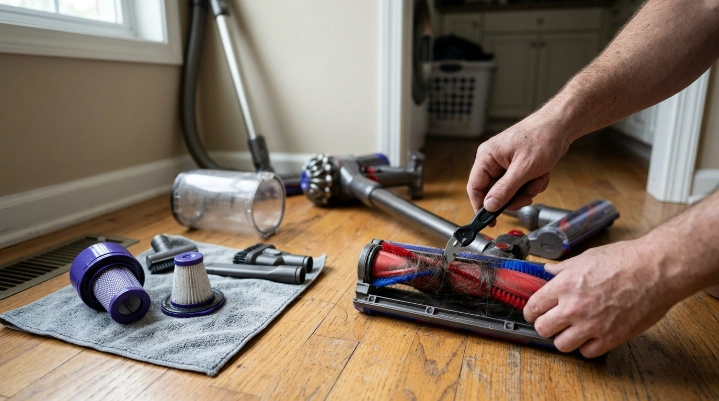
Start by disconnecting the vacuum from power. Unplug a corded model, or remove the battery when your cordless model allows it.
Then work from the dirtiest parts toward the cleaner airflow components. This keeps loose debris from falling back into areas you’ve already cleaned.
- Empty the bin or remove the bag. Do this carefully, preferably where loose dust won’t spread through your living space.
- Remove hair from the brush roll. Cut wrapped strands carefully without cutting the roller, belt, or bristles.
- Inspect the intake. Look for lodged debris around the floor head, neck, and airflow openings.
- Check the hose and wand. Shine a light through removable sections when possible.
- Inspect the filters. Wash only filters specifically labeled or documented as washable.
- Clean attachments. Remove lint, hair, and visible soil from crevice tools and upholstery brushes.
- Wipe the exterior. Use a slightly damp cloth while keeping moisture away from electrical components.
If you wash an approved filter, let it dry completely before reinstalling it. Some manufacturers specify at least 24 hours of drying time for particular filter designs.
For example, Dyson’s 2026 vacuum-cleaning guidance recommends monthly filter cleaning on applicable models and stresses proper drying.
Don’t use a damp filter to save time. Moisture where dry airflow or electrical components are expected can damage the vacuum.
Expert Alert: Stop using the vacuum and contact a qualified repair technician if you notice sparking, a damaged power cord, persistent overheating, melted plastic, or a strong electrical burning smell.
Section Takeaway: Disconnect power first, remove dry debris before washing anything, and never put a damp filter back into a vacuum.
When Should You Clean a Vacuum More Often?
Some homes load a vacuum with debris much faster than others. In these situations, calendar-based cleaning alone isn’t enough.
You Have Shedding Pets
Pet hair can fill small dust bins quickly and wrap tightly around rotating brushes. It can also collect around attachment bristles and intake openings.
Check the brush roll and dust container more often during seasonal shedding. A quick inspection after each major cleaning session can prevent a larger tangle.
Someone in the Home Has Allergies or Asthma
Household dust may contain pollen, pet dander, dust-mite material, and other particles. Keeping a vacuum’s filtration system maintained helps the machine operate as designed.
The CDC recommends regular vacuuming with HEPA filtration as one measure for reducing exposure to certain asthma triggers, including dust mites.
The Asthma and Allergy Foundation of America also advises regular HEPA-filter vacuuming as part of a broader dust-mite control strategy.
These recommendations don’t mean vacuuming removes every allergen. They support treating vacuuming as one part of a wider household cleaning plan.
You Vacuum Fine Dust
Fine construction dust, powder, fireplace ash, and similar particles can challenge ordinary household vacuums. Some materials should not be collected with a standard dry vacuum at all.
If your machine is approved for the material, inspect its filter sooner afterward. Fine particles can load filter media faster than ordinary crumbs or hair.
You Use the Vacuum Every Day
Daily use simply moves more air and debris through the machine. That usually means bins, rollers, and filters need attention sooner.
Robot vacuums are a good example. They may run every day, so their small bins, side brushes, main rollers, sensors, and filters can accumulate dirt quickly.
How Can You Tell a Vacuum Needs Cleaning?
Your vacuum often gives warning signs before it stops working properly. Changes in suction, sound, smell, and temperature are worth investigating.
- Weak suction: The bin, bag, filter, hose, wand, or floor head may be restricted.
- Debris left behind: Check the brush roll, height setting, intake opening, and airflow path.
- Hair-covered roller: Wrapped strands can interfere with normal brush movement.
- Dusty or stale smell: Inspect the bag, bin, filters, roller, and attachments for accumulated debris.
- Unusual noise: A blockage or trapped object may be interfering with airflow or moving parts.
- Frequent overheating: Restricted airflow can be one possible cause, though mechanical problems are also possible.
- Dust escaping: Check filter installation, seals, the bag, and dust-bin closure.
I use suction as my first warning sign. When a vacuum suddenly needs several passes over crumbs it would normally collect once, I check airflow before assuming the motor is failing.
Cleaning early is usually simpler. Waiting until airflow becomes severely restricted lets debris pack more firmly into filters, bends, and intake passages.
What Vacuum Cleaning Mistakes Should You Avoid?
The biggest mistake is treating every removable part as washable. Vacuum components use different papers, foams, fibers, seals, electronics, and adhesives.
- Don’t wash unapproved filters: A non-washable filter can be damaged by water.
- Don’t reinstall damp parts: Allow washable components to dry completely.
- Don’t poke clogs with sharp metal objects: You can puncture a hose or damage internal parts.
- Don’t cut blindly around a brush roll: Scissors can nick bristles, belts, wires, or soft roller material.
- Don’t wet the motor housing: Electrical sections should remain dry unless the manufacturer specifically states otherwise.
- Don’t ignore the manual: Maintenance steps differ across upright, canister, stick, handheld, and robot vacuums.
Another mistake is cleaning only the dust bin. A spotless bin won’t restore suction if the filter is loaded or the hose is partly blocked.
A complete maintenance check follows the whole airflow path. Start where dirt enters and continue toward the filters and exhaust.
Section Takeaway: Clean the entire airflow path, but only wash parts your manufacturer identifies as washable.
Frequently Asked Questions
Should I clean my vacuum after every use?
You don’t usually need a full deep clean after every use. Check the bin or bag, intake, and brush roll, then remove obvious debris before storing the machine.
How often should I deep-clean a vacuum cleaner?
About once a month is a useful baseline for many households. Heavy daily use, shedding pets, long hair, or fine dust may justify inspecting and cleaning relevant parts sooner.
How often should vacuum filters be cleaned?
Follow your model’s manual because filter designs vary. Some manufacturers recommend monthly cleaning for washable filters, while non-washable filters may require periodic replacement instead.
Can I wash a HEPA vacuum filter?
Only if the manufacturer specifically says that filter is washable. HEPA describes a filtration performance category, not whether the filter material can safely be rinsed with water.
How often should I clean hair from the vacuum brush?
Inspect the brush roll about weekly in a typical home. Check it more often when people have long hair, pets are shedding heavily, or threads and fibers frequently wrap around the roller.
Does a dirty vacuum filter reduce suction?
It can. A heavily loaded filter may restrict airflow, although low suction can also come from a full bag, packed bin, clogged hose, blocked floor head, or mechanical problem.
Is it safe to use a vacuum while the filter is still damp?
No, not unless the manufacturer explicitly designed the machine for that condition. Washable vacuum filters should normally be completely dry before they are returned to a standard dry vacuum.
A clean vacuum doesn’t require hours of work. A few quick checks after use and a more complete monthly routine can keep dirt from building up in the parts that matter most.
Start with your own vacuum’s manual, then adjust the schedule to your household. If suction, odor, noise, or heat changes before cleaning day, inspect the machine early rather than waiting for the calendar.