How to Recycle an Old Vacuum Cleaner

Quick Answer
To recycle an old vacuum cleaner, first decide whether it still works, then remove loose dirt, detachable bags, and any user-removable battery. Take the machine to an electronics or small-appliance recycling program that accepts vacuums, following the EPA’s electronics recycling guidance and your local waste rules rather than placing it automatically in curbside recycling.
Quick recycling steps
- Check its condition: Donate, sell, or give away a vacuum that still works safely.
- Empty the dirt: Remove dust, debris, disposable bags, and loose pet hair before transport.
- Check the battery: Cordless and robot vacuums may contain lithium-ion batteries that need separate handling.
- Find an approved site: Ask an electronics recycler, manufacturer take-back program, retailer, or local waste authority whether it accepts vacuums.
- Keep it intact: Don’t cut wires, open battery packs, or dismantle electrical parts unless a recycling facility specifically instructs you to.
One important check
- Call or check the recycler’s accepted-items list before making the trip because local programs classify small electrical appliances differently.
An old vacuum cleaner doesn’t have to go straight into the trash. Vacuums contain a mix of motors, wiring, plastics, filters, and sometimes rechargeable batteries, so I treat disposal as a small-appliance recycling job rather than normal household recycling.
The exact route depends on the vacuum and your local program. Here’s the practical process I use to decide whether to reuse, recycle, or dispose of one safely.
In This Guide
- Can Old Vacuum Cleaners Be Recycled?
- How Do You Recycle an Old Vacuum Cleaner Step by Step?
- Where Can You Recycle an Old Vacuum Cleaner?
- What Should You Do With Cordless and Robot Vacuum Batteries?
- How Should You Prepare a Vacuum for Recycling or Donation?
- Frequently Asked Questions
- What Is the Best Way to Get Rid of an Old Vacuum?
Can Old Vacuum Cleaners Be Recycled?
Yes, many old vacuum cleaners can be recycled, but you usually can’t put the whole machine in a household recycling bin. The correct option depends on what your local electronics, appliance, or solid-waste program accepts.
Definition: Vacuum cleaner recycling means sending an unwanted vacuum to a program that can recover usable components or materials instead of treating the entire machine as ordinary household trash.
Why isn’t a vacuum normal curbside recycling?
A vacuum isn’t one simple material. Even a basic upright model may combine a metal motor, copper wiring, molded plastics, circuit components, filters, wheels, hoses, and a power cord.
That mixed construction requires more sorting than bottles, cans, cardboard, and other common curbside materials.
- Corded uprights: Usually contain an electric motor, wiring, plastic housing, and a long power cable.
- Canister vacuums: Add hoses, wands, floor heads, and several removable accessories.
- Stick vacuums: Often contain rechargeable battery packs and electronic controls.
- Robot vacuums: May contain circuit boards, sensors, rechargeable batteries, motors, and charging equipment.
The EPA describes recycling as collecting and processing materials that would otherwise become waste, while also placing reduction and reuse ahead of recycling in its waste-management hierarchy. That makes reuse worth considering before you scrap a functioning machine.
You can read the broader EPA recycling basics and benefits for that waste-management approach.
Should you recycle or reuse it?
If the vacuum still runs well and has no serious electrical problem, reuse may be the better first option. Someone else may still get years of cleaning from it.
- Donate a clean, working vacuum to an organization that accepts appliances.
- Sell it locally if it still has useful value.
- Give it to a friend, student, renter, or family member.
- Offer working attachments or chargers separately if the main machine has failed.
- Recycle it when repair or reuse no longer makes practical sense.
I wouldn’t donate a machine with a damaged power cord, overheating problem, exposed wiring, swollen battery, or other obvious safety issue. A broken vacuum shouldn’t become somebody else’s problem.
Section Takeaway: A working vacuum is often worth reusing first. A failed vacuum should go to a recycler or waste program that specifically accepts small electrical appliances.
How Do You Recycle an Old Vacuum Cleaner Step by Step?
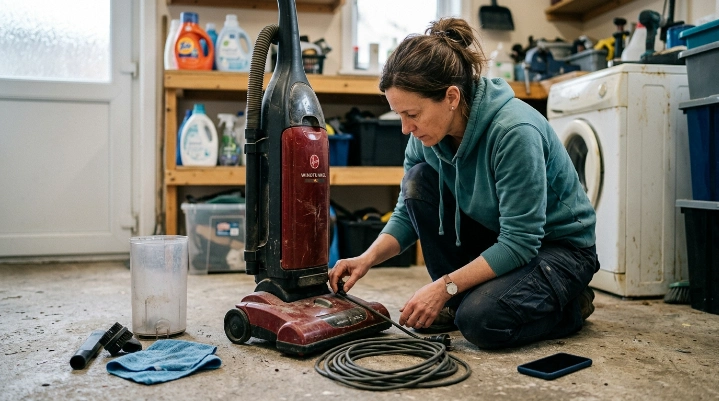
The safest process is simple: evaluate the vacuum, remove ordinary debris, identify the battery type, and confirm a recycling destination before transporting it. Don’t start by tearing the machine apart.
- Test whether it still works. If the vacuum runs normally and remains safe to use, consider donation or resale before recycling.
- Unplug and cool it down. Never clean or inspect a corded vacuum while it’s connected to power.
- Empty the collection system. Remove the disposable bag or empty the dustbin into household trash as appropriate.
- Remove loose debris. Clear pet hair, dust clumps, and ordinary debris from easily accessible areas.
- Check for a rechargeable battery. Cordless sticks, handheld models, and robot vacuums commonly use rechargeable packs.
- Remove the battery only if designed for user removal. Follow the manufacturer’s instructions rather than opening a sealed battery housing.
- Contact a recycling destination. Confirm that it accepts your type of vacuum before you leave home.
- Transport it safely. Keep batteries protected from damage and keep loose accessories together.
What if the vacuum still works but you don’t want it?
A working vacuum may have more value as a complete appliance than as separated recycling material. I normally check reuse options before looking for an e-waste drop-off.
Clean it enough that the next person doesn’t inherit a bin full of dust or an old bag full of debris. Include the charger and useful attachments when possible.
What if the motor has failed?
A dead motor doesn’t automatically make the entire vacuum worthless. Electronics and appliance recyclers may still recover metal, wiring, circuit components, or other materials depending on their process.
Don’t remove the motor yourself just to make the machine easier to recycle. Most households gain little from dismantling electrical appliances at home.
Expert Alert: If accessing the motor requires opening electrical housings, cutting wires, or working around capacitors or damaged electronics, leave the appliance intact and use a qualified repair technician or appropriate recycling facility.
Section Takeaway: Prepare the vacuum, but don’t perform unnecessary electrical disassembly. The recycler should handle material separation unless it gives you different instructions.
Where Can You Recycle an Old Vacuum Cleaner?
Your best option is usually an electronics recycler, local appliance program, manufacturer take-back service, or municipal collection site that confirms it accepts vacuum cleaners. Acceptance rules vary by location.
This is why I always check before loading an old upright or canister into the car.
| Option | Best For | Working Vacuum? | Broken Vacuum? | Check Before Going |
|---|---|---|---|---|
| Donation or reuse | Clean, safe machines | Yes | Usually no | Condition requirements |
| Electronics recycler | Corded, cordless, and electronic models | Often | Often | Vacuum and battery acceptance |
| Manufacturer or retailer program | Eligible brands or products | Varies | Varies | Brand, model, fees, and drop-off rules |
| Municipal collection site | Local residents | Varies | Often | Residency, schedules, and fees |
| Bulky-waste program | Machines not accepted elsewhere | Not ideal | Sometimes | Whether electronics are accepted |
Look for electronics recyclers first
For a broken powered appliance, an electronics recycler is a strong place to start. Ask specifically about vacuum cleaners or small electrical appliances rather than assuming all e-waste programs accept them.
The EPA explains that certified electronics recyclers can follow audited standards for managing used electronics. Its certified electronics recyclers guidance also explains the R2 and e-Stewards certification systems.
Check local government programs
Municipal waste agencies may run permanent drop-off sites, scheduled electronics events, appliance collection, or bulky-waste services. Rules can differ even between nearby cities.
As of 2026, EPA guidance still emphasizes checking state and community recycling options rather than assuming one nationwide disposal rule applies everywhere.
Check manufacturer and retailer take-back programs
Some manufacturers and retailers collect certain unwanted electronics or rechargeable batteries. Programs can change, and they may accept only selected products.
Use the manufacturer’s official support page or contact the retailer before traveling with the vacuum.
Section Takeaway: The best recycling destination is one that explicitly accepts your vacuum type. Confirm the appliance and battery rules before transport.
What Should You Do With Cordless and Robot Vacuum Batteries?
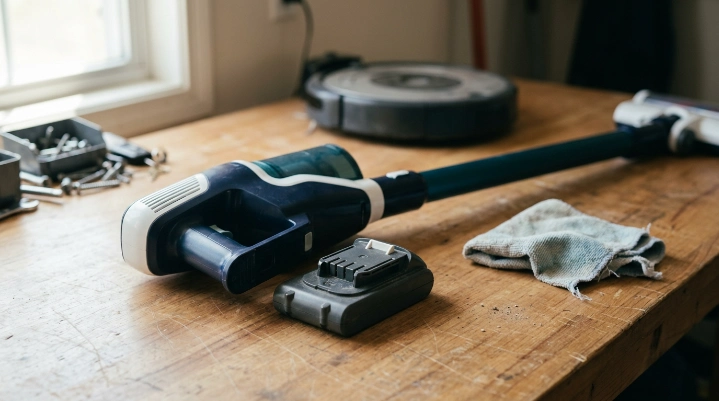
Treat the battery as a separate safety issue. Lithium-ion batteries and devices containing them should not be placed in household garbage or ordinary municipal recycling bins.
That matters for cordless stick vacuums, handheld vacuums, and many robot vacuum cleaners.
If the battery is designed to come out
Remove it only according to the appliance manufacturer’s directions. Don’t pry apart a housing or puncture a battery pack.
- Inspect it: Look for swelling, cracks, leaking, heat damage, or other visible damage.
- Protect terminals: Prevent exposed terminals from contacting metal objects.
- Keep it separate: Don’t toss a loose lithium-ion battery into a curbside recycling bin.
- Use a battery collection option: Take it to an appropriate battery recycler, electronics recycler, retailer take-back point, or local household hazardous waste program.
The EPA’s current used lithium-ion battery guidance recommends separate collection and advises protecting battery terminals during handling.
What if the battery is built into the vacuum?
Don’t force it out. Take the complete device to a facility that accepts electronics containing rechargeable batteries.
This approach is especially sensible with compact robot vacuums where the battery may sit behind a screwed panel or electrical cover.
What if the battery is swollen or damaged?
Stop using the vacuum and avoid crushing, puncturing, bending, or opening the pack. Follow the manufacturer’s handling advice and contact an appropriate battery or household hazardous waste program.
Don’t keep using a damaged rechargeable battery merely to drain the remaining charge.
Expert Alert: Don’t attempt to repair, rebuild, puncture, or open a lithium-ion battery pack. A damaged or inaccessible battery should be handled through the manufacturer or a qualified battery or electronics recycling program.
Section Takeaway: Battery-powered vacuums need one extra check. Keep lithium-ion batteries out of household trash and curbside recycling, and never dismantle a sealed pack yourself.
How Should You Prepare a Vacuum for Recycling or Donation?
Empty the vacuum, remove ordinary debris, gather accessories, and deal with any removable battery correctly. You don’t need to make a broken machine look new.
Empty the dust first
Recyclers need the appliance, not the dirt you’ve collected with it. Empty a bagless bin and remove disposable vacuum bags before transport.
- Seal dusty disposable bags before putting them in household trash.
- Empty bagless bins carefully to avoid spreading dust indoors.
- Remove tangled hair that comes away without taking electrical parts apart.
- Keep reusable bins, covers, and structural parts with the vacuum.
If I know a dustbin is going to release a cloud, I empty it outdoors or directly into a larger waste bag. That makes the final handoff cleaner and easier.
Should you remove HEPA filters?
A HEPA filter is a high-efficiency particulate air filter used to capture fine airborne particles in compatible appliances. Whether you should remove one before recycling depends on the recycler’s instructions.
Disposable vacuum filters aren’t automatically recyclable just because the vacuum itself is accepted for recycling.
- Clean reusable filters: Follow the manufacturer’s care instructions if you plan to donate the vacuum.
- Dirty disposable filters: Bag them before disposal if the recycler asks you to remove them.
- Don’t wash every filter: Some filters are not designed for water exposure.
What if the vacuum was used around mold?
A vacuum that contains visible mold growth, damp debris, or a strong contamination problem deserves extra care. Avoid shaking contaminated dust or brushing dried material into the air.
If contamination is limited to removable debris, bag the waste and follow local disposal rules before recycling the appliance.
Expert Alert: If the vacuum itself has extensive mold contamination or was used during a major mold remediation job, ask the remediation professional or recycling facility how it should be handled instead of dismantling or aggressively cleaning it indoors.
What should you not do?
- Don’t curbside-bin it blindly: Confirm that your local program accepts the appliance.
- Don’t hide a battery: Tell the recycler when a cordless or robot vacuum contains a rechargeable pack.
- Don’t cut the cord off: Leave electrical components intact unless the recycler requests otherwise.
- Don’t smash the housing: Breaking the machine can expose wiring, electronics, sharp pieces, or batteries.
- Don’t donate unsafe equipment: Damaged electrical appliances belong in repair or recycling channels, not reuse programs.
Section Takeaway: Clean enough to remove household dirt, but don’t turn recycling preparation into appliance disassembly. Keep the vacuum complete unless the receiving facility tells you otherwise.
Frequently Asked Questions
Can I put an old vacuum cleaner in the recycling bin?
Usually, you shouldn’t put a complete vacuum into ordinary curbside recycling unless your local authority specifically says it accepts small electrical appliances there. Vacuums contain mixed materials and electrical components that often require a dedicated collection route.
Can I throw a vacuum cleaner in the regular trash?
Local rules determine whether a corded vacuum can enter household trash or bulky waste. Recycling or reuse is worth checking first, and lithium-ion batteries should not go into household garbage even when the rest of the machine has reached end of life.
Are vacuum cleaners considered e-waste?
Many recycling programs handle powered vacuums alongside electronics or small electrical appliances, especially models containing circuit boards or rechargeable batteries. However, local classifications differ, so ask the receiving facility whether it accepts vacuum cleaners specifically.
Does Best Buy, a vacuum store, or another retailer recycle vacuums?
Retail take-back policies can change by company, location, product category, and battery type. Check the retailer’s current official recycling policy or contact the store before bringing in your vacuum.
Can I recycle a Dyson, Shark, or other cordless vacuum?
The brand doesn’t change the basic process. Check for a removable rechargeable battery, follow the manufacturer’s removal instructions, and confirm that the recycler accepts both the vacuum and its battery or tells you where each should go.
What should I do with old vacuum attachments?
Reusable hoses, wands, brushes, chargers, and floor heads may be worth donating or offering with the vacuum. Don’t place plastic attachments in curbside recycling unless your local program confirms that those specific items and plastic types are accepted.
Should I repair a vacuum before recycling it?
A simple repair may make sense when the vacuum is otherwise useful, especially for problems involving bags, filters, belts, clogs, or replaceable attachments. For serious motor, battery, or electrical faults, compare repair value with responsible recycling instead of attempting unsafe DIY work.
What Is the Best Way to Get Rid of an Old Vacuum?
The best route is reuse first when the machine still works, followed by a recycling program that accepts small powered appliances. A cordless or robot vacuum also needs proper battery handling.
My rule is simple: don’t guess where an appliance belongs. Check the machine, clean out the household debris, identify the battery, and confirm the destination before you leave home.
- Working and safe: Donate, sell, or give it away.
- Broken and corded: Look for electronics, appliance, or municipal recycling.
- Broken and cordless: Confirm both appliance and lithium-ion battery acceptance.
- Unsafe or damaged: Keep it out of reuse channels and ask the appropriate waste or recycling program for handling instructions.
That small amount of preparation keeps a bulky old vacuum from becoming a confusing last-minute disposal problem. It also gives reusable machines and recyclable components a better chance of staying in circulation.
If you’re clearing out an old vacuum today, start by checking its battery label and your local electronics recycling rules. Those two details usually tell you which disposal path to take next.
“`