How to Dispose of a Vacuum Cleaner Safely and Responsibly

Quick Answer
The best way to dispose of a vacuum cleaner is to reuse, donate, repair, or recycle it instead of automatically putting it in the trash. If it contains a rechargeable lithium-ion battery, follow EPA electronics recycling guidance and keep the battery or battery-powered device out of household trash and curbside recycling.
Quick disposal steps
- 1. Check its condition: Donate or sell a working vacuum before considering disposal.
- 2. Identify the battery: Check whether a cordless or robot vacuum contains a removable rechargeable battery.
- 3. Find local recycling: Ask an electronics, e-waste, or small-appliance recycler whether it accepts vacuum cleaners.
- 4. Handle batteries separately: Follow local battery-recycling rules and the manufacturer’s removal instructions.
- 5. Clean it first: Empty dust, remove debris, and seal dirty bags or filters before transport.
- 6. Check local rules: Disposal requirements differ by city, state, and country.
I’ve retired enough upright, canister, stick, and robot vacuums to learn that throwing one away is rarely the first option. A vacuum mixes plastic, metal, wiring, filters, electronics, and sometimes a rechargeable battery.
That makes proper vacuum cleaner disposal a little different from getting rid of ordinary household waste. Here’s how I decide what to reuse, recycle, separate, or take to a specialist collection point.
In This Guide
What Is the Best Way to Dispose of a Vacuum Cleaner?
The best route depends on whether the vacuum still works and whether it contains a rechargeable battery. I normally work through reuse, repair, recycling, and disposal in that order.
Definition: Vacuum cleaner disposal means choosing a safe end-of-life route for the appliance, its battery, filters, dust, and reusable or recyclable parts.
Start with reuse if the vacuum still works
A vacuum that still has good suction and no electrical problems may have useful life left. Selling it, giving it away, or donating it can keep the entire appliance in use.
- Test basic operation: Confirm that the motor, switch, cord, charging system, and floor head work normally.
- Empty the machine: Remove dust from the bin or install a fresh bag.
- Clean washable parts: Wash only components the manufacturer identifies as washable, then let them dry completely.
- Include useful accessories: Crevice tools, upholstery tools, chargers, and docking stations make reuse easier.
I avoid donating a machine with a frayed cord, overheating motor, damaged battery, burning smell, or exposed wiring. Passing an unsafe appliance to someone else only moves the problem.
Recycle it when repair or reuse no longer makes sense
A broken vacuum may still contain reusable materials. Motors, wiring, metals, plastics, circuit boards, and batteries can require different handling depending on the recycler.
The U.S. Environmental Protection Agency recommends recycling unwanted electronics through appropriate collection programs and encourages the use of qualified electronics recyclers. You can review its certified electronics recycler guidance when searching for a facility.
- Municipal e-waste centers: Some accept small electrical appliances.
- Retail take-back programs: Acceptance depends on the retailer, product, and location.
- Electronics recyclers: Ask specifically whether vacuum cleaners are accepted.
- Household hazardous waste programs: These may handle certain rechargeable batteries or battery-containing devices.
Never assume your normal curbside recycling cart accepts a vacuum. Check with the local waste authority before placing any electrical appliance in a municipal collection stream.
Section Takeaway: Reuse a safe working vacuum first. If it is broken, look for an approved electronics or small-appliance recycling route instead of assuming it belongs in the trash.
Can You Donate, Sell, or Repair an Old Vacuum?
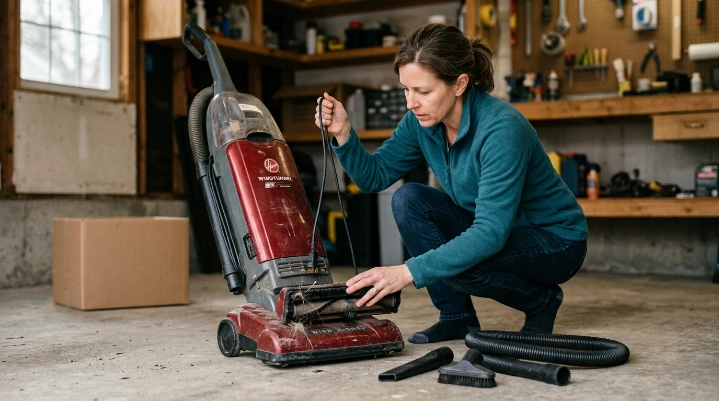
Yes, if the vacuum is safe and functional. Reuse is often the simplest end-of-life option because the whole machine stays useful instead of being dismantled.
When donation makes sense
I would consider donation when the vacuum starts normally, maintains suction, and has no obvious electrical or battery damage. It should also be clean enough that another household can use it without inheriting your dust.
- Empty the dust cup or replace the disposable bag.
- Remove hair from the brush roll.
- Clean tools and external surfaces.
- Check the hose for large clogs.
- Include the charger with cordless models.
- Tell the recipient about any known defects.
The EPA also encourages selling or donating usable appliances and electronics as a way to reduce waste. Its broader reduce, reuse, and donation guidance explains why extending product life can be preferable to immediate disposal.
When repair is worth considering
A torn hose, clogged airway, worn belt, blocked brush roll, or replaceable filter can make a healthy vacuum feel finished. I check those simple problems before retiring a machine.
Motor, battery, control-board, or internal wiring repairs are different. Repair cost and parts availability can quickly determine whether keeping an older vacuum makes sense.
Expert Alert: If a vacuum has exposed wiring, repeated overheating, sparking, a damaged power cord, or a swollen battery, stop using it. Have a qualified appliance technician or appropriate waste facility handle the problem rather than attempting unsafe electrical repairs.
Do not donate a badly contaminated vacuum
A vacuum used around heavy mold contamination, construction dust, pest waste, or another hazardous material may need special handling. A quick wipe-down does not guarantee that internal dust pathways are clean.
Used HEPA filters, pre-filters, and dust bags can hold fine particles and allergens. I seal heavily soiled disposable filters or bags before putting them into an allowed household waste stream.
Expert Alert: If the vacuum was used for suspected asbestos, lead-contaminated dust, sewage, or extensive mold remediation, get disposal advice from the relevant environmental or remediation professional. Do not dismantle a contaminated vacuum indoors.
Section Takeaway: Donate only a clean, working, electrically safe vacuum. Repair simple faults first, but treat electrical, battery, or hazardous-contamination problems as specialist issues.
How Do You Recycle Different Types of Vacuum Cleaners?
The disposal route changes most when a vacuum contains a rechargeable battery. Corded machines are simpler, while cordless and robot vacuums need an extra battery check.
Corded upright and canister vacuums
A corded upright or canister vacuum usually goes to a program that accepts small electrical appliances or electronics. Call ahead because acceptance rules differ between facilities.
- Ask whether the facility accepts vacuum cleaners specifically.
- Leave the motor and wiring intact unless the recycler tells you otherwise.
- Remove household dust and loose debris before transport.
- Keep reusable attachments if they fit another compatible machine.
Cordless stick and handheld vacuums
First identify the battery. Many rechargeable household appliances use lithium-ion batteries, but you should check the battery label or manufacturer instructions instead of guessing.
As of 2026, EPA guidance says lithium-ion batteries and devices containing them should not be placed in household garbage or municipal recycling bins. They should go to an appropriate battery, electronics, or household hazardous waste collection point.
The EPA’s used lithium-ion battery guidance also recommends protecting battery terminals from contact when the battery is removed for recycling.
- Removable battery: Remove it only in the normal user-serviceable manner described by the manufacturer.
- Exposed terminals: EPA recommends non-conductive tape over terminals or placing individual batteries in separate bags.
- Built-in battery: Do not pry the appliance apart just to reach the battery.
- Damaged battery: Contact the manufacturer or local hazardous waste program for handling directions.
Robot vacuums
A robot vacuum is an electronic appliance with sensors, circuit boards, a charging system, and a rechargeable battery. I treat it more like consumer electronics than an ordinary piece of household plastic.
Keep its charging dock and power adapter with it if donating the machine. For recycling, ask whether the facility wants the battery removed or left inside.
What about brands such as Dyson or Shark?
The brand does not decide the disposal method. The important questions are whether the machine works, what battery chemistry it uses, and what your local collection program accepts.
That same approach applies to stick, upright, canister, handheld, and robot models. Check the model manual before removing batteries or opening the housing.
Section Takeaway: Corded vacuums usually need small-appliance or electronics recycling, while cordless and robot models require special attention to the rechargeable battery.
How Should You Prepare a Vacuum for Disposal?
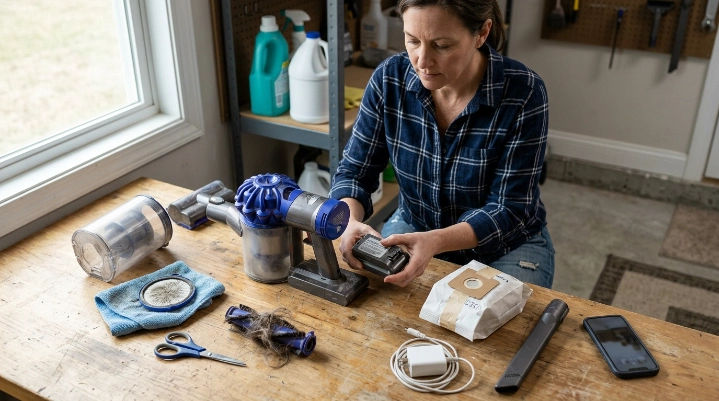
Prepare the vacuum before taking it to a donation center or recycler. A few minutes of cleaning makes the appliance safer and less unpleasant to handle.
Use this pre-disposal checklist
- Unplug or power down the vacuum. Disconnect the charger before cleaning or inspecting it.
- Empty the dust container. Bag dust carefully so it does not spread back into the room.
- Remove disposable bags. Seal a full bag before placing it into an allowed household waste stream.
- Check filters. Do not wash a HEPA or other filter unless its manufacturer says it is washable.
- Remove wrapped hair. Cut hair and thread away from the brush roll if you can do so safely.
- Inspect the battery. Look for swelling, cracking, unusual heat, leakage, or other visible damage.
- Gather accessories. Keep chargers, docks, extension tubes, and useful attachments with a donated vacuum.
- Call the destination. Confirm that the recycler or donation center accepts your specific type of vacuum.
What should you do with dirty filters and vacuum bags?
Used vacuum bags and filters are not automatically recyclable just because part of the appliance is recyclable. Dust, hair, allergens, and mixed filter materials can make them unsuitable for normal recycling streams.
I seal dusty disposable filters and bags before discarding them according to local household waste rules. This helps keep loose debris from escaping during handling.
If the vacuum uses a reusable pre-filter, you may want to keep it only when the vacuum itself is being reused. Follow the manufacturer’s cleaning instructions before giving the machine to someone else.
What if the battery looks swollen or damaged?
Do not puncture, crush, bend, or force a damaged rechargeable battery out of the machine. Stop charging and using the vacuum.
EPA guidance advises contacting the battery or device manufacturer for specific handling instructions when a lithium-ion battery is damaged. Your local household hazardous waste program may also provide disposal directions.
Section Takeaway: Empty the vacuum, contain dusty materials, inspect the battery, and confirm acceptance before traveling to a recycler or donation site.
Which Vacuum Disposal Option Should You Choose?
The table below shows the route I would check first for common vacuum situations. Local waste rules always take priority.
| Vacuum condition or type | Best first option | Battery action | Key consideration |
|---|---|---|---|
| Working corded vacuum | Donate, sell, or give away | None | Clean it and disclose defects |
| Broken corded vacuum | Small-appliance or electronics recycler | None | Confirm the facility accepts vacuums |
| Cordless vacuum with removable Li-ion battery | Electronics recycler plus approved battery collection | Remove only as designed; protect terminals | Do not put the battery in household trash or curbside recycling |
| Vacuum with built-in rechargeable battery | Recycler that accepts battery-containing devices | Leave installed unless instructed otherwise | Do not force the housing open |
| Robot vacuum | Reuse or electronics recycling | Check manufacturer instructions | Keep dock and charger with a reusable unit |
| Vacuum exposed to hazardous material | Professional or locally approved disposal route | Follow specialist advice | Do not donate or dismantle before getting guidance |
Why I do not dismantle a vacuum just for recycling
It can be tempting to pull out the motor, copper wire, circuit boards, and plastic housing yourself. I usually leave that work to a recycler.
Dismantling can expose sharp edges, electrical components, contaminated dust, or a battery you did not know was present. A facility can also tell you whether it wants the appliance intact.
Can a vacuum ever go in normal household trash?
That depends entirely on local rules and the vacuum’s battery. Some jurisdictions may permit certain corded appliances in bulky waste, while others require electronic or appliance recycling.
A lithium-ion battery or a device containing one should not be placed in household garbage. EPA guidance is explicit on that point.
Section Takeaway: Match the disposal route to the vacuum’s condition and battery type, then confirm the rule with your local waste provider before dropping it off.
Frequently Asked Questions
Can I put an old vacuum cleaner in the garbage?
Do not assume you can. Local appliance and e-waste rules vary, and battery-powered vacuums need extra care. If the vacuum contains a lithium-ion battery, it should not go into household garbage or municipal recycling. Check your local waste authority first.
Can vacuum cleaners be recycled?
Yes, many can be handled through electronics or small-appliance recycling programs. Acceptance varies by facility, so call ahead. Recyclers may recover useful materials from motors, wiring, electronics, and other components rather than sending the entire machine into the waste stream.
Where can I recycle a vacuum cleaner?
Start with your municipal e-waste program, household waste authority, electronics recycler, or retailer take-back program. Ask specifically about vacuum cleaners because a facility that accepts computers or televisions does not automatically accept every small electrical appliance.
What should I do with a cordless vacuum battery?
Identify the battery chemistry from its label or manual. If it is lithium-ion, use an approved battery or electronics collection point. Remove it only if the manufacturer designed it for user removal, and follow EPA guidance for protecting exposed terminals during transport.
Can I donate a vacuum cleaner?
Yes, if it works safely and is reasonably clean. Test the power system, suction, brush roll, cord or charger, and basic controls first. Avoid donating a vacuum with overheating, battery damage, exposed wiring, severe contamination, or another condition that could put the next user at risk.
Should I remove the HEPA filter before recycling a vacuum?
You can remove a dirty disposable filter to keep dust contained, but filter disposal rules depend on its materials and local program. Do not place a used HEPA filter in curbside recycling unless your local recycler specifically says it accepts that filter type.
How do I dispose of a robot vacuum?
Treat a robot vacuum as an electronic appliance. If it still works, reuse or donation is a good first choice. If broken, look for an electronics recycler that accepts it and follow the manufacturer’s instructions for its rechargeable battery.
Final Takeaway
When I dispose of a vacuum cleaner, I start by asking one question: can someone safely keep using it? If yes, reuse or donation usually beats throwing it away.
If the machine is finished, identify the battery and find a local electronics or small-appliance recycling route. Cordless and robot vacuums deserve special attention because rechargeable batteries need separate end-of-life handling.
Most importantly, do not guess. Check the vacuum manual, contact the recycler before visiting, and follow your local waste rules so the machine ends its useful life as safely as possible.
Before you toss your old vacuum, give it one final condition and battery check. Those two details usually tell you the safest next step.