How to Vacuum Quietly: 12 Practical Ways to Reduce Vacuum Noise

Quick Answer
To vacuum quietly, use the lowest effective power setting, keep filters and airflow paths clean, choose the right floor attachment, and avoid repeatedly striking furniture or baseboards. If your vacuum sounds unusually loud, check for blockages or worn parts before continuing. For perspective, the National Institute on Deafness and Other Communication Disorders explains safe sound levels and when hearing protection may be appropriate.
Quick steps for quieter vacuuming
- Lower the power: Use the weakest suction setting that still cleans the surface effectively.
- Clean the filters: Restricted airflow can make the motor work harder and change its sound.
- Check for clogs: Inspect the hose, wand, floor head, and air passages.
- Use smooth attachments: A suitable hard-floor or carpet head reduces unnecessary rattling and scraping.
- Vacuum slowly: Controlled passes reduce bumps while helping you avoid repeating the same area.
- Choose your timing: Clean when sleeping family members, neighbors, or noise-sensitive pets are least likely to be disturbed.
One important warning
- A sudden grinding, squealing, knocking, or much louder motor sound can indicate a mechanical problem rather than normal vacuum noise.
I understand why people search for ways to vacuum quietly. A vacuum can interrupt sleep, phone calls, television, studying, pets, and neighbors within minutes.
Fortunately, quieter cleaning usually doesn’t require giving up suction. This guide shows how to control vacuum noise while still removing household dust, crumbs, hair, and allergens effectively.
In This Guide
Why Are Vacuum Cleaners So Loud?
A vacuum cleaner produces noise mainly through its motor, moving airflow, rotating brush roll, wheels, attachments, and vibration through the machine’s body. Different surfaces can also change how loud the same vacuum seems.
Quiet vacuuming means reducing unnecessary sound while maintaining enough airflow and agitation to pick up dirt effectively.
The motor and airflow create the base noise
The motor spins a fan that creates the pressure difference responsible for suction. Higher power settings often increase motor speed, airflow, and perceived noise.
A restricted airflow path can also change the sound dramatically. A clog may produce whistling, surging, or a strained motor tone.
- Motor noise: The steady mechanical sound produced while the vacuum runs.
- Airflow noise: The rushing or whistling sound moving air creates.
- Brush-roll noise: The vibration and tapping created by a spinning floor brush.
- Impact noise: The sharp sound caused by hitting walls, furniture, or thresholds.
- Surface vibration: Hard flooring can reflect sound more strongly than soft carpet.
How loud is a normal vacuum?
There isn’t one universal vacuum noise level. Design, power setting, floor surface, distance, and measurement method all matter.
Consumer Reports notes that a typical vacuum is around 70 decibels. Its testing also treats noise as a separate performance factor when evaluating vacuum cleaners.
You can review its current quiet vacuum testing and recommendations if low operating noise is important when replacing a machine.
| Sound reference | Approximate level | What it means |
|---|---|---|
| Normal conversation | About 60–70 dBA | A useful everyday sound reference. |
| Typical household vacuum | Around 70 dB | Individual models can be quieter or considerably louder. |
| NIOSH precaution level | 85 dBA | NIOSH uses 85 dBA over an eight-hour workday as its occupational recommended exposure limit. |
How Do You Vacuum Quietly Step by Step?
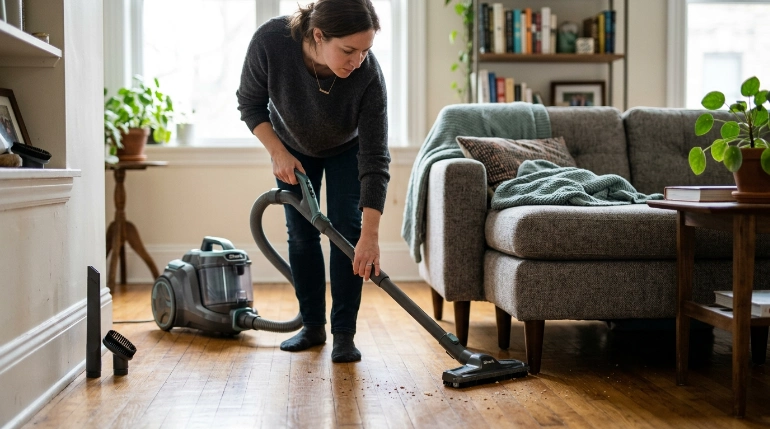
The easiest method is to eliminate avoidable noise before switching the vacuum on. Then use controlled movements and only as much power as the floor requires.
- Clear the floor first. Pick up toys, cables, coins, shoes, and other objects that could strike the vacuum head.
- Inspect the vacuum. Check that the dust bin or bag isn’t overfilled and the hose isn’t visibly blocked.
- Select the correct attachment. Use a hard-floor head on smooth flooring when your vacuum provides one.
- Start on a low setting. Increase suction only if debris remains after a normal pass.
- Turn off the brush roll when appropriate. Many hard floors don’t need an aggressive spinning brush.
- Use long, steady passes. Avoid rapid back-and-forth movements that repeatedly knock the floor head into furniture.
- Clean edges deliberately. A crevice tool is usually easier to control around baseboards than repeatedly striking them with a large floor head.
- Finish one area before moving on. Efficient coverage reduces total operating time.
Don’t sacrifice effective cleaning just to reduce sound
The quietest setting isn’t always the correct setting. Thick carpet, embedded pet hair, or heavier debris may require stronger suction or brush agitation.
Start low and inspect the result. If debris remains, increase power rather than making many weak passes over the same spot.
Reduce noise at the source instead of muffling the vacuum
Don’t cover the motor housing, exhaust vents, or air openings with blankets, foam, towels, or homemade soundproofing. Blocking cooling or exhaust airflow can damage the appliance.
Use manufacturer-approved settings and accessories instead. Sound reduction shouldn’t interfere with normal ventilation.
Section Takeaway: The best quiet-vacuuming routine combines low effective power, correct attachments, smooth movement, and fewer repeated passes.
Which Settings and Attachments Make Vacuuming Quieter?
Your vacuum’s settings can change both noise and cleaning performance. Use each control for the surface you’re cleaning instead of leaving everything on maximum.
Use adjustable suction when available
Low or medium power is often enough for hard flooring, curtains, upholstery, and light surface debris. Maximum power is more useful when stronger pickup is genuinely needed.
Cordless stick vacuums often make this easy because they offer several clearly separated power modes. Canister vacuums may use electronic controls or an airflow adjustment on the handle.
Use the correct floor head
- Hard-floor head: Often reduces brush-roll vibration on wood, laminate, tile, or vinyl.
- Powered brush head: Useful for carpet but can add mechanical noise.
- Crevice tool: Helps prevent repeated impacts against walls and furniture edges.
- Upholstery tool: Gives controlled contact on sofas, chairs, and fabric surfaces.
- Soft dusting brush: Useful for light dust where full floor-head power isn’t needed.
Check the vacuum manual before turning a powered brush roll off. Some machines depend on specific floor-head configurations for proper cleaning.
Can Vacuum Maintenance Reduce Noise?
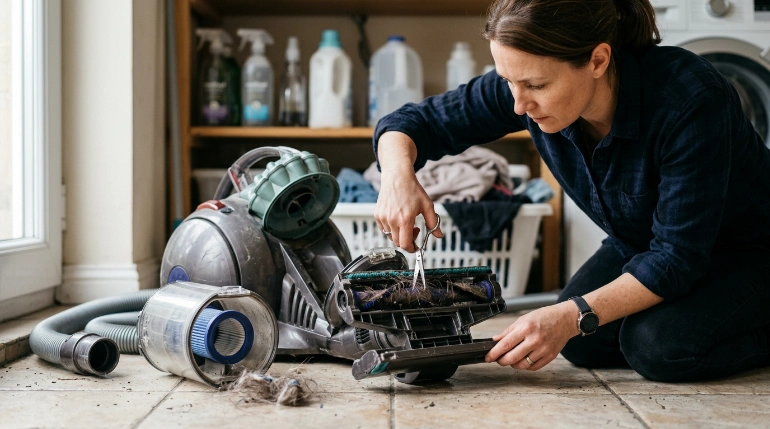
Yes. Maintenance won’t turn a naturally loud vacuum into a silent machine, but it can stop preventable whistles, rattles, strain, and vibration.
A vacuum that suddenly gets louder deserves attention. The change may indicate restricted airflow or a damaged moving part.
Check for airflow restrictions
Disconnect the vacuum from power before removing a hose, brush roll, or cover. Cordless models should also be switched off according to the manufacturer’s instructions.
- Empty an overfilled dust bin.
- Replace a full disposable bag.
- Inspect the hose for compacted debris.
- Check bends in the wand and floor head.
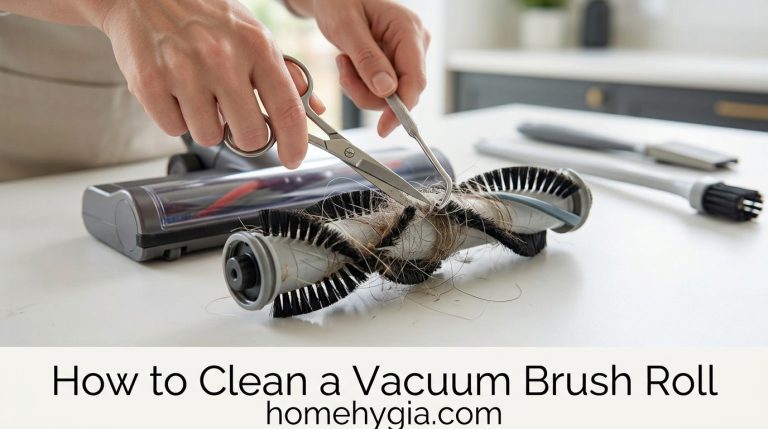
- Remove wrapped hair from the brush roll.
- Clean or replace filters according to the manual.
Keep filtration working correctly
Filtration matters for household hygiene as well as airflow. EPA explains that a HEPA filter is designed to capture at least 99.97% of particles measuring 0.3 microns under the defined test conditions.
You can read the EPA explanation of HEPA filtration for the technical definition.
A filter should only be washed if its manufacturer specifically says it’s washable. Washing a non-washable filter can damage it.
Listen for abnormal mechanical sounds
A repetitive knocking noise can come from debris trapped around the brush roll. Squealing may indicate a roller, belt, bearing, or another moving component needs inspection.
Grinding, burning smells, electrical crackling, smoke, or overheating are different. Stop using the vacuum rather than trying to make it quieter while it continues running.
Expert Alert: If you suspect an electrical fault, damaged motor, internal bearing problem, or overheating component, unplug the vacuum and have a qualified appliance technician inspect it.
Section Takeaway: When a familiar vacuum suddenly becomes louder, inspect airflow, filters, brush-roll movement, and loose components before assuming the extra noise is normal.
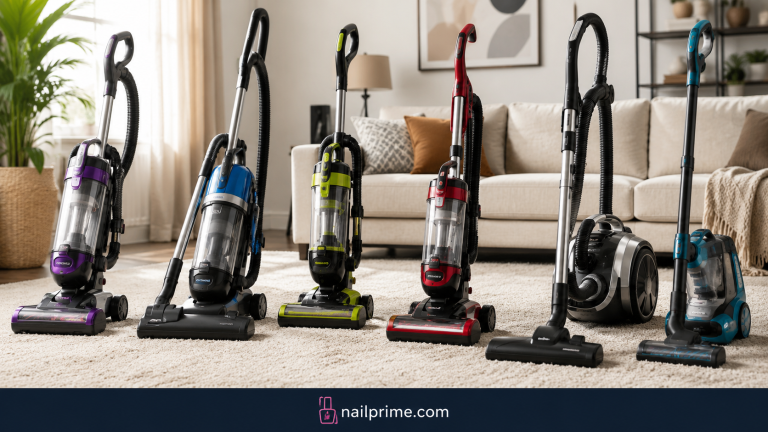
Which Type of Vacuum Is Usually Quieter?
Vacuum type alone doesn’t guarantee quiet operation. Motor design, insulation, airflow, floor head, power setting, and construction quality all influence sound.
As of 2026, manufacturers also offer variable-power and low-noise modes on many vacuum formats. Compare measured noise rather than assuming one style will always be quieter.
| Vacuum type | Potential quiet-use advantage | Possible noise drawback |
|---|---|---|
| Canister | Motor body stays farther from your ears while cleaning. | Canister wheels and powered heads can create extra surface noise. |
| Upright | One-piece design can make cleaning efficient. | Motor and powered brush are relatively close to the user. |
| Cordless stick | Multiple power modes let you avoid maximum output for light jobs. | Higher boost settings can sound much more intense. |
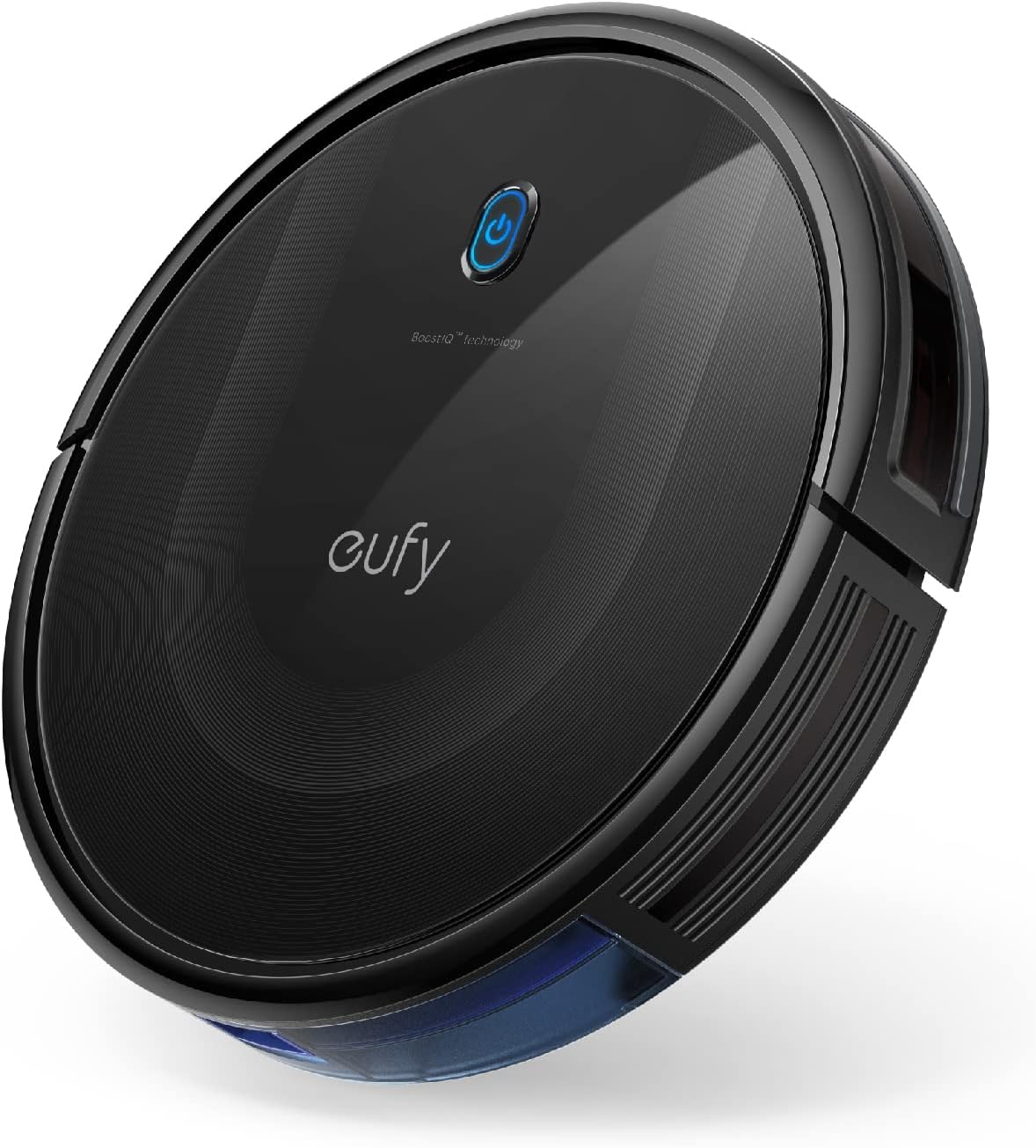
| Robot | Can run while you are away from the room. | Long cleaning cycles and dock-emptying systems can still be disruptive. |
| Handheld | Short jobs reduce total operating time. | The motor sits close to your head during many tasks. |
If quietness is a purchasing priority, look for independent noise measurements. Don’t rely only on marketing terms such as “silent,” “whisper,” or “quiet mode.”
How Can You Vacuum Without Disturbing People or Pets?
Sometimes the biggest improvement comes from changing when and where you vacuum. This costs nothing and doesn’t affect cleaning performance.
Choose a considerate cleaning time
- Avoid vacuuming beside someone sleeping or working on a call.
- Close interior doors between the vacuum and occupied rooms.
- Finish shared walls and hallways quickly in apartments.
- Avoid unnecessarily early or late cleaning where neighbors can hear it.
- Move noise-sensitive pets to another comfortable room first.
Local apartment or building quiet-hour rules vary. Check your lease or building policy if vacuum noise has already caused complaints.
Think about hearing exposure too
NIOSH identifies vacuums among equipment that can produce noise around 85–90 dBA. Its occupational guidance recommends precautions at 85 dBA and above, while louder sound requires shorter exposure.
The CDC/NIOSH noise and hearing guidance explains how sound level and exposure duration work together.
If you must raise your voice to speak to someone about three feet away, NIOSH says that’s one practical sign the sound may be around 85 dBA. A sound-level meter can provide a more useful measurement.
Keep dust control in mind while chasing lower noise
Don’t remove filters or bypass filtration to make a vacuum sound different. That can allow captured dust to escape or compromise normal operation.
EPA recommends considering HEPA-filtered vacuuming to reduce dust buildup, while AAFA notes that poor-quality vacuums can redistribute allergens.
For allergy-sensitive homes, see AAFA’s guidance on controlling indoor allergens while cleaning.
Frequently Asked Questions About Vacuuming Quietly
Can I make my existing vacuum quieter?
Sometimes. Start by lowering the power setting, cleaning filters, removing clogs, choosing the correct attachment, and checking for rattling parts. You can’t eliminate the machine’s normal motor noise, but you can often remove unnecessary noise caused by poor airflow or rough operation.
Does lowering suction make a vacuum quieter?
It often can, depending on the vacuum’s motor-control system. Use the lowest setting that still picks up debris effectively. If weak suction forces you to repeat every area several times, the lower setting may not save much total noise exposure.
Why did my vacuum suddenly become much louder?
A sudden change can come from a clogged hose, full bin, dirty filter, trapped brush-roll debris, air leak, damaged belt, or another mechanical problem. Stop and inspect the machine if you hear grinding, squealing, electrical crackling, or other abnormal sounds.
Is vacuuming on carpet quieter than vacuuming on hard floors?
Carpet can absorb some reflected sound, while hard floors can make wheels, brush rolls, and impacts more noticeable. However, carpet may require stronger suction or powered agitation, so the actual result depends on the vacuum and floor setting.
Can I put foam or a blanket around my vacuum to reduce noise?
No. Covering the motor housing or exhaust openings can restrict ventilation and cause overheating. Never add homemade sound insulation that blocks airflow unless the vacuum manufacturer specifically approves that modification.
Are robot vacuums better for quiet cleaning?
They can be convenient because you can schedule cleaning while you’re away from a room. However, operating noise varies by model, and self-emptying docks can produce a short burst of much louder sound.
What should I look for when buying a quiet vacuum?
Look for independent noise measurements, variable suction levels, well-insulated motor construction, suitable floor heads, and good cleaning performance at lower settings. Compare noise together with filtration, pickup performance, maintenance requirements, and replacement-part availability.
The simplest way to vacuum quietly is to reduce unnecessary noise rather than weaken the cleaning job. Keep the machine maintained, choose the right attachment, use controlled movements, and run only as much power as the surface requires.
If your vacuum remains painfully loud or develops a new mechanical sound, don’t ignore it. A quieter replacement or professional inspection may make more sense than continuing to tolerate a problem.