How to Vacuum Baking Soda Safely Without Harming Your Vacuum

Quick Answer
You can usually vacuum a small, dry amount of baking soda from carpet, rugs, or upholstery. Remove as much loose powder as possible first, vacuum slowly in several directions, and clean the vacuum filter afterward. Fine powder can load filters quickly, so I treat baking soda more carefully than normal dirt. The EPA’s indoor particulate guidance also recommends effective vacuuming and notes the value of HEPA filtration for controlling indoor dust.
How to vacuum baking soda
- Keep it dry: Don’t vacuum baking soda while it is damp or mixed into a wet paste.
- Remove excess: Scoop or brush up thick piles before switching on the vacuum.
- Vacuum slowly: Make several controlled passes instead of rushing over the area once.
- Change direction: Vacuum from two directions to lift powder trapped between carpet fibers.
- Check the filter: Inspect and clean or replace it according to your vacuum’s instructions.
For a large spill
- Remove most of the powder manually before vacuuming the thin residue that remains.
Baking soda is useful for household cleaning, but removing it isn’t quite the same as vacuuming crumbs. Its fine texture can settle deep into carpet and quickly coat a vacuum’s filter.
My rule is simple: use the vacuum for the final cleanup, not as the first tool for a thick pile. This guide explains exactly how to vacuum baking soda while protecting your carpet, indoor air, and vacuum cleaner.
In This Guide
Can You Safely Vacuum Baking Soda?
Yes, you can often vacuum a small amount of dry baking soda. The important part is avoiding a thick layer that overwhelms the vacuum’s dust collection and filtration system.
Baking soda, also called sodium bicarbonate, is a fine powder. Those tiny particles behave differently from hair, crumbs, lint, and other debris a household vacuum normally collects.
Can baking soda damage a vacuum?
A little baking soda doesn’t automatically ruin a vacuum. Problems become more likely when a large amount of fine powder reaches the filter at once.
The powder may coat a pre-motor filter, fill a bag quickly, or collect inside a bagless vacuum. That can reduce airflow and make suction feel weaker.
- Small dry dusting: Usually manageable with careful vacuuming.
- Thick pile: Remove most of it manually first.
- Damp baking soda: Don’t use a standard dry vacuum.
- Unknown vacuum limits: Check the manufacturer’s instructions before collecting fine powders.
A HEPA filter can help contain fine particles that reach the vacuum’s filtration system. However, having a HEPA filter doesn’t mean every vacuum is designed to collect large quantities of fine powder.
The Asthma and Allergy Foundation of America recommends HEPA-filtered vacuuming as part of controlling indoor allergens. That makes good filtration especially useful when you’re trying to avoid sending fine household dust back into the room.
Section Takeaway: Vacuum small amounts of dry baking soda slowly, but remove thick piles first. Fine powder puts more demand on a vacuum’s filter than ordinary debris.
How Do You Vacuum Baking Soda From Carpet?
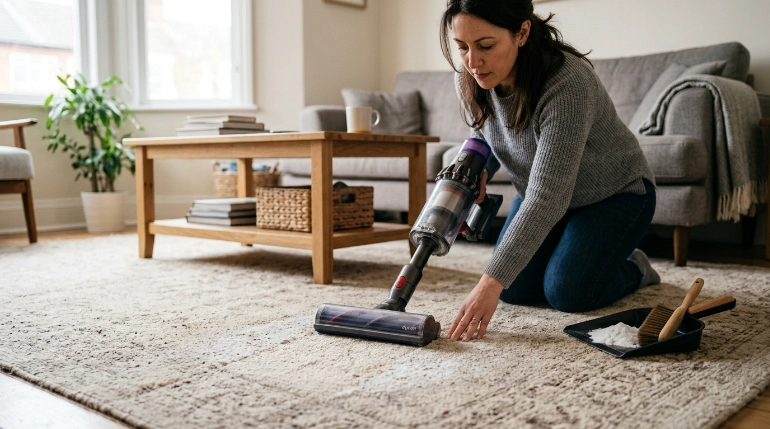
For carpet, the safest approach is to remove the excess first and vacuum the remaining thin layer. Don’t start by repeatedly running the vacuum over a visible mound of powder.
Step 1: Make sure the baking soda is completely dry
Touch the area before starting. If the powder feels damp, clumpy, or paste-like, give it time to dry or remove it using a method suitable for the carpet.
Moist baking soda can cake inside hoses and other vacuum parts. Standard household dry vacuums aren’t designed to collect wet material.
Step 2: Scoop up heavy deposits
Use a spoon, dustpan, piece of cardboard, or similar tool to lift thick piles. Work gently so you don’t push more powder into the carpet.
You don’t need to remove every grain manually. The goal is simply to prevent a large amount from entering the vacuum at once.
Step 3: Loosen powder from the carpet fibers
If baking soda has settled deeply, lightly brushing the dry carpet can bring some powder toward the surface. Use a clean, dry, soft-bristled brush.
Don’t scrub aggressively. Hard scrubbing can push powder farther into dense carpet or damage delicate fibers.
Step 4: Vacuum slowly
- Start at one edge of the treated area.
- Move the vacuum slowly across the carpet.
- Overlap each pass slightly.
- Turn 90 degrees and vacuum across the area again.
- Inspect the carpet before making more passes.
Slow passes give the vacuum more time to lift powder from between fibers. Changing direction is especially helpful on thicker carpet.
Step 5: Check the vacuum before continuing
If suction becomes weaker, stop. Check the bin, bag, and accessible filters according to the manufacturer’s directions.
Don’t keep running a vacuum that suddenly sounds strained or has clearly lost airflow. Fix the airflow problem before continuing.
The CDC’s household cleaning guidance includes vacuuming carpets and rugs as a normal cleaning method and recommends disposing of collected dirt safely.
Section Takeaway: Remove excess powder, vacuum a thin dry residue slowly, change directions, and monitor airflow throughout the job.
What Should You Do With a Large or Wet Baking Soda Spill?
A large spill needs a different approach. Don’t make your household vacuum swallow the entire pile simply because it looks easier.
| Situation | Best First Step | Vacuum? |
|---|---|---|
| Light dry dusting | Vacuum slowly | Usually yes |
| Small dry pile | Scoop excess first | Use for residue |
| Large dry spill | Remove most manually | Only if the vacuum permits fine dust |
| Damp powder | Remove without a standard dry vacuum | No |
| Wet baking-soda paste | Lift or extract using a surface-safe wet method | Only with suitable wet-rated equipment |
How do you remove a large dry spill?
- Keep people and pets away from the area.
- Avoid kicking or brushing the powder into the air.
- Scoop up the thickest layer.
- Place collected powder in a trash container.
- Vacuum only the thin residue that remains.
Fine particles can become airborne during cleaning. The EPA’s indoor-environment guidance recommends cleaning settled dust and vacuuming as part of reducing indoor pollutants and allergens.
What if the baking soda is wet?
Keep wet baking soda out of a vacuum designed only for dry debris. Moist powder can stick together and lodge inside the machine.
For carpet, lift as much material as possible without spreading it. Follow the carpet manufacturer’s cleaning directions if moisture or staining remains.
Expert Alert: If a wet spill involves contaminated water, sewage, mold growth, or a large water-damaged area, contact a qualified remediation or cleaning professional rather than treating it as a simple baking-soda cleanup.
Which Vacuum Is Best for Baking Soda?
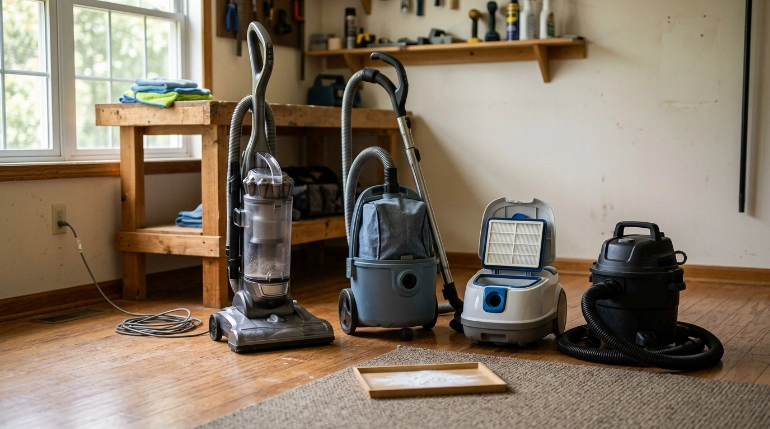
There isn’t one perfect vacuum for baking soda. The best choice is a machine whose manufacturer allows fine-particle pickup and whose filtration system is clean and correctly installed.
Bagged vacuum
A bagged vacuum keeps collected material inside a disposable bag. This can make cleanup convenient because you don’t have to empty loose powder from an open dust bin.
Watch the bag’s capacity. Fine baking soda may reduce airflow before a bag looks packed with ordinary debris.
Bagless vacuum
A bagless vacuum can handle normal household dust, but baking soda may coat its filters quickly. Check the filter after cleaning even when the bin isn’t full.
Empty the dust cup carefully. Dumping fine powder quickly can create another cloud of dust.
HEPA-filtered vacuum
HEPA means high-efficiency particulate air. A HEPA-filtered vacuum can help prevent some captured fine particles from escaping through the exhaust.
This feature is useful for homes where dust and allergens are a concern. Still, filtration doesn’t replace proper maintenance or the manufacturer’s fine-dust instructions.
Shop vacuum
Some shop vacuums are designed for heavier cleanup jobs. Their ability to collect fine powders varies by model, filter, and collection setup.
Check the manual before using one. Fine-dust bags or filters may be required for certain machines.
How Should You Clean the Vacuum Afterward?
Inspecting the vacuum after baking-soda cleanup is one of the most important steps. Fine powder may accumulate where ordinary debris doesn’t.
- Unplug the vacuum. Disconnect power before opening or inspecting it.
- Empty the bin or check the bag. Don’t wait for a noticeable loss of suction.
- Inspect accessible filters. Look for a visible coating of white powder.
- Clean filters correctly. Wash only filters specifically labeled washable.
- Let washable filters dry completely. Never reinstall a damp filter unless the manufacturer says otherwise.
- Check the hose and intake. Look for clumps or restricted airflow.
- Reassemble everything correctly. Poorly fitted filters can allow dust to bypass the intended filtration path.
Don’t bang a dusty filter inside your living space. That can release the same fine material you just removed from the floor.
If possible, empty dusty bins outdoors or directly into a trash bag. Be gentle so you don’t create a powder cloud.
For homes where airborne allergens matter, the AAFA’s indoor allergen guidance recommends regular vacuuming while also warning that poor dust containment can put particles back into the air.
Section Takeaway: The cleaning job isn’t finished when the carpet looks clean. Inspect the vacuum’s filter, collection system, hose, and airflow before storing it.
What Mistakes Should You Avoid?
Most baking-soda vacuum problems come from collecting too much powder too quickly. A few simple changes can make cleanup easier.
- Vacuuming a thick pile: Scoop up most of it first.
- Vacuuming wet baking soda: Use a method intended for wet material instead.
- Making very fast passes: Slow passes lift powder more effectively from carpet fibers.
- Ignoring weak suction: Stop and inspect the filter, bag, bin, and airflow path.
- Assuming HEPA means unlimited fine-dust pickup: HEPA describes filtration, not every part of a vacuum’s operating limits.
- Washing a non-washable filter: Follow the manufacturer’s care instructions.
- Reinstalling a damp washable filter: Allow it to dry completely first.
- Emptying the bin aggressively: Fine baking soda can easily become airborne again.
I also avoid spreading huge amounts of baking soda over carpet just because a cleaning tip says more is better. A light application is easier to remove and puts less fine powder through the vacuum.
As of 2026, the sensible approach remains simple: control dust at the source, vacuum carefully, and maintain the filtration system. Good technique matters as much as the vacuum itself.
Frequently Asked Questions
Can baking soda ruin a vacuum cleaner?
A small amount won’t automatically ruin a vacuum, but large quantities of fine powder can load filters and restrict airflow. Remove thick piles manually, vacuum only dry residue, and check your vacuum’s instructions about collecting fine particles.
Can I vacuum baking soda out of carpet?
Yes. Make sure the baking soda is dry, remove any thick layer first, and vacuum slowly in overlapping passes. Vacuuming in a second direction can help remove powder trapped deeper between carpet fibers.
How long should baking soda sit on carpet before vacuuming?
There isn’t one required waiting time for every cleaning job. Follow the directions for whatever cleaning method you’re using. Before vacuuming, the most important requirement is that the baking soda and carpet are dry.
Can I vacuum baking soda with a Dyson or Shark vacuum?
Don’t assume that every model from a brand has the same fine-powder limits. Check the manual for your exact Dyson, Shark, or other vacuum model before collecting a significant amount of baking soda.
Is a HEPA vacuum better for baking soda?
HEPA filtration can help contain fine particles captured by a vacuum. However, a HEPA filter doesn’t automatically make the machine suitable for large baking-soda spills, so the manufacturer’s operating instructions still matter.
Can I vacuum wet baking soda?
Not with a standard dry household vacuum. Wet baking soda can clump and stick inside the machine. Use equipment specifically designed for wet pickup or remove the material using a surface-appropriate cleaning method.
What should I do if my vacuum loses suction after cleaning baking soda?
Turn it off and unplug it. Check the dust bin or bag, filters, hose, and intake for powder buildup or blockage. Clean or replace serviceable parts according to the manufacturer’s instructions before using the vacuum again.
The Bottom Line
Knowing how to vacuum baking soda comes down to controlling how much fine powder enters the machine. A thin, dry layer is far easier to manage than a thick pile.
Scoop up excess powder, vacuum slowly, change directions on carpet, and inspect the filter afterward. Never vacuum damp baking soda with a dry-only machine.
If you remember one rule, make it this: use your vacuum for the final residue rather than an entire pile of baking soda. That approach keeps cleanup simple and reduces unnecessary strain on the vacuum.