
How to Vacuum Fine Dust Without Spreading It Around

Quick Answer
To vacuum fine dust, use a well-sealed vacuum with effective filtration, preferably a HEPA filter. Work slowly, avoid aggressive brush-roll action, and clean the filter before suction drops. The EPA’s indoor particulate matter guidance also recommends HEPA-filtered vacuuming to help control household dust.
Quick steps for fine dust
- Stop air movement: Turn off nearby fans so loose dust stays on the surface.
- Check the vacuum: Make sure its filter, bag, dust bin, seals, and hose are fitted correctly.
- Choose the right tool: Use a hard-floor head, soft brush, or suitable floor nozzle.
- Move slowly: Make controlled, overlapping passes instead of rushing across the surface.
- Watch the exhaust: Stop if you notice a visible dust plume or sudden loss of suction.
- Finish damp: After vacuuming hard surfaces, wipe or mop remaining residue with a slightly damp microfiber cloth.
Fine dust is one of those cleaning problems that looks simple until you start vacuuming. I learned that moving faster often makes the room look dusty again minutes later.
The right vacuum setup and technique make a much bigger difference. This guide explains how I handle fine household dust without simply pushing it around or blowing it back into the room.
In This Guide
What Is Fine Dust and Why Is It Hard to Vacuum?
Fine dust is powdery particulate matter made of particles much smaller than the crumbs, hair, and visible debris a vacuum normally collects. Household dust can include soil, fibers, pollen, skin flakes, pet material, and other tiny particles.
Because these particles are light, normal cleaning activity can stir some of them into the air. Fast vacuuming, sweeping, strong airflow, or a leaking vacuum can make the problem more noticeable.
Why fine dust behaves differently
Large debris usually stays on the floor until you collect it. Fine powder moves much more easily.
- Foot traffic can disturb settled dust.
- Brush rolls can throw lightweight powder before suction captures it.
- Vacuum exhaust can disturb dust near the machine.
- Dirty filters can reduce airflow and cleaning performance.
- Poor seals may allow collected particles to escape around the vacuum body.
The EPA notes that household dust can become airborne during normal indoor activities. That is why I focus on both pickup and containment instead of suction alone.
Know what kind of dust you’re cleaning
Ordinary household dust is different from potentially hazardous renovation or contamination dust. Don’t assume every powdery material is safe to collect with your normal vacuum.
- Normal household dust and lint
- Dust tracked indoors from outside
- Pet-related dust and dander
- Light pollen deposited on surfaces
- Powder from ordinary household activity
Construction materials need more caution. Dust produced by cutting, sanding, demolition, fire damage, or deteriorating old building materials may require specialized controls.
Expert Alert: If dust may contain asbestos, lead, crystalline silica, hazardous mold contamination, or another dangerous material, stop cleaning and contact a qualified remediation or environmental professional.
What Vacuum Is Best for Fine Dust?
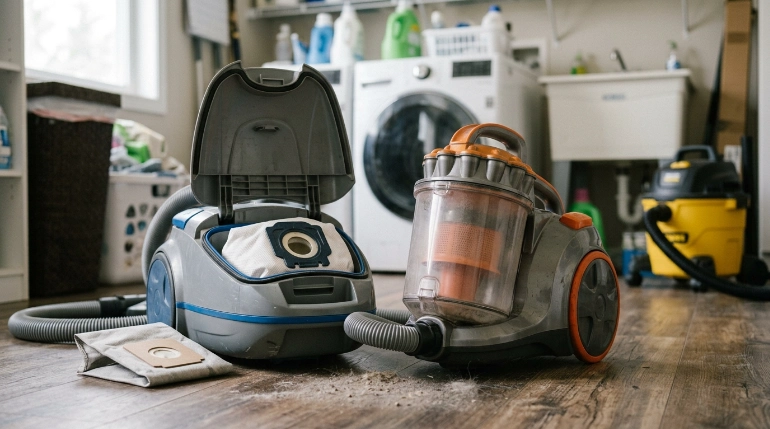
A vacuum designed to capture and contain small particles is the better choice for fine dust. I look at filtration, sealing, airflow, and dust disposal before worrying about extra features.
HEPA means high-efficiency particulate air. According to the EPA’s HEPA filter explanation, a HEPA filter can theoretically remove at least 99.97% of airborne particles measuring 0.3 microns.
That number describes the filter standard. It doesn’t automatically prove that an entire vacuum cleaner is equally well sealed.
HEPA filter versus a sealed vacuum system
A HEPA filter is useful, but I also want air to pass through that filter instead of escaping through gaps around the machine. This is why overall construction matters.
I check the dust-bin seal, filter cover, hose connection, bag compartment, and exhaust area. Even a good filter cannot help much if dusty air bypasses it.
| Vacuum Setup | Fine-Dust Control | Main Advantage | Main Concern |
|---|---|---|---|
| Sealed bagged vacuum with HEPA filtration | High when maintained correctly | Dust stays enclosed during collection and disposal | Requires replacement bags |
| Sealed bagless vacuum with HEPA filtration | High when seals and filters are clean | No disposable bag required | Emptying the bin can release fine dust |
| Standard vacuum without high-efficiency filtration | Variable | Suitable for ordinary larger debris | Greater chance of fine particles escaping |
| Wet/dry vacuum with manufacturer-approved fine-dust or HEPA setup | Depends on filter and machine configuration | Useful for suitable workshop or renovation debris | A basic filter may not be suitable for very fine material |
Bagged or bagless?
I prefer a well-sealed bagged setup when dust containment is my main concern. Removing a sealed disposable bag usually creates less direct contact with collected powder.
A good bagless model can also work well. I simply empty the bin carefully and avoid shaking dust into the room.
The Asthma and Allergy Foundation of America also recommends good filtration when controlling indoor allergens and warns that poor-quality vacuums may put dust back into the air. You can read its indoor allergen control guidance for more information.
How Do You Vacuum Fine Dust Step by Step?
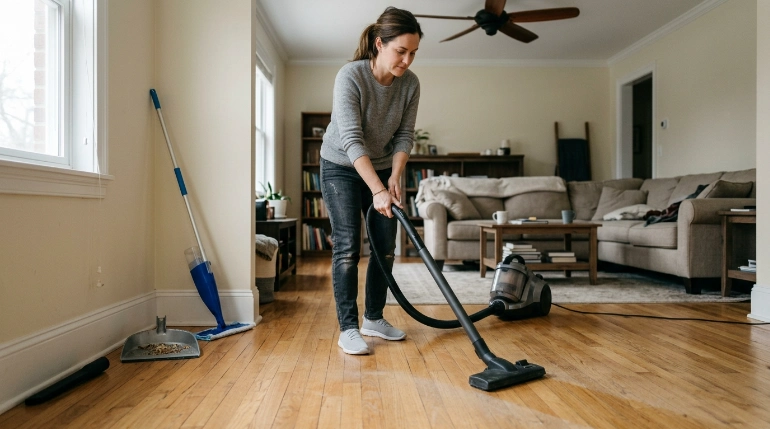
The best technique is slow and controlled. My goal is to capture settled particles while disturbing as little surrounding dust as possible.
1. Stop fans and strong air movement
Turn off ceiling fans, portable fans, and other nearby sources of strong airflow. Give visible airborne dust time to settle before you begin.
2. Remove larger debris first
Pick up objects, paper scraps, stones, and anything that could block the floor head. Don’t dry-sweep powder into a pile because sweeping can send lightweight particles airborne.
3. Check your filter and dust container
Inspect the vacuum before starting. A clogged filter or overfilled bag can reduce airflow when you need it most.
- Check the bag or dust cup.
- Inspect accessible filters.
- Check the hose for blockages.
- Make sure filter covers are closed.
- Confirm the dust bin is seated correctly.
Follow the manufacturer’s instructions when cleaning or replacing filters. Don’t wash a filter unless its manual specifically says it is washable.
4. Choose a gentle floor setting
On hard flooring, I normally use a hard-floor head or soft roller designed for that surface. An aggressive spinning brush can scatter lightweight powder ahead of the nozzle.
For carpet, use the carpet setting recommended for your machine. Adjust the head height if the vacuum becomes difficult to push.
5. Vacuum slowly in overlapping passes
This is the step that made the biggest difference in my own cleaning routine. Fast passes may look productive, but they give the nozzle less time over each area.
- Start at the far side of the room.
- Move the vacuum forward slowly.
- Pull it back across the same strip.
- Overlap the next strip slightly.
- Continue toward the exit.
For a visibly dusty spot, I make another pass from a different direction. Carpet fibers can hold material at different angles.
6. Vacuum edges and corners carefully
Use a crevice tool around baseboards, furniture legs, vents, and room edges. Keep the nozzle close to the surface instead of waving it through loose dust.
7. Finish hard surfaces with damp cleaning
After vacuuming, a slightly damp microfiber cloth or mop can collect the light residue that remains. The EPA also recommends damp dusting as a way to reduce dust being stirred back into indoor air.
Never vacuum wet material unless your machine is specifically designed for wet pickup.
How Do You Vacuum Fine Dust From Different Surfaces?
Fine dust doesn’t behave the same way on carpet, wood, tile, furniture, and mattresses. Changing the attachment is often more useful than increasing suction.
Hardwood, laminate, and tile
Use a hard-floor nozzle or soft roller where your vacuum supports one. Avoid a stiff spinning brush if it scatters dust across the floor.
- Vacuum edges first with a crevice tool.
- Work across the main floor in slow rows.
- Check under furniture and along baseboards.
- Follow with a damp microfiber mop when appropriate for the flooring.
Carpet and rugs
Carpet can hold dust below the visible surface. Slow passes are more useful than repeatedly racing over the same area.
Vacuum in one direction, then make a second pass across high-traffic areas from another angle. Check the rug manufacturer’s care instructions before using a powered brush.
Couches and upholstered furniture
Use an upholstery tool with controlled suction. Remove cushions where possible and clean the seams, folds, and frame edges with a crevice attachment.
I prefer working from the highest part of the furniture downward. Any loosened material then falls toward an area I haven’t cleaned yet.
Shelves, blinds, and delicate surfaces
Use a soft dusting brush with reduced suction if your vacuum allows adjustment. Keep the attachment clean so grit trapped in the bristles doesn’t scratch finished surfaces.
For very delicate items, damp microfiber cleaning may be safer than vacuuming.
Mattresses
Use a clean upholstery attachment and work in slow strips across the top and sides. Pay extra attention to seams, piping, and tufted areas where debris collects.
If allergies are a concern, vacuuming should be part of a broader cleaning routine rather than the only control measure.
Why Does Fine Dust Come Back After Vacuuming?
If a dusty haze returns quickly, the problem may not be your floor. Dust can remain on furniture, vents, shelves, fabrics, and other surfaces before settling again.
You cleaned the floor before higher surfaces
I clean from high to low whenever a room has visible dust. That prevents me from finishing the floor and then knocking more material onto it.
- Damp-wipe shelves and hard furniture surfaces.
- Clean blinds, ledges, and accessible vents.
- Vacuum upholstered surfaces.
- Vacuum the floor last.
- Damp-mop compatible hard flooring.
The vacuum filter is clogged
Fine powder can load filters quickly. If suction suddenly feels weak, stop and inspect the machine instead of continuing to make more passes.
Clean or replace the filter according to the manufacturer’s instructions. Also check the hose, floor head, bag, and cyclones where applicable.
The vacuum is leaking dust
Look for visible dust around the exhaust, filter housing, dust cup, hose connection, and bag compartment. A filter installed incorrectly can also cause problems.
EPA guidance notes that cleaning activity can resuspend fine particles. Its broader indoor air quality guidance explains why controlling indoor particle sources and ventilation matters alongside cleaning.
You emptied a bagless vacuum indoors
A dust cup full of fine powder can release a cloud when opened. I prefer emptying it carefully into a lined trash container without shaking or tapping it aggressively.
Follow your vacuum manufacturer’s disposal instructions. If dust exposure is a particular concern, a sealed bagged system may make routine disposal simpler.
The dust source is still active
Repeated dust buildup can point to an ongoing source. Cleaning faster won’t solve that.
- Renovation or sanding work
- Open windows near dusty outdoor areas
- Dirty HVAC filters
- Dusty return-air grilles
- Unsealed gaps around construction work
- Heavy foot traffic bringing soil indoors
Find the source before repeatedly deep-cleaning the same room. Source control usually saves more effort than constant vacuuming.
Expert Alert: Persistent heavy dust after construction, fire damage, major mold work, or disturbance of older building materials may require professional assessment instead of ordinary household cleaning.
Frequently Asked Questions About Vacuuming Fine Dust
Can a regular vacuum pick up fine dust?
A regular vacuum may collect some fine dust, but performance depends on filtration, sealing, airflow, and the type of material. For household fine particles, I prefer a properly maintained vacuum with high-efficiency filtration rather than relying on suction alone.
Is a HEPA vacuum better for fine dust?
A HEPA-equipped vacuum can provide better particle filtration when the machine is designed so collected air passes through the filter. A HEPA filter alone doesn’t guarantee that the entire vacuum is sealed against leakage.
Should I sweep fine dust before vacuuming?
I usually avoid dry sweeping fine powder because sweeping can disturb lightweight particles. Pick up large debris first, vacuum slowly, then use damp cleaning on compatible hard surfaces to collect remaining residue.
Why does my vacuum blow fine dust back out?
Check for a clogged or incorrectly installed filter, an overfilled bag or bin, loose seals, blocked airflow, or a filter unsuitable for the material. Stop using the machine if a visible dust plume appears from its exhaust.
Can I vacuum drywall dust with my household vacuum?
Large amounts of drywall or construction dust can quickly load filters and may not suit an ordinary household machine. Check the vacuum manufacturer’s instructions and use equipment designed for the material and cleanup task.
Should I mop after vacuuming fine dust?
Yes, on surfaces that safely tolerate damp cleaning. A slightly damp microfiber mop can collect the thin residue left after vacuuming, but avoid excessive water on wood, laminate, or other moisture-sensitive flooring.
How can I stop fine dust from settling again?
Clean from high surfaces downward, control the dust source, maintain vacuum and HVAC filters, and use damp dusting where suitable. Regular cleaning works better when the vacuum contains collected particles instead of releasing them back into the room.
The main lesson is simple: fine-dust cleaning depends on containment as much as suction. Use good filtration, move slowly, maintain the vacuum, and finish compatible hard surfaces with damp cleaning.
If dust keeps returning, investigate where it is coming from before vacuuming again. Fixing the source can turn an endless cleaning job into routine maintenance.