How to Vacuum Vinyl Plank Flooring Without Scratching It

Quick Answer
To vacuum vinyl plank flooring safely, use a hard-floor setting, switch off the rotating brush or beater bar, and remove grit with slow, overlapping passes. Vinyl-floor manufacturers such as Shaw Floors recommend avoiding rotating beater bars that may damage resilient vinyl.
How to vacuum vinyl plank flooring
- Check the floor: Pick up coins, screws, stones, and other hard objects before starting.
- Choose hard-floor mode: Turn off the powered brush roll or beater bar when your vacuum allows it.
- Inspect the vacuum head: Remove trapped grit, sharp debris, and tangled hair before it touches the floor.
- Start at the edges: Use a soft floor head or crevice tool along walls and under cabinets.
- Make slow passes: Vacuum in overlapping rows without pressing the head into the planks.
- Check problem areas: Make another gentle pass where sand, pet hair, or crumbs remain.
If you’re learning how to vacuum vinyl plank flooring, the biggest mistake is treating it like carpet. Vinyl plank is durable, but grit and aggressive brushes can still mark its wear layer.
I focus first on removing abrasive dirt without creating extra friction. That simple approach works better than relying on maximum suction or repeatedly scrubbing the same area.
In This Guide
- Is It Safe to Vacuum Vinyl Plank Flooring?
- Which Vacuum Settings and Attachments Are Safe?
- How Do You Vacuum Vinyl Plank Flooring Step by Step?
- What Vacuuming Mistakes Can Damage Vinyl Plank?
- Is Vacuuming Better Than Sweeping Vinyl Plank Flooring?
- Frequently Asked Questions
- Final Takeaway
Is It Safe to Vacuum Vinyl Plank Flooring?
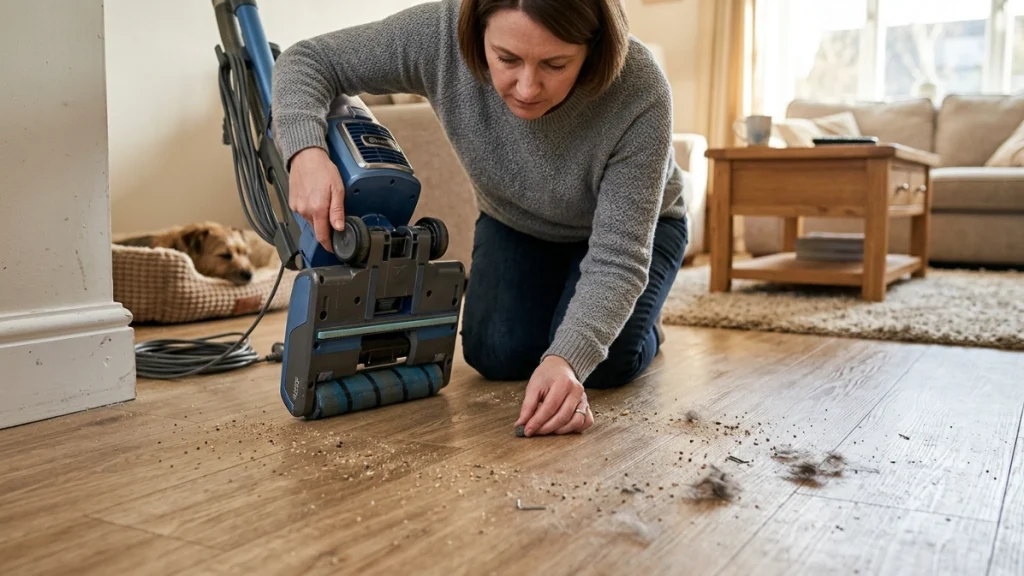
Yes. Vacuuming is generally a practical way to remove dry dust, crumbs, hair, and grit from vinyl plank flooring when you use a floor-safe setup.
The main concern isn’t suction itself. The greater concern is abrasive material trapped under the vacuum head or an aggressive rotating brush rubbing against the surface.
Definition: Vinyl plank flooring, often called LVP or luxury vinyl plank, is resilient flooring made in plank-shaped sections with a protective surface layer designed to handle everyday foot traffic and routine cleaning.
Why loose grit matters
Sand and tiny stones can behave like abrasive particles when dragged across a finished floor. Removing them regularly helps prevent unnecessary surface wear.
This is why I don’t push a vacuum aggressively when I hear a piece of debris clicking beneath the head. I stop and remove the object instead.
- Sand: Pick it up before repeated foot traffic spreads it.
- Small stones: Remove them instead of pushing the vacuum over them.
- Metal pieces: Pick up screws, staples, coins, and similar objects by hand.
- Pet litter: Use gentle passes so hard granules don’t get dragged along the floor.
Does vacuuming help with household dust?
Vacuuming removes settled material before it spreads around the room again. This can be useful in busy homes where dust and pet hair build up quickly.
The U.S. Environmental Protection Agency says frequent cleaning can help reduce indoor dust and other particulate pollutants. It also notes that a vacuum with a HEPA filter may help reduce dust buildup and keep some collected dust from escaping back into the air.
You don’t need a HEPA vacuum simply to protect vinyl flooring. Floor-head design and brush control matter more for preventing surface damage.
Which Vacuum Settings and Attachments Are Safe?
The safest setup is usually a hard-floor mode with the powered brush roll switched off. A soft floor head is another good choice when your vacuum includes one.
I check the underside of the head before every larger cleaning session. One hard pebble stuck beside a wheel can matter more than the vacuum’s brand or suction rating.
Look for these vacuum features
- Brush-roll shutoff: Lets you stop aggressive rotating bristles on hard flooring.
- Hard-floor mode: Adjusts the vacuum for smooth surfaces on compatible models.
- Soft floor head: Uses gentler contact materials against the flooring.
- Smooth wheels: Reduce the chance of trapped grit dragging underneath them.
- Crevice tool: Helps remove dirt along baseboards and plank edges.
- Adjustable suction: Can make lightweight mats and difficult edges easier to manage.
Can you use an upright vacuum?
Yes, if the upright has a suitable hard-floor setting or lets you disable its rotating brush. An upright with a permanently aggressive carpet brush may be a poor choice.
Canister and stick vacuums can also work well because many offer dedicated bare-floor heads. Consumer Reports likewise notes that brush control is useful when cleaning delicate hard-floor finishes in its hard-floor vacuum guidance.
Can you use a robot vacuum?
A robot vacuum can maintain vinyl plank floors if its wheels and brushes are clean and the manufacturer approves it for hard flooring. Check the underside regularly for trapped grit.
Clear cords, small toys, pins, and other hard objects first. A robot may drag an object farther than you would during manual vacuuming.
How Do You Vacuum Vinyl Plank Flooring Step by Step?
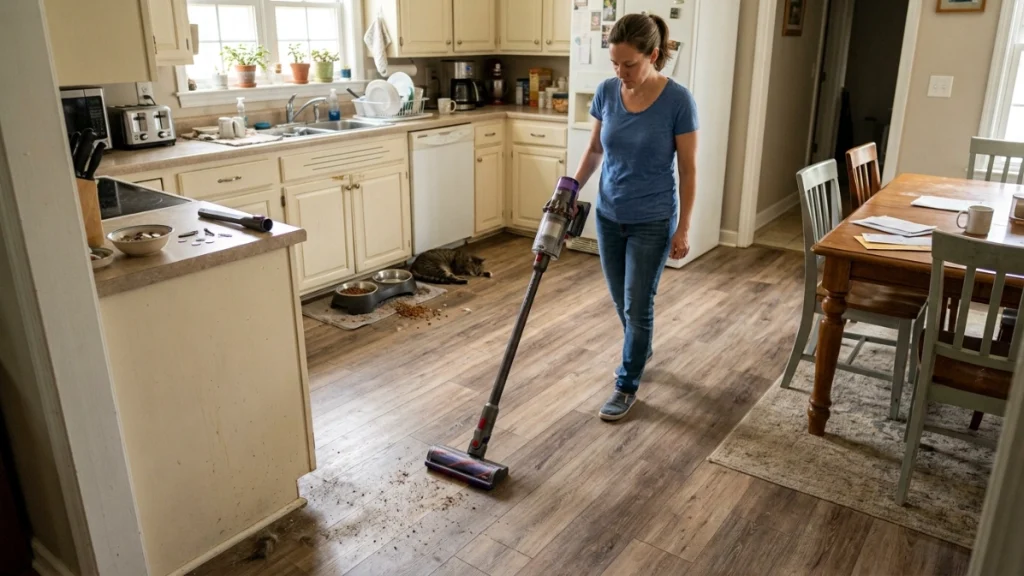
Start with the least aggressive setup that still picks up the debris. Then work methodically so you don’t keep passing over the same grit.
- Pick up large or sharp debris.
Remove coins, stones, screws, clips, and hard pieces by hand before turning on the vacuum. - Inspect the vacuum head.
Look underneath for sand, hair tangles, sharp fragments, damaged wheels, or rough plastic edges. - Turn off the rotating brush.
Select hard-floor mode when available and confirm the carpet beater bar is not spinning. - Clean edges first.
Run a crevice attachment or soft head along baseboards, corners, cabinets, and furniture edges. - Vacuum in overlapping rows.
Move slowly across the room with light pressure instead of scrubbing the floor with the head. - Approach visible grit carefully.
Lift the head slightly or pick up unusually hard particles rather than dragging them. - Finish high-traffic zones.
Make one extra pass near entrances, kitchen work areas, pet feeding stations, and other dirt-prone spots.
Should you vacuum with or against the plank direction?
Either direction can remove loose debris, so there’s no universal rule requiring you to follow the plank pattern. I usually make my main passes along the plank direction because it makes edges and seams easier to see.
For stubborn debris near joints, change direction for one gentle pass. Avoid repeatedly grinding the vacuum head over the same spot.
How much pressure should you use?
Use enough pressure to control the vacuum, not to force it against the floor. Suction should do most of the cleaning.
If the machine only picks up debris when you press down hard, check the head, filter, bin, bag, and suction path. A maintenance problem may be reducing airflow.
What Vacuuming Mistakes Can Damage Vinyl Plank?
The most common problems come from rotating brushes, trapped grit, damaged wheels, and repeatedly dragging hard debris across the floor. Most are easy to prevent.
1. Leaving the beater bar running
A powered carpet brush can create unnecessary friction on resilient vinyl. Some flooring manufacturers specifically warn against this setup.
Mohawk’s luxury vinyl care guidance advises avoiding vacuums with beater bars. Check your own flooring warranty because instructions can vary by product.
2. Ignoring the bottom of the vacuum
Dust isn’t the only material that collects underneath a floor head. Tiny stones and gritty particles can become lodged near wheels or felt strips.
- Wipe the vacuum head before cleaning.
- Check wheels for rough or stuck areas.
- Cut away tangled hair when the vacuum is unplugged or safely powered off.
- Replace damaged floor-head parts when needed.
3. Dragging the vacuum sideways
Vacuum heads are generally easier to control in their normal forward-and-back movement. Pulling a heavy machine sideways can place unusual pressure on wheels and edges.
Reposition yourself instead of twisting the head forcefully. This also makes it easier to spot debris before you cross it.
4. Using a damaged attachment
A cracked wheel, exposed screw, broken plastic edge, or worn floor strip can turn a safe vacuum into a scratching risk. Inspect questionable parts before continuing.
Expert Alert: If the vacuum has damaged electrical wiring, a cracked powered floor head, or exposed electrical parts, stop using it and have the appliance inspected by a qualified repair professional.
Is Vacuuming Better Than Sweeping Vinyl Plank Flooring?
Vacuuming, sweeping, and dry mopping can all remove loose debris. The best method depends on the mess and the equipment you have.
| Method | Power Needed | Uses Moisture | Best For | Main Caution |
|---|---|---|---|---|
| Vacuum | Yes | No | Dust, crumbs, pet hair, edges | Avoid aggressive beater bars |
| Soft broom | No | No | Large crumbs and quick cleanup | Can push fine dust around |
| Dry microfiber mop | No | No | Fine surface dust and hair | Pad must stay free of grit |
How often should you vacuum vinyl plank?
There isn’t one schedule that fits every household. Vacuum when you can see loose dirt or before grit has time to build up in high-traffic areas.
Homes with pets, children, outdoor shoes, or sandy entrances may need more frequent cleaning. Lower-traffic rooms usually need less attention.
- Entrances: Check often for sand and outdoor grit.
- Kitchen areas: Remove crumbs before they get stepped on repeatedly.
- Pet zones: Clean hair, litter, and tracked debris as needed.
- Low-traffic rooms: Vacuum according to visible dust and household use.
As of 2026, I still consider simple mechanical care more important than chasing special floor-cleaning gadgets. A clean vacuum head and correct brush setting solve most routine problems.
Frequently Asked Questions
Can I use a regular vacuum on vinyl plank flooring?
Yes, if the vacuum can clean hard floors without an aggressive rotating beater bar. Check the underside for grit and use a hard-floor setting when your model provides one.
Can a vacuum scratch luxury vinyl plank?
It can if hard debris becomes trapped under the head or if an unsuitable rotating brush repeatedly rubs the surface. Clean wheels, smooth attachments, and brush-roll control lower that risk.
Should I turn the brush roll off on vinyl flooring?
Yes, that is the safer default when your vacuum allows it. Flooring manufacturers including Shaw and Mohawk advise against vacuum beater bars on resilient or luxury vinyl products.
Can I use a Dyson, Shark, or other stick vacuum on vinyl plank?
Potentially, but brand name alone doesn’t determine floor safety. Check the specific model’s hard-floor instructions, floor-head design, brush behavior, and your flooring manufacturer’s care requirements.
Is a soft roller safe for vinyl plank flooring?
A clean soft roller designed for hard floors is generally a gentler option than an aggressive carpet brush. Still inspect it for embedded grit because even soft material can drag a hard particle.
Should I sweep before vacuuming vinyl plank?
You usually don’t need to sweep first when the vacuum can safely collect the debris. Pick up unusually large, sharp, or hard objects by hand before vacuuming.
Can I vacuum vinyl plank flooring every day?
Daily vacuuming can be reasonable in busy areas if you use a floor-safe setup. The important part is keeping the vacuum head clean and avoiding abrasive brush action.
Final Takeaway
Learning how to vacuum vinyl plank flooring comes down to one rule: remove dirt without adding abrasion. Use hard-floor mode, disable aggressive rotating brushes, and keep the vacuum head free of grit.
Don’t assume more power means better cleaning. Gentle, controlled passes usually give you the clean floor you want while helping protect the surface from avoidable scratches.
Before using any vacuum or cleaning method for the first time, check the care instructions and warranty for your exact vinyl plank product. Those instructions should always override general cleaning advice.