How to Vacuum Hardwood Floors Without Scratching Them

Quick Answer
To vacuum hardwood floors safely, use a soft floor head or a vacuum set to its hard-floor mode, then make slow overlapping passes without forcing the head across the wood. Keep the wheels and brush clean, turn off an aggressive rotating brush when possible, and remove gritty debris before it can scratch the finish. You can also review Consumer Reports’ hardwood-floor vacuum guidance when choosing the right setup.
Quick vacuuming steps
- Check the floor: Pick up coins, sharp pieces, cords, and anything that could jam the vacuum.
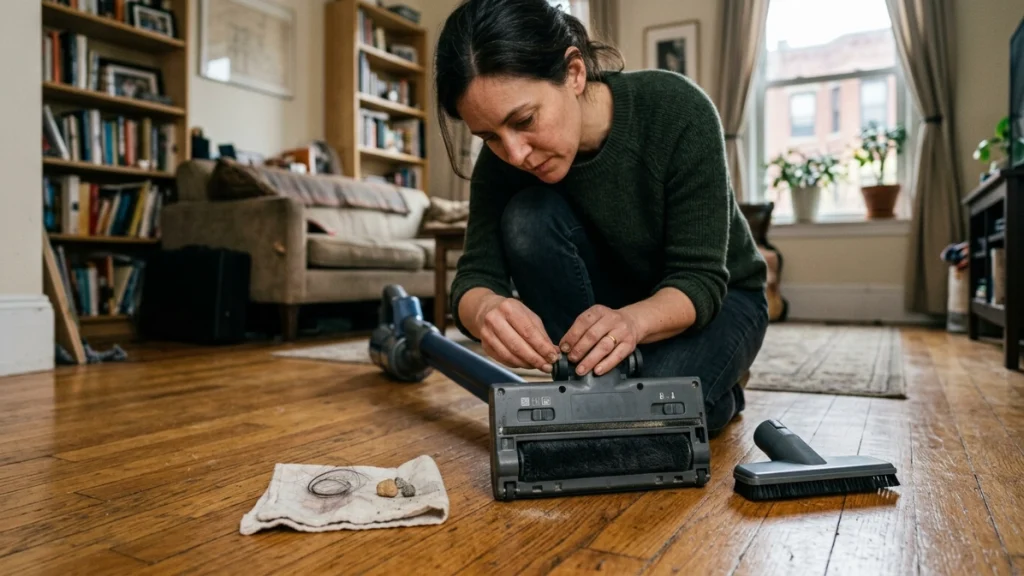
- Inspect the head: Remove trapped grit, hair, and hard debris from the wheels and cleaning head.
- Choose hard-floor mode: Switch off the brush roll or use its lowest suitable setting when your vacuum allows it.
- Vacuum slowly: Use steady, overlapping passes instead of pushing the machine quickly.
- Clean edges: Finish along baseboards and corners with a crevice or soft-brush tool.
- Check your work: Look for leftover grit before walking across the cleaned area.
Hardwood floors look simple to clean, but small mistakes can leave marks in the finish. The biggest problem I watch for is loose grit getting trapped under a wheel or cleaning head.
In this guide, I’ll show you a practical hardwood vacuuming routine, which attachments work best, and which common habits can cause trouble.
In This Guide
- What Vacuum Settings Should You Use on Hardwood Floors?
- How Do You Vacuum Hardwood Floors Step by Step?
- Which Vacuum Head Is Safest for Hardwood Floors?
- How Often Should You Vacuum Hardwood Floors?
- What Vacuuming Mistakes Can Damage Hardwood Floors?
- How Should You Vacuum Fine Dust, Pet Hair, and Allergens?
- Frequently Asked Questions
What Vacuum Settings Should You Use on Hardwood Floors?
Use a hard-floor setting whenever your vacuum provides one. The goal is strong pickup without letting an aggressive brush repeatedly strike the wood finish.
Vacuuming hardwood floors means removing loose dust, grit, hair, crumbs, and other dry debris with suction while protecting the floor’s surface and finish.
Turn off the brush roll when appropriate
Many upright and stick vacuums use a rotating brush roll for carpet. That brush helps lift debris from fibers, but hardwood does not need the same agitation.
If your vacuum provides a brush-roll off switch, hard-floor setting, or dedicated floor head, use the option recommended for bare flooring.
- Brush-roll off: A good choice when the vacuum still has enough suction to collect surface debris.
- Hard-floor mode: Often reduces brush speed or changes how the cleaning head works.
- Soft roller: Makes gentle contact with the floor while picking up fine dust and larger crumbs.
- Suction-only head: Avoids a powered rotating brush altogether.
Do not assume maximum power is always better
Higher suction normally does not scratch hardwood by itself. However, too much suction can make some floor heads difficult to slide smoothly.
If the head sticks tightly to the floor, lower the suction when your vacuum allows adjustment. You should be able to move it without dragging or forcing it.
Check the vacuum before it touches the floor
I consider this check more important than chasing a perfect power setting. A clean vacuum wheel cannot trap grit as easily as a dirty one.
- Look under the cleaning head.
- Remove stones, sand, or hard crumbs.
- Check small wheels for stuck debris.
- Cut away wrapped hair when needed.
- Make sure no hard plastic edge is broken or exposed.
These checks take less than a minute, yet they can prevent debris from being dragged across an entire room.
Section Takeaway: Use the vacuum’s hard-floor setup and keep every part touching the floor clean. A trapped grain of grit may be a bigger scratching risk than the suction itself.
How Do You Vacuum Hardwood Floors Step by Step?
Start by removing objects, inspect the vacuum head, then work slowly across the room in overlapping passes. Finish with corners, edges, and areas under furniture.
1. Pick up objects before you start
Walk through the room first. Remove charging cables, coins, small toys, paper clips, and anything else the vacuum could catch.
Move lightweight rugs if you plan to clean beneath them. Lift furniture when necessary instead of sliding it across the floor.
2. Check for grit and sharp debris
Look closely around exterior doors, pet areas, and entryways. These spots often collect sand and hard particles.
If you see a larger stone or sharp object, pick it up by hand rather than running the vacuum over it.
3. Inspect the cleaning head and wheels
Turn the vacuum off before checking underneath. Remove any hard debris stuck to the wheels, roller, or plastic housing.
I also run my fingers over accessible wheels to make sure they rotate normally. A wheel that will not turn can drag instead of roll.
4. Select the correct floor mode
Choose the manufacturer’s hardwood, bare-floor, or hard-floor setting if one is available. Switch off the powered brush if your model recommends that setup for wood.
A dedicated soft roller or parquet-style floor attachment can also work well.
5. Start at the far side of the room
Begin away from the doorway and work toward your exit. This creates an orderly pattern and makes missed areas easier to spot.
- Push the vacuum forward slowly.
- Pull it back without jerking.
- Move sideways by slightly less than the width of the cleaning head.
- Repeat until the open floor is finished.
Overlapping passes help catch debris near the edge of the previous path. You usually do not need to run over the same clean area many times.
6. Vacuum with the direction of the boards when useful
Following the direction of the boards can make your cleaning pattern easier to manage. It may also help when dust settles along visible seams.
For stubborn debris in grooves, approach from another direction once. Do not repeatedly scrub the same spot with a powered brush.
7. Clean edges and corners
Main floor heads rarely reach every baseboard. Switch to a crevice tool or soft dusting attachment for the perimeter.
- Vacuum along baseboards.
- Reach behind doors.
- Clean around furniture legs.
- Check heating vents and floor registers.
- Reach beneath accessible furniture.
8. Empty or check the vacuum afterward
An overfilled bin or clogged filter can reduce airflow in many vacuums. Follow your vacuum manufacturer’s instructions for emptying the bin and maintaining filters.
Before the next cleaning session, store the vacuum so its floor head does not sit in spilled dirt or garage grit.
Section Takeaway: Hardwood vacuuming works best as a controlled routine, not aggressive scrubbing. Clean equipment, slow passes, and careful edge work usually matter most.
Which Vacuum Head Is Safest for Hardwood Floors?
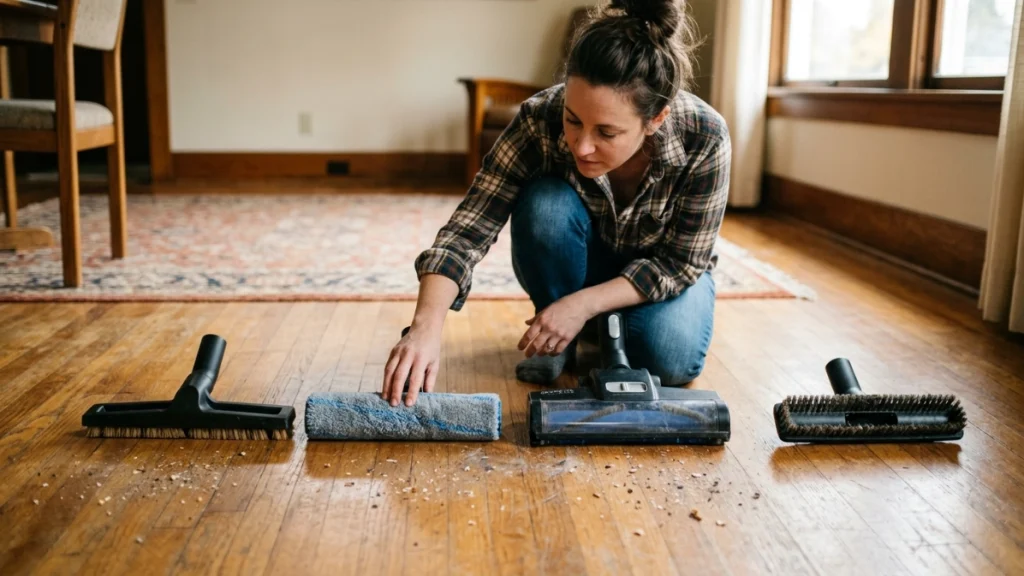
A soft roller or suction-only hardwood floor head is often the simplest choice. A powered brush can also be suitable when the manufacturer provides a hardwood-safe setting.
There is no single head that fits every vacuum. The floor finish, debris type, and vacuum design all matter.
| Vacuum Head Type | Best Use | Brush Action | Hardwood Consideration |
|---|---|---|---|
| Suction-only parquet head | Dust, crumbs, general debris | No powered rotation | Check the head and wheels for trapped grit |
| Soft roller | Fine dust and mixed debris | Soft rotating contact | Keep the roller clean and inspect it for embedded debris |
| Powered brush with off/low mode | Homes with both carpet and hard flooring | Adjustable or switchable | Use the manufacturer’s bare-floor setting |
| Standard fast brush roll | Primarily carpet | Continuous powered rotation | Avoid using it on wood unless the maker specifically approves the setup |
Can a stick vacuum clean hardwood?
Yes. A stick vacuum can be convenient for everyday debris, especially when it has a dedicated hard-floor head or adjustable brush roll.
Consumer Reports has found many vacuum types capable of strong bare-floor cleaning. The best choice depends on the rest of the surfaces in your home.
Can you use an upright vacuum?
Yes, as long as the machine is designed to clean hard floors. Look for a brush-roll shutoff, hard-floor mode, or another manufacturer-approved setting.
A heavy upright is not automatically harmful. What matters is the design and condition of the parts that contact your floor.
What about canister vacuums?
Canister vacuums often pair well with lightweight floor tools. That can make them comfortable around furniture and on large areas of bare flooring.
Whatever type you use, inspect the attachment regularly. Even a soft head can become abrasive if grit gets embedded in it.
How Often Should You Vacuum Hardwood Floors?
Vacuum high-traffic hardwood areas several times a week when they collect visible dirt, and clean quieter rooms as needed. Homes with pets, children, outdoor shoes, or sandy soil may need more frequent attention.
There is no universal schedule that fits every home. I prefer to judge the floor by how quickly dry debris returns.
| Area | Practical Starting Routine | Clean More Often When |
|---|---|---|
| Entryway | Every few days | Shoes bring in sand or soil |
| Kitchen | Several times a week | Crumbs collect daily |
| Living room | About once or twice a week | Pets or heavy foot traffic are present |
| Low-use bedroom | About weekly | Dust or pet hair appears sooner |
These are practical starting points rather than strict rules. If you can see or feel grit underfoot, I would not wait for a scheduled cleaning day.
The U.S. EPA also recommends frequent cleaning as one way to reduce indoor dust and particulate matter. Its guidance on indoor particulate matter notes that vacuuming and damp dusting can help control settled dust.
Prevent dirt before it reaches the floor
A good entry mat can reduce the amount of outdoor debris that reaches hardwood. A no-shoes routine can cut down tracking even further.
- Place mats at exterior entrances.
- Shake or clean mats regularly.
- Keep outdoor shoes near the entrance.
- Clean spills and crumbs promptly.
- Vacuum visible gritty debris instead of walking over it.
What Vacuuming Mistakes Can Damage Hardwood Floors?
The most common risks come from abrasive debris, dirty wheels, inappropriate brush settings, and dragging the machine carelessly. Avoid those problems before worrying about complicated cleaning techniques.
Using a dirty vacuum head
This is one of the first things I check. A small stone caught under a wheel can travel across several boards before you notice it.
Inspect the underside regularly, especially after vacuuming an entryway or another gritty surface.
Using the wrong brush-roll setting
A carpet brush may rotate aggressively. If your vacuum has a bare-floor setting, use it according to the manufacturer’s instructions.
If there is no suitable hard-floor mode, a dedicated floor attachment may be the safer option.
Dragging the vacuum sideways
Vacuum wheels are designed to roll in specific directions. Twisting a heavy machine sharply can make wheels or hard edges scrape rather than roll smoothly.
Reposition the machine instead of forcing it around tight furniture.
Vacuuming over liquids
Do not use an ordinary dry vacuum on spilled liquid unless its manufacturer specifically says the machine can handle wet pickup. Unplug electrical equipment before dealing with a spill near a cord or outlet.
Blot the liquid using a method approved for your floor’s finish, then let the area dry as appropriate.
Using the vacuum cord carelessly
A cord can catch around chair legs and knock objects onto the floor. It may also drag debris behind you.
Keep the cord controlled and move it as you progress through the room.
Following vacuuming with too much water or steam
Vacuuming removes loose dry debris, but wet cleaning is a separate job. The correct method depends on the floor finish and the flooring manufacturer’s care instructions.
Consumer Reports recommends checking product compatibility and warns against excess water and steam on hardwood in its hardwood floor cleaning guidance.
Expert Alert: If boards are lifting, the finish is peeling, deep scratches expose bare wood, or moisture damage is visible, contact a qualified flooring professional instead of trying aggressive DIY cleaning.
Section Takeaway: Most vacuum-related floor problems are preventable. Clean the wheels and head, choose the right setting, and never force the machine across the wood.
How Should You Vacuum Fine Dust, Pet Hair, and Allergens?
Use slow passes, maintain the vacuum’s filters, and focus on places where dust and hair collect. A vacuum with effective particle filtration can also help keep some captured dust from escaping back into the room.
For fine household dust
Fine dust settles beneath furniture, along baseboards, and in low-traffic corners. Use your main floor head first, then finish those areas with an appropriate attachment.
The EPA suggests considering a vacuum with a HEPA filter to help reduce dust buildup and limit some vacuumed dust from escaping back into indoor air.
For pet hair
Pet hair often gathers against walls and furniture legs before forming visible clumps. Vacuum these collection points instead of repeatedly running the main head across the center of the room.
- Check underneath pet beds.
- Vacuum around feeding areas.
- Clean baseboard edges.
- Inspect the roller for wrapped hair.
- Empty the bin before airflow becomes restricted.
For households concerned about allergens
Vacuuming can disturb settled dust while you clean. The Asthma and Allergy Foundation of America advises people with dust mite allergies to consider a vacuum with a HEPA filter and notes that vacuuming can temporarily stir up dust.
You can read the AAFA’s dust mite allergy guidance for broader allergen-control steps.
Do you need an air purifier too?
A vacuum and an air purifier perform different jobs. The vacuum targets debris that has settled on the floor, while an air cleaner filters particles moving through the air that passes through the unit.
The EPA explains that filtration may supplement source control and ventilation, but no air cleaner removes every indoor pollutant. Its Guide to Air Cleaners in the Home explains HEPA-style particle filtration and clean air delivery rate, or CADR, in more detail.
I would not buy an air purifier simply because a hardwood floor becomes dusty. First look for the source of the dust and improve regular surface cleaning.
Section Takeaway: For dust, hair, and allergens, technique and maintenance work together. Vacuum settled debris carefully, keep filters maintained, and treat air filtration as a separate tool rather than a replacement for cleaning.
Frequently Asked Questions
Is it better to sweep or vacuum hardwood floors?
Both can work, but a vacuum can collect fine dust and debris without pushing it around the room. Use a hardwood-safe floor head or setting, and keep its wheels and underside free of grit.
Can vacuum cleaners scratch hardwood floors?
They can if hard debris becomes trapped under a wheel or cleaning head, or if an unsuitable attachment drags across the finish. Regularly inspect the parts that touch the floor and follow the vacuum manufacturer’s bare-floor instructions.
Should the brush roll be on or off for hardwood floors?
Turn it off when your vacuum’s instructions recommend doing so for hard floors. Some modern machines use hardwood-safe soft rollers or reduced-speed hard-floor modes, so the correct setting depends on the model.
Can I use a Dyson, Shark, or other stick vacuum on hardwood?
Many stick vacuums are designed for hard floors, but suitability depends on the specific model and attachment. Check the manufacturer’s floor-care instructions rather than assuming every head is suitable for every wood finish.
Should I vacuum in the direction of the wood grain?
You can follow the direction of the boards because it creates an orderly cleaning pattern and can help you work along seams. Change direction once if debris remains, rather than repeatedly scrubbing one area.
How do I vacuum hardwood floors without spreading dust?
Use slow passes and keep the vacuum’s filters, seals, bin, or bag maintained according to its instructions. If dust visibly escapes from the machine, stop and check for a full bin, incorrectly fitted filter, blockage, or other maintenance issue.
Is a HEPA vacuum necessary for hardwood floors?
A HEPA filter is not required simply because your floor is hardwood. It may be useful when controlling fine household dust is a priority, especially if the vacuum is well sealed and maintained according to the manufacturer.
The takeaway: The safest way to vacuum hardwood floors is simple. Use the correct floor setting, keep the cleaning head spotless, remove gritty debris early, and move the vacuum with slow, controlled passes.
If you build those checks into your normal cleaning routine, hardwood vacuuming becomes quicker and much less stressful.