How to Disinfect a Vacuum Cleaner Safely: Step-by-Step Guide

Quick Answer
To disinfect a vacuum cleaner, unplug it first, empty the dirt, and clean away visible dust before using any disinfectant. Only disinfect hard, nonporous parts that your vacuum’s manual allows to get damp, following CDC cleaning and disinfecting guidance. Never spray liquid into the motor, electrical contacts, battery, or charging port.
Quick Steps
- Disconnect power: Unplug a corded vacuum or remove the battery when your model allows it.
- Empty the debris: Remove the bag or empty the dustbin without shaking dust around the room.
- Clean first: Remove hair, dust, crumbs, and visible dirt from washable or wipeable parts.
- Disinfect approved surfaces: Apply a compatible disinfectant according to its label and your vacuum manual.
- Dry completely: Let every cleaned part dry before reinstalling it or reconnecting power.
A vacuum cleaner picks up more than visible crumbs. Its dustbin, brush roll, hose, and tools can collect pet dander, allergens, fine dust, and other household debris.
As of 2026, my approach is simple: clean first and disinfect only when there is a reason. This guide explains how to disinfect a vacuum cleaner without damaging filters, seals, electrical parts, or the motor.
In This Guide
- What Does Disinfecting a Vacuum Cleaner Mean?
- What Should You Use to Disinfect a Vacuum Cleaner?
- How Do You Disinfect a Vacuum Cleaner Step by Step?
- How Should Different Vacuum Parts Be Cleaned?
- What Should You Never Do When Disinfecting a Vacuum?
- How Often Should You Disinfect Your Vacuum Cleaner?
- Frequently Asked Questions
What Does Disinfecting a Vacuum Cleaner Mean?
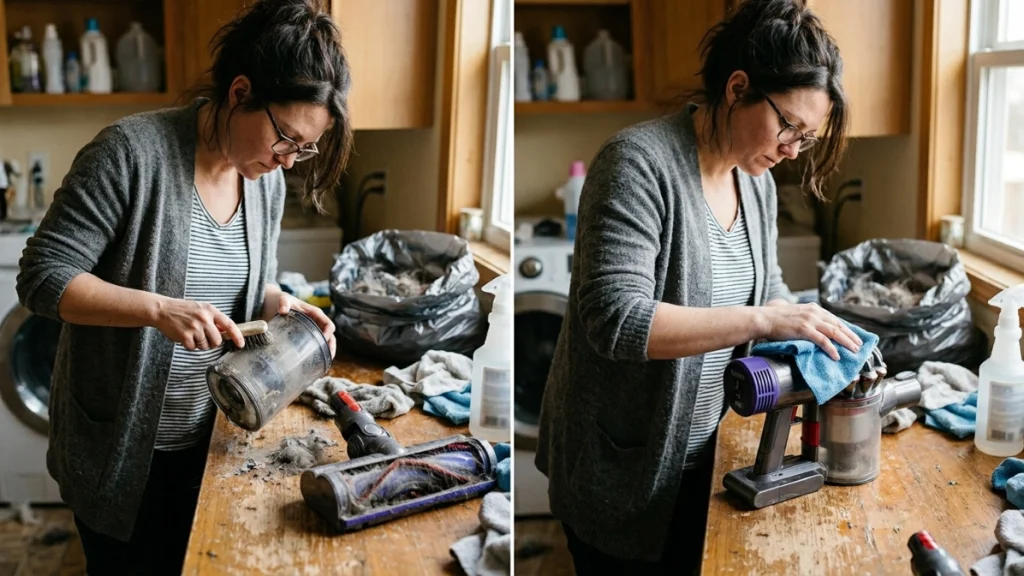
Disinfecting a vacuum cleaner means using an appropriate disinfectant on compatible surfaces after dirt has already been removed. It isn’t the same as simply emptying the dustbin.
Definition: Cleaning physically removes dirt and many germs. Disinfecting uses a chemical product to kill germs that remain on a compatible surface after cleaning.
This distinction matters. A layer of dust, hair, or greasy debris can stop a disinfectant from reaching the surface underneath.
That is why I never start by spraying a dirty vacuum. I remove the debris first, then decide whether disinfection is even necessary.
- Routine maintenance: Cleaning is usually the main job.
- After household illness: Disinfection of safe high-touch surfaces may be useful.
- After pet accidents: Clean contaminated removable parts carefully and disinfect only compatible surfaces.
- After unusually dirty jobs: A deeper cleaning may be more useful than spraying disinfectant everywhere.
The CDC notes that regular cleaning is enough in many household situations. Disinfection becomes more relevant when someone is sick or there is another clear contamination concern.
What Should You Use to Disinfect a Vacuum Cleaner?
You don’t need a large cleaning kit. You do need products that are safe for both the vacuum and the surface you’re treating.
Basic supplies
- Disposable or washable cleaning gloves
- Microfiber cloths
- A small cleaning brush or old soft toothbrush
- Mild dish soap for washable parts
- Warm water
- Scissors or a seam ripper for wrapped hair
- A manufacturer-approved disinfectant when disinfection is needed
- Trash bag for dust, bags, or debris
If you need a true disinfectant, check EPA information on registered disinfectants. The product label tells you where it can be used and how long the surface must remain wet.
There is no single disinfectant that I would recommend for every vacuum. Plastics, rubber seals, painted surfaces, and clear dustbins can react differently to strong chemicals.
Check the manual before adding moisture
A part that looks washable may contain adhesive, filter media, bearings, or electrical contacts. Always check the vacuum manufacturer’s instructions first.
This matters most with HEPA filters. Some filters are washable, while others can be permanently damaged by water.
Never assume that “HEPA” means “washable.” If the manual says replace the filter rather than wash it, follow that instruction.
How Do You Disinfect a Vacuum Cleaner Step by Step?
The safest method separates dry debris removal, washing, disinfection, and drying. I use that order because it keeps moisture away from places where it doesn’t belong.
- Turn the vacuum off and disconnect power. Unplug a corded machine. For a cordless vacuum, remove the battery if the manufacturer designed it to be removable.
- Move to a well-ventilated cleaning area. If possible, empty a dusty bag or bin outdoors. This helps avoid releasing collected fine dust back into your living space.
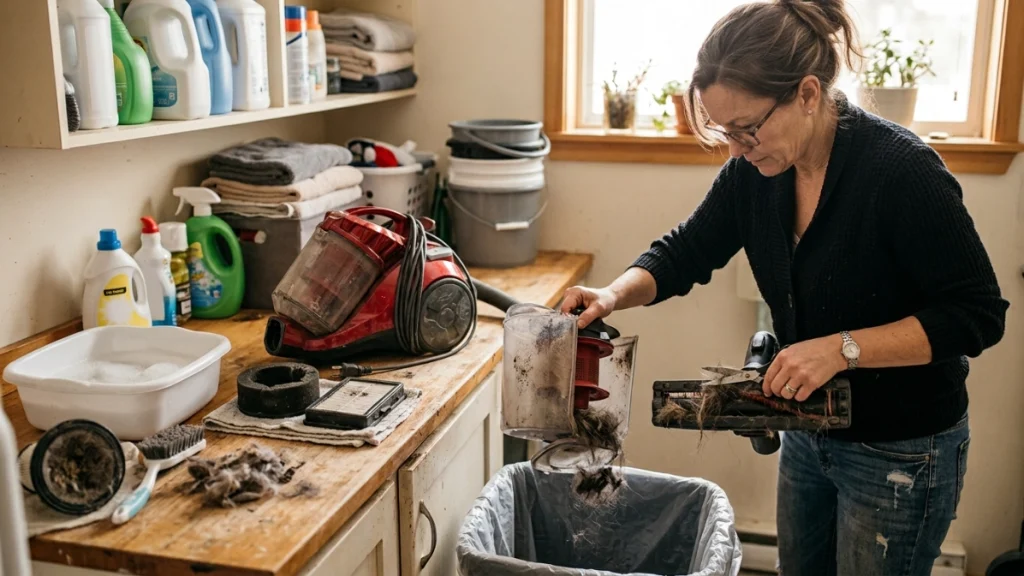
- Empty the dustbin or remove the bag. Bagless vacuums should be emptied gently into a trash bag. Avoid banging the container or creating a large dust cloud. For a bagged vacuum, remove and discard a full bag according to the manufacturer’s instructions. Don’t try to wash a disposable vacuum bag.
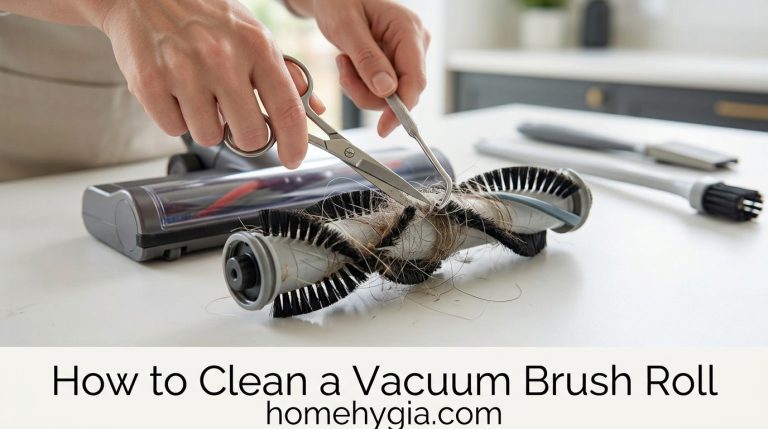
- Remove loose hair and debris. Check the brush roll, nozzle, wheels, hose opening, crevice tool, and upholstery tool. Cut wrapped hair carefully without damaging bristles or belts.
- Wash removable parts that are approved for washing. A washable plastic dustbin can often be cleaned with mild soap and water. Rinse away detergent residue and place it where air can circulate around it. Do the same with washable attachments. Keep metal bearings, powered floor heads, and electrical connectors dry unless the manual specifically says otherwise.
- Clean hard surfaces before disinfecting them. Wipe handles, release buttons, exterior plastic, and other high-touch areas to remove visible grime. Cleaning should always happen before chemical disinfection.
- Disinfect compatible hard, nonporous surfaces. Use a product approved for the material and intended surface. Follow its directions instead of guessing how much to apply. I prefer applying liquid to a cloth when the product directions permit it. That gives me better control near seams, switches, vents, and electrical areas.
- Respect the disinfectant’s contact time. A disinfectant needs to remain on the surface for the time stated on its label. Don’t immediately wipe it dry unless the directions tell you to.
- Let everything dry completely. This step is easy to rush. A damp dustbin, hose, or washable filter can trap moisture after you reassemble the machine. Give cleaned parts enough airflow and drying time. Never reinstall a washable filter while it is still damp.
- Reassemble and inspect the vacuum. Check that filters sit correctly, seals line up, the brush roll turns normally, and the dustbin closes securely. Then reconnect the battery or power cord.
Section Takeaway: Remove dirt first, use disinfectant only on approved surfaces, and keep all electrical areas dry. Complete drying is just as important as washing.
How Should Different Vacuum Parts Be Cleaned?
Not every vacuum component should be treated the same way. The table below is the rule set I use before introducing water or disinfectant.
| Vacuum Part | Routine Cleaning | Disinfect? | Main Caution |
|---|---|---|---|
| Plastic dustbin | Empty, wash if manufacturer allows, dry fully | Yes, if product and plastic are compatible | Keep electrical contacts dry |
| Washable foam filter | Wash only as directed by manufacturer | Usually not necessary | Must dry completely before use |
| HEPA filter | Follow exact filter instructions | Don’t apply chemicals unless specifically approved | Many HEPA filters aren’t washable |
| Brush roll | Remove hair, threads, and debris | Only if removable and compatible | Avoid bearings, belt, and motorized contacts |
| Non-powered attachments | Wash or wipe as allowed | Often possible on hard surfaces | Dry hollow tools thoroughly |
| Hose | Clear blockages; wash only if approved | Depends on hose design | Powered hoses may contain wiring |
| Motor housing | Dry cloth or lightly damp exterior cloth | Exterior touchpoints only when safe | Never allow liquid into vents |
Filters deserve extra care because they affect airflow and particle capture. A clogged or incorrectly installed filter can also reduce cleaning performance.
For homes dealing with dust mites, pet dander, or other allergens, regular vacuuming can be part of an allergen-control routine. The Asthma and Allergy Foundation of America also recommends regular vacuuming as one way to help control indoor allergens.
Disinfecting a filter isn’t the goal. Maintaining the filter according to its design is more important.
Section Takeaway: Treat each component according to its material and design. Washable plastic, HEPA media, motor housings, and powered attachments require different care.
What Should You Never Do When Disinfecting a Vacuum?
The biggest mistakes happen when people treat the entire vacuum like a kitchen countertop. A vacuum contains airflow paths, electrical parts, filters, bearings, seals, and sometimes a lithium-ion battery.
- Don’t spray the whole vacuum: Mist can enter vents, switches, charging contacts, or the motor housing.
- Don’t soak powered attachments: Many floor heads contain wiring, lights, sensors, or small motors.
- Don’t wash an unapproved filter: Water can damage filter media or change its shape.
- Don’t reinstall damp filters: Wait until washable components are fully dry.
- Don’t mix cleaning chemicals: Different household chemicals can react dangerously.
- Don’t guess disinfectant contact time: Follow the product label.
- Don’t use bleach automatically: It can damage some metals, fabrics, rubber, and plastics.
- Don’t pour liquid through the hose: Some hoses contain electrical wiring or are difficult to dry internally.
If bleach is specifically required for another household disinfection task, review CDC bleach safety guidance first. I would not use bleach on a vacuum unless both the appliance instructions and disinfectant directions support that use.
Expert Alert: If liquid has entered the motor, battery compartment, charging system, or internal electrical components, stop using the vacuum and contact a qualified repair technician.
Expert Alert: A vacuum contaminated by sewage, large-scale mold remediation, asbestos, lead dust, or other hazardous material needs specialist advice. A normal household disinfection routine isn’t enough for those exposures.
How Often Should You Disinfect Your Vacuum Cleaner?
Most household vacuums don’t need chemical disinfection after every cleaning session. Routine debris removal and maintenance are usually more useful.
I base the schedule on what the vacuum has collected rather than following an arbitrary calendar.
- After normal vacuuming: Empty the bin as needed and remove hair or debris from the cleaning head.
- Every few uses: Inspect filters, wheels, brush rolls, seals, and attachments for buildup.
- After pet accidents: Deep-clean contaminated removable parts promptly.
- After illness in the home: Consider disinfecting compatible high-touch and contaminated surfaces.
- When odors develop: Clean the bin, filters, brush roll, and hose before assuming disinfectant will solve the problem.
A stale vacuum smell often comes from trapped debris, damp material, a dirty filter, or pet hair. Spraying fragrance or disinfectant into the airflow path can hide the smell without fixing its source.
Good vacuum hygiene also supports the machine’s normal airflow. Empty bins, clear brush rolls, and properly maintained filters help the vacuum do the job it was designed to do.
Frequently Asked Questions
Can I spray disinfectant inside my vacuum cleaner?
Don’t spray disinfectant directly into a vacuum’s motor, vents, electrical contacts, charging port, or powered attachments. For compatible exterior surfaces, apply the product according to its label and the vacuum manufacturer’s instructions.
Can I use alcohol to disinfect a vacuum cleaner?
Only if the vacuum manufacturer allows it and the disinfectant is suitable for the material. Alcohol can affect some plastics, coatings, adhesives, and rubber components, so it shouldn’t be treated as a universal vacuum cleaner disinfectant.
Can I disinfect a vacuum cleaner with bleach?
Bleach isn’t a good default choice for vacuum cleaners. It may damage metals, plastics, fabrics, or rubber components. Use it only where both the appliance instructions and disinfectant directions clearly allow it.
Should I disinfect my vacuum after someone is sick?
Cleaning should come first. You may then disinfect compatible high-touch or contaminated hard surfaces, especially when illness is present in the household, while following the disinfectant label and appliance instructions.
Can I wash my vacuum’s HEPA filter?
Only wash it if the manufacturer specifically labels that filter as washable. Many HEPA filters aren’t designed for washing, and getting them wet may damage the filter media or affect airflow.
How do I disinfect a bagless vacuum dustbin?
Empty the bin first, remove visible dirt, and wash it if the manufacturer permits. After cleaning, use a compatible disinfectant when necessary, follow its required contact time, and allow the bin to dry fully before reinstalling it.
Does disinfecting a vacuum remove bad smells?
Not always. Odors can come from damp filters, pet hair, old debris, clogged hoses, or dirty brush rolls. Find and clean the odor source first instead of spraying disinfectant or fragrance into the vacuum.
Final takeaway: The safest way to disinfect a vacuum cleaner is to clean it first, disinfect only compatible hard surfaces, protect every electrical component from moisture, and let washable parts dry completely.
Before your next deep clean, check the manual for your exact model. Five minutes spent confirming which filters and attachments are washable can prevent an expensive mistake.