
Filterless Air Purifier vs HEPA: Essential Pros & Cons

Filterless air purifiers offer a cost-effective, maintenance-free alternative to traditional HEPA filters, but their effectiveness in capturing fine particles like allergens and pollutants is a key consideration in the filterless air purifier vs HEPA debate.
Breathing cleaner air at home is a goal for many, especially with rising concerns about indoor air quality. You might be looking at air purifiers and wondering which type is best for your needs. The choice often comes down to two main categories: filterless air purifiers and those with HEPA filters. This can feel overwhelming, but I’m here to break down the essential pros and cons of filterless air purifier vs HEPA. We’ll explore how each technology works, what they’re best at capturing, and what their limitations are. By the end of this guide, you’ll have a clear understanding to make an informed decision for your home.
What is a Filterless Air Purifier?
A filterless air purifier, as the name suggests, operates without disposable filters. Instead, it uses technologies like ionizers, UV-C light, or electrostatic precipitation to capture or neutralize airborne particles. These systems aim to offer a continuous purification process without the recurring cost and hassle of filter replacements.
Filterless air purifiers often rely on electrical charges to attract and collect pollutants. They can be a convenient option for those who want a set-it-and-forget-it approach to air cleaning.
What is a HEPA Air Purifier?
HEPA, which stands for High-Efficiency Particulate Air, is a standard for air filters. A true HEPA filter must capture at least 99.97% of airborne particles 0.3 microns in size. This includes common allergens like pollen, pet dander, mold spores, and even some bacteria and viruses.
HEPA filters work by physically trapping particles as air is drawn through them. They are widely recognized for their effectiveness in removing a broad spectrum of microscopic contaminants.
How Do Filterless Air Purifiers Work?
Filterless air purifiers employ various methods to clean the air. Ionizers release charged ions that attach to airborne particles, causing them to clump together and fall out of the air or stick to collection plates. UV-C light can be used to kill microorganisms, while electrostatic precipitators use charged plates to attract and hold particles.
These technologies offer an alternative to the physical trapping mechanism of HEPA filters. They often require periodic cleaning of collection plates or components rather than filter replacement.
How Do HEPA Air Purifiers Work?
HEPA filters are made of a dense mat of randomly arranged fibers. As air passes through, particles are captured through several mechanisms: impaction, interception, and diffusion. Impaction occurs when larger particles can’t follow the airflow around the fibers and hit them directly. Interception happens when particles follow the airflow but come close enough to the fibers to be caught. Diffusion is most effective for the smallest particles, which move erratically and are more likely to collide with fibers.
The intricate mesh of a HEPA filter is designed to be highly effective at trapping a wide range of particle sizes. This physical barrier is the core of its purification power.
Filterless Air Purifier vs HEPA: Particle Capture Effectiveness
When comparing filterless air purifier vs HEPA, particle capture is a crucial factor. HEPA filters are scientifically proven to capture 99.97% of particles at 0.3 microns. This includes many common allergens and irritants.
Filterless technologies, especially ionizers, can sometimes struggle with very fine particles or may even produce ozone, which can be an irritant. Electrostatic precipitators can be effective but may require frequent cleaning to maintain performance.
Pros of Filterless Air Purifiers
Filterless air purifiers offer several attractive benefits. The most significant is the elimination of recurring filter replacement costs, saving you money over time. They also reduce waste, making them a more environmentally friendly choice.
Maintenance is typically simpler, often involving just washing collection plates or components. This convenience appeals to many users seeking a hassle-free solution for cleaner air.
Cons of Filterless Air Purifiers
Despite their convenience, filterless air purifiers have drawbacks. Some technologies, particularly ionizers, can produce ozone as a byproduct. Ozone is a lung irritant and can worsen respiratory conditions, a significant concern for health-conscious individuals.
Their effectiveness against ultra-fine particles can also be less consistent compared to true HEPA filters. Cleaning can sometimes be a messy or intricate process to ensure optimal performance.
Pros of HEPA Air Purifiers
HEPA air purifiers are renowned for their exceptional particle removal capabilities. They are highly effective against allergens, dust, pet dander, mold spores, and even some bacteria and viruses, contributing to a healthier indoor environment.
The standardized nature of the HEPA certification provides a reliable benchmark for performance. You know exactly what level of filtration you’re getting, which is reassuring for those with specific air quality needs.
Cons of HEPA Air Purifiers
The primary disadvantage of HEPA air purifiers is the ongoing cost and effort of replacing filters. These filters need to be changed periodically, typically every 6-12 months, depending on usage and air quality, adding to the overall expense.
Missed filter replacements can reduce the purifier’s effectiveness and, in some cases, lead to the release of trapped particles back into the air. The disposal of used filters also contributes to waste.
Cost Comparison: Filterless Air Purifier vs HEPA
The initial cost of filterless air purifiers can sometimes be higher than basic HEPA models. However, when you factor in the long-term savings from not buying replacement filters, filterless units can become more economical over several years.
For example, a HEPA filter might cost $30-$60 annually, which adds up over the lifespan of the unit. A filterless purifier eliminates this recurring expense, making its total cost of ownership potentially lower for many users.
Maintenance: A Key Difference
Maintenance is where the filterless air purifier vs HEPA debate often centers. HEPA purifiers require scheduled filter replacements, which is a straightforward but necessary task. Neglecting this can compromise air quality.
Filterless models usually require cleaning of internal components like collection plates. This might involve washing or wiping them down, a process that needs to be done regularly to maintain efficiency.
Which is Best for Allergies and Asthma?
For individuals suffering from allergies or asthma, a true HEPA air purifier is generally the recommended choice. Their proven ability to capture 99.97% of microscopic particles, including common allergens like pollen, dust mites, and pet dander, makes them highly effective at improving respiratory health.
While some filterless models can reduce airborne particles, their consistency and effectiveness against the smallest irritants may not meet the stringent requirements needed for severe allergy or asthma sufferers. Always check manufacturer specifications and third-party testing when making this decision.
Ozone Production: A Critical Factor
A significant concern with some filterless air purifiers, particularly ionizers, is their potential to produce ozone. The U.S. Environmental Protection Agency (EPA) states that ozone can irritate the lungs and aggravate respiratory issues.
True HEPA purifiers do not produce ozone as a byproduct of their filtration process. This makes them a safer choice for homes with children, the elderly, or individuals with pre-existing respiratory conditions.
Noise Levels and Energy Consumption
Both filterless and HEPA air purifiers vary in noise levels and energy consumption depending on the model and fan speed. Generally, units with larger fans and higher airflow rates tend to be louder.
Filterless technologies might consume less energy over time due to the absence of a constantly running fan motor dedicated to pushing air through a dense filter. However, this is not a universal rule, and specific product reviews are the best guide.
Environmental Impact: Filters vs. Waste
The environmental impact is another aspect to consider in the filterless air purifier vs HEPA discussion. HEPA purifiers generate waste through disposable filters that end up in landfills. This can be a concern for eco-conscious consumers.
Filterless purifiers, by eliminating disposable filters, reduce this waste stream. However, their manufacturing process and the longevity of the unit itself also contribute to their overall environmental footprint.
Filterless Air Purifier vs HEPA: Which Should You Choose?
The choice between a filterless air purifier vs HEPA ultimately depends on your priorities and specific needs. If you prioritize long-term cost savings, minimal waste, and convenience, a filterless model might be appealing.
However, if your primary concern is maximum effectiveness against allergens, asthma triggers, and the smallest airborne particles, a certified HEPA air purifier is usually the superior option. For optimal indoor air quality, especially for those with respiratory sensitivities, HEPA remains the gold standard.
Frequently Asked Questions
Are filterless air purifiers as effective as HEPA?
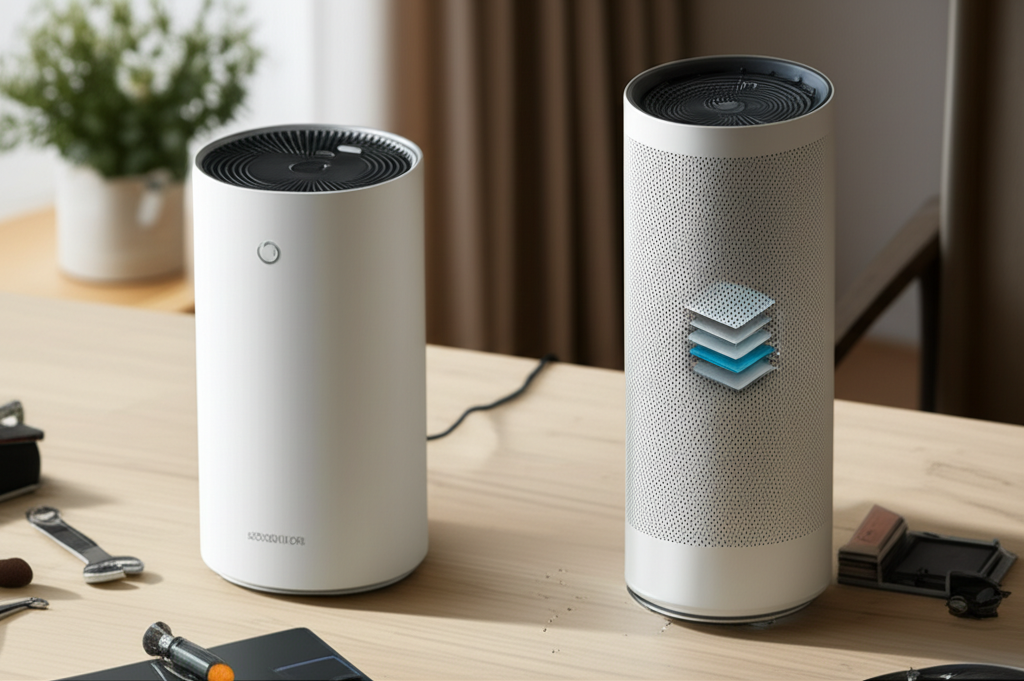
While filterless air purifiers can remove larger particles, HEPA filters are scientifically proven to capture 99.97% of particles 0.3 microns in size, making them generally more effective for fine allergens and pollutants.
Do filterless air purifiers produce ozone?
Some filterless technologies, like ionizers, can produce ozone as a byproduct, which can be a lung irritant. Always check the specifications and look for ozone-free certifications.
How often do I need to replace filters in a HEPA air purifier?
HEPA filters typically need replacement every 6 to 12 months, depending on the air purifier’s usage and the quality of your indoor air.
Are filterless air purifiers more expensive in the long run?
Initially, filterless purifiers might have a higher upfront cost, but they can be more economical over time by eliminating the recurring expense of replacement filters.
Can filterless air purifiers help with pet dander and allergies?
Some filterless models can help reduce pet dander, but HEPA filters are generally more effective at capturing the small, allergenic particles associated with pets.
What are the maintenance requirements for filterless air purifiers?
Filterless purifiers typically require periodic cleaning of their collection plates or components, rather than filter replacement.
Final Verdict
Navigating the world of air purifiers can be complex, especially when comparing filterless air purifier vs HEPA technologies. My take is that for comprehensive, reliable air purification, particularly if you or your family suffer from allergies or asthma, a true HEPA air purifier remains the most robust choice. Its proven track record in capturing microscopic particles is unmatched. However, if you’re seeking a more budget-friendly, low-maintenance, and eco-friendlier option for general air freshening, a filterless model could serve your needs, provided you are mindful of potential ozone production. Always research specific models and their certifications to ensure they align with your health and home environment goals.
