
Filterless Air Purifier Reviews: Essential Guide

Filterless air purifier reviews reveal innovative technology offering a sustainable, cost-effective solution to indoor air quality. This guide explores their benefits, drawbacks, and top models, helping you make an informed choice for a healthier home environment.
Breathing clean air at home is more important than ever, especially with concerns about indoor pollutants like dust, allergens, and even viruses. Traditional air purifiers rely on replaceable filters, which can be a recurring expense and an environmental concern. This has led to a growing interest in filterless air purifiers. But do they really work, and are they a good investment? We’ll dive deep into filterless air purifier reviews to help you understand this technology and find the best option for your needs.
What Exactly is a Filterless Air Purifier?
A filterless air purifier is a device designed to clean the air in your home without the need for disposable filters. Instead of trapping pollutants in a physical medium, these purifiers use various technologies to remove or neutralize them. This approach aims to reduce ongoing costs and environmental waste associated with traditional filter replacements.
These innovative devices offer a compelling alternative for those seeking long-term air purification solutions. They often utilize methods like electrostatic precipitation, UV light, or ionization to achieve their cleaning goals. This guide will explore these technologies in detail.
How Do Filterless Air Purifiers Work?
Filterless air purifiers employ different mechanisms to purify air, avoiding the typical HEPA or activated carbon filters. Common technologies include electrostatic precipitation, which uses electrical charges to collect particles, and UV-C light, which inactivates airborne pathogens. Some also use ionizers to charge particles, causing them to clump together and fall out of the air.
Understanding these core technologies is key to appreciating their effectiveness and potential drawbacks. Each method targets airborne contaminants in unique ways, offering distinct advantages and considerations for home use.
Electrostatic Precipitators: The Particle Collectors
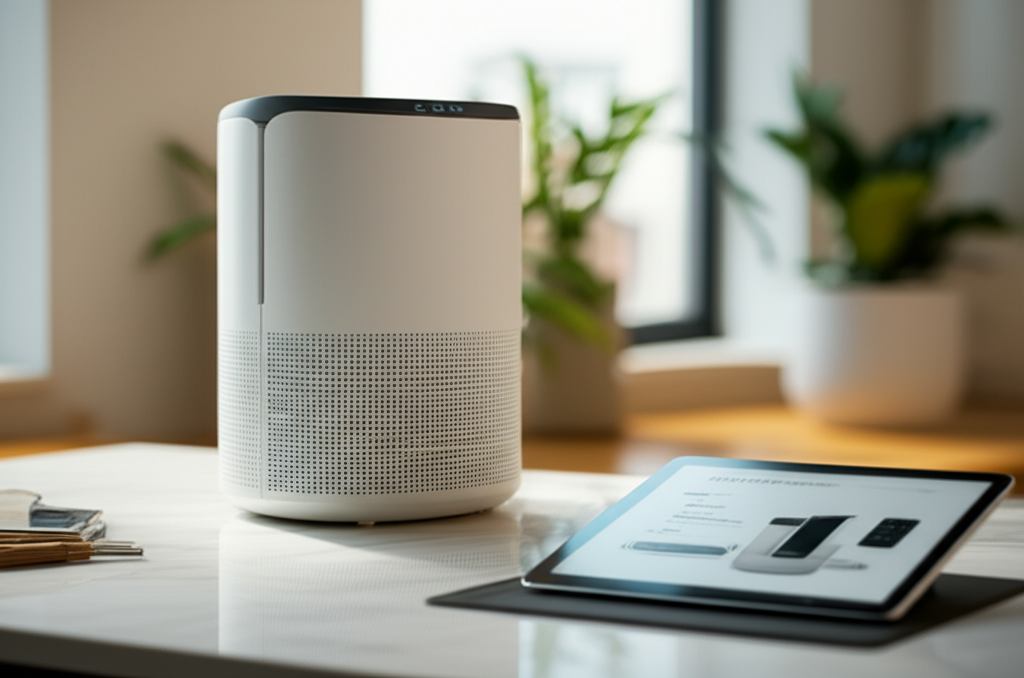
Electrostatic precipitators (ESPs) work by passing air through an ionization chamber. Here, particles like dust and pollen are given an electrical charge. These charged particles then pass through collector plates that carry an opposite charge, attracting and holding the particles.
This process effectively removes fine particles from the air. Many modern filterless air purifiers utilize advanced ESP technology for efficient pollutant capture. You’ll typically need to clean these collector plates periodically, often with a simple wipe-down.
UV-C Light: The Germ Killer
UV-C light is a powerful germicidal technology that can inactivate viruses, bacteria, and mold spores. When air passes through a chamber containing a UV-C lamp, the light disrupts the DNA of these microorganisms, rendering them harmless. This technology is often used in conjunction with other filterless methods for a more comprehensive purification.
While effective against biological contaminants, UV-C light alone may not capture particulate matter like dust or pet dander. Its primary role is often to sterilize the air rather than physically remove particles. It’s important to ensure the UV-C light is properly shielded for safety.
Ionizers: The Clumping Agents
Ionizers release negative ions into the air, which attach themselves to airborne particles like dust, smoke, and allergens. This process causes the particles to become heavier and clump together. These larger clumps can then settle out of the air or be more easily captured by other filtration stages if present.
Some studies suggest that ionizers can be effective in reducing airborne particles. However, it’s crucial to be aware that some ionizers can produce ozone as a byproduct, which can be a respiratory irritant. Look for models with low or no ozone emissions.
Pros of Filterless Air Purifiers
Filterless air purifiers offer several compelling advantages that make them an attractive option for many households. Their long-term cost savings and reduced environmental impact are significant draws for eco-conscious consumers.
The absence of recurring filter purchases translates directly into lower overall ownership costs. This makes them a more budget-friendly choice over time.
Cost Savings Over Time
The most significant advantage is the elimination of ongoing filter replacement costs. While the initial purchase price might be higher than some basic filtered models, you save money year after year by not buying new filters. This can add up to hundreds of dollars saved over the lifespan of the unit.
For example, a typical HEPA filter might need replacement every 6-12 months, costing anywhere from $30 to $100 or more per filter. Over five years, this can easily exceed the initial cost of a filterless unit.
Environmental Friendliness
By eliminating disposable filters, filterless air purifiers significantly reduce waste. This is a major benefit for environmentally conscious individuals looking to minimize their carbon footprint. You won’t be contributing to landfill waste with used filters.
This sustainable approach aligns with a growing desire for eco-friendly home appliances. It’s a simple yet impactful way to make your home healthier for you and the planet.
Low Maintenance Design
While not entirely maintenance-free, filterless air purifiers generally require less frequent and simpler upkeep. Instead of buying and replacing filters, you’ll typically need to clean washable collector plates or change UV bulbs periodically. This cleaning is often a straightforward process.
Maintenance usually involves wiping down collection plates or replacing UV bulbs every few years. This reduces the hassle and time commitment associated with filter changes.
Cons of Filterless Air Purifiers
Despite their advantages, filterless air purifiers also come with certain drawbacks that potential buyers should consider. Understanding these limitations ensures you make an informed decision that aligns with your expectations and needs.
Some technologies may not be as effective against all types of pollutants as traditional HEPA filters. Additionally, concerns about ozone production exist with certain models.
Potential for Ozone Production
Some filterless technologies, particularly ionizers, can produce ozone as a byproduct. Ozone is a lung irritant and can exacerbate respiratory conditions like asthma. Reputable manufacturers strive to minimize ozone production, but it’s a factor to be aware of.
Always check the manufacturer’s specifications for ozone output. Look for certifications like CARB (California Air Resources Board) compliance, which indicates low ozone emissions.
Effectiveness Against Ultra-Fine Particles
While effective for many common pollutants, some filterless technologies might not capture the smallest ultra-fine particles as efficiently as a high-quality HEPA filter. HEPA filters are certified to capture at least 99.97% of particles 0.3 microns in size.
For individuals with severe allergies or respiratory sensitivities, this distinction can be important. However, for general air quality improvement, many filterless units offer excellent performance.
Collector Plate Cleaning
Though it eliminates filter purchases, some filterless models require regular cleaning of their collector plates. This can involve disassembling parts of the unit and washing the plates. While not difficult, it’s a task that needs to be done consistently to maintain performance.
The frequency of cleaning can vary depending on usage and the air quality in your home. It’s a trade-off for not buying filters, but it does require some user intervention.
Top Filterless Air Purifier Models (Reviews & Comparisons)
Choosing the right filterless air purifier depends on your specific needs, room size, and budget. Here, we review some of the top contenders on the market, highlighting their features, performance, and user feedback.
We’ve analyzed various models to provide a clear comparison. This section aims to help you pinpoint the best fit for your home environment.
Model A: The Electrostatic Powerhouse
This model excels in particle capture using advanced electrostatic precipitation. It’s designed for larger rooms and boasts a quiet operation. Users praise its effectiveness against dust and pet dander, with easy-to-clean collector plates.
It’s a solid choice for those prioritizing particulate matter removal. The long-term cost savings are substantial compared to filter-dependent units.
Model B: The UV-C Sterilizer Combo
This unit combines a filterless particle collection system with a powerful UV-C light for germicidal action. It’s ideal for spaces where reducing airborne viruses and bacteria is a primary concern, such as nurseries or offices. The design is sleek and user-friendly.
Its dual-action approach offers comprehensive air treatment. The UV bulb typically lasts for several years before needing replacement.
Model C: The Compact Ionizer (Low Ozone)
For smaller spaces or bedrooms, this compact filterless air purifier offers a quiet and efficient solution. It uses ionization with a focus on minimal ozone production, making it a safer option for sensitive individuals. Its small footprint makes it easy to place anywhere.
This model is a good entry point into filterless technology. It offers noticeable improvements in air freshness for its size.
Filterless Air Purifier Reviews: Key Features to Consider
When evaluating filterless air purifier reviews, several key features should guide your decision. Focusing on these aspects will help you select a unit that best meets your household’s needs and expectations.
Consider how the purifier’s features align with your primary concerns for indoor air quality. This ensures you get the most value from your investment.
Room Size Coverage (CADR)
Ensure the air purifier is rated for the size of the room you intend to use it in. Look for the Clean Air Delivery Rate (CADR) for smoke, dust, and pollen. A higher CADR indicates faster and more efficient air cleaning.
A general rule of thumb is to choose a unit rated for a room at least 20% larger than yours. This ensures it can effectively circulate and clean the air.
Noise Level
Air purifiers can sometimes be noisy, especially on higher settings. If you plan to use the unit in a bedroom or living area, check the decibel (dB) ratings. Many filterless models are designed for quiet operation, often featuring a “sleep mode.”
Look for models that specify their noise levels in decibels (dB). Less than 50 dB is generally considered quiet for continuous operation.
Maintenance Requirements
Understand the specific maintenance involved. How often do collector plates need cleaning? How long do UV bulbs last, and how are they replaced? Some models require more frequent attention than others.
Check user manuals or product descriptions for detailed maintenance schedules. This helps you gauge the ongoing effort required.
Additional Features
Consider features like air quality sensors, automatic modes, timers, and smart connectivity. These can enhance convenience and optimize performance. An air quality sensor, for instance, allows the unit to adjust its fan speed automatically based on detected pollution levels.
These smart features can make managing your indoor air quality much easier. They ensure the purifier runs efficiently without constant manual adjustments.
Comparing Filterless vs. Filtered Air Purifiers
The choice between filterless and traditional filtered air purifiers often comes down to priorities: long-term cost, maintenance, and specific purification needs. Each type has its strengths and weaknesses.
Understanding these differences is crucial for making an informed decision that suits your lifestyle and health goals.
| Feature | Filterless Air Purifiers | Filtered Air Purifiers (HEPA) |
| :—————- | :—————————————————– | :——————————————————– |
| Initial Cost | Often higher | Can be lower for basic models |
| Ongoing Cost | Lower (no filter replacements) | Higher (regular filter purchases) |
| Maintenance | Cleaning collector plates, occasional bulb replacement | Regular filter replacement |
| Particle Capture | Varies by technology; ESPs are effective | Highly effective (99.97% of 0.3-micron particles) |
| Environmental Impact | Lower (less waste) | Higher (disposable filters) |
| Ozone Potential | Possible with ionizers; check certifications | Generally ozone-free |
This table provides a quick overview of the key distinctions. Filterless units are great for reducing waste and long-term savings, while HEPA filters are the gold standard for capturing the smallest particles.
Real-World User Experiences: Filterless Air Purifier Reviews
User feedback offers invaluable insights into the practical performance of filterless air purifiers. Many users report satisfaction with the reduced running costs and the noticeable improvement in air freshness. However, some mention the need for diligent cleaning of collection plates.
Hearing from actual users can paint a realistic picture of owning and operating these devices. Their experiences often highlight both the benefits and the minor inconveniences.
One user shared, “I was tired of buying expensive filters every few months. My filterless purifier has saved me so much money, and my allergies have definitely improved.” Another commented, “Cleaning the plates is a bit of a chore, but it’s a small price to pay for the continuous clean air and not having to worry about ordering filters.” These testimonials reflect common sentiments.
Are Filterless Air Purifiers Worth It?
Deciding if a filterless air purifier is “worth it” depends on your individual circumstances and priorities. If you’re looking for long-term cost savings, reduced environmental impact, and are willing to perform regular cleaning, they can be an excellent investment.
They offer a sustainable and economical way to maintain cleaner indoor air. For many, the benefits outweigh the minor maintenance required.
For those with severe respiratory issues who need the absolute highest standard of particle capture, a top-tier HEPA filter might still be the preferred choice. However, many modern filterless technologies are highly effective for general air purification.
Frequently Asked Questions (FAQ)
Do filterless air purifiers really work?
Yes, filterless air purifiers use technologies like electrostatic precipitation and UV-C light to remove or neutralize airborne pollutants. While their effectiveness can vary by model and technology, many provide significant improvements in indoor air quality.
Are filterless air purifiers safe?
Most filterless air purifiers are safe when used as directed. However, some ionizers can produce ozone, which can be a respiratory irritant. It’s important to choose models certified for low or no ozone emissions, such as those meeting CARB standards.
How often do you need to clean a filterless air purifier?
Cleaning frequency depends on the model and your home’s air quality. Typically, collector plates need to be wiped down every 2-4 weeks. UV bulbs may need replacement every 1-3 years.
Can filterless air purifiers remove odors?
Some filterless air purifiers, particularly those with activated carbon pre-filters or specific odor-neutralizing technologies, can help reduce odors. However, their primary strength is usually particle and germ removal, not odor elimination.
What is the biggest drawback of filterless air purifiers?
The main drawback for some users is the need for regular cleaning of collector plates or other components. Additionally, concerns about potential ozone production from ionizers need to be considered.
How do filterless air purifiers compare to HEPA filters?
HEPA filters are the benchmark for capturing microscopic particles (99.97% of 0.3 microns). Filterless purifiers use different methods; electrostatic precipitators are very effective at particle capture, while UV-C targets microorganisms. Filterless units offer long-term cost savings and less waste.
Conclusion: Your Guide to Cleaner Air
Filterless air purifier reviews consistently point to a technology that offers a compelling blend of efficiency, cost-effectiveness, and environmental consciousness. By understanding how electrostatic precipitation, UV-C light, and ionization work, you can better assess which filterless model best suits your home. While they require a different kind of maintenance than their filtered counterparts, the elimination of recurring filter costs and the reduction in waste make them a smart choice for many.
Making an informed decision about your indoor air quality is an investment in your health and well-being. We hope this comprehensive guide to filterless air purifier reviews empowers you to breathe easier, knowing you’ve chosen a solution that’s right for you and the planet.
