
AC vs Air Purifier: Essential Guide for Clean Air

AC vs air purifier: Understand the core differences in cooling vs. cleaning air. While ACs cool and dehumidify, air purifiers specifically remove pollutants. This guide helps you choose the right device for healthier indoor air.
The air we breathe indoors can be surprisingly full of pollutants, from dust and pollen to pet dander and even microscopic viruses. Many of us rely on air conditioners to keep our homes comfortable, but do they actually clean the air? This common question leads to confusion when trying to achieve truly fresh and healthy indoor air. You might be wondering if your AC can do the job of an air purifier, or if you need both. Let’s break down the essential differences between ACs and air purifiers to help you make the best choice for your home.
AC vs Air Purifier: What’s the Real Difference?
Understanding the fundamental purpose of each appliance is key. Air conditioners are designed primarily to cool and dehumidify the air in a room. They achieve this by circulating air over cold coils, which removes heat and moisture. Air purifiers, on the other hand, are specifically engineered to remove airborne contaminants like dust, pollen, smoke, and odors. They use various filtration technologies to trap these particles, leaving the air cleaner.
How Air Conditioners (ACs) Work for Air Quality
Air conditioners do offer some air quality benefits, though it’s not their main function. As air passes through an AC unit, it goes through a filter. This filter can capture larger particles like dust and some pet hair. Additionally, the dehumidifying process can help reduce the growth of mold and mildew by lowering indoor humidity levels.
However, standard AC filters are not designed to capture the very fine particles that significantly impact indoor air quality. Think of them as a basic sieve rather than a high-efficiency trap for microscopic allergens and pollutants. Regular cleaning and maintenance of your AC unit and its filters are crucial to maximize any air-cleaning benefits and prevent them from becoming a source of pollutants themselves.
The Advanced Filtration Power of Air Purifiers
Air purifiers employ specialized filtration systems to tackle a much wider range of airborne particles. The most common and effective type is the High-Efficiency Particulate Air (HEPA) filter. A true HEPA filter is certified to capture at least 99.97% of airborne particles 0.3 microns in size.
These microscopic particles include common allergens like pollen, dust mites, mold spores, and pet dander. Many air purifiers also include activated carbon filters, which are excellent at absorbing odors, gases, and volatile organic compounds (VOCs) emitted from cleaning products, paints, and furniture.
AC Filters vs. Air Purifier Filters: A Detailed Comparison
The type and effectiveness of filters are where ACs and air purifiers diverge significantly. AC filters are typically made of fiberglass or pleated paper and are designed to protect the AC’s internal components from dust buildup. Their pore size is generally too large to catch the smallest, most harmful airborne particles.
Air purifier filters, especially HEPA filters, are designed with much finer materials and tighter weaves. This allows them to trap a significantly higher percentage of microscopic pollutants. Some advanced air purifiers may also incorporate pre-filters for larger debris and specialized filters for gases and odors, offering a comprehensive approach to air purification.
| Feature | Air Conditioner (AC) Filter | Air Purifier (HEPA) Filter |
| :————– | :——————————————- | :—————————————— |
| Primary Goal | Protect AC unit, capture large debris | Remove airborne pollutants (allergens, dust) |
| Efficiency | Captures larger particles (e.g., >10 microns) | Captures 99.97% of particles 0.3 microns |
| Particle Size | Larger dust, hair, lint | Pollen, mold spores, bacteria, viruses, smoke |
| Additional Tech | Basic mechanical filtration | Often includes activated carbon for odors/gases |
| Replacement | Varies (monthly to quarterly) | Varies (6 months to 2 years) |
When an Air Conditioner Might Suffice (with caveats)
For homes with minimal air quality concerns, such as very low levels of dust or no pets or smokers, a well-maintained air conditioner might offer a basic level of air filtration. If your primary concern is simply cooling and reducing humidity, and you only notice large dust particles, your AC’s filter could be sufficient. However, it’s crucial to remember its limitations.
Regularly cleaning or replacing your AC filter is essential to prevent it from recirculating dust and allergens. If you experience allergies, asthma, or have pets, relying solely on an AC for air quality is generally not recommended. You’ll likely need a more targeted solution.
Why Air Purifiers Are Essential for Allergy and Asthma Sufferers
Individuals who suffer from allergies or asthma often find significant relief with air purifiers. These devices directly target the common triggers for respiratory issues, such as pollen, pet dander, dust mites, and mold spores. By removing these allergens from the air, air purifiers can help reduce symptoms like sneezing, coughing, itchy eyes, and difficulty breathing.
For optimal results, place air purifiers in rooms where you spend the most time, like bedrooms and living areas. Choosing a model with a true HEPA filter is paramount for effectively capturing these microscopic irritants. Many studies, including those from the American Lung Association, highlight the importance of reducing indoor air pollutants for respiratory health.
Can an AC and Air Purifier Work Together?
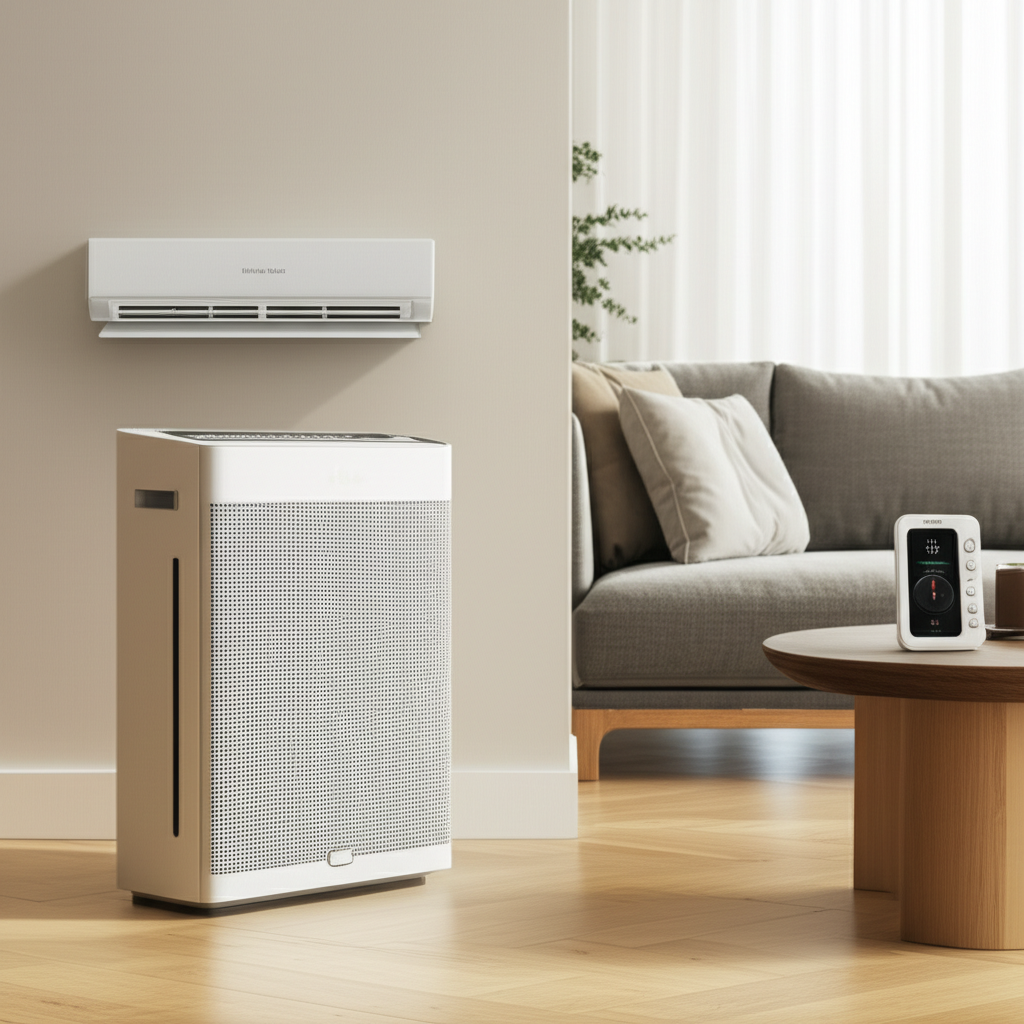
Absolutely! Using an air conditioner and an air purifier in the same room is not only possible but often highly beneficial. The air conditioner manages temperature and humidity, creating a comfortable environment, while the air purifier actively cleans the air of pollutants. This combination provides a dual approach to indoor air quality.
Think of it this way: your AC creates the ideal climate, and your air purifier ensures the air within that climate is as clean and healthy as possible. This is especially effective during warmer months when windows are closed, trapping indoor pollutants. Many people find this combination leads to a noticeable improvement in overall air freshness and a reduction in allergy symptoms.
Choosing the Right Air Purifier: Key Features to Look For
When shopping for an air purifier, several features are worth considering to ensure you get the best performance for your needs. Always prioritize a unit with a true HEPA filter for effective allergen and particle removal. Look for the Clean Air Delivery Rate (CADR) to understand how quickly the unit can purify a room of smoke, dust, and pollen.
Consider the noise level, especially for bedrooms, and check for additional features like activated carbon filters for odor control, a pre-filter for larger particles, and energy efficiency ratings. Smart features like app control and air quality sensors can also add convenience. For example, the Coway Airmega series is known for its robust filtration and smart capabilities.
AC Maintenance: The Unsung Hero of Indoor Air
Proper maintenance of your air conditioner plays a vital role in its ability to contribute to better indoor air. Regularly cleaning or replacing the AC filter is the most crucial step. A clogged filter not only reduces the AC’s efficiency but can also become a breeding ground for mold and bacteria, which are then circulated throughout your home.
Beyond filters, schedule professional tune-ups for your AC unit annually. Technicians can clean the coils and check for any potential issues that might affect air quality. Keeping the area around your outdoor AC unit clear of debris also helps ensure proper airflow.
Making the Smart Choice for Your Home Environment
Deciding between an AC and an air purifier, or opting for both, depends on your specific needs and priorities. If your main goal is cooling and some basic dust removal, a well-maintained AC might suffice. However, for comprehensive air cleaning, allergy relief, and removal of fine pollutants, an air purifier is an essential investment.
Many households benefit most from a combined approach, leveraging the cooling power of an AC and the advanced filtration of an air purifier. This ensures both comfort and optimal health for everyone breathing the indoor air. Prioritizing clean air is a direct investment in your well-being and that of your family.
Frequently Asked Questions (FAQ)
Can an air purifier replace my air conditioner?
No, an air purifier cannot replace an air conditioner. Air conditioners are designed to cool and dehumidify the air, while air purifiers are designed to remove pollutants. They serve different primary functions.
Will my AC filter catch viruses?
Standard AC filters are generally not effective at capturing viruses, which are extremely small particles. Specialized HEPA filters in air purifiers are much more effective at trapping airborne viruses.
How often should I clean my AC filter?
You should clean or replace your AC filter every 1 to 3 months, depending on usage and environmental factors like pets or high dust levels. Check your AC’s manual for specific recommendations.
Can I run my air purifier and AC at the same time?
Yes, running an air purifier and an air conditioner simultaneously is safe and often recommended for optimal indoor air quality and comfort. They complement each other’s functions.
Do air purifiers use a lot of electricity?
Modern air purifiers are generally energy-efficient, especially those with Energy Star ratings. The amount of electricity consumed varies by model and fan speed, but it’s typically comparable to a light bulb.
How do I know if I need an air purifier?
You likely need an air purifier if you experience allergies, asthma, have pets, live in an area with poor outdoor air quality, or notice persistent odors in your home.
Conclusion: The Path to Healthier Indoor Air
When comparing AC vs air purifier, it’s clear they serve distinct yet complementary roles in managing your home’s environment. While an air conditioner cools and dehumidifies, providing comfort, an air purifier is the dedicated champion for removing harmful airborne contaminants. For truly clean, healthy air, especially if you suffer from allergies or asthma, an air purifier is an indispensable tool.
Investing in a high-quality air purifier, ideally with a true HEPA filter, alongside proper AC maintenance, offers the most comprehensive solution for breathing easier. By understanding the capabilities of each, you can make an informed decision to create a healthier and more comfortable living space. Prioritize your well-being by ensuring the air you breathe indoors is as pure as possible.


