
Do Plug In Air Purifiers Work: Essential Guide

Plug-in air purifiers offer a convenient way to improve indoor air quality, but their effectiveness varies greatly. This guide explores their capabilities, limitations, and when they are a worthwhile investment for your home.
Breathing clean air at home is a fundamental part of a healthy lifestyle, yet many of us struggle with airborne irritants like dust, allergens, and odors. You might have noticed small, plug-in devices promising to purify your air, and wondered if they’re a magic bullet or a waste of energy. It’s a common question, and understanding their real-world performance is key to making informed choices. This guide will demystify plug-in air purifiers, helping you discover if they truly work for your specific needs and how to get the most out of them.
What Are Plug-In Air Purifiers?
Plug-in air purifiers are compact devices designed to be plugged directly into a wall outlet, requiring no separate cords. They typically utilize various technologies, such as ionizers, activated carbon, or small HEPA filters, to capture or neutralize airborne particles and pollutants. Their primary appeal lies in their simplicity and small footprint, making them suitable for small spaces like bedrooms or offices.
They offer a straightforward solution for enhancing the air quality in localized areas of your home. Understanding their mechanism is the first step to assessing their effectiveness.
How Do Plug-In Air Purifiers Work?
The operational principles of plug-in air purifiers vary, but most rely on either filtration or ionization. Some use small fans to draw air in, passing it through a filter to trap particles before expelling cleaner air. Others employ ionizers to release negatively charged ions that attach to airborne particles, causing them to clump together and fall out of the air or stick to surfaces.
These processes aim to reduce the concentration of unwanted substances in the immediate vicinity of the device. The specific technology employed significantly impacts their performance and potential byproducts.
Ionizer Technology and Its Effects
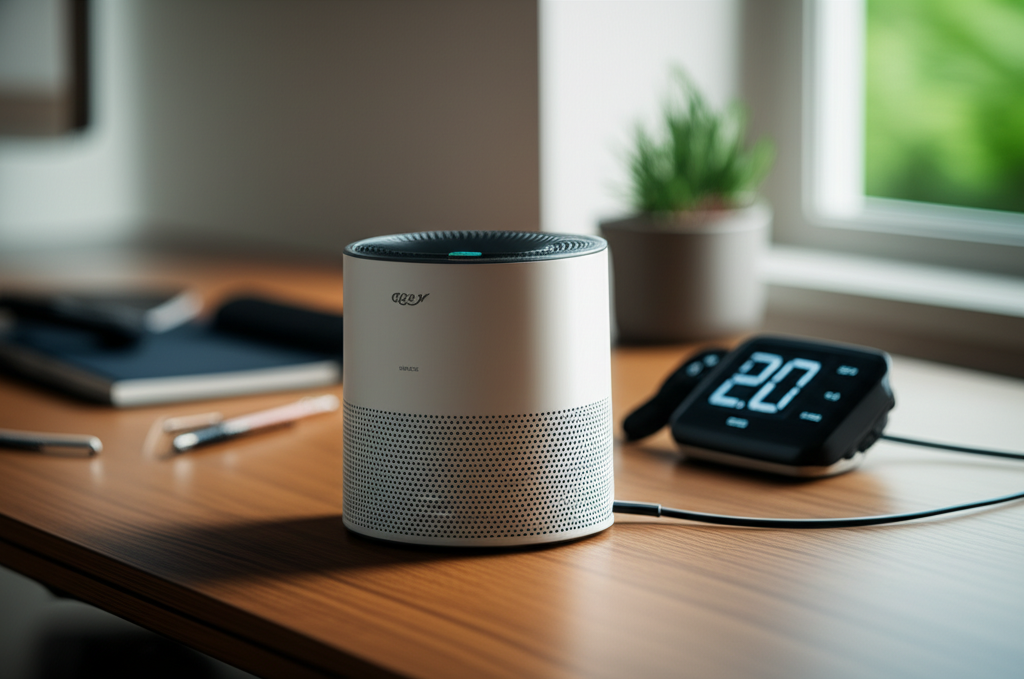
Ionizers work by emitting negative ions that electrically charge airborne particles. These charged particles then become attracted to surfaces like walls and furniture, or they may clump together, making them heavier and fall to the floor. Some ionizers also utilize positive ions to create an electrostatic field that attracts and neutralizes pollutants.
While ionizers can reduce some airborne particles, they can also produce ozone as a byproduct. This is a critical consideration for health and safety.
Activated Carbon Filters for Odors and VOCs
Activated carbon filters are porous materials treated to have a vast surface area, making them excellent at adsorbing odors, gases, and volatile organic compounds (VOCs). When air passes through the activated carbon, these gaseous pollutants get trapped within the carbon’s structure. These filters are particularly effective for eliminating smells from cooking, pets, or smoke.
These filters are a key component in many air purifiers for tackling chemical pollutants and unpleasant smells. Their effectiveness is directly related to the amount and quality of the activated carbon used.
Small HEPA-Type Filters in Compact Units
Some plug-in purifiers incorporate small HEPA-type filters, which are designed to capture a significant percentage of airborne particles down to a certain size. While not always true HEPA filters (which must meet strict standards for particle capture efficiency), they can still trap common allergens like dust mites, pollen, and pet dander. The size of the filter and the airflow rate determine its overall effectiveness.
These filters offer a mechanical approach to removing particulate matter from the air. Their ability to capture fine particles is a major factor in their cleaning power.
Effectiveness of Plug-In Air Purifiers: The Science
The effectiveness of plug-in air purifiers is a topic of ongoing research and depends heavily on several factors, including the device’s technology, size, and the specific pollutants being targeted. For very small spaces and localized improvement, some can offer a noticeable difference, particularly in reducing odors or larger dust particles. However, they are generally not as powerful or efficient as larger, standalone air purifiers.
Scientific studies often highlight that the air changes per hour (ACH) and the clean air delivery rate (CADR) are crucial metrics for evaluating an air purifier’s performance. Plug-in models often have lower CADR ratings due to their size and fan power.
Understanding CADR and ACH
CADR (Clean Air Delivery Rate) is a standardized measure of how quickly an air purifier can clean a room of specific pollutants like smoke, dust, and pollen. ACH (Air Changes per Hour) indicates how many times the air in a room is completely filtered by the purifier in one hour. Higher CADR and ACH ratings generally mean a more effective air purifier.
Plug-in units, due to their compact size, typically have significantly lower CADR and ACH ratings compared to larger units. This means they can clean a smaller volume of air more slowly.
Particle Removal vs. Gas/Odor Removal
Plug-in air purifiers with activated carbon can be quite effective at adsorbing odors and some VOCs in their immediate vicinity. However, their capacity is limited by the amount of carbon present. For particulate matter, their effectiveness depends on the filter type and airflow. Ionizers can reduce particles but may not be ideal for those sensitive to ozone.
It’s important to match the purifier’s technology to the type of air quality issue you are trying to address. Odor problems might be better addressed by carbon, while dust might require a filter.
When Do Plug-In Air Purifiers Work Best?
Plug-in air purifiers are most effective in small, enclosed spaces where their limited capacity can make a noticeable impact. Think of a small bedroom, a home office, or even a car. They can be beneficial for targeting specific localized issues, like a persistent pet odor in a corner or a need for slightly cleaner air while sleeping in a small room.
They excel at providing a subtle enhancement to air quality in very confined areas. Their limitations become apparent when you try to purify larger spaces or address significant air quality problems.
Small Rooms and Personal Spaces
For a dorm room, a nursery, or a small home office, a plug-in air purifier can offer a tangible improvement. They can help reduce the concentration of common airborne irritants in these limited environments. The goal here is not to purify an entire house, but to create a small bubble of cleaner air around you.
Their compact size makes them ideal for these intimate settings. They can contribute to a more comfortable and healthier personal environment.
Targeting Specific Odors
If you’re dealing with a specific, localized odor problem, such as smoke from a hobby or lingering pet smells in a small area, a plug-in unit with an activated carbon component can be surprisingly effective. It works by adsorbing the odor molecules directly from the air in its vicinity.
They can act as a targeted solution for localized scent issues. The key is to place them strategically where the odor is most concentrated.
Limitations and Drawbacks of Plug-In Air Purifiers
Despite their convenience, plug-in air purifiers have significant limitations. Their small size means they have limited airflow, resulting in a low CADR and ACH. This makes them inefficient for purifying larger rooms or for tackling widespread air quality issues. Furthermore, some models, particularly ionizers, can produce ozone, which is a lung irritant and can exacerbate respiratory problems.
It’s crucial to be aware of these drawbacks to avoid disappointment and potential health risks. Their limited power means they cannot replace more robust air purification solutions for whole-house needs.
Ozone Production Concerns
Many plug-in air purifiers that use ionization technology can release ozone into the air. The U.S. Environmental Protection Agency (EPA) warns that ozone can irritate the lungs and aggravate conditions like asthma and emphysema. While some devices are designed to minimize ozone production, it remains a potential concern for health-conscious individuals.
Always check for ozone-free certifications or opt for filter-based technologies if ozone is a concern. This is particularly important for children and individuals with respiratory sensitivities.
Limited Coverage Area
Due to their small fans and filters, plug-in air purifiers are designed for small spaces. Attempting to use one in a large living room or open-plan area will yield minimal results. Their effective range is typically limited to a few square feet directly around the unit.
They are best suited for personal spaces rather than whole-room or whole-home purification. Their effectiveness diminishes rapidly with distance.
Filter Replacement Costs and Frequency
Even small plug-in air purifiers often require filter replacements, which can add to the ongoing cost of ownership. The frequency of replacement depends on the filter type, the air quality, and how often the unit is used. For some models, the cost of replacement filters can become a significant factor over time.
Factor in the recurring expense of filters when considering the long-term value of a plug-in air purifier. Some units use proprietary filters that can be more expensive.
Comparing Plug-In Air Purifiers to Larger Units
Larger, standalone air purifiers are generally more effective than plug-in models because they are designed with more powerful fans, larger filters (often true HEPA), and higher CADR ratings. These units can circulate and clean the air in entire rooms or even larger living spaces more efficiently. They are a better investment for significant air quality improvements or for people with severe allergies or respiratory conditions.
The difference in scale and engineering means larger units offer superior performance for comprehensive air purification. They are built to handle greater volumes of air and more significant pollutant loads.
Size and Airflow Differences
Larger air purifiers typically feature robust motors and fans capable of moving a much greater volume of air. This increased airflow allows them to process the air in a room multiple times per hour, effectively reducing pollutant concentrations. Plug-in units, constrained by their size, have inherently lower airflow capabilities.
The physical dimensions of an air purifier directly correlate with its potential to move and clean air efficiently. Larger units are simply built for greater capacity.
Filter Technology and Capacity
Many larger air purifiers utilize true HEPA filters, which are certified to capture 99.97% of particles as small as 0.3 microns. They also often incorporate substantial amounts of activated carbon for superior odor and gas removal. Plug-in models may use HEPA-type filters or have limited carbon capacity, impacting their overall effectiveness.
The quality and quantity of filtration media are critical determinants of an air purifier’s performance. Larger units typically offer more advanced and higher-capacity filtration.
Factors to Consider When Buying a Plug-In Air Purifier
When selecting a plug-in air purifier, prioritize devices that are certified ozone-free and feature activated carbon filters for odor control if that’s a concern. Look for specifications regarding the room size it’s intended for and consider the cost and availability of replacement filters. Reading independent reviews can also provide valuable insights into real-world performance.
Making an informed choice involves understanding your specific needs and the product’s capabilities. Don’t be swayed solely by compact size; look for substantive performance indicators.
Certifications and Safety Standards
Look for certifications such as CARB (California Air Resources Board) compliance, which ensures the device meets strict ozone emission limits. UL or ETL listings indicate that the product has been tested for safety. Prioritizing these certifications ensures you are choosing a device that is both effective and safe for your home environment.
Safety certifications are a crucial indicator of responsible manufacturing and product design. They help protect you from potentially harmful byproducts like excessive ozone.
Filter Type and Maintenance
Decide whether you need particle filtration, odor absorption, or both. If you opt for a filter-based model, check the type of filter (HEPA-type or true HEPA) and its lifespan. Understand the replacement schedule and the cost of new filters to budget for ongoing maintenance.
Regular filter maintenance is essential for optimal performance and longevity. Neglecting this can reduce the purifier’s effectiveness and potentially lead to other issues.
Are Plug-In Air Purifiers Worth It?
Whether plug-in air purifiers are “worth it” depends entirely on your expectations and the specific problem you’re trying to solve. For a small, contained space and a minor improvement in air freshness or odor reduction, they can be a worthwhile, affordable option. However, if you’re seeking to significantly improve air quality in a larger room or address serious allergies or respiratory issues, a larger, more powerful unit is a better investment.
They can be a useful tool for niche applications, but they are not a substitute for comprehensive air purification. Manage your expectations based on their size and technological limitations.
When They Can Be a Good Investment
Plug-in air purifiers can be a good investment for targeting very specific, localized issues in small spaces. For example, in a small bathroom to combat musty odors, a cramped home office to reduce stale air, or a dorm room where personal air quality is paramount. Their low cost and portability make them accessible for these particular needs.
Consider them for supplementary air quality enhancement rather than a primary solution. They can offer incremental benefits in very specific scenarios.
When to Consider Larger Alternatives
If you have allergies, asthma, or other respiratory sensitivities, or if you live in an area with poor outdoor air quality, a plug-in unit will likely be insufficient. For these situations, investing in a certified HEPA air purifier with a high CADR suitable for your room size is essential. Whole-house systems or multiple larger units are often necessary for significant improvement.
For serious air quality concerns, always opt for devices with proven performance and certifications for particulate removal. Your health and comfort depend on it.
Alternatives to Plug-In Air Purifiers
Beyond plug-in units, several other effective methods can improve your indoor air quality. Opening windows for ventilation, using larger, high-performance air purifiers, maintaining houseplants known for air purification, and regular cleaning to reduce dust and allergens are all viable strategies. Each offers a different approach to creating a healthier living environment.
Exploring these alternatives can help you find the most suitable and effective solutions for your home. Sometimes, simple practices can be just as impactful as technology.
Ventilation and Natural Airflow
Regularly opening windows and doors allows fresh outdoor air to circulate, diluting indoor pollutants. This natural ventilation is one of the most effective ways to improve air quality, especially after activities that generate indoor pollutants like cooking or cleaning. Aim for at least a few minutes of cross-ventilation daily, weather permitting.
This simple, cost-free method can significantly reduce the concentration of indoor pollutants. It’s a cornerstone of healthy indoor environments.
Larger HEPA Air Purifiers
For comprehensive air purification, consider investing in larger air purifiers equipped with true HEPA filters and substantial activated carbon layers. These units are designed to efficiently clean the air in entire rooms, offering superior performance for allergy sufferers and those concerned about fine particulate matter, VOCs, and odors.
These are the workhorses of air purification, designed for significant impact in living spaces. They offer a robust solution for a wide range of air quality concerns.
Houseplants and Natural Filtration
Certain houseplants, such as spider plants, snake plants, and peace lilies, have been shown to help filter common indoor air pollutants like formaldehyde and benzene. While their air-purifying capacity is modest compared to mechanical purifiers, they contribute to a healthier environment and add aesthetic value to your home.
Houseplants offer a natural, aesthetically pleasing way to supplement air purification efforts. They contribute to a more serene and healthy atmosphere.
Frequently Asked Questions (FAQ)
Q1: Can plug-in air purifiers get rid of dust?
Yes, plug-in air purifiers with filters can capture some dust particles, especially in very small spaces. However, their limited airflow means they are not as effective at removing dust as larger, more powerful units.
Q2: Do plug-in air purifiers work for allergies?
For mild allergy relief in a small personal space, they might offer some benefit by capturing a portion of allergens like pollen or pet dander. However, for significant allergy symptoms, a certified HEPA air purifier is a much better choice.
Q3: How often should I replace the filter in a plug-in air purifier?
Filter replacement frequency varies by model and usage. Typically, it ranges from 3 to 6 months. Always check your manufacturer’s recommendations for the specific replacement schedule.
Q4: Are ozone-producing plug-in air purifiers dangerous?
Yes, ozone can be harmful, especially to individuals with respiratory issues. It’s best to choose ozone-free certified plug-in air purifiers or opt for filter-based technologies that don’t produce ozone.
Q5: Can a plug-in air purifier make a whole room smell better?
If the room is very small and the odor is mild, a plug-in unit with activated carbon might help slightly. For significant odor problems or larger rooms, they are generally not powerful enough.
Q6: What is the difference between a plug-in air purifier and a portable air purifier?
The terms are often used interchangeably. However, “plug-in” usually refers to the smallest units that plug directly into an outlet, while “portable” can encompass slightly larger, tabletop units that may still be compact but have more robust features.
Conclusion: Do Plug-In Air Purifiers Work Effectively?
In conclusion, do plug-in air purifiers work? The answer is nuanced: they can offer a marginal improvement in air quality for very small spaces and specific, localized issues like minor odors. Their compact design makes them convenient and affordable for personal use in areas like dorm rooms or small offices. However, it’s crucial to understand their limitations: their small size restricts airflow, making them inefficient for larger rooms or significant air quality problems. Furthermore, potential ozone production from ionizer models is a health concern that warrants careful consideration, making ozone-free certifications paramount. For those with allergies, asthma, or a need for comprehensive air purification, investing in a larger, certified HEPA air purifier with a suitable CADR is a far more effective solution.
