
Can Humidifier Trigger Air Purifier: Genius Fix

Yes, a humidifier can trigger an air purifier, often leading to an increase in readings and fan speed as the purifier detects increased airborne moisture and potentially aerosolized particles. This article explores why this happens and offers genius fixes to optimize both devices for cleaner, healthier air.
Are you experiencing a puzzling phenomenon where your air purifier suddenly ramps up its fan speed or shows higher particulate matter readings right after you turn on your humidifier? It’s a common concern for many who use both devices to create a healthier indoor environment. The good news is that this interaction isn’t necessarily a malfunction; it’s often a predictable response. Understanding this connection is the first step to optimizing your home’s air quality. Let’s dive into why this happens and how you can achieve a harmonious balance between your humidifier and air purifier for the cleanest air possible.
Why Your Air Purifier Reacts to a Humidifier
Your air purifier’s sensors are designed to detect changes in your air. When you introduce moisture with a humidifier, especially a cool-mist or ultrasonic model, it can aerosolize water particles. These tiny water droplets can be mistaken by the purifier’s sensors as fine particulate matter, triggering a response.
The Science Behind the Interaction
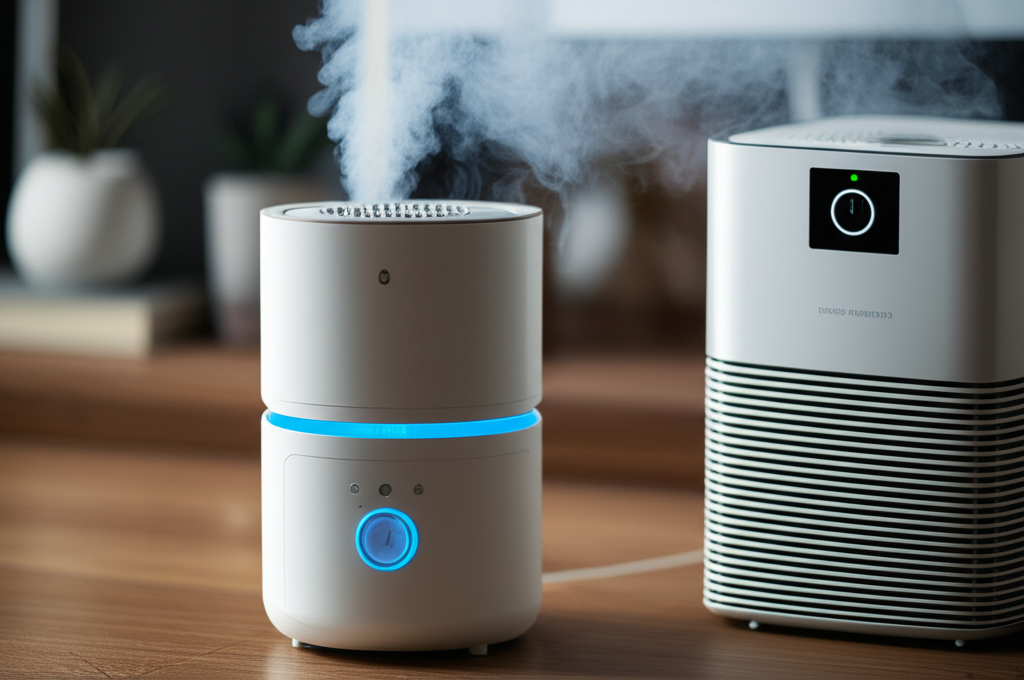
Air purifiers typically use optical sensors to detect particles. These sensors shine a light beam and measure how much light is scattered by airborne particles. Water vapor and fine water mist, while not harmful pollutants, can scatter light in a similar way to dust or pollen.
How Moisture Affects Sensor Readings
High humidity itself doesn’t directly trigger most air purifiers. However, the micro-droplets released by some humidifiers can trick the sensors. This is particularly true for ultrasonic humidifiers that vibrate water into a fine mist.
Understanding Different Humidifier Types
The type of humidifier you use can influence how your air purifier reacts. Evaporative humidifiers, for instance, release moisture as water vapor, which is less likely to trigger sensors than the mist from ultrasonic models.
Ultrasonic vs. Evaporative Humidifiers
Ultrasonic humidifiers create a visible mist by vibrating water at high frequencies. This fine mist can easily be picked up by air purifier sensors. Evaporative humidifiers use a fan to blow air through a wet wick, releasing moisture as vapor, which is generally less detectable.
The Role of Air Purifier Sensor Technology
Modern air purifiers often feature advanced sensor technology. While this enhances their ability to detect pollutants, it can also make them more sensitive to environmental changes like increased humidity or mist.
Optical vs. Other Sensor Types
Most common air purifiers use optical particle sensors. Some high-end models might incorporate additional sensors for gases or VOCs, which wouldn’t typically be triggered by a humidifier.
Can a Humidifier Trigger Air Purifier: The “Genius Fix” Explained
The “genius fix” involves understanding and managing the interplay between your devices. It’s not about disabling your air purifier but about optimizing its performance and ensuring it’s truly detecting pollutants, not just water vapor. This means strategic placement, sensor calibration, and sometimes, adjusting humidifier settings.
Strategic Placement for Optimal Performance
Where you place your humidifier and air purifier in relation to each other is crucial. Avoid placing them too close, as this can lead to inaccurate readings and inefficient operation for both.
Creating Separation Between Devices
Position your air purifier away from direct mist output. Aim for at least 3-5 feet of separation. This allows the air purifier to sample air from a broader area, reducing the chance of it being directly influenced by the humidifier’s output.
Considering Room Airflow Patterns
Understand how air circulates in your room. Placing the air purifier in a location where it can draw air from the general room environment, rather than directly from the humidifier, is key.
Adjusting Humidifier Settings
Many humidifiers allow you to control the mist output or humidity level. Reducing the intensity can significantly lessen the impact on your air purifier’s sensors.
Lowering Mist Output Levels
If your humidifier has an adjustable mist setting, try turning it down. A lower mist output means fewer water particles are released into the air, reducing the likelihood of false positives from your air purifier.
Utilizing Built-in Humidistats
Using your humidifier’s built-in humidistat to maintain a specific relative humidity (e.g., 40-50%) is often more effective than running it at maximum. This prevents over-humidification and the excessive mist that can trigger your air purifier.
Managing Air Purifier Sensor Sensitivity
Some air purifiers offer ways to adjust sensor sensitivity or have a manual mode. This can be a direct way to mitigate the issue.
Manual vs. Auto Modes
Switching your air purifier to a manual mode or a lower fan speed can prevent it from overreacting to temporary changes in humidity or mist. This allows you to control its operation based on your actual needs.
Cleaning Your Air Purifier’s Sensors
Dust and debris can also affect sensor accuracy. Regularly cleaning your air purifier’s sensors, as per the manufacturer’s instructions, can help maintain their calibration and prevent false triggers.
The Benefits of a Balanced Approach
When you manage the interaction between your humidifier and air purifier, you ensure each device functions as intended. This leads to better overall air quality management, accurate pollutant detection, and a more comfortable living environment.
Accurate Air Quality Monitoring
By preventing false triggers, your air purifier can provide more accurate readings of actual airborne pollutants like dust, pollen, and smoke. This allows you to trust the data and make informed decisions about your air.
Optimizing Humidity and Purity
Achieving the right balance ensures you benefit from both humidification for comfort and dryness prevention, and air purification for removing harmful particles, without one device hindering the other.
Can Humidifier Trigger Air Purifier: A Practical Example
Imagine placing your cool-mist humidifier on a bedside table and your air purifier on the floor across the room. Initially, the purifier might show clean air. As the humidifier runs, its mist disperses. If the purifier is too close or the mist is dense, the purifier’s sensor might detect this as particles, increasing its fan speed. The fix? Move the humidifier further away, or reduce its mist output, allowing the air purifier to sense the true room air.
Troubleshooting Common Issues
If you’re still facing problems, there are a few more things to check. Sometimes, the issue might be with the specific models you’re using or their age.
When to Consider a Different Device
If your current air purifier consistently misinterprets humidity as pollution, even after trying placement and setting adjustments, you might consider a model with more advanced sensor technology or a different type of humidifier.
Upgrading Your Air Purifier
Look for air purifiers with dual sensors or those that specifically mention better performance in varied humidity conditions. Brands like Coway and Blueair often offer models with robust sensor systems.
Choosing a Different Humidifier Type
If your ultrasonic humidifier is the culprit, switching to an evaporative or steam humidifier might resolve the issue, as they produce less fine mist.
Checking for Other Environmental Factors
Remember that your air purifier responds to any airborne particles. Other factors in your home could be contributing to increased readings, not just the humidifier.
Identifying Other Particle Sources
Cooking, cleaning products, open windows, and even pets can introduce particles into the air. Ensure these aren’t the primary cause of your air purifier’s activity.
Consulting Manufacturer Guidelines
Always refer to the user manuals for both your humidifier and air purifier. They often contain specific advice on placement and operation for optimal performance.
Frequently Asked Questions (FAQ)
Can a humidifier make my air purifier work harder?
Yes, a humidifier can make your air purifier work harder by releasing fine water mist that can be detected by the purifier’s sensors as particulate matter, leading to increased fan speeds.
Will high humidity affect my air purifier’s performance?
High humidity itself generally won’t harm your air purifier’s performance, but the fine mist from some humidifiers can trigger its sensors, leading to false readings and higher fan speeds.
Should I run my humidifier and air purifier at the same time?
Yes, you can run them at the same time, but it’s important to manage their placement and settings to avoid interference. Strategic separation and adjusted mist levels are key.
How can I prevent my air purifier from reacting to my humidifier?
You can prevent this by placing them several feet apart, reducing the humidifier’s mist output, using its humidistat, or switching the air purifier to a manual mode if it’s overreacting.
Are there air purifiers that are not affected by humidifiers?
While no air purifier is completely immune to dense mist, models with advanced dual sensors or those designed for higher humidity environments are generally less affected.
Is it bad if my air purifier thinks humidity is pollution?
It’s not inherently “bad” in terms of damage, but it means your air purifier isn’t accurately reflecting the true air quality and might be running unnecessarily. This can reduce the lifespan of filters and increase energy use.
What is the ideal humidity level for my home?
The ideal indoor humidity level is generally between 40% and 50% for comfort and health, helping to prevent issues like dry skin, static electricity, and the growth of mold or bacteria.
Conclusion
Navigating the relationship between your humidifier and air purifier doesn’t have to be a mystery. By understanding that humidifiers, particularly ultrasonic ones, can release fine mist that air purifiers might interpret as pollutants, you gain the power to optimize their function. Implementing strategic placement, adjusting mist output, and utilizing manual modes or sensor cleaning are effective “genius fixes” to ensure your air purifier accurately monitors your air quality. This balanced approach allows both devices to contribute to a healthier, more comfortable indoor environment without one interfering with the other. You can enjoy the benefits of both humidified and purified air simultaneously.
