
Whats Better a Humidifier or Air Purifier: Essential Guide

A humidifier adds moisture to dry air, while an air purifier removes pollutants. Choosing whats better a humidifier or air purifier depends on your specific needs: dry air issues call for a humidifier, while allergies or air quality concerns benefit from an air purifier.
It can be confusing to know if you need a humidifier or an air purifier for your home. Both devices aim to improve your indoor air quality, but they do it in very different ways. One adds moisture, and the other cleans the air. This guide will help you understand which one is right for you. We’ll look at what each device does, who can benefit most, and how to choose the best option for your comfort and health. Let’s clear the air and make your home a healthier place.
What is a Humidifier and What Does It Do?
A humidifier is a device that adds moisture to the air. It does this by releasing water vapor or mist into your room. Dry air can cause many problems, like dry skin and a sore throat. A humidifier combats this by increasing the humidity level. This makes the air feel more comfortable and can help with certain health issues.
Think of it like watering a plant. Dry air is like a thirsty plant. A humidifier is the water that helps the plant thrive. It brings life back to the air, making it feel softer and more pleasant.
Who Benefits Most from a Humidifier?
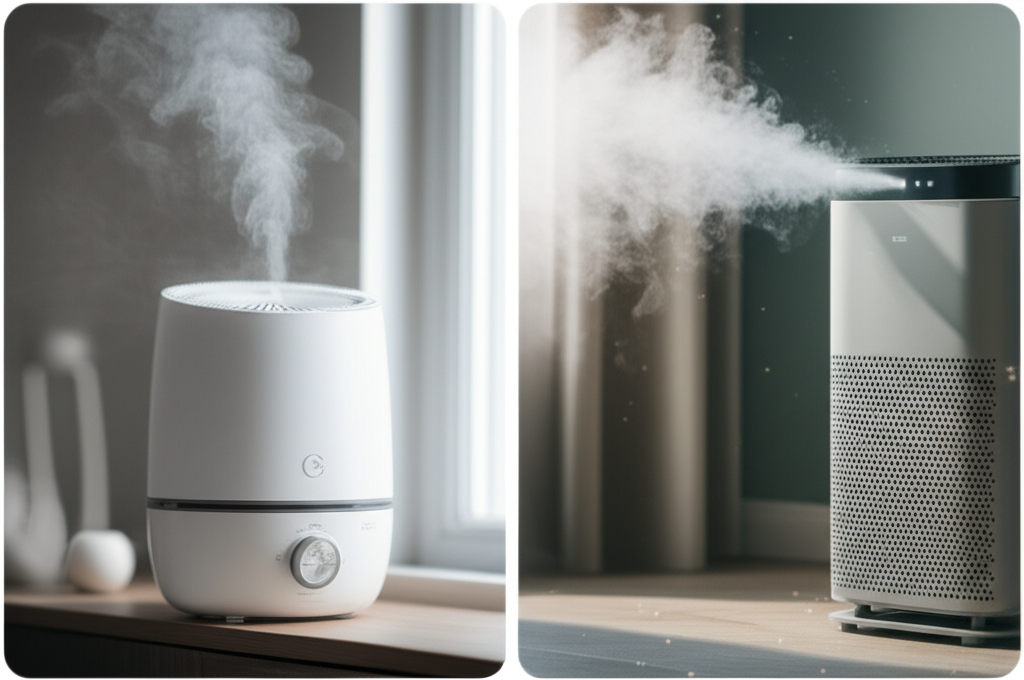
People living in dry climates or during winter months often benefit greatly. If you wake up with a dry nose, scratchy throat, or chapped lips, a humidifier can help. It’s also good for babies and young children who are more sensitive to dry air. Those with respiratory conditions like asthma or allergies might find relief.
Dry air can irritate your nasal passages and lungs. This can make breathing more difficult. A humidifier keeps these passages moist, reducing irritation and making breathing easier. It creates a more comfortable environment for everyone.
What is an Air Purifier and What Does It Do?
An air purifier is a device that removes pollutants from the air. It uses filters to trap tiny particles like dust, pollen, pet dander, and smoke. These pollutants can cause allergies and breathing problems. An air purifier makes the air cleaner and healthier to breathe.
Imagine your air is like a swimming pool. An air purifier is like a pool filter that catches all the dirt and debris. It leaves you with clean, clear water to enjoy.
Who Benefits Most from an Air Purifier?
Air purifiers are excellent for people with allergies, asthma, or other respiratory issues. If you have pets, a smoker in the household, or live in an area with poor outdoor air quality, an air purifier is highly recommended. It helps remove common allergens and irritants from your living space.
These devices can significantly reduce the number of allergens floating in your home. This means fewer sneezes, less congestion, and an easier time breathing. It creates a sanctuary from airborne irritants.
Comparing Humidifiers and Air Purifiers: Key Differences
The main difference lies in their function: humidifiers add moisture, while air purifiers remove contaminants. Humidifiers work with water, releasing it as vapor. Air purifiers use filters, trapping unwanted particles. They address different indoor air quality problems.
| Feature | Humidifier | Air Purifier |
| :————– | :——————————————- | :———————————————– |
| Primary Goal | Increase air moisture | Remove airborne pollutants |
| Mechanism | Releases water vapor or mist | Uses filters (HEPA, activated carbon, etc.) |
| Benefits | Relieves dry skin, sore throat, congestion | Reduces allergens, odors, smoke, dust |
| Use Case | Dry climates, winter, dry air symptoms | Allergies, asthma, pets, smoke, poor air quality |
| Maintenance | Regular cleaning, refilling water tank | Filter replacement, occasional unit cleaning |
Understanding this core difference is crucial for making the right choice. One adds something to the air, the other takes things away.
When to Choose a Humidifier
You should choose a humidifier if your primary concern is dry air. Symptoms like dry skin, itchy eyes, a scratchy throat, or static electricity are clear signs. If your nose bleeds easily or your lips are always chapped, dry air is likely the culprit. Humidifiers help restore a comfortable moisture balance.
A study published in the Journal of Environmental Health noted that maintaining optimal indoor humidity levels (between 30-50%) can reduce the survival of influenza viruses. This highlights a direct health benefit of using a humidifier when air is too dry. It’s about making the air feel better and potentially healthier.
Benefits of Using a Humidifier
Humidifiers can soothe dry, irritated skin and reduce chapped lips. They can help alleviate congestion from colds and sinus infections by keeping nasal passages moist. For babies, they can make sleeping more comfortable by easing coughs and stuffy noses. A properly humidified home feels warmer and more comfortable.
They can also benefit your home by reducing static electricity. This means fewer shocks when you touch doorknobs or your pets. Wood furniture and musical instruments can also benefit from stable humidity.
When to Choose an Air Purifier
An air purifier is your best bet if you suffer from allergies, asthma, or sensitivities to airborne irritants. If you notice a lot of dust settling quickly, or if cooking odors or pet smells linger, an air purifier can help. It’s also essential if you live near a busy road or in an area with wildfire smoke. The U.S. Environmental Protection Agency (EPA) recommends air cleaners as part of a strategy to improve indoor air quality.
These devices actively clean the air you breathe. They remove microscopic particles that can trigger allergic reactions or breathing difficulties. It’s about creating a cleaner breathing environment.
Benefits of Using an Air Purifier
Air purifiers significantly reduce allergens like pollen, dust mites, and pet dander. They can also capture mold spores and bacteria. Many models include activated carbon filters to remove odors from cooking, pets, or smoke. This leads to fresher, cleaner air throughout your home.
For individuals with respiratory conditions, the reduction in airborne irritants can mean fewer asthma attacks and less severe allergy symptoms. It contributes to a healthier living space.
Can You Use Both a Humidifier and an Air Purifier?
Yes, you can absolutely use both a humidifier and an air purifier together. In fact, for many people, this is the ideal solution for comprehensive indoor air quality management. They address different issues and complement each other. One cleans the air, and the other adjusts its moisture content.
Using both devices means you are tackling both dryness and pollution. This can lead to the greatest improvement in your home’s overall air comfort and health. It’s like having a complete air care system.
How They Work Together
An air purifier removes allergens and pollutants, creating a cleaner base. A humidifier then adds the right amount of moisture to this clean air, preventing it from becoming too dry. This combination can be particularly effective for individuals with severe allergies or respiratory issues who are sensitive to both dry air and airborne particles.
Some advanced devices even combine both functions into a single unit. These hybrid appliances offer convenience and space-saving benefits. They provide a dual approach to indoor air quality.
Choosing the Right Device for Your Needs
To decide whats better a humidifier or air purifier for your home, assess your primary air quality concerns. Do you feel constantly dry and itchy, or are you sneezing and wheezing? If your home feels dry and causes physical discomfort, a humidifier is likely your priority. If allergies, odors, or dust are the main issues, an air purifier should come first.
Consider the climate you live in and the season. Dry winters might make a humidifier essential, while pollen-heavy springs might call for an air purifier. Your personal health conditions, like asthma or allergies, are also key factors.
Factors to Consider When Buying
When purchasing a humidifier, look for ease of cleaning, tank size, and mist type (cool or warm). For air purifiers, focus on the type of filters (HEPA is crucial for allergens), room coverage (CADR rating), and noise level. Always check the manufacturer’s specifications to ensure the device is suitable for your room size.
Think about maintenance too. Humidifiers require regular cleaning to prevent mold and bacteria growth. Air purifiers need their filters replaced periodically. Factor these ongoing costs and efforts into your decision.
Humidifier Types and Features
There are several types of humidifiers, each with its own advantages. Evaporative humidifiers use a fan to blow air through a wet wick. They are generally energy-efficient and don’t produce a visible mist. Ultrasonic humidifiers use high-frequency vibrations to create a fine mist. They are typically quieter and come in cool or warm mist options.
Impeller humidifiers use a rotating disk to fling water into a diffuser, creating a cool mist. Steam vaporizers boil water to create warm mist, which can help kill bacteria and minerals. Some humidifiers come with features like automatic shut-off, adjustable mist levels, and built-in hygrometers to monitor humidity.
Air Purifier Types and Features
Air purifiers vary mainly by their filtration technology. HEPA (High-Efficiency Particulate Air) filters are considered the gold standard for capturing tiny particles like allergens and dust. Activated carbon filters are excellent at absorbing odors, gases, and volatile organic compounds (VOCs). UV-C light purifiers use ultraviolet light to kill bacteria and viruses.
Some purifiers use ionizers, which release negative ions to charge particles, causing them to stick to surfaces or collector plates. However, some ionizers can produce ozone, which can be harmful. Always check for ozone-free certifications. Look for the Clean Air Delivery Rate (CADR) to ensure the purifier is powerful enough for your room size.
When Dryness and Pollutants Combine: The Best Solution
If you experience symptoms of both dry air and airborne irritants, using both a humidifier and an air purifier is the most effective approach. This dual-action strategy addresses all your indoor air quality concerns. You get the benefit of cleaner air and comfortable humidity levels.
This combined approach creates the healthiest and most comfortable indoor environment. It tackles dryness that irritates your throat and skin, while also removing the allergens that trigger your allergies. It’s a complete air care package for your home.
Expert Recommendation for Combined Use
Many allergists and pulmonologists recommend using both devices when necessary. For example, during allergy season, an air purifier tackles pollen while a humidifier prevents dry nasal passages from becoming more irritated. “Maintaining optimal humidity levels is crucial, but not at the expense of breathing clean air,” states Dr. Emily Carter, an environmental health specialist. “Combining a good air purifier with a humidifier, when needed, offers the most comprehensive solution.”
This synergy ensures that you’re not just treating one symptom but improving overall air quality. It’s a holistic approach to a healthier home.
Frequently Asked Questions (FAQs)
Can a humidifier make allergies worse?
A humidifier can worsen allergies if it is not cleaned regularly. Mold and bacteria can grow in the water tank, and these can be released into the air, triggering allergies. Keeping the humidifier clean is very important.
Does an air purifier help with dry air?
No, an air purifier does not add moisture to the air. It only removes particles and pollutants. If you have dry air problems, you will need a humidifier.
What is the ideal humidity level for a home?
The ideal indoor humidity level is generally between 30% and 50%. Levels below 30% are too dry, and levels above 50% can encourage mold and dust mite growth. A hygrometer can help you measure your home’s humidity.
Do I need a humidifier if I have an air purifier?
You need a humidifier if your home’s air is too dry, regardless of whether you have an air purifier. Air purifiers and humidifiers serve different purposes. Check your symptoms and humidity levels to decide.
How often should I clean my humidifier?
You should clean your humidifier at least once a week to prevent mold and bacteria growth. Always follow the manufacturer’s instructions for cleaning and maintenance. This ensures it runs efficiently and safely.
Can an air purifier remove viruses?
Some air purifiers with HEPA filters can capture viruses, as they are small particles. However, they are not guaranteed to eliminate all viruses. UV-C light purifiers are designed to kill viruses and bacteria.
Conclusion: Making the Right Choice for Your Home
Deciding whats better a humidifier or air purifier comes down to your specific needs. If dry air is causing discomfort, a humidifier is your solution. If you’re battling allergens, odors, or poor air quality, an air purifier is the way to go. For the most comprehensive improvement, using both devices offers the best of both worlds.
By understanding the distinct roles of each appliance, you can make an informed decision. Invest in your home’s air quality for a healthier, more comfortable living space. Take control of your indoor environment today.
