How to Remove Odors From a Vacuum Cleaner

Quick Answer
To remove odors from a vacuum cleaner, empty the bag or dust bin first. Then clean the brush roll, hose, attachments, and washable parts, and check the filters for trapped dirt or moisture. Let every washable part dry completely before reassembly, and follow the manufacturer’s filter instructions. The EPA’s guide to home air filtration also explains why particle filters and odor-removing media serve different purposes.
Quick odor-removal steps
- Unplug the vacuum: Never clean around the brush roll, motor area, or electrical parts while power is connected.
- Empty the debris: Replace a full bag or empty the dust bin outdoors when possible.
- Remove trapped dirt: Check the hose, brush roll, floor head, and attachments for hair, food, or damp debris.
- Check the filters: Wash only filters specifically labeled washable and replace filters that the manufacturer says are disposable.
- Dry everything: Never reinstall a washable filter or bin while it is still damp.
- Test the exhaust: If a burning, electrical, or hot-rubber smell remains, stop using the vacuum.
One thing I would not do
- Don’t mask the source: Avoid putting perfume, essential oil, baking soda, or deodorizing powder inside the motor, filter housing, or dust path unless your vacuum manufacturer specifically allows it.
A smelly vacuum cleaner is usually telling you that something inside needs attention. Pet hair, old dust, damp debris, dirty filters, and food crumbs can all turn normal vacuuming into a home-hygiene problem.
When I deal with vacuum odor, I don’t start with fragrance. I work through the dirt path from the floor head to the exhaust, which usually makes the real source much easier to find.
In This Guide
Why Does My Vacuum Cleaner Smell Bad?
A vacuum usually smells because collected material is sitting somewhere in its airflow path. The source may be the bag, dust bin, filter, hose, brush roll, or floor head.
Definition: Vacuum cleaner odor is an unwanted smell produced by debris, moisture, contaminated filters, overheated components, or other material inside the vacuum’s collection and airflow system.
Pet hair and dander
Pet hair traps skin oils, dirt, moisture, and other household material. When that mixture sits inside a warm vacuum, the exhaust can carry the smell back into the room.
I check the brush roll first when a pet household vacuum develops a stale or animal-like smell. Hair often winds tightly around the roller ends where it’s easy to miss.
Old dust and food debris
Dust isn’t just one material. A household dust bin can contain fibers, skin flakes, crumbs, pet debris, pollen, and fine particles collected from many rooms.
- Sour odor: Check for old food crumbs or damp organic debris.
- Stale odor: Inspect an overdue bag, dirty bin, or loaded filter.
- Pet odor: Check hair around the brush roll, hose, and collection chamber.
- Musty odor: Look for moisture and parts that were stored before drying.
Moisture inside the vacuum
Ordinary dry vacuums aren’t designed to collect wet debris. Moist dust can cling to a hose, bin, filter, and internal passages instead of leaving with normal emptying.
Moisture also matters when mold is suspected. The CDC’s mold guidance explains that mold grows where moisture is present and that a musty smell can be a warning sign.
If the vacuum was used on wet, mold-contaminated material, simple deodorizing may not be enough. Follow the manufacturer’s cleaning instructions and replace contaminated disposable filters when required.
Dirty or incorrectly maintained filters
A filter catches material carried by the vacuum’s airflow. As it loads with dust, pet debris, or moisture, it can become another odor source.
A high-efficiency particulate air, or HEPA, filter is designed for particles. It shouldn’t be confused with activated carbon media, which is used in some products to adsorb certain gases and odors.
Section Takeaway: A bad vacuum smell is usually a source-control problem. Find and remove the contaminated debris instead of trying to cover the exhaust with fragrance.
How Do You Remove Odors From a Vacuum Cleaner?
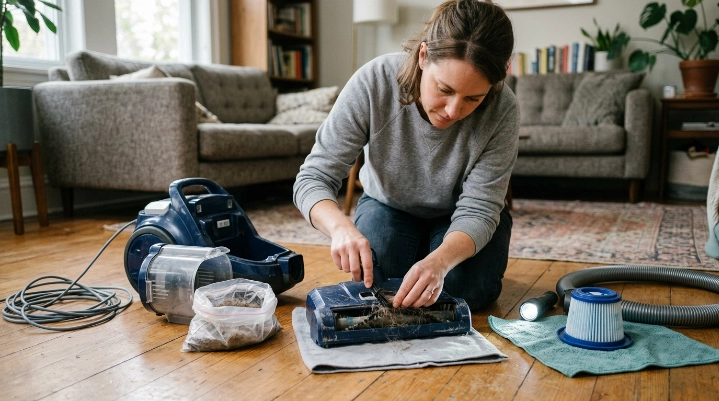
The safest approach is to clean the vacuum from the collection chamber backward through its removable airflow parts. Always unplug a corded model or remove the battery when the design allows.
1. Empty the bag or dust bin
Take a bagless vacuum outside before opening the bin if you want to limit loose dust indoors. Seal the trash promptly after emptying it.
For a bagged vacuum, replace a smelly or full bag instead of trying to deodorize it. Check the bag connection for debris that may have escaped into the compartment.
2. Clean the dust bin if the manual allows it
Remove loose dust first. Wash only components that your owner’s manual identifies as washable.
- Separate the washable bin from electrical parts.
- Use mild soap and water if the manufacturer permits it.
- Rinse away remaining residue.
- Leave the component open until completely dry.
- Reinstall it only when no moisture remains.
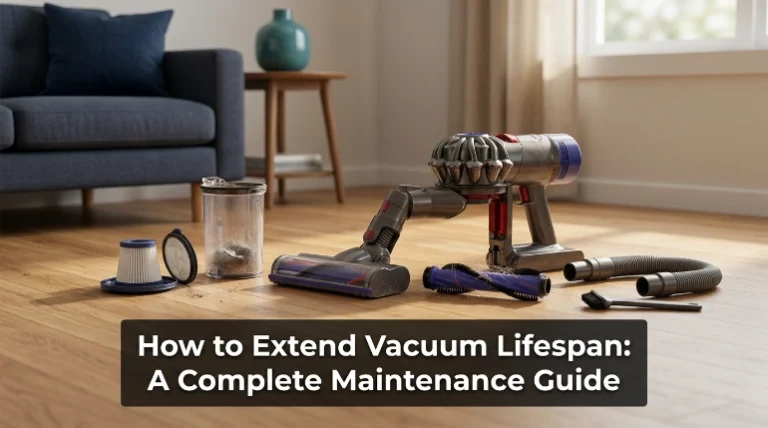
Don’t immerse the motor housing, powered floor head, electrical connectors, or battery. Designs from Dyson, Shark, and other manufacturers differ, so model-specific instructions always take priority.
3. Remove hair from the brush roll
Turn the floor head over and inspect the roller. Cut away wrapped hair carefully without damaging bristles, belts, wiring, or the roller itself.
- Check both roller ends.
- Remove thread from the bearings or end caps if accessible.
- Look for trapped food or pet debris behind the roller.
- Inspect the air channel leading into the hose.
A heavily wrapped brush can also increase resistance. If you notice a hot-rubber smell, stop and inspect the roller and belt rather than continuing to vacuum.
4. Inspect the hose and attachments
Disconnect removable hoses and tools. A single piece of damp debris inside a hose can keep producing odor even after you clean the bin.
Use a flashlight to look through straight sections. Don’t push sharp objects through a flexible hose because they can puncture it.
5. Service the filters correctly
Read the filter label or manual before applying water. Some foam or pre-filters are washable, while many HEPA and exhaust filters must stay dry and be replaced instead.
If a washable filter still smells after proper washing and complete drying, replacement may be more practical. Never run the vacuum without required filters unless the manufacturer specifically instructs you to do so.
6. Reassemble and test
Make sure each washable component is completely dry. Reinstall the filters, bin, hose, and attachments in their correct positions.
Run the vacuum briefly on a clean, dry surface. If the ordinary dusty or pet smell is gone, the cleaning worked.
Section Takeaway: Emptying the bin alone often misses the source. A complete odor clean includes the brush roll, hose, filters, attachments, and every washable surface allowed by the manufacturer.
Which Vacuum Parts Should You Clean or Replace?
Different vacuum parts need different treatment. Washing a component that isn’t designed for water can create a bigger problem than the original smell.
| Part | Main job | Odor response | Water? |
|---|---|---|---|
| Dust bag | Stores collected debris | Replace when smelly, damaged, or due | No |
| Bagless bin | Stores debris | Empty and clean as directed | Only if manufacturer permits |
| Pre-filter | Catches debris before later filtration stages | Clean or replace as specified | Only if labeled washable |
| HEPA/filter media | Captures particles | Replace or maintain by model instructions | Only if explicitly washable |
| Activated carbon media | Adsorbs certain gases and odors | Replace when spent according to instructions | Normally not washed unless specified |
| Brush roll | Agitates floor debris | Remove hair and trapped material | Depends on floor-head design |
The distinction between particle and gas filtration matters. EPA guidance notes that most filters target either particles or gases, while activated carbon can be used for certain gaseous pollutants and odors.
For household allergen control, the National Institute of Environmental Health Sciences also recommends HEPA filtration or double-layer microfilter bags when vacuuming for dust-mite management.
What Does Each Vacuum Smell Mean?
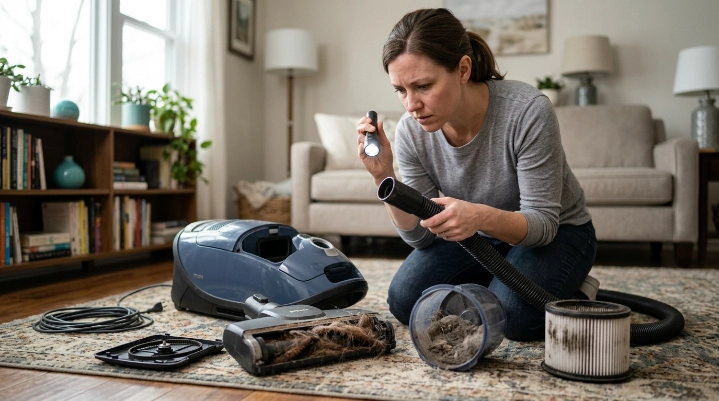
The type of smell can help narrow the search. I treat burning or electrical odors much differently from ordinary stale dust.
| Smell | Likely place to check | Best first action |
|---|---|---|
| Dusty or stale | Bag, bin, filters | Empty debris and inspect filtration |
| Pet-like | Brush roll, bin, hose | Remove hair and clean permitted parts |
| Sour | Food debris, damp dirt | Locate and remove organic debris |
| Musty | Damp filters, hose, bin | Stop, inspect for moisture, clean and dry |
| Burning rubber | Brush roll, belt, floor head | Unplug immediately and inspect |
| Electrical or hot plastic | Motor or electrical system | Stop using the vacuum |
Don’t assume every unpleasant odor is biological. A hot motor, stalled roller, damaged belt, or electrical fault needs a safety check rather than deodorizing.
Likewise, fragrance doesn’t prove the exhaust is clean. As of 2026, EPA guidance still distinguishes particle filtration from gas and odor control rather than treating smell as a measure of particle-removal performance.
How Can You Keep a Vacuum From Smelling?
Prevention is easier than deep-cleaning a vacuum after odor becomes established. The main goal is to keep old debris and moisture from sitting inside the machine.
Empty debris before it sits too long
Don’t wait for decomposing food, pet hair, or damp material to fill the entire chamber. Households with pets may need more frequent emptying than low-dust homes.
Never vacuum wet messes with a dry vacuum
Use equipment designed for liquid pickup when moisture is involved. A standard upright, canister, robot, or stick vacuum may be damaged by liquid.
Let washable filters dry completely
This is one of the mistakes I watch for most closely. A filter may feel dry on the outer surface while moisture remains deeper inside the material.
Follow the manufacturer’s drying instructions rather than guessing a universal number of hours. Filter materials and thicknesses differ between models.
Clean hair from the floor head
- Inspect the roller for tightly wound hair.
- Check small wheels for thread.
- Clear visible debris from the intake channel.
- Look at removable pet tools after heavy use.
Be careful with scented products
I prefer removing the odor source instead of pouring fragrance into a vacuum. Essential oils and powders can reach filters, seals, plastic surfaces, or motor pathways that weren’t designed for them.
Household fragrances and cleaning products may also release volatile organic compounds, or VOCs. EPA provides more background on VOCs and indoor air quality.
When Should You Stop Using a Smelly Vacuum?
Stop using the vacuum immediately if the odor resembles burning wiring, melting plastic, or overheated rubber. Smoke, sparks, unusual heat, or repeated electrical shutdowns also deserve immediate attention.
- Burning smell: Unplug the vacuum and let it cool.
- Smoke or sparks: Do not restart it.
- Damaged cord: Keep the vacuum disconnected from power.
- Stalled brush: Remove power before inspecting the floor head.
- Repeated overheating: Check for blockages and arrange qualified service if it continues.
Expert Alert: Don’t open a motor, battery pack, mains-wiring compartment, or other electrical assembly unless you’re qualified to repair it. Have electrical faults diagnosed by the manufacturer or a qualified appliance technician.
A strong musty smell deserves different attention. If the vacuum collected material from a significant mold problem, cleaning the appliance doesn’t solve the moisture source in the home.
Expert Alert: If mold contamination is extensive, keeps returning, involves major water damage, or extends beyond a small household cleanup, consider qualified remediation instead of relying on vacuuming alone.
The CDC recommends fixing the underlying moisture problem when mold is present. Its mold cleanup guidance also covers protective equipment and safer cleanup practices.
Frequently Asked Questions
How do I get a dog smell out of my vacuum?
Empty the bag or bin, then remove pet hair from the brush roll, hose, floor head, and attachments. Check the filters next, because fine pet debris can remain there after the visible hair is gone.
Can I put baking soda in my vacuum cleaner?
I wouldn’t put baking soda directly into the vacuum unless the manufacturer says the model can handle it. Fine powder can reach filters and internal passages, so removing and cleaning the odor source is the safer general approach.
Can I put essential oils in my vacuum filter?
Don’t apply essential oil to a filter unless the vacuum manufacturer explicitly approves it. Oils may affect filter media, plastics, seals, or airflow, and fragrance only masks a contaminated bin or filter.
Why does my vacuum smell worse when I turn it on?
The motor’s airflow can carry odor from the bag, bin, hose, filter, or floor head into the exhaust. Clean those areas separately so you can identify which component is holding the smell.
Why does my vacuum smell musty?
A musty vacuum may contain damp dust, a wet filter, moisture in the hose, or contaminated debris. Stop using it until you find the moisture source and completely dry every washable component allowed by the manufacturer.
Does a HEPA filter remove vacuum odors?
A HEPA filter is primarily a particle filter, not an odor filter. Some machines combine particle filtration with activated carbon or another gas-phase medium, but the exact capability depends on the product’s design and specifications.
Should I replace a vacuum filter if it smells?
Replace a disposable filter when it’s dirty, damaged, overdue, or remains smelly according to the manufacturer’s maintenance guidance. If the filter is specifically washable, clean and dry it exactly as directed before deciding whether replacement is needed.
Final takeaway: The best way to remove odors from a vacuum cleaner is to remove the material creating the smell. Empty the debris, clean permitted components, service the filters correctly, dry everything fully, and treat burning or electrical odors as a safety issue.
If your vacuum smells fresh again after that process, keep up with smaller cleanings before dirt builds up. That simple habit usually makes odor control much easier.