
Ozone Generators: How They Work and Why You Need One

What Are Ozone Generators?
Ozone generators are devices designed to release ozone (O₃) into the air. Ozone is a molecule made of three oxygen atoms. It’s a powerful oxidant that breaks down pollutants, odors, and some types of bacteria.
These devices are marketed as tools for improving air quality. They are especially popular for odor removal, promising to eliminate strong smells from spaces like basements, kitchens, or vehicles. You might also see them used in industrial settings, where they tackle large-scale issues like water treatment and factory odor control.
While ozone can be helpful in certain situations, it’s crucial to know how these devices work and whether they’re the right choice for your space.

How Do Ozone Generators Work?
At their core, ozone generators create ozone by splitting oxygen molecules (O₂) into single atoms. These single atoms then combine with other oxygen molecules to form ozone (O₃). This is done using one of two methods:
1. Corona Discharge
This method mimics the way ozone is created naturally during a thunderstorm. The generator produces a small electrical discharge, similar to lightning, which splits oxygen molecules. The result is ozone, which is then released into the air.
2. Ultraviolet (UV) Light
Some ozone generators use ultraviolet light to break oxygen molecules apart. This method is common in smaller, portable devices.
Once ozone is in the air, it reacts with pollutants like smoke, odors, or mold spores. The reaction changes the chemical structure of these substances, breaking them down into less harmful components.
Common Uses of Ozone Generators
Ozone generators are not one-size-fits-all devices. They’re designed for specific tasks and should be used in controlled environments. Here are the most common applications:
1. Odor Removal
- Ozone is particularly effective at neutralizing strong odors, like smoke, cooking smells, and pet odors.
- It doesn’t just mask smells—it chemically alters odor molecules, breaking them down.
2. Mold and Mildew Reduction
- While ozone generators can reduce the smell of mold, they don’t actually remove mold itself.
- Mold removal requires cleaning and proper remediation, as ozone can’t reach deeply embedded mold spores.
3. Industrial Applications
- Water Treatment: Ozone is used to disinfect drinking water and swimming pools.
- Factories: Industrial ozone generators are employed to control odors and sanitize equipment in large facilities.
Effectiveness of Ozone Generators
Are ozone generators effective? The answer depends on how and where they’re used.
- Odors: Ozone generators excel at eliminating odors in spaces like basements or smoke-damaged rooms.
- Mold: They can reduce mold-related smells but won’t solve the root problem.
- Pollutants: These devices are less effective at removing airborne particles like dust, pollen, or pet dander.
Here’s a quick comparison to summarize their strengths and weaknesses:
| Application | Effectiveness | Notes |
| Odor Removal | High | Works well for smoke and pet smells. |
| Mold Control | Low | Can reduce smells but doesn’t remove mold. |
| Airborne Pollutants | Minimal | Not effective for dust or allergens. |
Key Considerations
Before using an ozone generator, it’s important to understand its limitations and risks. While these devices can be helpful for specific tasks, they are not suitable for continuous use in homes with people or pets.
Ozone Generators and Health Risks
Ozone generators are marketed as a tool to clean the air, but they can pose serious health risks. While ozone is beneficial in the upper atmosphere, where it protects us from harmful UV rays, it’s a different story indoors.
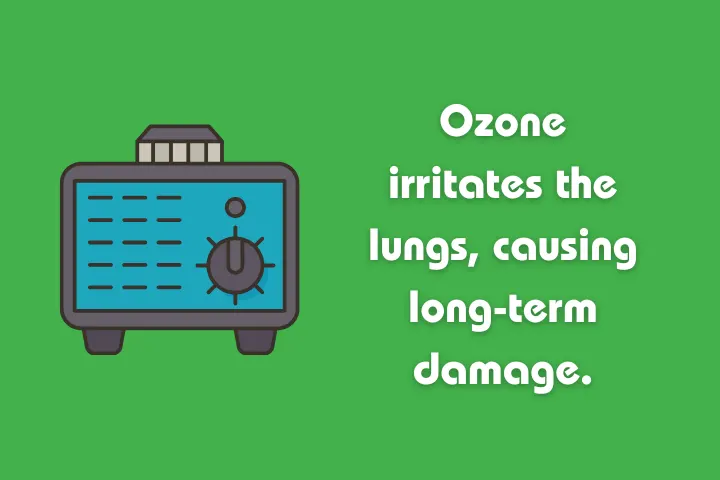
Breathing in ozone can irritate your lungs and cause a range of health issues. Even at low levels, it can lead to:
- Shortness of breath
- Coughing and throat irritation
- Chest pain
- Worsened asthma symptoms
Children, the elderly, and people with respiratory problems are especially vulnerable. For these groups, ozone exposure can turn a harmless-looking device into a health hazard.
Why Ozone Isn’t Safe Indoors
Here’s the key problem: ozone generators don’t just stop at breaking down odors or bacteria. They also react with other chemicals in the air, creating byproducts that can be harmful to your health.
For example:
- Volatile Organic Compounds (VOCs) in cleaning products or paint can react with ozone to create formaldehyde, a toxic gas.
- Ozone can also worsen indoor air quality by causing fine particles to linger in the air.
The Environmental Protection Agency (EPA) warns against using ozone generators in occupied spaces. According to the EPA, ozone levels can easily exceed safe limits, especially in small, enclosed rooms.
Myths vs. Facts: Clearing the Confusion
There’s a lot of misinformation about ozone generators. Let’s separate fact from fiction:
Myth 1: Ozone Removes All Pollutants
- Fact: Ozone doesn’t remove particles like dust, pet dander, or pollen. It mainly neutralizes odors and some surface-level bacteria.
Myth 2: If You Can’t Smell Ozone, It’s Safe
- Fact: Ozone is harmful even at levels below your ability to smell it. Just because you can’t detect it doesn’t mean it isn’t there.
Myth 3: Ozone Generators Purify the Air Completely
- Fact: They mask odors but don’t clean the air as thoroughly as a HEPA or activated carbon filter.
Scientific Research on Ozone Generators
Multiple studies have shown the dangers of ozone exposure:
- A 2016 study in the Journal of Asthma found that ozone exposure worsens asthma symptoms, particularly in children.
- Consumer Reports tested popular ozone generators and found that many exceeded safe ozone levels, especially in poorly ventilated spaces.
- The World Health Organization (WHO) states that ozone exposure can harm lung function, even in healthy adults.
These findings are a wake-up call for anyone considering an ozone generator for daily use.
Real-Life Stories of Health Concerns
Hearing from real users adds a human touch to the data:
- Worsened Allergies: Some users report that their allergies became more severe after using ozone generators in their homes.
- Headaches and Fatigue: Frequent use of ozone generators in enclosed spaces has led to complaints about headaches and feeling tired.
- Lingering Smells: In many cases, the odors returned quickly, forcing users to run the device repeatedly—further increasing ozone exposure.
These accounts show that the risks of ozone exposure aren’t just theoretical—they’re very real for everyday users.
Indoor Air Quality Concerns
Ozone generators can sometimes worsen the very problem they’re supposed to solve: indoor air quality. Here’s a breakdown:
| Issue | Impact |
| Respiratory Irritation | Lung irritation, coughing, and asthma flare-ups. |
| Odor Masking | Covers smells without removing the source. |
| Harmful Byproducts | Creates secondary pollutants like formaldehyde. |
What Health Experts Recommend
Health organizations like the EPA, WHO, and American Lung Association advise against using ozone generators in homes, especially in occupied spaces. Instead, they recommend safer alternatives like HEPA filters, which physically trap pollutants without releasing harmful substances.
Ozone generators might promise cleaner air, but the health risks are significant. From lung irritation to harmful byproducts, the dangers often outweigh the benefits.
Safe Alternatives to Ozone Generators
Ozone generators might sound effective, but they’re not the only solution for improving indoor air quality. Safer alternatives not only work better but also avoid the risks of harmful ozone exposure. Let’s look at some of the best options available:
1. HEPA Filters

- What They Do: High-Efficiency Particulate Air (HEPA) filters trap particles like dust, pollen, pet dander, and mold spores.
- Why They’re Better: Unlike ozone generators, HEPA filters don’t release harmful byproducts. They physically capture airborne particles, leaving your air cleaner and healthier.
- Best For: Allergy sufferers, pet owners, and households with kids.
2. Activated Carbon Filters

- What They Do: These filters absorb odors, smoke, and harmful gases like volatile organic compounds (VOCs).
- Why They’re Better: Carbon filters target chemical pollutants and odors without creating secondary pollutants like ozone.
- Best For: Homes with strong cooking smells, smokers, or chemical sensitivities.
3. UV-C Light Purifiers

- What They Do: UV-C purifiers use ultraviolet light to kill bacteria, viruses, and other microorganisms.
- Why They’re Better: When designed correctly, they sterilize air without producing harmful ozone.
- Best For: Healthcare settings or households looking for extra germ protection.
4. Indoor Plants

- What They Do: Plants like peace lilies and spider plants naturally filter the air by absorbing toxins.
- Why They’re Better: Plants are eco-friendly and cost-effective. While they’re not as powerful as a HEPA filter, they’re a great supplemental option.
- Best For: Eco-conscious consumers who want a natural way to improve air quality.
When (and If) to Use Ozone Generators
There are a few scenarios where ozone generators can be used safely. But remember, they should always be used with caution:
- Unoccupied Spaces: Use ozone generators only in rooms where no people, pets, or plants are present. Ventilate the space thoroughly before re-entering.
- Industrial Settings: Ozone generators are more suitable for tasks like disinfecting water, cleaning large-scale facilities, or eliminating odors in vehicles.
- Certified Models: If you must use an ozone generator, choose one certified by the California Air Resources Board (CARB) for minimal ozone emissions.
Important: Never use ozone generators in occupied spaces or for extended periods. The risks often outweigh the benefits.
Practical Tips for Maintaining Indoor Air Quality
Improving indoor air quality doesn’t always require fancy equipment. Small, consistent habits can make a big difference.
1. Ventilation
- Open windows regularly to let fresh air in and stale air out.
- Use exhaust fans in kitchens and bathrooms to remove moisture and odors.
2. Regular Cleaning
- Dust surfaces and vacuum carpets frequently to remove allergens.
- Wash bedding, curtains, and upholstery to reduce dust mites and pet dander.
3. Control Humidity
- Use a dehumidifier to keep humidity levels between 30-50%. This prevents mold growth and reduces allergens.
4. Air Quality Monitors
- Invest in an air quality monitor to measure pollutants, humidity, and ozone levels. These devices help you track and improve your home’s air health.
Choosing the Right Air Purifier
With so many options on the market, how do you choose the best air purifier for your needs? Here’s a quick comparison to guide you:
| Feature | HEPA Filter | Activated Carbon | Ozone Generator |
| Removes Allergens | Yes | No | Partial |
| Eliminates Odors | Limited | Yes | Yes |
| Emits Harmful Byproducts | No | No | Yes |
| Maintenance | Moderate | Moderate | Minimal |
Key Takeaway: For everyday use, HEPA and carbon filters are the safest and most effective options.
FAQs
1. Are ozone generators safe for home use?
Ozone generators should only be used in unoccupied spaces. They are not recommended for daily use in homes due to health risks.
2. What’s the best air purifier for allergies?
HEPA filters are ideal for trapping allergens like dust, pollen, and pet dander.
3. Can ozone generators kill viruses?
Ozone generators can neutralize some viruses, but the risks often outweigh the benefits. Safer options like UV-C purifiers are better for this purpose.
4. How can I test my home’s air quality?
You can use an air quality monitor to measure pollutants, humidity, and ozone levels. These devices provide real-time insights into your indoor environment.
Conclusion
Ozone generators can remove odors and bacteria, but their health risks—like respiratory irritation and harmful byproducts—make them unsuitable for many situations. Safer alternatives, such as HEPA filters, carbon filters, and UV-C purifiers, offer effective air purification without compromising your health.
To keep your air clean, focus on consistent habits like ventilating your home, cleaning regularly, and monitoring air quality. Your health is worth the effort, so choose solutions that prioritize safety and long-term benefits.
Take control of your indoor air today—and breathe easier tomorrow!
