IQAir vs Dyson Air Purifier: Essential Choice

Choosing between IQAir and Dyson air purifiers is a crucial decision for your home’s air quality. This comparison highlights their key differences in filtration, performance, and price to help you make the essential choice for a healthier living space.
The air in our homes can be full of tiny particles we can’t see. These can include dust, pollen, pet dander, and even smoke. Breathing these in regularly can make us feel unwell. Many people wonder if an air purifier is the right solution. Two of the most well-known brands are IQAir and Dyson. Deciding between an IQAir vs Dyson air purifier can feel overwhelming. I’m here to break down exactly what sets them apart. We will look at how well they clean your air, what features they offer, and what you can expect to spend. This will help you pick the best one for your family’s needs.
Why Air Purifiers Matter for Your Health
Clean air is vital for everyone’s well-being. Poor indoor air quality can lead to allergies, asthma symptoms, and general discomfort. Studies show indoor air can be much more polluted than outdoor air. For example, the U.S. Environmental Protection Agency (EPA) notes that indoor air pollutants can be 2 to 5 times higher than outdoor levels. Air purifiers work by filtering out these harmful particles. They can significantly improve the air you breathe every day. This makes them an important addition to many homes.
Understanding Filtration Technology: IQAir vs Dyson
The heart of any air purifier is its filter. IQAir is famous for its medical-grade filtration. Their HyperHEPA filters are designed to capture ultra-fine particles. Dyson uses its own patented filtration systems, often combining HEPA filters with activated carbon. Both aim to remove pollutants, but their approach and effectiveness can differ.
IQAir’s HyperHEPA Filtration
IQAir’s HyperHEPA technology is a standout feature. It captures particles down to 0.003 microns. This is much smaller than what standard HEPA filters can catch. It means IQAir purifiers can trap viruses, bacteria, and even fine particulate matter (PM2.5) very effectively. This level of filtration is often recommended for people with severe allergies or respiratory issues.
Dyson’s Multi-Stage Filtration
Dyson purifiers typically feature a sealed HEPA filtration system. This captures 99.97% of particles as small as 0.3 microns. They also include activated carbon filters to remove gases and odors. Some Dyson models also incorporate UV-C light technology. This is claimed to neutralize bacteria and viruses.
Performance Metrics: CADR and Beyond
When comparing air purifiers, it’s important to look at performance metrics. The Clean Air Delivery Rate (CADR) is a common measure. It tells you how quickly a purifier can clean the air in a room. However, other factors like noise levels and energy consumption are also important.
Clean Air Delivery Rate (CADR)
CADR ratings indicate how effectively an air purifier removes specific pollutants like smoke, dust, and pollen. Higher CADR numbers mean faster air cleaning. IQAir models often boast very high CADR ratings, especially for their larger units. Dyson models also perform well, but it’s essential to check the specific CADR for the room size you intend to purify. You can find CADR ratings from independent testing bodies.
Noise Levels and Energy Efficiency
Air purifiers can be noisy, especially on higher settings. IQAir units are generally known for being powerful but can be louder. Dyson purifiers often focus on quieter operation, especially in their ‘Auto’ modes. Energy efficiency is also a consideration, as purifiers run for many hours. Both brands offer energy-efficient models, but checking the wattage is always a good idea.
Design and Aesthetics: A Key Differentiator
When choosing an air purifier, how it looks in your home matters. IQAir purifiers are designed for maximum performance, often resulting in a more industrial or functional aesthetic. Dyson products are known for their sleek, modern designs and innovative features.
IQAir: Function Over Form
IQAir units tend to be larger and more utilitarian in appearance. Their focus is on robust build quality and powerful filtration. They might blend into a clinical setting or a dedicated air purification room better than a stylish living space.
Dyson: Smart and Stylish
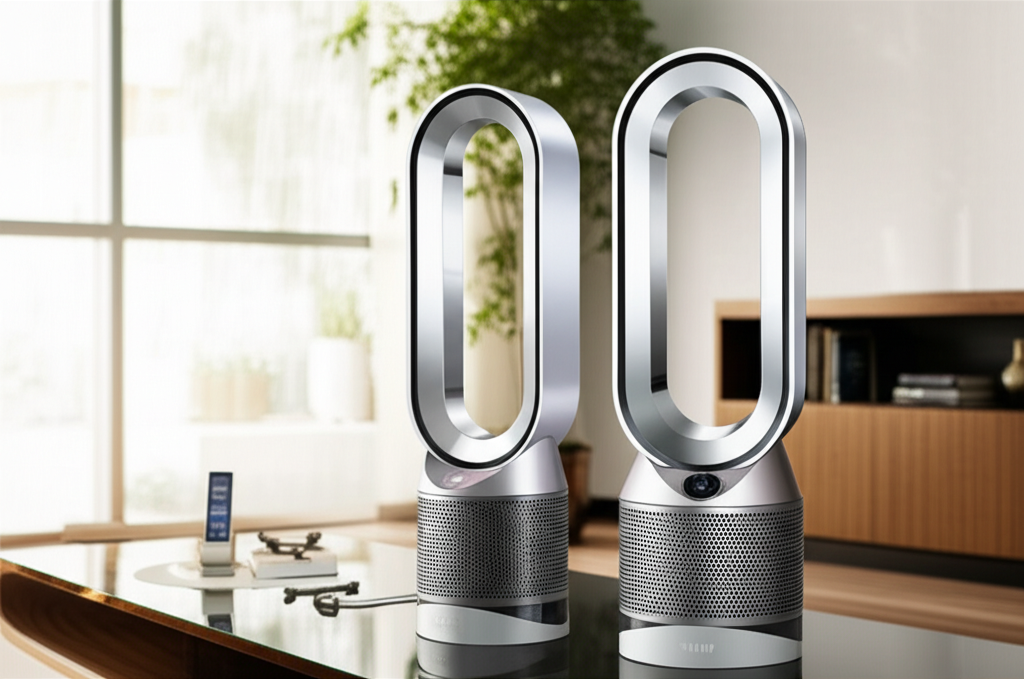
Dyson air purifiers are often seen as statement pieces. They are designed to be visually appealing and integrate seamlessly into modern home decor. Many Dyson models also function as fans or heaters, adding to their versatility and design appeal.
Smart Features and Connectivity
In today’s connected world, smart features are increasingly important. Both IQAir and Dyson offer models with app connectivity and intelligent sensors. These allow you to monitor air quality and control your purifier remotely.
IQAir’s AirVisual App
IQAir’s AirVisual platform provides detailed air quality data. It allows users to monitor indoor and outdoor air quality. You can control your IQAir purifier through the app, set schedules, and receive alerts. This offers a comprehensive view of your environment.
Dyson Link App and Sensors
Dyson purifiers connect to the Dyson Link app. This app provides real-time air quality reports and allows remote control. Many Dyson models feature advanced sensors that detect pollutants and automatically adjust purification levels. This makes them user-friendly and responsive.
Price Point and Value Proposition
The cost of an air purifier is a significant factor for most consumers. IQAir units are generally positioned at a premium price point, reflecting their advanced filtration. Dyson purifiers also come with a higher price tag, often justified by their multi-functionality and design.
IQAir: A Premium Investment
IQAir purifiers are often among the most expensive on the market. This is due to their specialized medical-grade filtration and robust construction. For individuals with serious air quality concerns, the investment is often seen as worthwhile for the health benefits.
Dyson: Multi-Functional Value
Dyson purifiers offer a blend of purification, fan, and heating functions in some models. This multi-functionality can offer good value for those looking for a versatile appliance. However, the initial purchase price is still substantial.
Filter Replacement Costs and Lifespan
An ongoing cost to consider is filter replacement. Filters need to be changed periodically to maintain purification effectiveness. The cost and lifespan of these filters can add up over time.
IQAir Filter Costs
IQAir filters are engineered for longevity and high performance. While the initial cost of the unit is high, the filters themselves can last for several years depending on usage and air quality. Replacement filters are an ongoing expense that should be factored in.
Dyson Filter Costs
Dyson filters also have a considerable lifespan, often lasting around a year. The cost of replacement filters is comparable to other premium brands. The Dyson Link app typically notifies you when it’s time to replace them.
Which Air Purifier is Right for You?
The choice between an IQAir vs Dyson air purifier depends heavily on your priorities. If absolute top-tier particle filtration for severe respiratory issues is your main concern, IQAir is a strong contender. If you value multi-functionality, smart design, and a user-friendly experience, Dyson might be a better fit.
Frequently Asked Questions
What is the main difference between IQAir and Dyson air purifiers?
IQAir focuses on medical-grade, ultra-fine particle filtration. Dyson offers a blend of HEPA filtration, activated carbon, and often includes fan or heating functions with a modern design.
Are Dyson air purifiers as effective as IQAir?
IQAir is generally considered superior for capturing the smallest particles due to its HyperHEPA technology. Dyson purifiers are highly effective for general air purification needs.
Which brand is more expensive, IQAir or Dyson?
Both brands are premium. IQAir units often have a higher initial purchase price, while Dyson’s price can be justified by multi-functionality.
Do Dyson purifiers really clean the air well?
Yes, Dyson purifiers use sealed HEPA filtration to capture a high percentage of airborne particles and allergens effectively.
How often do I need to replace filters for IQAir and Dyson?
Filter lifespan varies by model and usage, but typically IQAir filters can last longer than Dyson filters, often several years versus about a year for Dyson.
Can I use an air purifier in a small room?
Yes, you can use an air purifier in a small room. It’s important to choose a model with a CADR rating appropriate for the room size to ensure effective cleaning.
Conclusion: Making Your Essential Choice
Deciding between an IQAir vs Dyson air purifier is about matching the device to your specific needs and budget. IQAir offers unparalleled filtration for those with critical air quality requirements, making it an excellent choice for health-focused users. Dyson provides a more integrated home solution with its smart features, versatile functions, and stylish design. Both brands represent a significant investment in your home’s air quality and overall well-being. Consider your priorities carefully to make the essential choice that will best serve you and your family.