
Humidifier vs Air Purifier vs Dehumidifier: Genius Essential Guide

Humidifier vs air purifier vs dehumidifier: This guide clarifies the distinct roles of these devices in improving your home’s air quality, helping you choose the right one for comfort and health by understanding humidity levels and airborne pollutants.
Breathing fresh, comfortable air at home is more than just a luxury; it’s essential for our well-being. Yet, many of us struggle with air quality issues, leading to dry skin, stuffy noses, or even mold concerns. You might be wondering if a humidifier, air purifier, or dehumidifier is the solution you need. Navigating the differences between these devices can feel overwhelming, but don’t worry. I’m here to break down exactly what each one does, who it’s for, and how to pick the perfect machine for your home.
What is a Humidifier and Why Do You Need One?
A humidifier is a device designed to increase the level of moisture, or humidity, in the air. It achieves this by releasing water vapor or mist into your living space. When the air in your home is too dry, it can lead to a range of discomforts and health issues.
This is especially common during winter months when heating systems dry out the air, or in arid climates. Dry air can exacerbate allergies, irritate your throat and nasal passages, and even make your skin feel dry and itchy. A humidifier can bring relief by restoring optimal humidity levels, typically between 30% and 50%.
Signs Your Home Needs a Humidifier
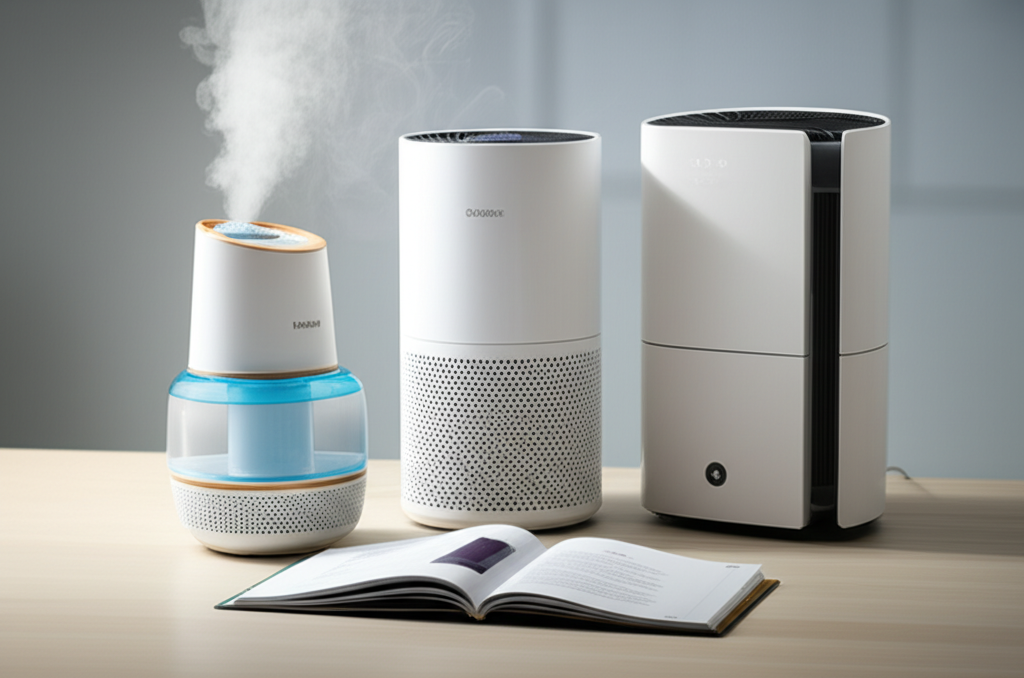
If you’re experiencing any of these symptoms, your home might be too dry:
Dry, itchy skin and chapped lips: Low humidity pulls moisture from your skin.
Sore throat or dry nasal passages: Your mucous membranes dry out, making you feel uncomfortable.
Increased static electricity: Dry air is a breeding ground for static shocks.
Worsening allergy or asthma symptoms: Dry air can irritate airways and make breathing difficult.
Cracking wooden furniture or floors: Extreme dryness can damage wood.
A humidifier can significantly improve these issues by adding much-needed moisture back into your environment.
What is an Air Purifier and Why is it Essential?
An air purifier is an appliance that removes contaminants and pollutants from the air in a room. It works by drawing in air, passing it through a filtration system, and then releasing cleaner air back into the space. These devices are crucial for removing airborne particles that can negatively impact your health.
Common pollutants include dust, pollen, pet dander, mold spores, smoke, and volatile organic compounds (VOCs). For individuals with allergies, asthma, or other respiratory sensitivities, an air purifier can be a game-changer. It helps create a healthier indoor environment by trapping these irritants.
How Air Purifiers Work: The Filtration Process
Most air purifiers rely on one or more types of filters to clean the air. The most common and effective is the High-Efficiency Particulate Air (HEPA) filter.
HEPA Filters: These are designed to capture at least 99.97% of airborne particles 0.3 microns in size. This includes most allergens and pollutants.
Activated Carbon Filters: These filters are excellent at adsorbing odors, gases, and VOCs that HEPA filters can’t capture.
Pre-filters: These capture larger particles like hair and lint, extending the life of the main HEPA filter.
By combining these technologies, air purifiers offer comprehensive protection against a wide range of airborne threats.
What is a Dehumidifier and When is it Necessary?
A dehumidifier is a device that reduces the level of humidity in the air. It works by drawing in moist air, cooling it to condense the water vapor into liquid, and then collecting the water in a reservoir or draining it away. This process is vital for preventing issues associated with excessively high humidity.
High humidity levels can make your home feel clammy and uncomfortable, but the problems go deeper. It creates an ideal environment for mold, mildew, dust mites, and bacteria to thrive. These can trigger allergies, asthma, and other respiratory problems.
Recognizing the Signs of High Humidity
If your home feels damp or you notice these signs, a dehumidifier might be the solution:
Musty odors: This is a classic sign of mold or mildew growth.
Condensation on windows or pipes: Visible moisture indicates excess water vapor in the air.
Peeling paint or wallpaper: High humidity can cause materials to warp and detach.
Feeling sticky or clammy indoors: The air feels heavy and uncomfortable.
Increased allergy or asthma symptoms: Mold and dust mites flourish in damp conditions.
A dehumidifier actively combats these issues by removing excess moisture, creating a healthier and more comfortable living space. According to the U.S. Environmental Protection Agency (EPA), indoor humidity levels should ideally be between 30% and 50% to prevent mold growth.
Humidifier vs. Air Purifier vs. Dehumidifier: Key Differences
Understanding the core function of each device is the first step in making the right choice. While all three aim to improve indoor air quality, they address different aspects of it. A humidifier adds moisture, an air purifier removes pollutants, and a dehumidifier removes moisture.
Think of it this way: if your air feels dry and scratchy, you likely need a humidifier. If you’re concerned about dust, allergens, or odors, an air purifier is your best bet. If your home feels damp, sticky, or you see signs of mold, a dehumidifier is what you need. They are not interchangeable, and choosing the wrong one won’t solve your specific problem.
A Simple Comparison Table
| Feature | Humidifier | Air Purifier | Dehumidifier |
| :—————— | :————————————— | :—————————————- | :—————————————- |
| Primary Function| Adds moisture to the air | Removes airborne pollutants and allergens | Removes excess moisture from the air |
| Problem Solved | Dry air, dry skin, irritated airways | Allergies, asthma, odors, dust, smoke | Mold, mildew, musty smells, dampness |
| Humidity Level | Increases humidity | Does not significantly affect humidity | Decreases humidity |
| Key Component | Water tank, mist/vapor emitter | Filters (HEPA, Carbon, Pre-filter) | Compressor/cooling coils, water collection|
| Best For | Dry climates, winter months | Allergy sufferers, pet owners, urban areas| Humid climates, basements, bathrooms |
This table highlights the distinct purposes of each appliance, making it easier to identify which one aligns with your home’s needs.
When to Choose a Humidifier
You should consider a humidifier if you live in a dry climate or experience particularly dry air during certain seasons. Winter is a common time for people to use humidifiers because indoor heating systems tend to strip moisture from the air. Low humidity can lead to dry skin, chapped lips, irritated sinuses, and can even make you more susceptible to colds and flu.
Using a humidifier can help alleviate these discomforts by maintaining a healthy humidity level between 30% and 50%. This can lead to better sleep, fewer respiratory issues, and a more comfortable living environment overall. It’s a proactive step for personal comfort and health.
Types of Humidifiers
There are several types of humidifiers, each with its own advantages:
Cool Mist Humidifiers: These release a cool, invisible mist into the air. They are generally safer for homes with children and pets as they don’t produce heat.
Warm Mist Humidifiers: These boil water to produce a warm mist. This process can help kill bacteria and mold in the water before releasing it.
Ultrasonic Humidifiers: These use ultrasonic vibrations to create a fine mist. They are typically very quiet and available in both cool and warm mist options.
Evaporative Humidifiers: These use a fan to blow air through a wet wick or filter, causing the water to evaporate into the air.
Choosing the right type depends on your preference for mist temperature, noise level, and ease of maintenance.
When to Choose an Air Purifier
An air purifier is your go-to solution if airborne pollutants are your primary concern. This is particularly true for individuals suffering from allergies, asthma, or other respiratory conditions. Pet owners often find air purifiers indispensable for managing dander and odors.
They are also beneficial in urban environments where outdoor pollution can seep indoors, or if you or someone in your household smokes. An air purifier with a HEPA filter is designed to capture microscopic particles, significantly improving the air you breathe daily. A study by the National Institutes of Health (NIH) highlights the importance of indoor air quality for respiratory health.
What to Look for in an Air Purifier
When selecting an air purifier, consider these factors:
Room Size: Ensure the purifier’s coverage area (CADR rating) matches your room size.
Filter Type: A HEPA filter is essential for capturing allergens. Activated carbon is great for odors and gases.
Noise Level: Check the decibel rating, especially if placing it in a bedroom.
Energy Efficiency: Look for ENERGY STAR certified models to save on electricity costs.
Maintenance: Consider the cost and frequency of filter replacements.
Investing in a good air purifier means investing in cleaner, healthier air for your home.
When to Choose a Dehumidifier
A dehumidifier is necessary when your home’s humidity levels are consistently too high. This is often the case in humid climates, damp basements, bathrooms, or poorly ventilated areas. Excess moisture creates an environment where mold, mildew, and dust mites can thrive, leading to musty odors and potential health problems.
According to the Environmental Protection Agency (EPA), keeping indoor humidity below 60 percent, and ideally between 30 and 50 percent, is crucial for preventing mold growth. A dehumidifier actively removes this excess moisture, protecting your home and your health.
How Dehumidifiers Work and Key Features
Dehumidifiers typically use a refrigeration cycle to remove moisture. Here’s a simplified look:
1. Air Intake: A fan draws in warm, moist air from the room.
2. Cooling Coils: The air passes over cold coils, causing the moisture to condense into water.
3. Water Collection: The condensed water drips into a collection bucket or is routed to a drain.
4. Air Exhaust: Drier, cooler air is released back into the room.
When choosing a dehumidifier, consider its capacity (measured in pints of water removed per day), the size of the area you need to cover, and features like a built-in humidistat to maintain a set humidity level.
Can You Use These Devices Together?
Yes, in many cases, you can and should use these devices together to create the optimal indoor environment. The key is to understand which condition you are trying to address. For instance, someone living in a very humid climate might need a dehumidifier to control moisture levels and prevent mold, while also using an air purifier to tackle allergens and dust.
Conversely, in a dry winter climate, you might use a humidifier to combat dry air and an air purifier to keep allergens at bay. It’s about layering solutions to address specific environmental challenges. Using them together allows you to fine-tune your home’s atmosphere for maximum comfort and health.
Synergistic Air Quality Solutions
Consider these scenarios:
Humidifier + Air Purifier: Ideal for dry climates with allergies. The humidifier adds moisture, while the purifier removes allergens and pollutants.
Dehumidifier + Air Purifier: Perfect for damp areas or humid climates. The dehumidifier controls moisture and mold, and the purifier cleans the air of irritants.
Humidifier + Dehumidifier (Rarely): This combination is less common and usually only needed in very specific, fluctuating climate conditions where you might need to actively manage both extremes. Often, one is sufficient based on the season.
The goal is always to achieve a balanced indoor environment.
Choosing the Right Device for Your Needs: A Step-by-Step Approach
To confidently select the right device, I recommend following these steps:
1. Assess Your Symptoms: Are you experiencing dry skin, sore throat (suggesting low humidity)? Or are you sneezing, coughing, or noticing musty smells (suggesting pollutants or high humidity)?
2. Measure Your Humidity: Use a hygrometer (a small, inexpensive device) to measure the humidity level in your home. Ideal levels are between 30% and 50%. If it’s consistently below 30%, you need a humidifier. If it’s consistently above 50-60%, you need a dehumidifier.
3. Identify Your Primary Concern: Is it dust, pollen, pet dander, smoke, or odors? If so, an air purifier is likely your best choice. If it’s dampness, mold, or that “stuffy” feeling, a dehumidifier is needed. If it’s dry air making you uncomfortable, a humidifier is the answer.
4. Consider Your Climate and Season: Dry winters often call for humidifiers. Humid summers or damp basements require dehumidifiers. Year-round concerns about allergens might mean an air purifier is a constant necessity.
5. Read Reviews and Compare: Once you’ve identified the type of device, research specific models, read user reviews, and compare features and prices.
By systematically evaluating your situation, you can make an informed decision.
Common Misconceptions About Air Quality Devices
It’s easy to get confused about what these devices do. One common misconception is that an air purifier can add moisture to the air, or that a humidifier can clean pollutants. This is simply not true; they are designed for very different purposes.
Another mistake is assuming one device can solve all your air quality problems. If your air is both too dry and has too many allergens, you might need both a humidifier and an air purifier. Understanding the unique function of each is key to effective air quality management.
Debunking Myths
Myth: Air purifiers humidify the air. Fact: Air purifiers focus on filtration, not moisture addition.
Myth: Humidifiers clean the air. Fact: Humidifiers add moisture; they don’t remove particles or odors.
Myth: Dehumidifiers make air dry and uncomfortable. Fact: Dehumidifiers simply remove excess moisture to bring humidity to a healthy range.
Myth: One device can do it all. Fact: Each device addresses a specific air quality issue.
Clarifying these points ensures you invest in the right solution for your home.
Frequently Asked Questions (FAQ)
Q1: Can I use a humidifier and a dehumidifier at the same time?
While technically possible, it’s rarely necessary or efficient. They work against each other. You’d typically use one or the other depending on the season or specific room conditions, or use an air purifier alongside either one.
Q2: How often should I clean my humidifier or dehumidifier?
Regular cleaning is crucial for both. Humidifiers should be cleaned every 1-3 days to prevent mold and bacteria growth. Dehumidifiers should have their tanks emptied daily and the unit cleaned weekly or bi-weekly.
Q3: Do air purifiers help with pet odors?
Yes, air purifiers with activated carbon filters are very effective at removing pet odors and dander from the air. HEPA filters capture the dander itself, while carbon filters absorb the odor molecules.
Q4: My basement is always damp. What do I need?
A dehumidifier is essential for damp basements. High humidity in basements can lead to mold and mildew growth, so a dehumidifier will help keep the air dry and healthy.
Q5: I have dry, itchy skin in the winter. What should I get?
If your skin feels dry and irritated, especially in winter, it’s likely due to low indoor humidity. A humidifier is the best solution to add moisture back into the air.
Conclusion: Your Path to Healthier Air
Choosing between a humidifier, air purifier, and dehumidifier isn’t about finding the “best” device overall, but the best device for your* specific needs. Whether your air is too dry, too moist, or full of pollutants, there’s a targeted solution to improve your home’s environment. I’ve walked you through the distinct functions, benefits, and signs that indicate which device is right for you.
By understanding the differences between a humidifier vs air purifier vs dehumidifier, you can confidently invest in a solution that promotes better health, comfort, and peace of mind. Don’t let poor air quality affect your well-being. Take the steps to identify your issue and select the right appliance to breathe easier.
