
Does Air Purifier Make Noise? Essential Guide

Yes, air purifiers do make noise, but the level of sound varies significantly. Understanding decibel levels and fan speeds is key to finding a quiet model that won’t disturb your peace.
Is your new air purifier humming louder than expected? You’re not alone. Many people wonder, “Does air purifier make noise?” The answer is a definitive yes, but the intensity of that sound is crucial. Excessive noise can be disruptive, turning a health-conscious purchase into an annoyance.
This guide will demystify air purifier sound, helping you understand what’s normal, what’s not, and how to find a quiet companion for cleaner air. We’ll explore decibel levels, fan settings, and factors influencing noise so you can breathe easy, both in terms of air quality and sound.
Understanding the Question: Does Air Purifier Make Noise?
Air purifiers generate noise primarily from their internal fan and motor. This sound is measured in decibels (dB), a unit representing sound intensity. A whisper is around 30 dB, normal conversation is about 60 dB, and a vacuum cleaner can reach 70-80 dB. Most modern air purifiers operate within a range that is generally considered acceptable, often between 30 dB on their lowest setting and 60 dB on their highest. The crucial factor is finding a unit whose noise output aligns with your comfort level and the intended use of the room.
Decibel (dB) Explained: What’s Quiet?
Understanding decibel levels is key to managing air purifier noise. Lower dB ratings indicate quieter operation. For a bedroom, aiming for under 40 dB is ideal, similar to a quiet library. Living areas might tolerate slightly higher levels, around 50 dB, which is comparable to a refrigerator’s hum. Higher settings on most purifiers are for situations needing rapid air cleaning, where some noise is a reasonable trade-off.
What is a “Normal” Noise Level for an Air Purifier?
A “normal” noise level for an air purifier typically falls between 30 to 60 decibels (dB). On its lowest fan speed, a quiet air purifier might sound like a gentle hum or even a soft white noise, often around 30-40 dB. When running on its highest setting, which is necessary for maximum air purification during intense pollution events or when quickly clearing odors, the noise can increase to 50-60 dB, akin to a quiet conversation. Anything significantly above 60 dB on a regular setting might be considered loud for most home environments.
Why Do Air Purifiers Make Noise?
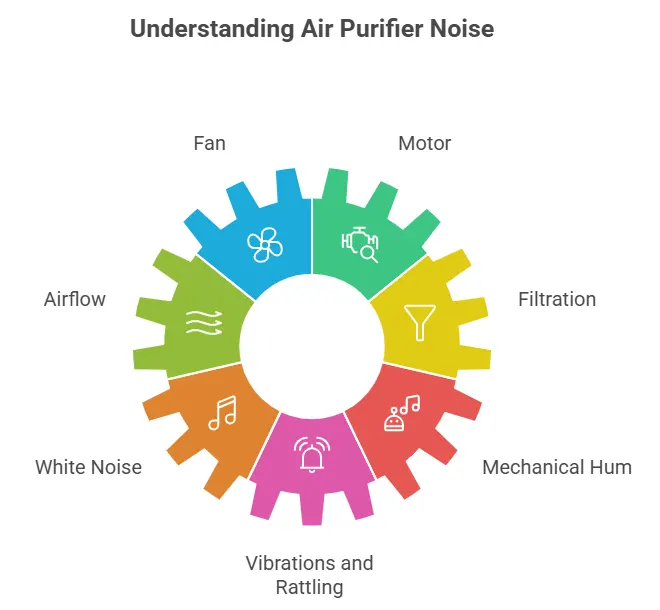
The core components responsible for an air purifier’s sound are its fan and motor. The fan draws air into the unit, forcing it through filters, and then expels the cleaner air. This mechanical process inherently creates sound waves. The motor powers the fan, and its operation also contributes to the overall noise profile. Different designs and power levels of these components directly impact how loud the unit will be.
The Role of the Fan and Motor
The fan is the primary culprit behind air purifier noise. It spins at various speeds to move air. The faster the fan spins, the more air it processes, and the louder the sound becomes. The motor that drives the fan also generates a low hum. Higher-quality motors are often designed for quieter operation, minimizing vibrational noise.
Airflow and Filtration: The Trade-off
More powerful airflow generally means more noise. Air purifiers need to move a significant volume of air to be effective, especially in larger rooms. This increased airflow is achieved by faster fan speeds, which directly correlate with higher decibel (dB) readings. Similarly, the process of forcing air through dense HEPA filters can create some resistance, contributing to the fan’s workload and thus, its sound.
Types of Air Purifier Sounds
Air purifiers can produce a range of sounds, from subtle white noise to more noticeable hums. Recognizing these different sounds can help you identify if your unit is operating normally or if there might be an issue. Understanding these sound profiles is crucial for setting realistic expectations and ensuring your comfort.
White Noise vs. Mechanical Hum
White noise is often described as a steady, consistent, and unobtrusive sound, similar to static or a fan running. Many people find this type of sound soothing and even beneficial for sleep or concentration. A mechanical hum, on the other hand, can be more irregular and might include vibrations or rattling sounds, which are generally less desirable and could indicate a problem.
Vibrations and Rattling
Vibrations or rattling noises are usually not normal operating sounds for a well-maintained air purifier. These can stem from loose parts, an unbalanced fan, or the unit not being placed on a stable, level surface. If you hear these sounds, it’s worth investigating to ensure optimal performance and longevity of the device.
Factors Affecting Air Purifier Noise
Several factors contribute to how noisy an air purifier is. From the design of the unit to how you use it, these elements all play a role in the decibel levels you’ll experience. Considering these factors upfront can help you select the best model for your needs and environment.
Fan Speed Settings
This is arguably the most significant factor. Air purifiers almost always offer multiple fan speed settings, typically ranging from low to high. The lowest setting is usually very quiet, designed for continuous operation without disruption. The highest setting provides maximum purification but will be the loudest. Many models also include an “auto” mode that adjusts fan speed based on detected air quality.
Unit Size and Power
Larger, more powerful air purifiers designed for bigger spaces often have larger fans and motors to move more air. Consequently, they can be louder than smaller units intended for personal spaces or small rooms. The power consumption (wattage) can also be an indicator, though not always a direct correlation to noise.
Filter Type and Condition
While the primary function of filters is to clean the air, their design can indirectly affect noise. Denser filters, like those in high-efficiency HEPA systems, create more resistance to airflow, potentially making the fan work harder and produce more sound. As filters clog with pollutants over time, they can also restrict airflow, which might subtly change the sound profile.
Placement and Environment
Where you place your air purifier matters. Placing a unit on a soft, carpeted surface can absorb some sound, while placing it on a hard floor might amplify vibrations. Ensuring the unit is on a flat, stable surface and not too close to walls or furniture can also help minimize resonance and noise.
How to Measure Air Purifier Noise
You don’t need specialized equipment to get a sense of your air purifier’s noise level. Simple tools and methods can help you gauge whether it’s within an acceptable range for your home. This self-assessment can empower you to make informed decisions about your device.
Using a Smartphone App
Many free smartphone apps can measure decibel levels. Simply download a sound meter app, place your phone near the air purifier (at roughly ear level when you’re in the room), and run the app on different fan settings. While not as precise as professional equipment, these apps provide a good general indication of the noise output.
Comparing to Everyday Sounds
A more intuitive method is to compare the noise to familiar sounds. Does it sound like a quiet hum, a gentle breeze, or a loud vacuum cleaner? This subjective comparison, alongside the dB range mentioned earlier (30-60 dB), can help you determine if the noise is within expected parameters.
Finding a Quiet Air Purifier: What to Look For
Beside finding the answer to Does Air Purifier Make Noise, you may find a quiet air purifier. If noise is a primary concern, several features and specifications can guide your purchasing decision. Focusing on these aspects will help you find a model that prioritizes quiet operation without compromising on air cleaning performance.
Decibel Ratings (dB)
Always check the manufacturer’s specifications for decibel ratings. Look for units that clearly state their dB levels for both low and high fan settings. Aim for models that advertise low dB ratings, particularly on their lowest setting, often below 40 dB.
Energy Star Certification
While not directly a noise rating, Energy Star certified appliances are generally designed for efficiency, which can sometimes correlate with quieter operation. These units are tested to meet strict energy efficiency guidelines set by the EPA.
Specialized “Sleep” or “Quiet” Modes
Many air purifiers come equipped with a dedicated “sleep” mode. This setting typically runs the fan at its lowest speed, dims or turns off indicator lights, and minimizes overall noise to create an optimal sleeping environment. This is a crucial feature for bedroom use.
Brand Reputation and Reviews
Researching brands known for producing quiet appliances and reading user reviews can provide invaluable real-world insights. Many reviews will specifically comment on the noise level of a particular air purifier model.
Tips for Reducing Air Purifier Noise
Even if your air purifier isn’t the quietest model, there are several practical tips you can employ to reduce its perceived noise level. These simple adjustments can make a significant difference in your home’s acoustic comfort.
Optimize Placement
Avoid placing the air purifier directly on hard, resonant surfaces like hardwood floors or tiled surfaces without some form of dampening. Try placing it on a rug, a mat, or even a small piece of dense foam. Ensure it has adequate space around it for airflow; a cramped position can sometimes cause the fan to work harder.
Use Lower Fan Speeds
Whenever possible, utilize the lower fan speed settings. While they may not clean the air as rapidly as higher settings, they are significantly quieter. For continuous air quality maintenance, the lowest setting is often sufficient and provides a consistent, unobtrusive hum.
Regular Maintenance
Clogged filters can impede airflow and potentially alter the sound the unit makes. Regularly cleaning pre-filters and replacing HEPA and carbon filters as recommended by the manufacturer ensures the unit operates efficiently and quietly. A well-maintained unit is generally a quieter unit.
Consider a Sound-Dampening Mat
If your air purifier is on a hard surface and still seems too noisy, consider placing it on a specialized sound-dampening mat. These mats are designed to absorb vibrations and reduce the transmission of noise into the room.
When Air Purifier Noise Becomes a Problem
While some noise is expected, there are instances where an air purifier’s sound can become a genuine problem. Recognizing these signs is important for both your comfort and the device’s optimal functioning. Addressing these issues promptly can prevent further complications.
Disrupting Sleep or Work
If the noise level consistently disrupts your sleep, concentration during work-from-home, or general relaxation, it’s a clear indicator that the current unit or its settings are not suitable for your environment. This is a primary reason to seek out quieter models or adjust usage.
Unusual Sounds (Clicking, Grinding, Whining)
As mentioned earlier, sounds like clicking, grinding, or high-pitched whining are not typical operating noises. These often signal a mechanical issue, such as a damaged fan blade, a failing motor bearing, or loose internal components.
Excessive Noise on Lowest Setting
If even the lowest fan setting is unacceptably loud for your needs, it suggests the unit is not designed for quiet operation. This is a critical point to consider during your next purchase, prioritizing models explicitly designed for low-noise performance.
Top Quiet Air Purifier Features to Prioritize
When shopping for a new air purifier with quiet operation as a priority, focus on these key features. They are designed to minimize noise while maximizing air cleaning efficiency, ensuring a peaceful and healthy home environment.
Low Decibel Ratings on All Settings
Look for models that provide dB ratings for all fan speeds, not just the lowest. A truly quiet purifier will have a low dB rating even on its medium settings, not just the absolute minimum.
Sleep Mode with Dimmed Lights
A robust sleep mode is essential. It should significantly reduce fan speed and noise. Ideally, it should also dim or turn off all indicator lights, as even small lights can be distracting in a dark bedroom.
DC Motors
Some manufacturers are now using Direct Current (DC) motors in their air purifiers. DC motors are generally more energy-efficient and quieter than traditional Alternating Current (AC) motors, often producing less vibration and a more consistent hum.
Pre-filters and Easy-to-Clean Components
While not directly noise-related, units with easily accessible and washable pre-filters mean less strain on the main filters and fan, potentially contributing to quieter operation over time.
Air Purifier Noise: A Comparative Table
To help visualize the differences, here’s a table comparing typical noise levels of air purifiers to common household sounds. This can provide a practical reference point for understanding what to expect.
| Sound Source | Approximate Decibel Level (dB) | Recommended Air Purifier Setting |
|---|---|---|
| Whisper | 30 dB | Lowest Setting |
| Quiet Air Purifier | 30–40 dB | Lowest Setting |
| Refrigerator Hum | 40–50 dB | Medium Setting |
| Normal Conversation | 50–60 dB | Medium / High Setting |
| Washing Machine | 60–70 dB | High Setting |
| Vacuum Cleaner | 70–80 dB | Max Setting |
This table illustrates that most air purifiers, especially on lower settings, are quieter than many common household appliances. The key is managing expectations and choosing a model appropriate for the room’s intended use.
Frequently Asked Questions (FAQ)
Can air purifiers be completely silent?
No, air purifiers cannot be completely silent because they contain moving parts, primarily a fan and motor, which generate some level of sound. The goal is to find a unit that operates at a noise level you find unobtrusive or even pleasant, like white noise.
What is the quietest type of air purifier?
Generally, air purifiers with smaller coverage areas and lower fan speeds are quieter. Models specifically designed with “sleep modes” or advertised with very low decibel ratings (e.g., under 30 dB on the lowest setting) are typically the quietest options available.
How does filter replacement affect noise?
As air filters become clogged with dust and pollutants, they restrict airflow. This can force the fan to work harder, potentially increasing the noise level or changing its pitch. Replacing filters according to the manufacturer’s schedule helps maintain optimal performance and quiet operation.
Is a higher CADR rating always louder?
Not necessarily. While higher CADR (Clean Air Delivery Rate) ratings often indicate more powerful units that can be louder on their highest settings, many manufacturers design high-performance purifiers with advanced motor technology and aerodynamics to keep noise levels manageable across various speeds.
What is “white noise” and why is it good?
White noise is a sound that contains all audible frequencies at equal intensities. Many people find it beneficial because it can mask other distracting sounds, making it easier to focus or sleep. Air purifiers operating on low settings often produce a gentle white noise.
Can I use my air purifier in my bedroom at night?
Yes, absolutely! Many air purifiers are specifically designed for bedroom use, featuring quiet “sleep modes” and dimmed lights. It’s crucial to choose a model with low decibel ratings for its lowest settings to ensure it doesn’t disrupt your sleep.
Conclusion: Finding Your Quiet Air Purification Solution
Ultimately, the question “Does air purifier make noise?” is answered with a “yes, but…” It’s not about eliminating sound entirely, but about managing it. Understanding decibel levels, fan speeds, and the contributing factors allows you to make an informed choice. By prioritizing units with low dB ratings, beneficial sleep modes, and by employing simple tips for placement and maintenance, you can enjoy the significant health benefits of cleaner air without the drawback of disruptive noise. Choosing the right air purifier means finding a balance that supports both your respiratory health and your peace of mind, ensuring your home remains a sanctuary of fresh, quiet air.
