
Do Air Purifiers Create Humidity: Essential Truths

Air purifiers generally do not create humidity; they primarily filter air. While some advanced models with humidifying functions exist, standard purifiers remove particles and can even slightly reduce moisture, rather than add it. Understanding your unit’s capabilities is key to managing your home’s humidity levels effectively.
Do Air Purifiers Create Humidity: Essential Truths
Ever wondered if your trusty air purifier might be secretly altering your home’s humidity? It’s a common question, especially when dealing with dry winter air or sticky summer days. You want cleaner air, but you also need comfortable humidity. Let’s clear the air on this topic and explore exactly how air purifiers interact with moisture in your environment. By the end, you’ll know precisely what your air purifier is doing and how to best manage your home’s air quality and humidity.
The Core Function of Air Purifiers
Air purifiers are designed to clean the air you breathe. Their primary job is to capture airborne particles like dust, pollen, pet dander, and smoke. They achieve this through various filtration methods, most commonly using HEPA filters and activated carbon filters. These filters trap pollutants without directly affecting the moisture content of the air.
This means that for the vast majority of air purifiers on the market, the answer to “do air purifiers create humidity” is a resounding no. Their internal mechanisms focus on physical filtration and adsorption, not on adding water vapor to the atmosphere.
Understanding Air Purifier Technologies
Different air purifiers use different technologies, and it’s this technology that dictates their effect on humidity. Most common units employ passive filtration systems. These systems draw air through a series of filters.
More advanced or specialized units might incorporate additional features. It’s these less common features that can sometimes lead to confusion about humidity levels.
HEPA Filters and Their Role
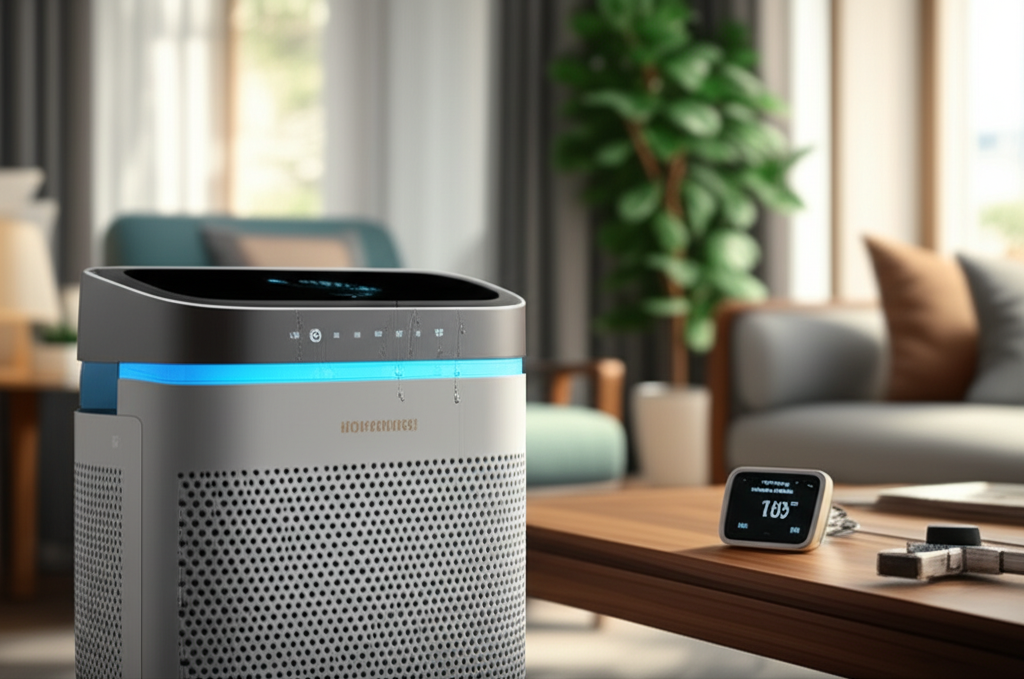
High-Efficiency Particulate Air (HEPA) filters are the gold standard in air purification. They are designed to trap at least 99.97% of airborne particles 0.3 microns in size. These filters are made of a dense mesh of fibers.
HEPA filters work by physically trapping particles. They do not add moisture to the air. In fact, some very dry air passing through a HEPA filter might even have a minuscule amount of its moisture absorbed by the filter material, though this effect is negligible.
Activated Carbon Filters and Moisture
Activated carbon filters are often paired with HEPA filters. Their primary function is to adsorb odors and volatile organic compounds (VOCs). This is achieved by the porous nature of activated carbon, which has a massive surface area.
While activated carbon is highly effective at trapping gases and odors, it does not actively add humidity. It can absorb some moisture from the air, similar to how silica gel packets work, but again, this effect is minimal in typical home use.
Do Air Purifiers Add Humidity? The Honest Answer
For standard air purifiers, the direct answer to “do air purifiers create humidity” is no, they do not add humidity. They are not designed to humidify the air. Their purpose is solely to remove contaminants from the air.
If you are experiencing increased humidity alongside running your air purifier, the cause likely lies elsewhere. It’s important to differentiate between a true humidifier and an air purifier.
What About Humidifier-Purifier Combos?
This is where the confusion often arises. Some devices on the market are designed as hybrid units, combining air purification with humidification. These are often marketed as 2-in-1 or 3-in-1 appliances.
In these combo units, the air purifier component functions as described above, filtering the air. The humidifier component, however, actively adds moisture to the air. If you have such a device and notice increased humidity, it’s the humidifier function at play.
It’s crucial to check your appliance’s specifications to understand if it has a humidifying feature. Reading the user manual is the best way to confirm.
How Air Purifiers Might Seem to Affect Humidity
While air purifiers don’t create humidity, there are a few indirect reasons why you might perceive a change in your home’s moisture levels. Understanding these can help you accurately assess your environment.
One common scenario is in very dry climates during winter. When you turn on your heating system, it dries out the air. An air purifier will continue to circulate this dry air.
Conversely, in humid summer months, an air purifier will circulate that humid air. It doesn’t change the humidity; it just moves the existing air around.
The Impact of Airflow and Ventilation
Air purifiers increase airflow within a room. They constantly draw in air, filter it, and expel it. This continuous circulation can sometimes make existing humidity feel more noticeable.
If your home has poor ventilation, an air purifier might simply make you more aware of the ambient humidity levels. It’s not adding moisture, but the increased air movement can alter your perception.
When to Suspect a Different Cause
If you’re experiencing issues with high or low humidity, and you have an air purifier, it’s wise to look beyond the purifier itself. Many other factors contribute significantly to indoor humidity.
Common culprits include cooking, showering, drying clothes indoors, and even breathing. Leaky pipes or poor insulation can also impact moisture levels.
Troubleshooting Humidity Issues with an Air Purifier
If you suspect your air purifier is somehow involved in a humidity problem, here’s a systematic approach to troubleshoot:
1. Identify Your Air Purifier Type: Confirm if it’s a standalone purifier or a combo unit with humidifying capabilities.
2. Check Device Settings: If it’s a combo unit, ensure the humidifying function is off if you don’t want it.
3. Monitor Humidity Independently: Use a hygrometer (a device that measures humidity) to get an objective reading.
4. Observe Changes: Turn the air purifier off for a day or two and monitor humidity. Then, turn it back on and observe again.
5. Inspect for Leaks or Condensation: Look for any unusual moisture around the unit, though this is rare for standard purifiers.
This methodical approach will help you pinpoint the true source of any humidity fluctuations.
The Role of a Hygrometer
A hygrometer is an essential tool for anyone concerned about indoor air quality and humidity. This small, affordable device provides an accurate measurement of the relative humidity in your home. You can find them online or at most hardware stores.
Using a hygrometer alongside your air purifier will give you concrete data. This data will reveal whether your humidity levels are changing independently of the purifier’s operation.
Ideal Humidity Levels for Your Home
Maintaining optimal humidity levels is crucial for comfort and health. Generally, indoor relative humidity between 30% and 50% is considered ideal.
Below 30%: Can lead to dry skin, irritated sinuses, static electricity, and damage to wooden furniture.
Above 50%: Can promote the growth of mold, mildew, dust mites, and exacerbate allergies.
An air purifier, by itself, will not help you achieve these ideal levels. It simply cleans the air.
Conclusion: Air Purifiers and Humidity – The Essential Truth
To summarize the essential truth: do air purifiers create humidity? Generally, no. Standard air purifiers are designed to filter pollutants and do not add moisture to the air. If your device also has a humidifying function, that specific feature is responsible for adding humidity. By understanding your air purifier’s capabilities and using tools like a hygrometer, you can effectively manage both your air quality and your home’s humidity for a healthier, more comfortable living space.
Frequently Asked Questions
Do air purifiers make the air drier?
While not their primary function, some air purifiers, particularly those with robust activated carbon filters, can absorb a tiny amount of moisture from the air. However, this effect is usually negligible and won’t significantly dry out your home.
Can an air purifier cause mold?
No, an air purifier itself does not cause mold. Mold thrives in damp conditions. If you notice mold, it indicates an underlying moisture problem in your home that needs to be addressed separately.
My air purifier has a “humidify” setting. What does that mean?
This means your device is a combination unit, functioning as both an air purifier and a humidifier. The “humidify” setting is specifically designed to add moisture to the air.
How can I increase humidity if my air purifier doesn’t?
If your air purifier doesn’t have a humidifying function and you need more moisture, consider purchasing a separate humidifier. You can also place bowls of water near heat sources or hang damp clothes to dry indoors, though these methods are less controlled.
Should I run my air purifier and humidifier at the same time?
Yes, you can run them simultaneously, especially if you have a combination unit or separate devices. This allows you to purify your air while maintaining optimal humidity levels. Just ensure the combined humidity doesn’t exceed 50%.
