Do Air Purifiers Affect Candles: Essential Insights

Yes, air purifiers can affect candles, primarily by drawing in their smoke and scent particles, potentially reducing their fragrance throw and lifespan, while also capturing some of the soot.
Do Air Purifiers Affect Candles? Essential Insights for Home Hygia
The cozy ambiance of a burning candle is a cherished part of many homes. However, if you also use an air purifier to maintain clean indoor air, you might wonder: do air purifiers affect candles? It’s a common concern for those who love both the soothing glow of a flame and the fresh air a purifier provides. This article will demystify the interaction between these two popular home accessories, offering clear insights and practical tips to ensure you can enjoy both without compromise. Let’s explore how your air purifier might be impacting your favorite candles and what you can do about it.
Understanding How Air Purifiers Work with Candles
Air purifiers work by drawing in surrounding air, passing it through various filters to trap pollutants, and then releasing cleaner air back into the room. When a candle burns, it releases soot particles and aromatic compounds into the air. An air purifier’s fan will inevitably pull these airborne particles towards it. This process can impact both the candle’s performance and the air purifier’s effectiveness.
The primary mechanism at play is the air purifier’s suction. Its fan actively pulls air from all directions, including the air emanating from a lit candle. This means that smoke, soot, and the fragrance oils dispersed by the candle are drawn into the purifier’s filtration system. This constant airflow can alter the way a candle burns and distributes its scent.
The Impact of Air Purifier Suction on Candle Scent
One of the most noticeable effects of an air purifier on a candle is its impact on scent throw. The fan of the air purifier can pull the fragrant molecules away from the candle before they have a chance to fully disperse into the room. This can lead to a weaker or less consistent fragrance experience. Instead of wafting gently, the scent is aggressively drawn towards the purifier.
This phenomenon is especially pronounced if the air purifier is placed too close to the candle. The stronger the fan speed, the more pronounced this effect will be. It’s like trying to enjoy a perfume while standing next to a strong fan – the scent is there, but it’s diluted and pulled away too quickly.
Soot and Air Purifiers: A Filtration Scenario
Candles, particularly those made with paraffin wax or those that are not trimmed properly, can produce visible soot. Air purifiers equipped with HEPA and activated carbon filters are designed to capture particulate matter, including soot. Therefore, your air purifier will likely trap a significant portion of the soot released by a candle.
While this might sound beneficial for air quality, it means your air purifier’s filters will get dirty faster. Soot is a fine particulate that can clog filters, reducing their efficiency and lifespan. Regular filter maintenance becomes even more crucial when burning candles in proximity to an air purifier.
Candle Burn Quality and Air Purifier Proximity
The airflow created by an air purifier can disrupt the natural convection current of a candle flame. This can lead to uneven burning, where one side of the candle melts faster than the other, creating a “tunneling” effect. This not only wastes wax but also shortens the candle’s overall burn time.
A stable flame is essential for an even melt pool and consistent scent release. When the air is constantly being pulled towards an air purifier, the flame can flicker or lean, preventing the wax from melting evenly across the surface. This can lead to a less aesthetically pleasing burn and a diminished scent experience.
Optimizing Placement: Air Purifier and Candle Harmony
The key to enjoying both your candles and your air purifier lies in strategic placement. Avoid placing your candle directly in the path of the air purifier’s intake or exhaust. A general rule of thumb is to keep them at least several feet apart. This allows the candle to burn naturally while the air purifier can still effectively clean the air without aggressively interfering.
Consider the airflow patterns in your room. If your air purifier has a directional output, ensure it’s not pointed directly at your candle. Similarly, if your candle is placed on a coffee table, your air purifier might be better situated on a nearby bookshelf or the floor at a distance.
Choosing the Right Candles for Air Purifier Users
Certain types of candles are less likely to cause issues with air purifiers. Soy wax and beeswax candles, for example, tend to burn cleaner and produce less soot than traditional paraffin wax candles. Choosing high-quality candles with natural essential oils for fragrance can also help, as they may produce fewer volatile organic compounds (VOCs) that can be drawn into the purifier.
When selecting candles, look for those made with 100% natural waxes like soy, coconut, or beeswax. Opt for those scented with essential oils rather than synthetic fragrances. These choices contribute to a cleaner burn and a less demanding load on your air purifier’s filtration system.
Air Purifier Settings and Candle Use
Adjusting your air purifier’s fan speed can also make a difference. Running your air purifier on a lower setting when you’re burning a candle can reduce the amount of air being pulled towards it, thereby minimizing the impact on the flame and scent dispersion. Many modern air purifiers offer automatic modes or adjustable fan speeds that can be tailored to your needs.
If your air purifier has a specific “night mode” or low setting, this is ideal for use while enjoying a candle. This reduces the strong suction that can disrupt the candle’s burn and scent throw, allowing for a more balanced experience.
Maintaining Your Air Purifier When Burning Candles
As mentioned, burning candles can increase the rate at which your air purifier’s filters become saturated, especially with soot. It’s essential to adhere to a stricter filter replacement schedule. Regularly checking and cleaning pre-filters (if applicable) can also extend the life of your main HEPA and carbon filters.
Consult your air purifier’s manual for recommended filter replacement intervals. If you notice a decline in air quality or an increase in soot in your home, it’s a sign that your filters may need attention sooner than usual.
Can Air Purifiers Remove Candle Smoke Smell?
Yes, air purifiers, particularly those with activated carbon filters, are very effective at removing smoke odors, including the smell of burnt wick or candle smoke. The activated carbon acts like a sponge, adsorbing the odor molecules from the air. This is one of the primary benefits of using an air purifier in conjunction with candles.
While the purifier might reduce the immediate scent throw of your candle, it will efficiently clean up any undesirable smoke smell that might arise from the burning process. This can be a significant advantage for those sensitive to smoke or seeking to maintain a consistently fresh-smelling home.
Frequently Asked Questions About Air Purifiers and Candles
Will an air purifier make my candle smell less?
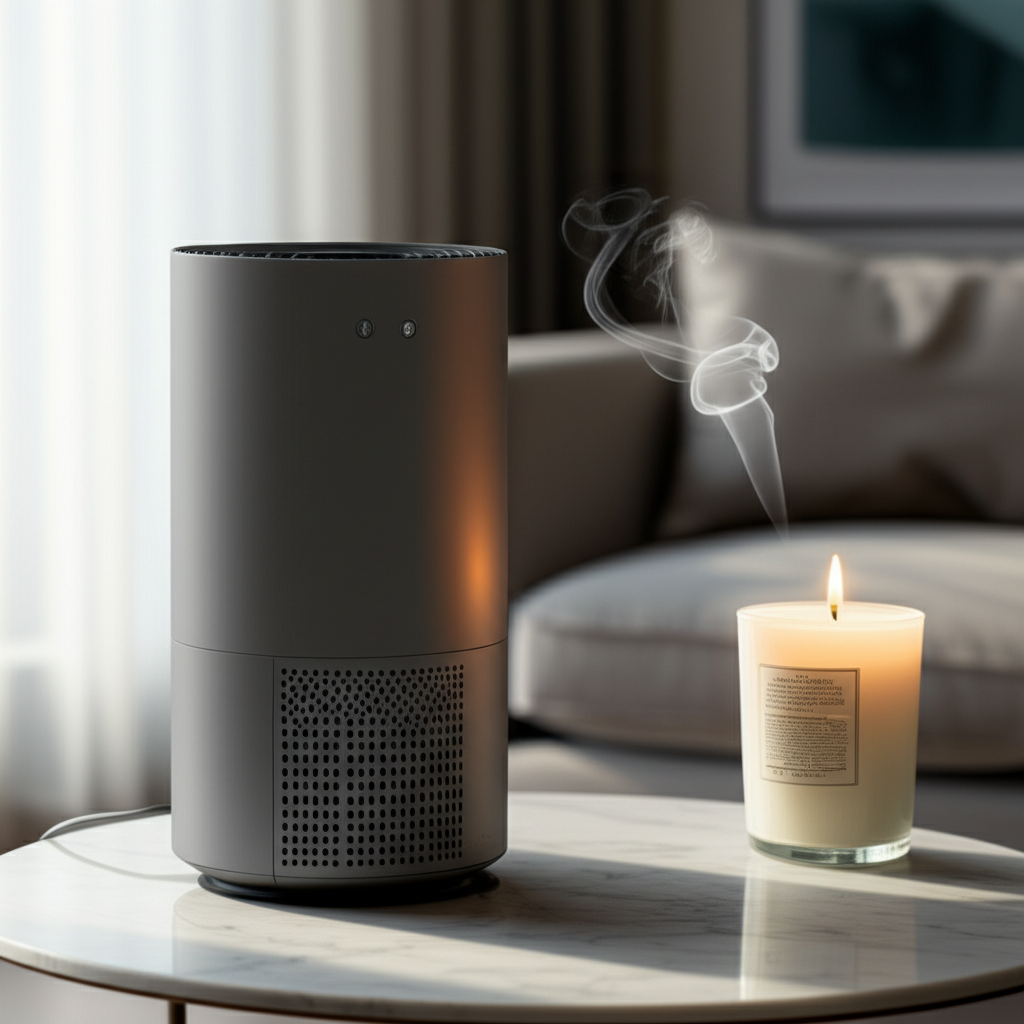
Yes, an air purifier can reduce the intensity of a candle’s fragrance because its fan pulls the scented air towards the filters before it can fully disperse.
Can air purifiers catch candle soot?
Absolutely. Air purifiers with HEPA filters are designed to capture fine particles like soot, preventing them from circulating in your air.
Should I turn off my air purifier when burning a candle?
It’s not necessary to turn it off completely. Instead, consider reducing the fan speed or placing them further apart to minimize interference with the candle’s burn and scent.
How can I prevent tunneling in my candles when using an air purifier?
Ensure your candle is not placed directly in the airflow of your air purifier and consider using a lower fan speed on your purifier.
Will burning candles ruin my air purifier?
Not necessarily, but it will cause the filters to clog faster, requiring more frequent cleaning or replacement to maintain optimal performance.
What type of candles are best if I use an air purifier?
Soy wax or beeswax candles tend to burn cleaner and produce less soot than paraffin candles, making them a better choice when using an air purifier.
Conclusion: Enjoying Your Ambiance Without Compromise
Ultimately, do air purifiers affect candles? Yes, they do, but not in a way that needs to ruin your experience. By understanding the principles of how air purifiers function and how candles release scent and particles, you can easily implement strategies to mitigate any negative impacts. Strategic placement, mindful candle selection, and appropriate air purifier settings are your best allies. With these simple adjustments, you can continue to bask in the warm glow and delightful fragrances of your favorite candles while enjoying the benefits of cleaner air provided by your purifier. It’s all about finding that perfect balance for a truly harmonious home environment.