
Charcoal Air Filter vs HEPA Filter: Essential Choice

Choosing between a charcoal air filter and a HEPA filter is crucial for cleaner indoor air. HEPA filters excel at capturing tiny particles like dust and allergens, while charcoal filters are best for odors and gases. Often, the best solution involves a combination of both to tackle a wider range of air pollutants effectively.
Air purifiers are becoming a staple in many homes, and understanding the different filter types is key to making the right choice. You might be wondering, “What’s the real difference between a charcoal air filter and a HEPA filter, and which one do I need?” It’s a common question, and the answer can significantly impact your home’s air quality and your overall well-being. Don’t worry, I’m here to break it down for you, step-by-step, so you can breathe easier. We’ll explore what each filter does, their unique strengths, and how to decide which is best for your specific needs, or if you need both.
Understanding Air Filter Basics
Air filters work by trapping contaminants as air passes through them. Different filter materials and designs target different types of pollutants. This means that while one filter might be great at catching dust, another might be far superior at eliminating odors. Understanding these fundamental differences is the first step in making an informed decision for your home.
What is a HEPA Filter?
A High-Efficiency Particulate Air (HEPA) filter is a mechanical air filter designed to remove at least 99.97% of airborne particles 0.3 micrometers (µm) in diameter. These tiny particles include dust, pollen, mold spores, pet dander, and bacteria. HEPA filters are made from a dense mat of fine fibers, typically polypropylene or fiberglass, arranged in a pleated manner to maximize surface area.
How HEPA Filters Work
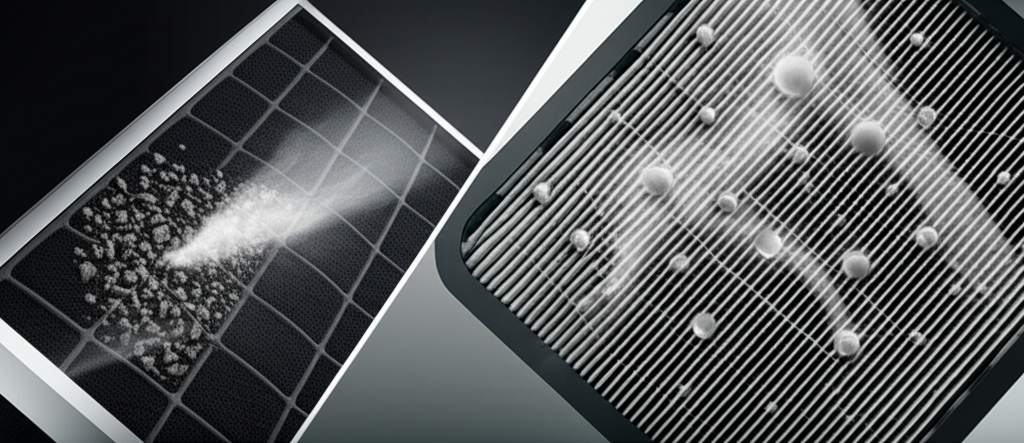
HEPA filters capture particles through several mechanisms, including interception, impaction, and diffusion. Even particles smaller or larger than 0.3 µm can be effectively trapped. This makes them incredibly effective for allergy and asthma sufferers. According to the U.S. Department of Energy, true HEPA filters must meet strict performance standards.
Strengths of HEPA Filters
HEPA filters are unmatched when it comes to removing microscopic solid particles from the air. This includes common allergens that can trigger respiratory issues and skin reactions. If your primary concern is reducing dust, dander, or pollen, a HEPA filter is your go-to solution. They provide a tangible reduction in airborne irritants, leading to a cleaner living environment.
Limitations of HEPA Filters
While HEPA filters are excellent for particles, they are generally not effective at removing odors, gases, or volatile organic compounds (VOCs). These substances are often molecular in size and can pass through the dense HEPA filter material. To tackle smells and chemical pollutants, you’ll need a different type of filtration.
What is a Charcoal Air Filter?
A charcoal air filter, often referred to as an activated carbon filter, uses activated charcoal (carbon) to adsorb (chemically bind to the surface) gases, odors, and VOCs. Activated charcoal is a porous material that has been treated to increase its adsorptive properties, creating millions of tiny pores that trap contaminants. This makes it ideal for purifying the air from smells and chemical fumes.
How Charcoal Filters Work
The magic of charcoal filters lies in adsorption. As air passes through the activated carbon, odor molecules and gaseous pollutants stick to the vast surface area of the carbon. Think of it like a sponge, but instead of water, it absorbs smelly or harmful gases. This process effectively neutralizes odors and removes harmful chemicals from the air.
Strengths of Charcoal Filters
Charcoal filters are champions at neutralizing odors from cooking, pets, smoke, and even unpleasant household smells. They are also highly effective at removing VOCs emitted from paints, cleaning products, and furniture, which can cause headaches and other health issues. If your home struggles with persistent smells or chemical fumes, a charcoal filter is essential.
Limitations of Charcoal Filters
Similar to HEPA filters, charcoal filters are not designed to capture small particulate matter like dust, pollen, or dander. The pores in activated carbon are too large to trap these solid particles effectively. Therefore, relying solely on a charcoal filter will leave you vulnerable to airborne allergens and dust.
Charcoal Air Filter vs HEPA Filter: The Core Differences
The fundamental difference lies in what each filter targets. HEPA filters are designed for particulates, trapping tiny solid particles. Charcoal filters are designed for gases and odors, using adsorption to capture molecules. They address entirely different categories of air pollutants.
When to Choose a HEPA Filter
You should opt for a HEPA filter if your main concerns are:
Allergies: Reducing pollen, dust mites, and pet dander.
Asthma: Minimizing airborne triggers that can cause flare-ups.
General Dust Reduction: Keeping your home cleaner and reducing the need for frequent dusting.
Post-Construction Clean-up: Capturing fine dust particles after renovation work.
A true HEPA filter is certified to capture 99.97% of particles at 0.3 microns, making it a powerful tool against microscopic irritants.
When to Choose a Charcoal Air Filter
A charcoal air filter is the best choice if you’re struggling with:
Lingering Odors: From cooking, pets, smoke, or mildew.
Chemical Fumes: VOCs from new furniture, paint, or cleaning supplies.
Secondhand Smoke: Neutralizing the smell and harmful compounds.
General Stale Air: Improving the overall freshness of your living space.
Activated carbon filters are excellent for improving the sensory experience of your home’s air.
The Power of Combination: HEPA and Charcoal Filters Together
Many high-quality air purifiers combine both HEPA and activated carbon filters in a multi-stage filtration system. This approach offers comprehensive air purification, tackling both particulate matter and gaseous pollutants simultaneously. This is often the most effective solution for a truly clean and fresh indoor environment.
Multi-Stage Filtration Systems
These systems typically feature a pre-filter (to catch larger particles like hair), followed by a HEPA filter, and then an activated carbon filter. Some advanced models may include additional stages like UV-C light or ionizers. This layered approach ensures that a wide spectrum of air contaminants is addressed.
Benefits of Combined Filters
By using both types of filters, you get the best of both worlds. You can reduce allergens and dust with the HEPA filter while simultaneously eliminating unpleasant odors and harmful VOCs with the charcoal filter. This comprehensive approach leads to a healthier and more comfortable living space for everyone.
Key Considerations When Buying an Air Purifier
When looking for an air purifier, consider the following:
Room Size: Ensure the purifier’s Clean Air Delivery Rate (CADR) is appropriate for the square footage of the room.
Filter Type: Decide if you need HEPA, charcoal, or a combination.
Noise Level: Check the decibel rating, especially for bedrooms.
Maintenance: Factor in the cost and frequency of filter replacements.
Energy Efficiency: Look for Energy Star certified models.
Understanding these factors will help you select a unit that best meets your needs and budget.
Comparing Filter Performance: A Quick Look
| Feature | HEPA Filter | Charcoal Filter |
| :—————- | :—————————————– | :——————————————— |
| Primary Target | Particulates (dust, pollen, dander) | Gases & Odors (VOCs, smoke, cooking smells) |
| Mechanism | Mechanical trapping | Adsorption (chemical bonding) |
| Particle Size | Captures ≥ 0.3 µm particles | Does not capture particulate matter |
| Effectiveness | High for allergens, dust, bacteria | High for odors, VOCs, smoke |
| Lifespan | Varies, typically 6-12 months | Varies, depends on pollutant load, often 3-6 months |
| Replacement | Essential for ongoing particle filtration | Essential for ongoing odor/gas filtration |
This table highlights the distinct roles each filter plays in air purification.
Real-World Scenarios: Which Filter Do You Need?
Scenario 1: You have severe allergies and a shedding dog. You need a powerful HEPA filter to capture pet dander and other allergens. A unit with a substantial activated carbon layer would also be beneficial to tackle pet odors.
Scenario 2: Your apartment often smells like strong cooking fumes, and you live near a busy road. A robust activated carbon filter is crucial here to absorb those cooking odors and potential traffic-related VOCs. A HEPA filter would also be good to catch any dust or outdoor pollutants that might enter.
Scenario 3: You’re sensitive to new furniture smells and cleaning product fumes. An air purifier with a thick activated carbon filter will be your best friend. While HEPA filters won’t help with these chemical smells, they will capture any dust stirred up.
These examples illustrate how specific household issues point towards different filtration needs.
Expert Insights on Air Filtration
“For comprehensive indoor air quality, a multi-stage system incorporating both HEPA and activated carbon filtration is generally recommended,” states Dr. Emily Carter, an environmental health specialist. “This dual approach addresses the most common indoor air pollutants effectively, providing a significant benefit for occupant health and comfort.” Many organizations, like the Environmental Protection Agency (EPA), also recommend improving indoor air quality through filtration.
Maintenance and Replacement Schedules
Both HEPA and charcoal filters have a finite lifespan and require regular replacement. A dirty HEPA filter loses its efficiency, and saturated activated carbon can no longer adsorb pollutants, sometimes even releasing trapped substances back into the air. Always follow the manufacturer’s recommendations for filter replacement, which can range from every 3 to 12 months depending on usage and air quality.
Frequently Asked Questions (FAQ)
Can a charcoal filter remove dust?
No, charcoal filters are designed to adsorb gases and odors, not to trap solid particles like dust. For dust removal, a HEPA filter is necessary.
Do I need both a HEPA and a charcoal filter?
For the most comprehensive air purification, yes. A combined system tackles both particles and gases/odors.
How often should I replace my HEPA filter?
Typically every 6 to 12 months, but check your manufacturer’s guide as usage and air quality can affect lifespan.
How often should I replace my charcoal filter?
Charcoal filters usually need replacement more frequently, often every 3 to 6 months, due to their adsorption capacity being filled faster.
Can I wash a HEPA filter?
Most true HEPA filters are not washable and must be replaced when dirty. Washing can damage the filter media and reduce its effectiveness.
Are “HEPA-type” or “HEPA-like” filters the same as true HEPA?
No. Only filters that meet the strict 99.97% efficiency at 0.3 microns standard are considered “true HEPA.” “HEPA-type” filters may be less effective.
Conclusion
Deciding between a charcoal air filter and a HEPA filter boils down to your primary air quality concerns. If allergens, dust, and microscopic particles are your main worry, a HEPA filter is essential. If odors, smoke, and chemical fumes plague your home, an activated carbon filter will be your ally. For the most complete solution to improve your indoor air quality, consider an air purifier that integrates both HEPA and charcoal filtration. This powerful combination ensures you’re addressing a wider range of pollutants, leading to a cleaner, fresher, and healthier living environment for you and your family. Make the informed choice today and breathe easier tomorrow.
