
Can Air Purifier Be Used As Dehumidifier: Essential Guide

No, an air purifier cannot be used as a dehumidifier. While both devices improve indoor air quality, they serve distinct purposes and operate on different principles to achieve them. Understanding these differences is crucial for making informed decisions about your home’s environment.
Air Purifiers vs. Dehumidifiers: Understanding the Core Difference
Many homeowners grapple with the question of whether their air purifier can tackle excess humidity. It’s a common point of confusion because both devices aim to enhance your living space. However, their fundamental functions are quite distinct. Air purifiers are designed to capture airborne particles like dust, pollen, and smoke, while dehumidifiers focus on removing moisture from the air.
Key Takeaway: Air purifiers clean the air of particles, whereas dehumidifiers remove moisture.
Can Air Purifier Be Used As Dehumidifier? The Straight Answer
To directly answer the question: Can air purifier be used as dehumidifier? No, an air purifier cannot effectively function as a dehumidifier. While some air purifiers might have a minor impact on humidity due to the airflow and filtration process, they are not engineered to remove significant amounts of moisture from the air. Their primary mechanism involves drawing air through filters, trapping pollutants, and recirculating cleaner air.
Key Takeaway: Air purifiers are not designed for moisture removal and won’t act as a substitute for a dehumidifier.
How Air Purifiers Work: Focusing on Air Quality
Air purifiers typically employ a multi-stage filtration system. This often includes a pre-filter for larger particles, an activated carbon filter for odors and VOCs, and a High-Efficiency Particulate Air (HEPA) filter for microscopic contaminants. Some advanced models also incorporate UV-C light or ionizers to further purify the air. The goal is to trap pollutants, not to condense water vapor.
Key Takeaway: Air purifiers utilize filters to trap airborne particles and improve air purity.
How Dehumidifiers Work: Targeting Moisture Removal
Dehumidifiers, on the other hand, are specifically built to reduce humidity levels. They work by drawing in moist air, cooling it over refrigerated coils to condense the water vapor, and then releasing drier air back into the room. The collected water is stored in a tank or can be drained away. This process directly combats dampness, mold growth, and musty odors.
Key Takeaway: Dehumidifiers condense moisture from the air using cooling coils and collect the water.
The Minor Humidity Impact of Air Purifiers
While not their primary function, some air purifiers might slightly influence humidity levels. The constant circulation of air can help distribute moisture more evenly. Additionally, the heat generated by the motor in some units could theoretically lead to a minuscule reduction in relative humidity. However, this effect is negligible and insufficient for managing actual humidity problems.
Key Takeaway: Any humidity reduction from an air purifier is minimal and not a substitute for a dedicated dehumidifier.
Why You Need a Dedicated Dehumidifier for High Humidity
If your home suffers from high humidity, a dedicated dehumidifier is essential. Excessive moisture can lead to a host of problems, including:
Mold and Mildew Growth: Damp environments are breeding grounds for mold, which can cause respiratory issues and damage your home.
Dust Mite Proliferation: Dust mites thrive in humid conditions and are common allergens.
Musty Odors: Dampness often results in unpleasant smells that permeate your living space.
Structural Damage: Prolonged high humidity can damage wooden furniture, paint, and even the structural integrity of your home.
Discomfort: High humidity can make your home feel sticky, clammy, and uncomfortably warm.
Key Takeaway: High humidity requires a dehumidifier to prevent mold, allergens, odors, and structural damage.
Can Air Purifier Be Used As Dehumidifier: When to Choose Which
Deciding between an air purifier and a dehumidifier depends entirely on your specific needs. If your primary concern is airborne allergens, dust, smoke, or pet dander, an air purifier is the right choice. If you’re battling condensation on windows, damp basements, or that tell-tale musty smell, a dehumidifier is what you need.
Key Takeaway: Choose an air purifier for air particle issues and a dehumidifier for moisture problems.
Understanding Relative Humidity and Its Impact
Relative humidity (RH) is the amount of water vapor present in the air expressed as a percentage of the amount that could be present at the same temperature. Ideal indoor RH levels are generally between 30% and 50%. Consistently high RH (above 60%) can create the conditions for mold growth, while very low RH (below 30%) can lead to dry skin, irritated sinuses, and static electricity.
Key Takeaway: Maintaining indoor relative humidity between 30-50% is crucial for comfort and health.
Features to Look for in a Dehumidifier
When selecting a dehumidifier, consider these important features:
Capacity: Measured in pints of water removed per day, choose a capacity suitable for your room size.
Coverage Area: Ensure the dehumidifier is rated for the square footage of the space you intend to use it in.
Humidistat: Allows you to set a desired humidity level, automatically turning the unit on and off.
Auto-Shutoff: Prevents overflow by stopping operation when the water tank is full.
Drainage Options: Look for models with continuous drainage hoses or large, easy-to-empty tanks.
Energy Efficiency: Consider Energy Star certified models to save on electricity costs.
Key Takeaway: Key dehumidifier features include capacity, coverage area, humidistat, auto-shutoff, drainage, and energy efficiency.
Can Air Purifier Be Used As Dehumidifier: A Comparative Table
| Feature | Air Purifier | Dehumidifier |
| :————— | :—————————————– | :——————————————- |
| Primary Goal | Remove airborne particles (dust, pollen) | Remove excess moisture from the air |
| Mechanism | Filtration (HEPA, carbon, etc.) | Condensation via cooling coils |
| Output | Cleaner air | Drier air and collected water |
| Humidity Impact | Minimal, indirect | Significant, direct |
| Best For | Allergies, asthma, smoke, pet dander | Mold prevention, musty odors, dampness |
| Water Handling | None | Collects water in a tank or via drain hose |
Key Takeaway: The table clearly illustrates the distinct functions and mechanisms of air purifiers and dehumidifiers.
Can Air Purifier Be Used As Dehumidifier: Common Misconceptions
A common misconception is that because air purifiers move air, they might also reduce humidity. While air movement is a factor in both devices, the method of moisture removal is entirely different. An air purifier’s fan simply circulates air through its filters. A dehumidifier’s internal workings are designed to actively extract water vapor.
Key Takeaway: Air movement alone does not equate to dehumidification; specific mechanisms are required.
Exploring Dual-Action Devices: Are They Real?
While a standard air purifier cannot act as a dehumidifier, there are some devices on the market that combine both functions. These are often marketed as “air treatment systems” or “multi-functional air conditioners.” However, it’s important to note that these are typically more complex and expensive units, and their dehumidifying capabilities might not be as robust as a standalone, high-capacity dehumidifier.
Key Takeaway: Some combined units exist, but they are not a replacement for dedicated, high-performance appliances.
When to Consider a Dehumidifier for Your Home
You should seriously consider investing in a dehumidifier if you notice any of the following in your home:
Condensation: Water droplets forming on windows, mirrors, or pipes.
Peeling Paint or Wallpaper: Often a sign of moisture buildup behind walls.
Musty Smells: Particularly noticeable in basements, bathrooms, or closets.
Mold or Mildew: Visible growth on walls, ceilings, or fabrics.
Damp or Clammy Feeling: Even when the temperature is comfortable.
Warped Wood: Furniture or structural elements showing signs of moisture damage.
High Readings on a Hygrometer: If your hygrometer consistently shows humidity above 50%.
Key Takeaway: These are clear indicators that a dehumidifier is needed to protect your home and health.
Maintaining Optimal Humidity Levels with the Right Tools
Achieving optimal indoor humidity is key to a healthy and comfortable living environment. Using the right appliances for the job ensures you’re addressing your specific needs effectively. For air quality concerns related to particles, an air purifier is your best bet. For managing moisture and preventing its associated problems, a dehumidifier is the necessary solution.
Key Takeaway: Using the correct appliance for air quality or humidity issues is vital for a healthy home.
Frequently Asked Questions
Q1: Can I use my air purifier in a very humid room?
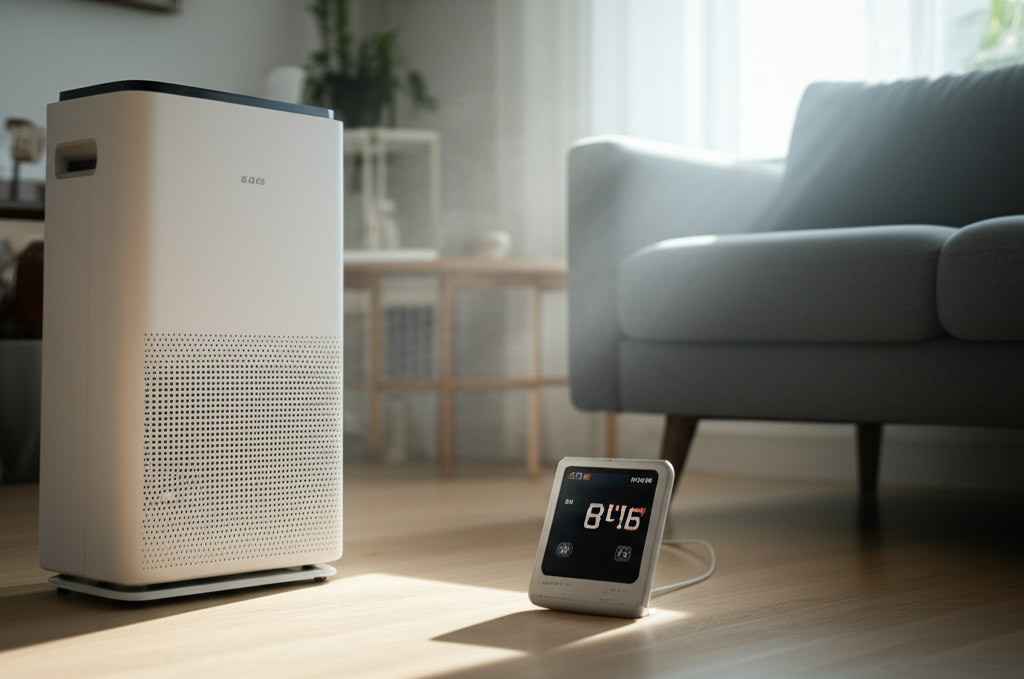
While an air purifier can help circulate air in a humid room, it won’t reduce the humidity itself. For high humidity, a dehumidifier is necessary.
Q2: Will an air purifier make my basement less damp?
No, an air purifier will not make your basement less damp. Its filters are designed for particles, not water vapor. A dehumidifier is needed for damp basements.
Q3: Are there any air purifiers that also dehumidify?
Yes, some advanced air treatment systems combine air purification and dehumidification. However, they are typically more expensive and may not be as powerful as dedicated units.
Q4: How can I tell if I need a dehumidifier?
Signs include condensation on windows, musty smells, visible mold, peeling wallpaper, or a consistently damp feeling in the air.
Q5: Can a dehumidifier improve my air quality?
Yes, by reducing moisture, dehumidifiers can help prevent mold and dust mite growth, which are common allergens and can negatively impact air quality.
Q6: What is the ideal humidity level for my home?
The ideal relative humidity level for most homes is between 30% and 50%.
Key Takeaway: These FAQs address common concerns about the capabilities of air purifiers and dehumidifiers.
Conclusion: The Right Tool for the Right Job
In summary, to answer the question, can air purifier be used as dehumidifier? The definitive answer is no. Air purifiers and dehumidifiers are distinct appliances with unique functions. While both contribute to a healthier home environment, they tackle different problems. An air purifier cleans the air of pollutants, while a dehumidifier removes excess moisture. Understanding this crucial difference ensures you invest in the right equipment to maintain a comfortable, healthy, and mold-free living space. Always choose the appliance that directly addresses your specific environmental concerns.
