
Best Budget Air Purifier For Large Rooms: Proven Clean Air

Find the best budget air purifier for large rooms to ensure clean, healthy air without breaking the bank. This guide covers top picks, essential features, and expert tips for maximum efficiency.
Breathing fresh, clean air in your home shouldn’t be a luxury. For those with spacious living areas, finding an effective air purifier that doesn’t cost a fortune can feel like a daunting task. Allergens, dust, pet dander, and even cooking odors can quickly make a large room feel stuffy and unhealthy. But don’t worry, I’m here to guide you through the options. We’ll explore the most effective and affordable air purifiers designed specifically for large spaces, ensuring you can achieve proven clean air.
Why Your Large Room Needs a Budget Air Purifier
Investing in a budget air purifier for large rooms is crucial for maintaining a healthy indoor environment. These devices are designed to tackle a wide range of airborne pollutants that can accumulate in expansive living areas, from dust and pollen to smoke and VOCs. A good air purifier can significantly improve air quality, offering relief to allergy sufferers and creating a more comfortable living space for everyone.
Large rooms, by their nature, have more air volume to circulate and purify. This means a standard, small-room air purifier will struggle to be effective, leaving you with compromised air quality. A dedicated unit for your living room, open-plan kitchen, or master bedroom is essential for truly clean air.
Understanding Air Purifier Basics for Large Spaces
Before diving into specific models, it’s important to understand a few key concepts that make an air purifier effective for large rooms. These include CADR ratings, coverage area, and filter types. Knowing these will help you make an informed decision when selecting the best budget air purifier for large rooms.
What is CADR?
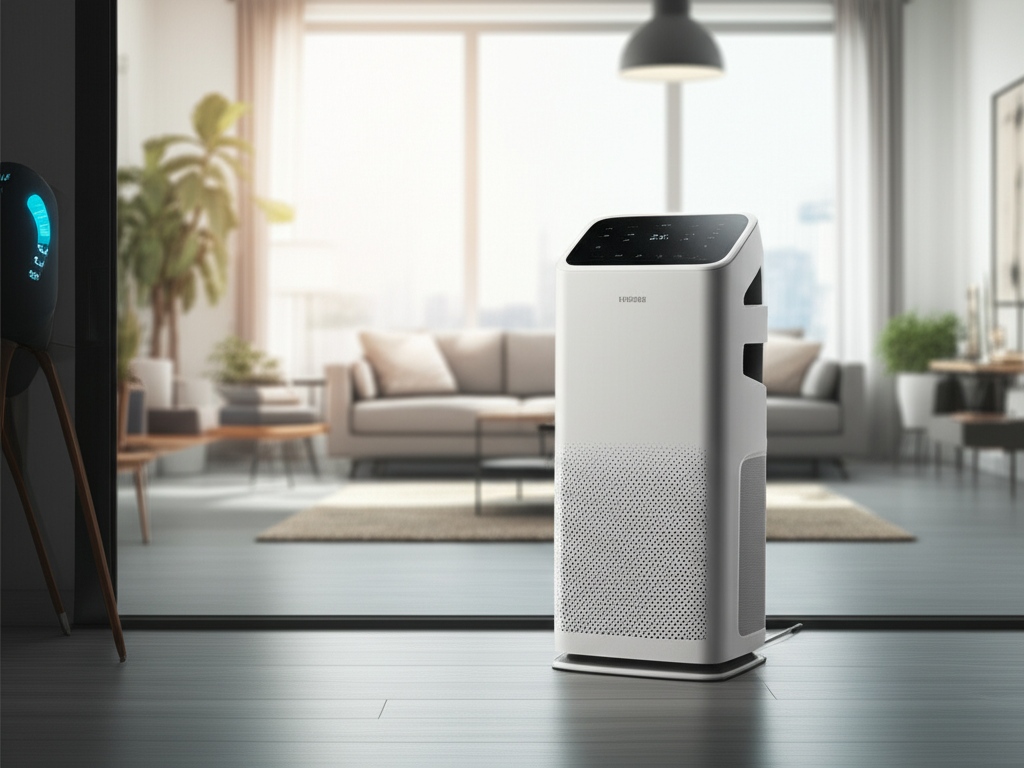
CADR, or Clean Air Delivery Rate, is a standardized measure of how quickly an air purifier can clean the air in a room. It’s measured for three common pollutants: dust, pollen, and smoke. Higher CADR ratings indicate a more powerful and efficient unit, essential for tackling the air volume in large rooms.
Room Coverage Area: The Crucial Metric
Air purifiers are rated for specific room sizes, usually in square feet. For large rooms, you’ll need a unit with a coverage area that matches or exceeds your room’s dimensions. Overestimating is better than underestimating to ensure effective purification throughout the entire space.
Types of Air Purifier Filters Explained
Most effective air purifiers use a multi-stage filtration system. This typically includes a pre-filter for larger particles, an activated carbon filter for odors and gases, and a HEPA filter for fine particles like allergens and dust. Some may also include UV-C light or ionizers, though these can sometimes produce ozone.
Top Picks: Best Budget Air Purifier for Large Rooms
Finding a balance between performance and price is key when looking for the best budget air purifier for large rooms. I’ve researched several options that offer excellent value, combining robust features with affordability. These models are known for their effectiveness in larger spaces.
Levoit Core 300S: A Compact Powerhouse for Medium-to-Large Spaces
While often marketed for medium rooms, the Levoit Core 300S, with its strong performance and quiet operation, can be a surprisingly effective budget option for smaller large rooms or open-plan areas. Its 3-stage filtration system, including a True HEPA filter, captures 99.97% of airborne particles as small as 0.3 microns. Its smart features, like app control and voice commands, add convenience without a hefty price tag.
Coway Airmega AP-1512HH Mighty: Proven Performance on a Budget
The Coway Airmega AP-1512HH Mighty is consistently praised for its excellent performance-to-price ratio. It boasts a robust 4-stage filtration system, including a True HEPA filter and an activated carbon filter, making it highly effective against pollutants. Its automatic mode, driven by an air quality sensor, adjusts fan speed as needed, ensuring efficient operation and proven clean air in rooms up to 361 sq ft, making it a strong contender for many large rooms.
Winix 5500-2: A Feature-Rich Option for Larger Areas
The Winix 5500-2 is a popular choice for its comprehensive filtration and smart features at an accessible price point. It includes a True HEPA filter, an activated carbon filter, and PlasmaWave technology (which can be turned off if preferred). With a coverage area suitable for medium to large rooms (up to 360 sq ft), it effectively tackles allergens, odors, and other common indoor pollutants, making it a great budget air purifier for large rooms.
Blueair Blue Pure 211+ Auto: Stylish and Effective for Open Spaces
For those seeking a blend of aesthetics and performance, the Blueair Blue Pure 211+ Auto is an excellent option. It features a unique, washable fabric pre-filter and a combination particle and activated carbon filter. Its high CADR and coverage area (up to 540 sq ft) make it ideal for very large rooms or open-concept living spaces. The “Auto” model includes an air quality sensor for intelligent operation, offering proven clean air with minimal fuss.
Key Features to Look for in a Budget Air Purifier for Large Rooms
When selecting the best budget air purifier for large rooms, prioritize certain features to ensure you’re getting the most bang for your buck. These elements directly impact the purifier’s effectiveness and your user experience. Focusing on these will lead you to a reliable and efficient unit.
True HEPA Filtration: Non-Negotiable
A True HEPA filter is essential. It’s certified to capture at least 99.97% of airborne particles 0.3 microns in size, including dust mites, pet dander, pollen, and mold spores. Don’t settle for “HEPA-type” or “HEPA-like” filters, as they are not as effective.
Activated Carbon for Odor and Gas Removal
For tackling cooking smells, pet odors, smoke, and volatile organic compounds (VOCs), an activated carbon filter is crucial. The more carbon content, the better it will be at absorbing these gaseous pollutants. Look for purifiers with a substantial amount of carbon for effective odor control in large spaces.
Adequate CADR for Your Room Size
Ensure the CADR ratings for dust, pollen, and smoke are high enough for your room size. A general rule of thumb is to look for a CADR that is at least two-thirds of the room’s square footage for effective air changes per hour. For example, a 400 sq ft room would benefit from a CADR of at least 260.
Low Noise Levels and Energy Efficiency
Since you’ll likely run the purifier for extended periods in a large room, low noise levels are important for comfort. Energy efficiency is also key to keeping electricity bills down. Look for Energy Star certified models when possible.
Setting Up Your Air Purifier for Maximum Efficiency
Proper placement and maintenance are vital for ensuring your best budget air purifier for large rooms operates at peak performance. Even the most powerful unit won’t be effective if it’s not set up correctly or if its filters are clogged. Follow these steps for optimal results.
Optimal Placement Strategies
Place your air purifier in a location where it can freely circulate air. Avoid corners, behind furniture, or near curtains that can obstruct airflow. Placing it in a central location or where air circulation is most needed (e.g., near a pet area or cooking zone) can enhance its effectiveness.
Understanding Air Changes Per Hour (ACH)
Air changes per hour (ACH) indicate how many times the air in a room is completely filtered in one hour. For general air purification, 2-3 ACH is usually sufficient. For allergy or asthma sufferers, aim for 4-5 ACH. Ensure the purifier’s specifications meet your needs for the size of your room.
Regular Filter Maintenance is Key
Filters need to be cleaned or replaced regularly according to the manufacturer’s instructions. A clogged pre-filter can reduce airflow, while a saturated HEPA or carbon filter will lose its effectiveness. This is crucial for maintaining proven clean air and extending the life of your unit.
Budget Air Purifier Features to Be Wary Of
While many budget air purifiers offer great value, some features might be compromises or even detrimental to your health. Being aware of these can help you avoid making a purchase that doesn’t deliver on its promise of clean air. It’s important to distinguish between beneficial features and marketing gimmicks.
Ozone-Generating Technologies (Ionizers, UV-C)
While some ionizers and UV-C lights can help neutralize pollutants, they can also produce ozone as a byproduct. Ozone is a lung irritant and can worsen respiratory conditions. If your budget air purifier for large rooms includes these, ensure there’s an option to disable them or that they are certified as ozone-free.
Overly Complicated Smart Features
While smart features can be convenient, overly complex apps or connectivity issues can be frustrating. For a budget option, focus on core purification performance rather than advanced, potentially unreliable smart capabilities. Simple, effective purification should be the priority.
Misleading Coverage Area Claims
Be skeptical of claims that an air purifier can cover an extremely large area with very low CADR ratings. Always cross-reference the stated coverage area with the unit’s CADR and consider the number of air changes per hour it can achieve in your specific room size.
Comparing Top Budget Air Purifiers for Large Rooms: A Quick Look
Here’s a simplified comparison to help you visualize the strengths of some of the best budget air purifier for large rooms options I’ve highlighted. This table focuses on key specifications relevant to large spaces.
| Model | Room Coverage (Sq Ft) | True HEPA Filter | Activated Carbon Filter | Key Feature | Approx. Price Range |
|---|---|---|---|---|---|
| Levoit Core 300S | ~219 | Yes | Yes | Smart Controls, Quiet | $100 – $150 |
| Coway Airmega AP-1512HH | ~361 | Yes | Yes | Auto Mode, Air Sensor | $150 – $200 |
| Winix 5500-2 | ~360 | Yes | Yes | PlasmaWave (Optional), Auto Mode | $150 – $200 |
| Blueair Blue Pure 211+ Auto | ~540 | Yes | Yes (Combined) | High CADR, Washable Pre-filter | $250 – $300 |
Remember that prices can fluctuate, and this table is a general guide. Always check current pricing and detailed specifications before making a purchase decision.
Long-Term Costs and Maintenance Considerations
When buying the best budget air purifier for large rooms, it’s important to look beyond the initial purchase price. The ongoing costs of filter replacements and energy consumption can add up over time. Understanding these factors will help you choose a unit that is truly economical in the long run.
Filter Replacement Costs
Replacement filters are the most significant ongoing expense. HEPA filters typically need replacing every 6-12 months, and carbon filters may need replacing more frequently depending on your air quality. Research the cost and availability of replacement filters for any model you consider.
Energy Consumption
Most air purifiers use between 20-100 watts, depending on the fan speed. Energy Star certified models are designed for greater efficiency. Running your air purifier 24/7 on a lower setting will significantly impact your electricity bill, so choose a unit that balances performance with energy efficiency.
Warranty and Durability
A longer warranty period can indicate a manufacturer’s confidence in their product’s durability. Most budget air purifiers come with a 1-2 year warranty. Checking user reviews for common issues or premature failures can also provide insight into long-term reliability.
When to Consider a Slightly Higher Budget
While this guide focuses on budget-friendly options, there are times when stretching your budget slightly can yield significant improvements in performance and longevity. If you have severe allergies, live in an area with very poor air quality, or have an exceptionally large open-plan space, a small investment increase might be worthwhile.
For Severe Allergies or Asthma
If you or someone in your household suffers from severe allergies or asthma, investing in a unit with a higher CADR and more advanced filtration might be necessary. These units can provide more air changes per hour and capture even finer particles, offering greater relief. Check out reputable sources like the EPA’s guidance on air cleaners for more information.
For Very Large Open-Concept Spaces
For sprawling open-concept homes, a single budget air purifier might not be enough. You might need a unit with an exceptionally high CADR or consider purchasing two units to cover the entire area effectively. This is where looking at slightly higher-tier models or commercial-grade options might become necessary.
Investing in Long-Term Air Quality
Sometimes, spending a little more upfront on a well-regarded brand or a model known for its durability can save you money in the long run by avoiding frequent replacements or costly repairs. Prioritizing proven clean air technology from trusted manufacturers can be a smart long-term investment.
Frequently Asked Questions (FAQ)
Can a budget air purifier really work for a large room?
Yes, many budget air purifiers are designed with sufficient CADR ratings and coverage areas to effectively clean the air in large rooms. The key is to match the purifier’s specifications to your room’s size and your specific air quality needs.
How often should I replace the filters in my air purifier?
Filter replacement frequency depends on the model and your air quality. Generally, True HEPA filters should be replaced every 6-12 months, and activated carbon filters may need replacement every 3-6 months. Always follow the manufacturer’s recommendations.
What does “True HEPA” mean?
“True HEPA” filters are certified to capture at least 99.97% of airborne particles 0.3 microns in size. This is the standard you should look for to effectively remove allergens, dust, and other fine pollutants.
Is it better to have one large air purifier or two smaller ones for a big room?
For very large or open-concept rooms, two appropriately sized air purifiers placed strategically can sometimes provide more even air purification than a single, overpowered unit. However, a single high-CADR unit designed for large spaces can also be very effective.
What’s the difference between an air purifier and an air filter?
An air filter is a component within a larger system (like an HVAC unit) that traps particles. An air purifier is a standalone appliance that actively draws in air, filters it, and releases clean air back into the room, often using multiple stages of filtration.
Do air purifiers use a lot of electricity?
Modern air purifiers, especially Energy Star certified models, are quite energy-efficient. They typically consume between 20-100 watts, similar to a light bulb, making them affordable to run continuously on lower settings.
Conclusion: Achieving Proven Clean Air on a Budget
Finding the best budget air purifier for large rooms is entirely achievable with the right knowledge. By understanding CADR, room coverage, and essential filter types like True HEPA and activated carbon, you can confidently select a unit that delivers proven clean air without overspending. Prioritize models like the Coway Airmega AP-1512HH Mighty, Winix 5500-2, or Blueair Blue Pure 211+ Auto for their excellent balance of performance, features, and affordability in larger spaces. Remember to consider ongoing costs like filter replacements and energy usage to ensure your choice remains economical long-term. With these insights, you can transform your large room into a healthier, fresher environment for you and your family.
