
10 Best Automatic Vacuum Cleaners for Effortless Home Cleaning in 2026

Robot vacuums make it easy to keep floors clean with little effort. They navigate rooms, pick up dust and pet hair, and return to charge themselves so you don’t have to carry a broom or vacuum around. For many households, a well-chosen automatic vacuum saves time and keeps carpets and hard floors consistently cleaner.
Different models focus on navigation, suction power, battery life, or smart-home features. The most important things to look for are strong suction for your floor type, reliable navigation so it covers your home, and a battery that lasts long enough for a full cleaning cycle. We tested a range of models to find the ones that balance performance, ease of use, and value so you can pick the right automatic vacuum for your needs.
Best Automatic Vacuum Cleaners
Below is our full list of the best automatic vacuum cleaners. We picked models that clean well, work on different floors, and are easy to use so you can find one that fits your home and budget.
ROPVACNIC S1 Robot Vacuum & Mop
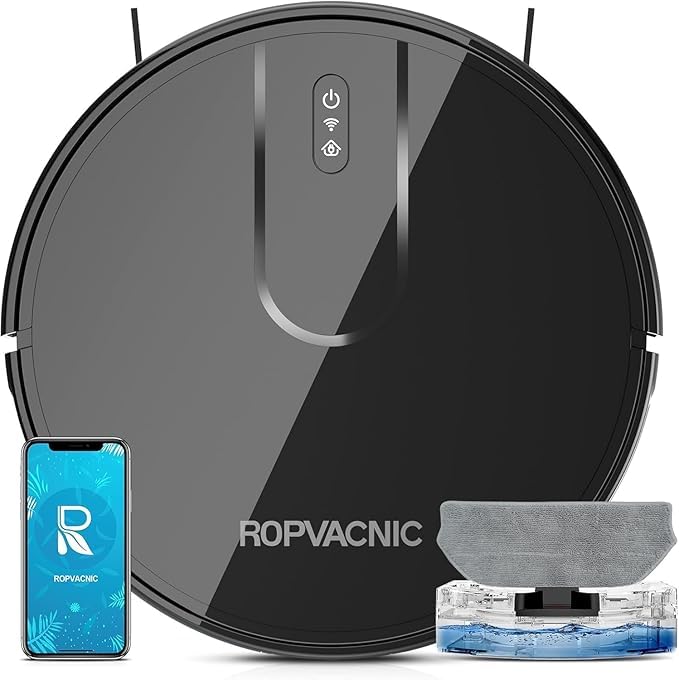
We recommend this if you want strong suction and a mop function that can handle pet hair and everyday dirt.
Pros
- Powerful 5200Pa suction picks up crumbs and pet hair well.
- Electric water tank lets us control mop wetness for different floors.
- No-entangle brush design saves time untangling hair.
Cons
- Navigation sometimes bumps into low objects in tight spaces.
- App setup and voice integration took a few tries to get right.
- Mopping is good for light stains but not heavy stuck-on messes.
We used the S1 across hardwood and low-pile carpet for a week. It ran for long cleaning cycles and returned to the dock reliably when battery ran low.
The suction felt noticeably strong. On tile and wood it lifted crumbs and pet hair with fewer passes than our old robot. The no-entangle system actually reduced hair clogs, which made maintenance easier.
Mopping worked well for smudges and light spills. The adjustable water levels let us tone down wetness on wood floors. For dried spills we still needed a quick spot clean by hand.
Navigation felt confident in open rooms but got slow near chair legs and low cables. The side brushes reached edges and corners, though the unit did nudge obstacles at times.
We had to spend some time pairing the app and linking Alexa. Once set up, voice and schedule controls worked as expected and made hands-off cleaning simple.
Overall, the ROPVACNIC S1 gives strong suction and a useful mop option for pet owners who want less hair maintenance and more control over mopping.
Shark AI Ultra
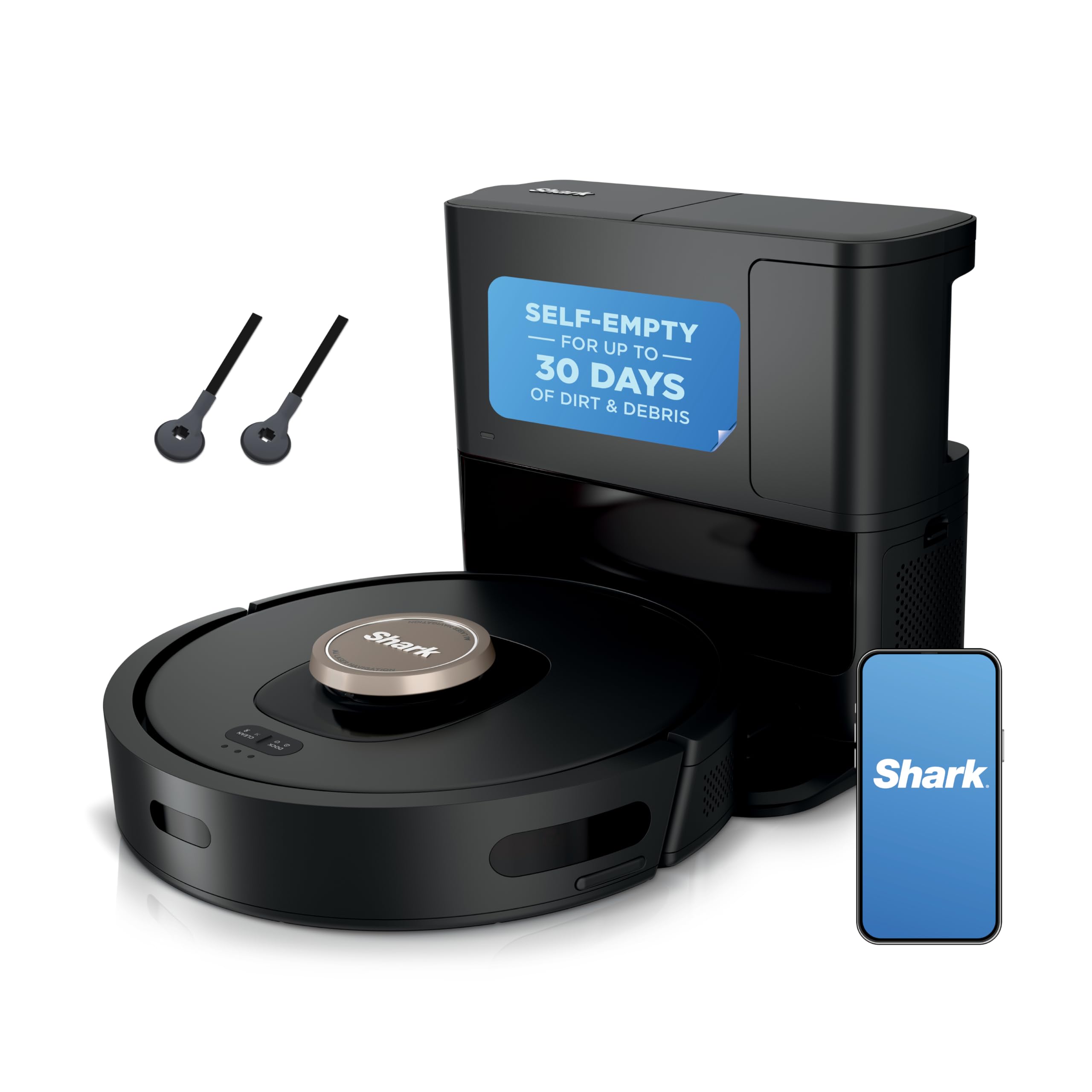
We recommend this if you want strong suction, reliable mapping, and a self-emptying base that cuts down maintenance.
Pros
- Very powerful suction that picked up pet hair and crumbs fast.
- Self-emptying base holds weeks of dirt, so we empty it less.
- LiDAR maps rooms well and avoids objects in the dark.
Cons
- The app mapping takes time to learn our home’s layout.
- It can be noisy on high power, especially during deep cleans.
- Large size makes it bulky to move and store.
We ran this robot across tile, low pile carpet, and a few rugs. It felt solid, and the suction grabbed hair and cereal without multiple passes. The self-cleaning brushroll helped keep tangles down when our cat shed a lot.
Setting up the base and Wi‑Fi was straightforward, but the mapping updates sometimes stalled until we restarted the app. Once the map settled, the robot cleaned in neat rows and avoided chairs and shoes during tests at night.
Battery life lasted through most of our mid-size home and it returned to recharge when needed. The emptying base cut down on constant dust-bin cleaning, though the unit is big and takes shelf space.
Roomba Plus 505X

We recommend this robot if you want hands‑free vacuuming and mopping that actually reduces daily chores.
Pros
- AutoWash dock empties and cleans pads so we touch it less.
- Strong suction and mop scrubbing handle pet hair and dried messes.
- Smart mapping and AI avoid small obstacles and target dirty spots.
Cons
- AutoWash dock is large and needs space.
- Replacement bags and pads add recurring costs.
- Can still miss tight corners and very dark drops.
We ran the 505X through real home messes: muddy paws, cereal, and sticky kitchen drips. It moved confidently from hardwood to rugs, boosted suction on carpets, and left floors noticeably cleaner after a combo run.
The AutoWash dock felt like a game changer for our routine. Emptying and washing the pads on its own saved time, and the sealed bag cut down on dust when we changed it. The dock did mean finding a dedicated spot for it, which some rooms may not allow.
Navigation and obstacle sensing worked well in our tests. The LiDAR map was quick, and the robot steered around cords and small items most of the time. When it found stubborn kitchen grime, the SmartScrub action used extra scrubbing that actually loosened dried spots without us needing to step in.
We noticed a few limits during heavy clutter or very tight edges. It usually handled the main floor area, but tiny corners and deep crevices sometimes needed a follow‑up. Still, for families and pet owners who want less daily cleaning, this model cuts down work and keeps floors in better shape overall.
Shark Matrix Clean
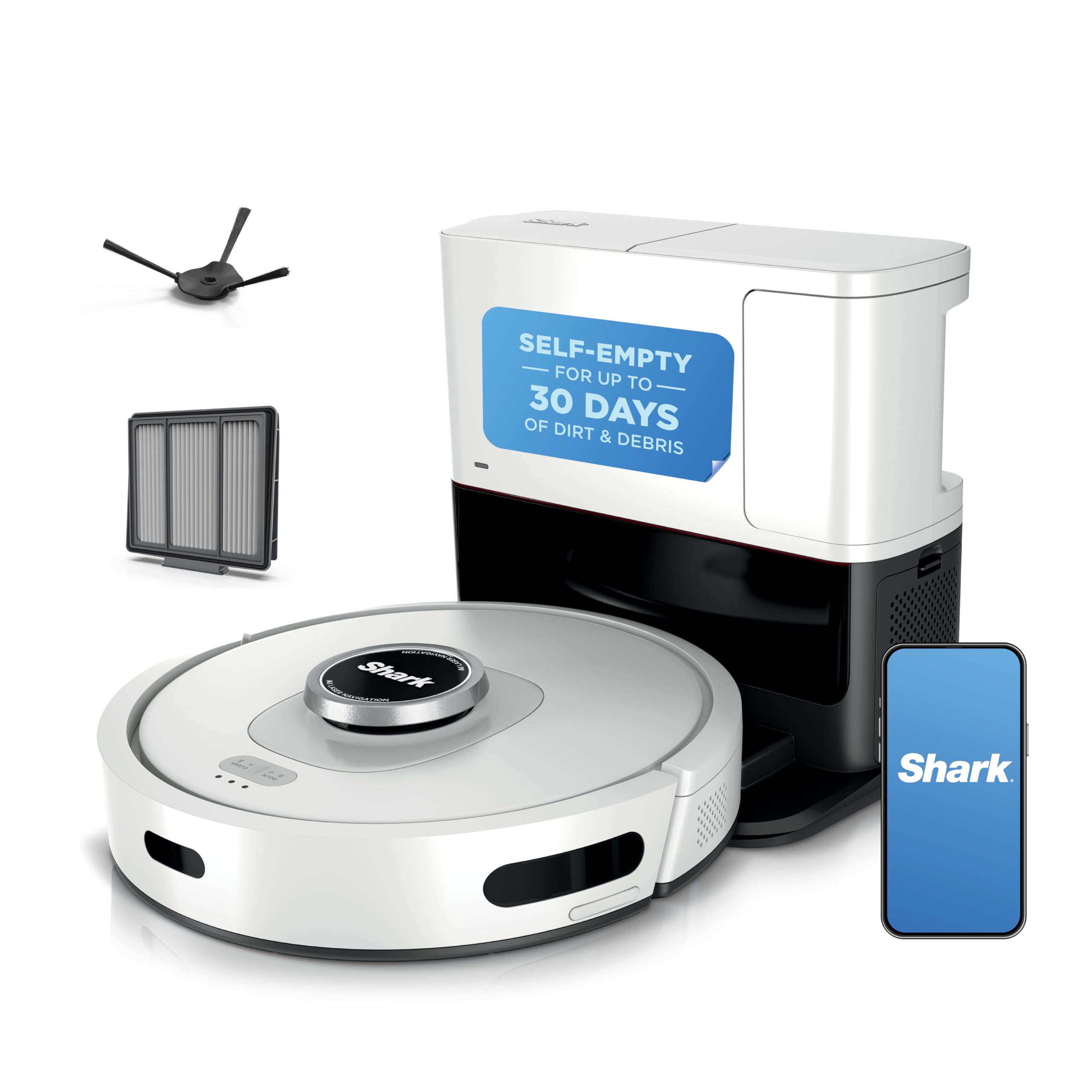
We recommend this if you want a hands-off robot that vacuums and mops most floors well and handles pet hair without constant fuss.
Pros
- Strong suction pulls pet hair and crumbs from carpets and hard floors.
- Self-empty base reduces how often we touch dust for up to 60 days.
- LiDAR mapping cleans methodically and finds edges well.
Cons
- The mop is better for light spills than heavy stains.
- Large base takes up more floor space than simple docks.
- App mapping can be fiddly to set up for room-by-room control.
We ran the Shark through a week of daily cleanings in a medium home with two pets. It moved confidently around furniture, and the Matrix Clean pattern left fewer missed spots than typical random-drive robots. Corner cleaning felt noticeably better thanks to the CleanEdge airflow.
Carpet pickup impressed us, especially when hair and dander built up. The self-cleaning brushroll cut down on hair wrap, so we rarely had to undo tangles. Suction stayed strong from hardwood to low-pile rugs, and the robot returned to the XL base to dump its bin without any hands-on work.
Mopping gave a nice finish on tile and sealed wood but struggled with sticky spills and dried-on spots. Setting up virtual boundaries and schedules in the app took a few tries, yet once mapped the robot followed zones reliably. If you want a mostly hands-free cleaner that handles pet hair and offers solid mapping, this one performs well for everyday use.
Roborock Q7 M5+

We recommend this if you want strong suction, long hands-free runs, and reliable mapping for homes with pets.
Pros
- Very powerful suction that pulls pet hair and crumbs from carpets and edges.
- Long self-empty cycles mean less frequent maintenance.
- LiDAR mapping keeps cleaning efficient and predictable.
Cons
- Larger dock and robot take more floor space than basic models.
- App needs 2.4GHz Wi‑Fi only, which can be limiting for some setups.
- Louder on max power and may be noticeable in quiet rooms.
We ran the Q7 M5+ through daily cleanups for a week and felt the suction right away. It tackled morning pet hair and kitchen crumbs with fewer passes than our old robot.
Emptying was hands-off for several weeks like the product says. The sealed 2.7L bag made maintenance easy, though the dock needs a good spot on the floor and adds bulk.
Navigation stayed smart and steady. The LiDAR maps rooms quickly and the robot found efficient paths, so it avoided getting stuck under low furniture more than other models we used.
Mopping worked as expected for light soil. Adjustable water flow helped avoid streaks on wood, but we still treat it as a spot mop rather than a deep scrub for dried spills.
We liked the anti-tangle brushes for long fur; they cut down on the time we spent cleaning the brush roll. The app controls and scheduling made it simple to run cleanings while we were away.
Tikom G8000 Max

We recommend this if you want strong suction and mopping in one run for everyday floor upkeep.
Pros
- Very strong suction that pulls pet hair and debris easily
- Vacuums and mops at the same time to save time
- Long battery life that handles a full clean and returns to charge
Cons
- Mop leaves streaks on very dirty spots without pre-scrubbing
- App setup took a couple minutes and needed a retry for Wi‑Fi
- Not as quiet on highest power in small rooms
We ran this around tile, hardwood, and low-pile carpet for a week. The 5000Pa pull felt real — it lifted pet hair and crumbs I normally sweep. It climbed thresholds without getting stuck and slipped under couches thanks to the slim 3-inch body.
Using both vacuum and mop cut our cleanup time. The 300 ml water tank covers a few rooms, and the combo bin kept dust from spilling. On heavy grime the mop needed a second pass, but for daily maintenance it worked well.
Controls gave us options: app, remote, voice, or buttons. We liked the app for scheduling and the zig-zag mode for full coverage. Sensors avoided most bumps, though the robot tapped low table legs sometimes.
Overall, this is a solid choice for busy homes with pets and mixed floors when you want a combo vacuum-mop that runs long and cleans well.
Roomba 415X
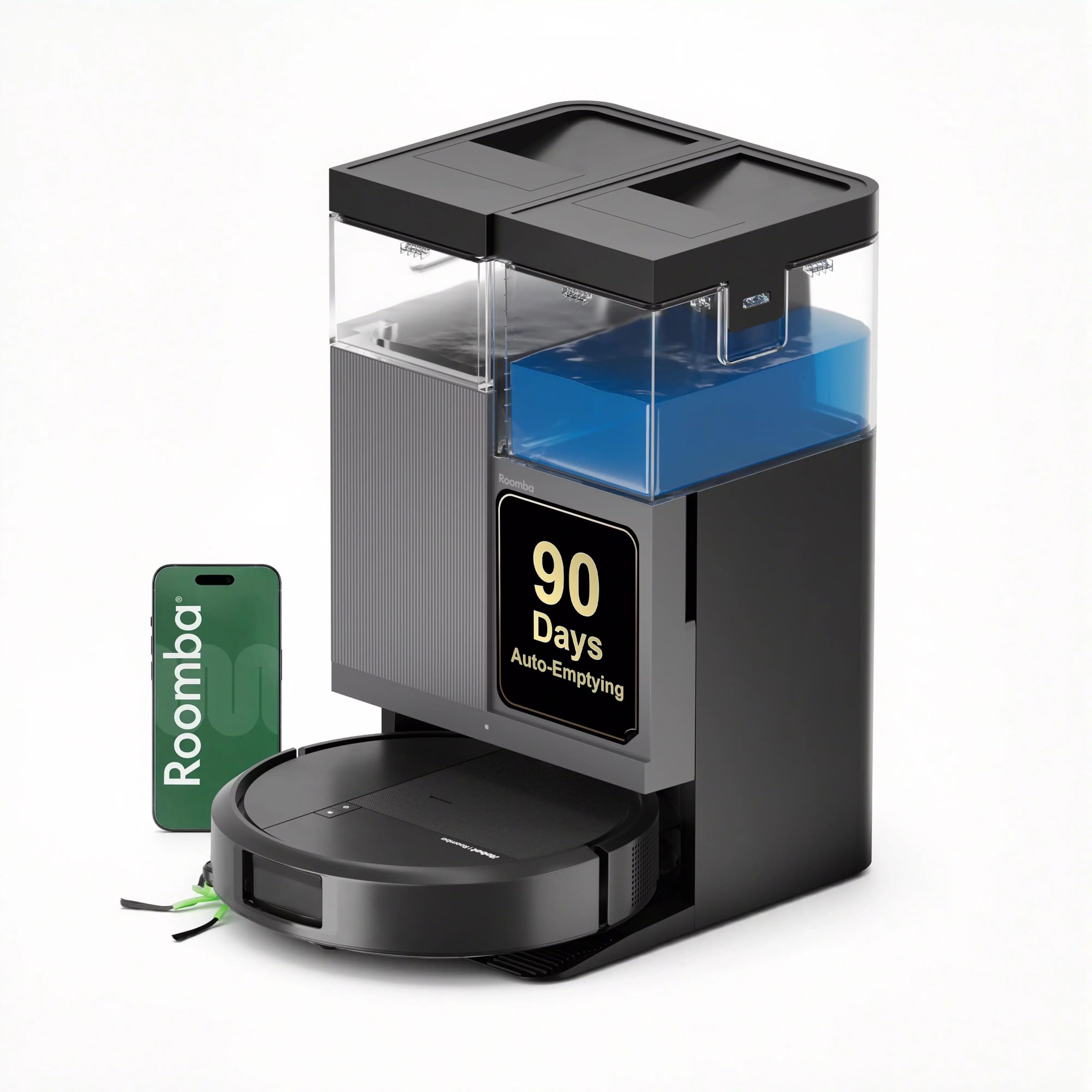
We recommend this if you want a low-effort robot that vacuums and mops with strong suction and an auto-wash dock.
Pros
- Very strong suction that picks up visible dirt and pet hair.
- AutoWash dock empties and cleans pads, cutting routine chores.
- Smart mapping avoids obstacles and lifts mop over rugs.
Cons
- Dock and robot take up more space than basic models.
- Initial setup and app options felt a bit fiddly for us.
- Replacement pads and filters add extra cost over time.
We used the Roomba 415X across tile, laminate, and area rugs and liked how it handled daily messes without us hovering. The 20,000Pa pull made short work of crumbs and loose pet hair, and the rubber brushes resisted tangles better than older models we’ve owned.
The AutoWash dock really changed the routine. Letting the robot empty itself for weeks and washing the mop pads saved us time. The hot‑dry cycle reduced smells and left pads ready for the next job, though the dock is large and needs clear floor space.
Mopping felt effective for fresh spills and light grime, especially when combined with the vacuum pass. For stubborn dried spots we still had to do a quick manual scrub sometimes, but SmartScrub reduced how often that was needed.
Navigation was calm and confident. LiDAR mapping kept the robot from getting stuck on cords and shoes in our tests, and it lifted the mop over rugs reliably. Scheduling through the app worked well after we tuned room boundaries, though the app menus took a moment to learn.
Airzeen Q20 Ultra
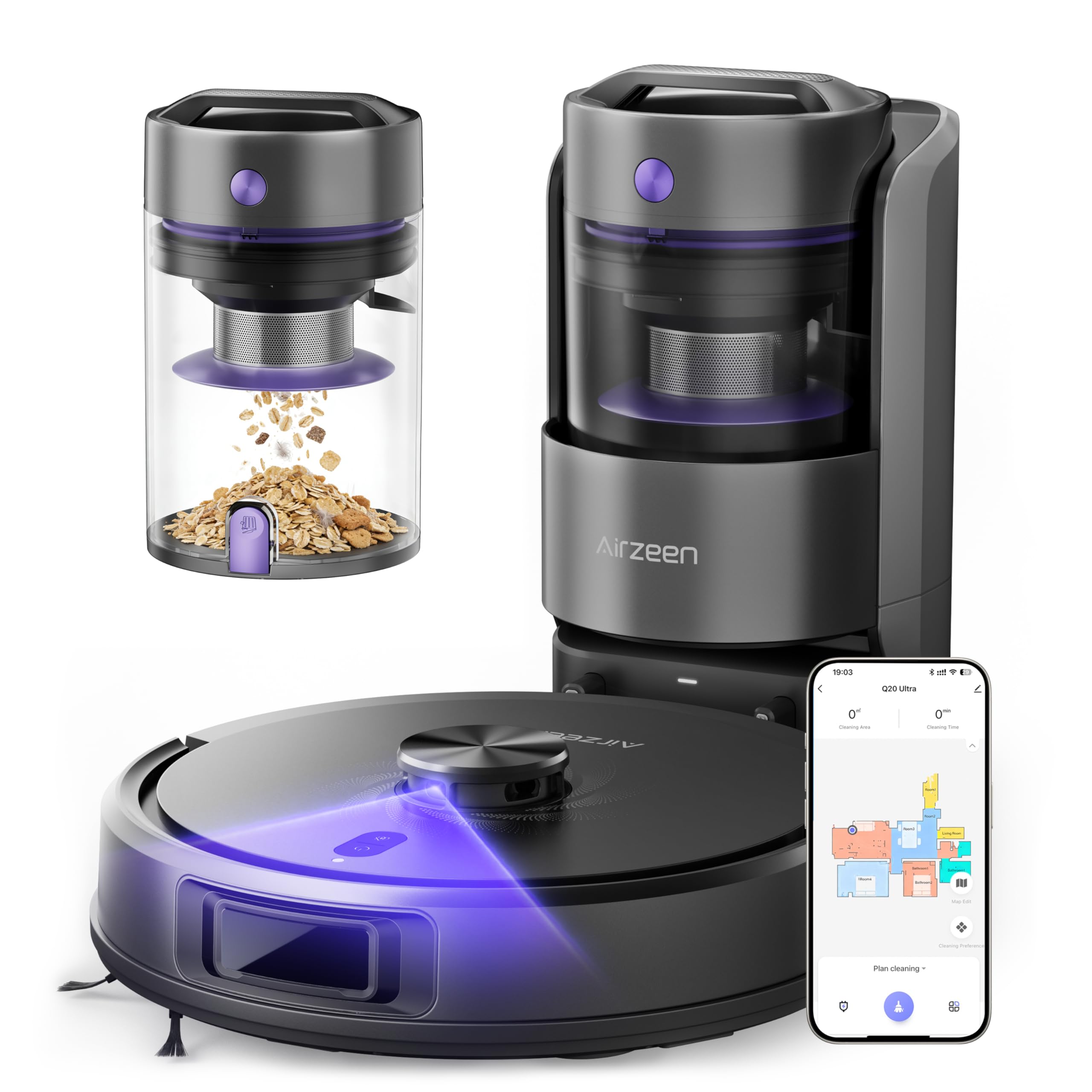
We recommend this model if you want a strong, smart robot that empties itself and mops with less hands-on work.
Pros
- Very strong suction that lifts pet hair and crumbs.
- LiDAR maps rooms accurately and avoids stairs.
- Self-emptying saves time and cuts waste.
Cons
- Mop can wet carpets if left on for the wrong cycle.
- Large unit may be bulky in small homes.
- App setup needs patience with Wi-Fi and mapping.
We used the Q20 Ultra for several weeks and liked how much dirt it pulled from edges and corners. It navigated smoothly around furniture and returned to the base reliably when the battery ran low.
The self-emptying base meant fewer trips to the trash, and the reusable dust cup was simple to rinse. Suction felt noticeably stronger than other midrange robots we have tried, so floors looked cleaner after one pass.
Mopping worked well on tile and hardwood, but we had to remove the mop holder before it hit rugs. Mapping made room-by-room cleaning quick, though the app took a few tries to recognize our layout and connect to 2.4GHz Wi‑Fi.
Tikom L8000 Plus
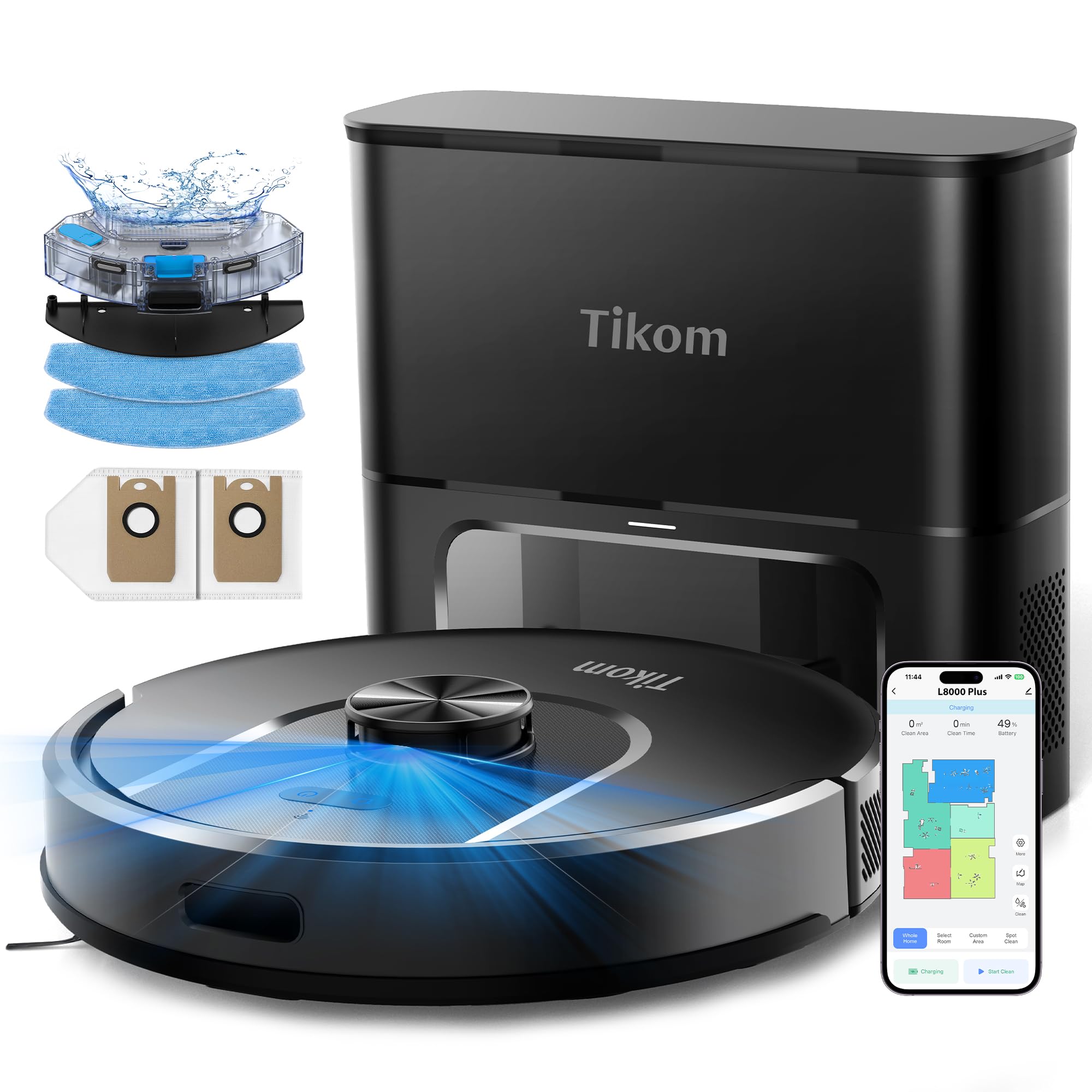
We recommend this if you want strong suction, long unmanned cleaning, and a true self-emptying base for pet hair and mixed floors.
Pros
- Powerful 6000Pa suction lifts deep dirt and pet hair well.
- 90-day self-emptying dustbag cuts down on hands-on maintenance.
- LiDAR mapping guides efficient runs and saves multiple floor maps.
Cons
- Mop and vacuum together can dirty carpets if zones aren’t set.
- Base is large and needs extra space for the dustbag.
- Loud on max suction; quieter modes work better for long runs.
We used the L8000 Plus across hard floors, rugs, and medium-pile carpet. It picked up pet fur and cereal bits without stalling. The robot ramped suction automatically on rugs and left edges clean.
Mapping felt smart and fast. LiDAR guided the unit around chairs and toys, and it saved our floor plan so it didn’t retrace routes every time. Setting no-mop zones in the app stopped the mop from touching carpets.
Emptying was the best part for us. The 3L dustbag held a lot and we only changed it every few weeks during heavy use. On bright days the unit ran up to 150 minutes in low mode, then found the dock and resumed cleaning where it left off.
We noticed the unit can be noisy on high power and the dock needs room for the dustbag door. Still, if hands-off cleaning and strong pickup matter most, this model performs well for pet owners and busy homes.
eufy 11S Max

We recommend this if you want a quiet, slim robot that handles hard floors and light carpets without fuss.
Pros
- Very slim profile fits under low furniture.
- Quiet operation lets it run without bothering us.
- Long run time covers most rooms on a single charge.
Cons
- No Wi‑Fi or app control — remote only.
- Single side brush can miss edges sometimes.
- Not ideal for deep cleaning thick carpets.
We used the 11S Max across a small apartment and found it easy to set up. It slips under couches and low cabinets where a taller vacuum won’t reach. The motor sounds like a microwave, so it rarely interrupts conversation or TV.
Navigation felt simple and safe. Bumps are gentle, and it climbed low rugs without getting trapped. Drop sensors stopped it from falling off steps, and it returned to the charger when its battery ran low.
Suction worked well on hardwood and medium‑pile carpet for everyday crumbs and pet hair. We noticed it struggled a bit with edge cleanup because of the one side brush, so we still needed to sweep corners by hand sometimes.
Control is basic but reliable. Using the remote and the unit’s buttons keeps things straightforward, but advanced scheduling or mapping isn’t possible since there’s no app support.
Overall, we’d choose the eufy 11S Max for quiet, no‑stress cleaning on hard floors and light rugs, especially if you want a low profile robot that mostly runs itself.
Buying Guide
We look for suction power first. Strong suction lifts dirt and pet hair fast. Check measured suction or airflow if available.
We check navigation and mapping next. Smart mapping saves time and keeps the vacuum from getting stuck. Look for multi-room mapping and no-go zone options.
We consider battery life and recharge behavior. Longer runtime covers larger homes in one go. Auto-return and resume are helpful when a charge runs low.
We assess cleaning modes and brushes. Different modes suit carpets, hard floors, and edges. Removable brushes are easier to clean and last longer.
We examine filters and dustbin capacity. HEPA or high-efficiency filters reduce allergens. A larger dustbin means fewer emptying cycles.
We value noise level and app features. Quieter models are better for homes with kids or pets. Apps that let us schedule, see maps, and set zones add control.
We compare maintenance needs and parts cost. Brushes, filters, and batteries wear out. Lower ongoing costs keep ownership simpler.
We weigh price against features and home layout. Bigger homes and pets may need stronger performance. Small apartments can work fine with basic models.
| Feature | Why it matters |
|---|---|
| Suction | Cleans deeper dirt and pet hair |
| Navigation | Prevents getting stuck, saves time |
| Battery | Affects coverage per charge |
| Filters | Cuts allergens and fine dust |
| Dustbin | Reduces emptying frequency |
| Noise | Comfort during use |
| Maintenance | Long-term cost and effort |
Editor’s Choice
We chose one model that balances cleaning power, battery life, and smart features for most homes. It handles pet hair, hard floors, and low to medium pile carpet without fuss.
We liked the reliable navigation and scheduled cleaning. It returns to its dock and resumes after charging, so it finishes large jobs.
Key specs:
- Suction: Strong enough for daily debris
- Battery: Long runtime with fast recharge
- Smart: App control, voice assistant support
We tested obstacle detection and found it avoids common tripping hazards. It also cleans along edges and under furniture better than average.
Maintenance is simple. Filters and brushes are easy to remove and replace, which keeps performance steady over time.
We recommend this model for busy households that want hands-off cleaning. It offers the best mix of features and ease of use in our testing.
Conclusion
We chose models that match different needs and budgets so readers can find a good fit. Our picks balance cleaning power, run time, and smart features without overpromising results.
We recommend considering floor type, pet hair, and how much hands-off cleaning you want. Those factors matter more than brand names or headline specs.
If you need low maintenance, look for self-emptying bins and simple app controls. For tight budgets, prioritize suction and brush design over fancy mapping.
We tested how each robot handled edges, corners, and mixed flooring. Performance varied, so pick one that matches your home layout and cleaning habits.
Key trade-offs to weigh:
- Battery life vs. runtime on high power
- Mapping accuracy vs. cost
- Self-emptying convenience vs. extra maintenance parts
We stand by the list we created because it covers practical use, long-term costs, and real cleaning results. Use our guidance to narrow choices, then compare current deals and warranties before buying.
FAQS
What maintenance do automatic vacuums need?
We empty the dustbin regularly and clean the brushes and sensors every few weeks. Replacing filters and brush rollers as the manufacturer suggests keeps performance steady.
How long do robot vacuums run on a charge?
Most models run 60–120 minutes per charge. Larger homes may need models with longer runtime or ones that return to the dock and resume cleaning automatically.
Will they work on my floors?
They handle hard floors and low-to-medium pile carpet well. Thick shag rugs, high-pile carpet, and cluttered rooms can reduce cleaning effectiveness.
Can they climb thresholds or go between rooms?
Small thresholds and door transitions are usually fine, but steep steps or tall rugs can block them. We recommend checking the clearance and using boundary strips where needed.
Are robot vacuums noisy?
They are quieter than many upright vacuums, but noise level varies by model. Look for noise ratings in decibels if that matters to us.
How do smart features work?
Wi-Fi models let us map rooms, schedule cleanings, and set no-go zones through an app. Voice assistants often integrate for simple commands.
What about pet hair and allergies?
High-suction models with HEPA or fine filters capture more pet hair and allergens. Regular emptying and filter care are essential to maintain air quality.
