
Best Air Purifier for Medium Room: Essential Guide

Find the best air purifier for medium room to breathe cleaner air. This guide covers key features, types, and top picks to help you choose wisely for your space, ensuring a healthier home environment.
The air in our homes can feel surprisingly stale, carrying dust, allergens, and even odors that impact our well-being. Finding the best air purifier for a medium room is crucial for creating a healthier living space. Many factors can affect indoor air quality, from pets and cooking to outdoor pollution seeping in. I’m here to guide you through the process, breaking down what truly matters when selecting an air purifier so you can breathe easy.
What Makes an Air Purifier Ideal for a Medium Room?
The best air purifier for a medium room effectively cleans the air in spaces typically ranging from 150 to 350 square feet. Key considerations include its Clean Air Delivery Rate (CADR), room coverage area, and filtration technology. A unit that’s too small won’t adequately purify the air, while one that’s oversized might be unnecessarily noisy and expensive. We’ll explore these critical specifications to ensure you make an informed decision for your specific needs.
Understanding Air Purifier Coverage Area and CADR
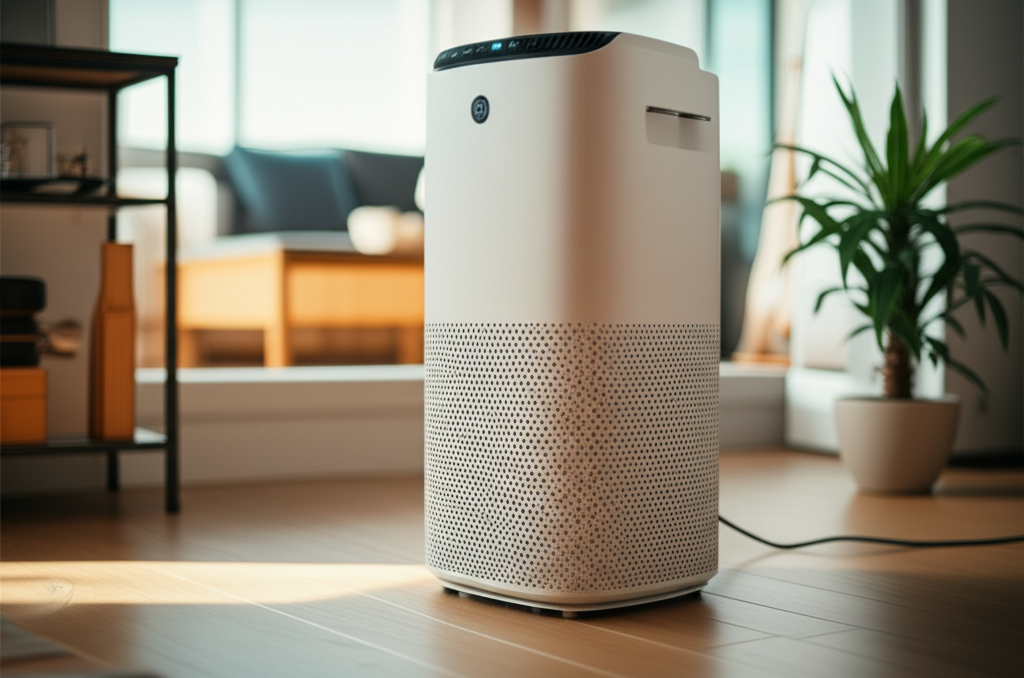
The coverage area, measured in square feet, indicates the maximum room size an air purifier can effectively handle. CADR ratings, on the other hand, measure how quickly an air purifier can remove specific pollutants like smoke, dust, and pollen. For a medium room, look for a CADR of at least 200 for smoke, dust, and pollen. Higher CADR ratings mean faster air cleaning.
A higher CADR rating ensures that the air purifier can circulate and clean the air in your medium-sized room more efficiently. This is especially important if you have significant pollutant sources like pets or allergies. Always check the manufacturer’s recommended room size alongside the CADR to get a comprehensive understanding of its performance.
The Importance of HEPA Filters
High-Efficiency Particulate Air (HEPA) filters are the gold standard for capturing airborne particles. The best air purifier for a medium room will feature a True HEPA filter, capable of removing at least 99.97% of particles as small as 0.3 microns. This includes common allergens like pollen, dust mites, pet dander, and mold spores.
HEPA filters work by forcing air through a fine mesh that traps contaminants. This process is vital for individuals suffering from allergies or asthma, as it significantly reduces exposure to irritants. Beyond HEPA, many purifiers also include pre-filters and activated carbon filters for enhanced purification.
Activated Carbon Filters: Tackling Odors and VOCs
While HEPA filters excel at capturing particles, activated carbon filters are essential for addressing gases, odors, and volatile organic compounds (VOCs). These filters contain porous carbon that adsorbs, rather than absorbs, these airborne chemicals. This makes them invaluable for combating cooking smells, pet odors, cigarette smoke, and fumes from household cleaning products.
The effectiveness of an activated carbon filter depends on its density and the amount of carbon used. For persistent odors or chemical sensitivities, a thicker, high-quality carbon filter is highly recommended. It works in tandem with the HEPA filter to provide a more comprehensive air purification solution.
Pre-filters: Extending the Life of Main Filters
A pre-filter is the first line of defense, capturing larger particles like hair, lint, and large dust bunnies. This crucial layer prevents these bigger debris from reaching and clogging the more sensitive HEPA and carbon filters. By trapping these larger particles, the pre-filter significantly extends the lifespan and efficiency of the primary filters.
Most pre-filters are washable or vacuumable, making maintenance straightforward and cost-effective. Regularly cleaning or replacing the pre-filter is a simple yet highly effective way to ensure your air purifier operates at its best. This small step can save you money on replacement filters in the long run.
Top Features to Look For in a Medium Room Air Purifier
Beyond the core filtration technologies, several features can enhance your experience with the best air purifier for a medium room. These include noise levels, energy efficiency, smart capabilities, and ease of use. Prioritizing these can make a significant difference in daily operation and overall satisfaction.
Noise Levels: Finding a Peaceful Balance
Air purifiers operate using fans, which inevitably produce some noise. For a medium room, especially if it’s a bedroom or living area, noise levels are a critical consideration. Look for purifiers with a low decibel (dB) rating on their lowest setting, ideally below 50 dB, which is comparable to a quiet library. Many units also offer a sleep mode that significantly reduces fan speed and noise.
The noise level is often tied to the fan speed and the unit’s overall design. Some models are engineered for quieter operation, which is a worthwhile investment if you’re sensitive to sound. Always check reviews that specifically mention noise performance at different settings.
Energy Efficiency: Saving on Your Bills
An air purifier will likely run for extended periods, making energy efficiency an important factor. Look for models with the ENERGY STAR certification, indicating they meet strict energy efficiency guidelines set by the U.S. Environmental Protection Agency. While these units might have a slightly higher upfront cost, they can save you money on electricity bills over time.
The power consumption of an air purifier is usually measured in watts. Lower wattage ratings generally mean less energy usage. Consider how often you plan to run the purifier and factor in the long-term energy costs when making your selection.
Smart Features and Connectivity
Modern air purifiers often come equipped with smart features, such as Wi-Fi connectivity, app control, and voice assistant integration (like Amazon Alexa or Google Assistant). These allow you to monitor air quality, adjust settings, set schedules, and receive filter replacement reminders remotely. For many, these conveniences significantly enhance the user experience.
Smart features can also provide valuable insights into your home’s air quality, helping you understand what pollutants are present and how your purifier is working. This data can empower you to make informed decisions about ventilation and cleaning habits.
Ease of Use and Maintenance
A user-friendly interface and simple maintenance routine are essential for any appliance. Look for intuitive controls, clear indicator lights for filter status, and easy access to filters for cleaning or replacement. The best air purifier for a medium room should not be a hassle to operate or maintain.
Consider the weight and portability of the unit if you plan to move it between rooms. Some models come with integrated handles or wheels to aid in relocation. Simple, straightforward operation ensures you’ll consistently use the purifier to its full potential.
Types of Air Purifiers Suitable for Medium Rooms
When selecting the best air purifier for a medium room, you’ll encounter various types, each with its strengths. Understanding these differences will help you choose the technology best suited to your specific air quality concerns.
Ionizers and Ozone Production Concerns
Ionizers work by releasing negative ions into the air, which attach to airborne particles, causing them to clump together and fall to the ground or stick to surfaces. While effective at particle removal, some ionizers can produce ozone as a byproduct, which can be a lung irritant, especially for those with respiratory issues. It’s crucial to choose an ozone-free or certified low-ozone producing ionizer if you opt for this technology.
Many reputable brands offer ionizers that have been independently tested and certified to produce minimal to no harmful ozone. Always look for certifications like CARB (California Air Resources Board) compliance, which indicates adherence to strict ozone emission standards.
UV-C Light Technology
UV-C light is a germicidal technology that can kill airborne bacteria, viruses, and mold spores. When air passes through the purifier and is exposed to UV-C light, these microorganisms are neutralized. This technology is often incorporated into purifiers alongside HEPA and carbon filters, providing an extra layer of defense against biological contaminants.
It’s important to note that UV-C light’s effectiveness depends on the intensity of the light and the duration of exposure. For optimal results, ensure the UV-C component is well-integrated and has sufficient contact time with the air. This technology is best for those concerned about airborne pathogens.
Combination Air Purifiers
Many of the best air purifiers for medium rooms are combination units, integrating multiple technologies for comprehensive purification. A common and highly effective setup includes a pre-filter, a True HEPA filter, and an activated carbon filter. Some may also include UV-C light or an ionizer, offering a multi-stage approach to tackle a wide range of pollutants.
These multi-stage systems provide a holistic solution, addressing particles, odors, gases, and even microorganisms. They are often the most versatile and recommended choice for general home air purification needs. Understanding each stage’s function helps appreciate the overall purification process.
Key Factors for Choosing the Best Air Purifier for Medium Room
Selecting the right air purifier involves considering several crucial factors tailored to your specific environment and needs. The best air purifier for a medium room isn’t a one-size-fits-all solution. Let’s delve into the specifics that will guide your decision-making process.
Room Size and Air Changes Per Hour (ACH)
When looking for the best air purifier for a medium room, it’s essential to match the unit’s capacity to your room’s dimensions. Most manufacturers specify the square footage their purifier is designed for. Equally important is the Air Changes Per Hour (ACH) rating, which indicates how many times the purifier can circulate and clean the entire volume of air in a room within one hour. For optimal air quality, aim for an ACH of at least 4-5.
A higher ACH means the air is being cleaned more frequently, which is beneficial in spaces with higher pollution levels or for individuals with severe allergies. For a medium room, ensuring the purifier can achieve 4-5 ACH within its specified coverage area is a good benchmark.
Allergens, Pet Dander, and Asthma Considerations
If allergies, asthma, or pet dander are primary concerns, prioritize purifiers with True HEPA filters and a robust activated carbon component. These features are essential for capturing microscopic allergens like pollen, dust mites, and pet dander, as well as neutralizing pet odors. Look for models specifically marketed for allergy sufferers or pet owners.
Consider purifiers with a very low noise level, especially if the room is a bedroom, to ensure restful sleep. Additionally, some units offer specialized allergen-reduction modes or sensors that automatically adjust fan speed based on detected allergen levels.
Odor and Smoke Removal
For households dealing with persistent odors from cooking, pets, smoking, or even external pollution, an activated carbon filter is non-negotiable. The best air purifier for a medium room in this scenario will feature a substantial amount of activated carbon. Some purifiers offer specialized odor-eliminating filters or enhanced carbon filtration for superior performance.
The amount of activated carbon in a filter is often measured in pounds or grams. A larger quantity generally translates to better odor absorption and a longer filter life before replacement is needed. Check product descriptions for details on the carbon filter’s capacity.
Budget and Long-Term Costs
Air purifiers range significantly in price, from budget-friendly models to premium, feature-rich units. While it’s tempting to opt for the cheapest option, consider the long-term costs, primarily filter replacements. True HEPA and activated carbon filters need periodic replacement, and these costs can add up.
When comparing models, factor in the price of replacement filters and their recommended replacement intervals. Some purifiers use proprietary filters, which can be more expensive. Researching these ongoing costs will help you find a unit that fits your budget both initially and over its lifespan.
Top-Rated Air Purifiers for Medium Rooms in [Current Year]
Choosing the best air purifier for a medium room can feel overwhelming with so many options available. Based on expert reviews, user feedback, and performance metrics, here are a few highly recommended models that consistently perform well in medium-sized spaces.
1. Coway Airmega AP-1512HH Mighty
The Coway Airmega AP-1512HH Mighty is frequently cited as one of the best air purifiers for medium rooms. It boasts a True HEPA filter, an activated carbon filter, and a pollution sensor that automatically adjusts settings. Its compact design, quiet operation, and excellent CADR make it a popular choice for allergy sufferers and general air purification.
This model is known for its energy efficiency and durable construction. The filter replacement indicator ensures you maintain optimal performance without guesswork. It’s an excellent all-around performer for its price point.
2. Levoit Core 300S Smart True HEPA Air Purifier
The Levoit Core 300S is a highly regarded smart air purifier suitable for medium rooms. It features a 3-stage filtration system (pre-filter, True HEPA, activated carbon) and is praised for its quiet operation, especially on lower settings. The “S” in its name signifies its smart capabilities, allowing control via the VeSync app and voice commands.
Its compact cylindrical design fits well in various room decors. The ARC-Silk Technology ensures quiet performance, making it ideal for bedrooms or offices. The affordable filter replacements are another significant advantage.
3. Winix 5500-2 Air Purifier
The Winix 5500-2 is another strong contender for the best air purifier for a medium room, offering a comprehensive filtration system. It includes a washable fine-mesh pre-filter, True HEPA filter, and an activated carbon filter. It also features Winix’s PlasmaWave technology, which breaks down airborne pollutants at a molecular level.
This unit is particularly effective at tackling pet dander and odors. The auto mode and air quality sensor adjust fan speed as needed, optimizing performance and energy use. It’s a solid choice for homes with pets or multiple occupants.
4. Blueair Blue Pure 211+ Auto
The Blueair Blue Pure 211+ Auto stands out with its unique HEPASilent technology, combining electrostatic and mechanical filtration to deliver high performance with low energy consumption and quiet operation. It features a single-unit filter that combines a particle filter and an activated carbon filter, simplifying maintenance. The auto mode intelligently adjusts performance based on detected air quality.
Its large coverage area makes it suitable for larger medium rooms. The stylish design with interchangeable fabric pre-filters allows for customization to match your decor. This model is excellent for those prioritizing quiet operation and energy efficiency.
5. Honeywell HPA300 True HEPA Air Purifier
The Honeywell HPA300 is a powerful air purifier designed for medium to large rooms, offering excellent CADR ratings for smoke, dust, and pollen. It utilizes a True HEPA filter and an activated carbon pre-filter to capture a wide range of airborne contaminants. Its straightforward controls and clear display make it easy to operate.
This unit is known for its robust performance in quickly cleaning the air. It features three different air intake channels for maximum efficiency. The filter replacement indicator ensures you always know when to change filters for optimal performance.
How to Place Your Air Purifier for Maximum Effectiveness
The placement of your air purifier significantly impacts its ability to circulate and clean the air in your medium room. Strategic positioning ensures optimal performance and air quality throughout the space. Follow these guidelines for the best results.
Optimal Room Placement Strategies
For the best air purifier for a medium room, place it in a location where air can freely circulate around it. Avoid corners, tight spaces behind furniture, or areas blocked by curtains. Placing it near the source of pollution, such as a pet’s resting area or near a window where outdoor air enters, can also be beneficial.
Consider placing the unit at least a foot or two away from walls and other objects. This allows the fan to draw in air from all directions and expel clean air effectively into the room. If you have multiple rooms to purify, consider investing in a unit for each space.
Airflow and Obstruction Considerations
Ensure there are no obstructions around the air intake and outlet vents of your air purifier. Blocked vents can restrict airflow, reduce the unit’s efficiency, and potentially cause it to overheat or work harder than necessary. Keep the area around the purifier clear.
Check the manufacturer’s recommendations for minimum clearance distances. Proper airflow is crucial for the purifier to achieve its stated CADR and coverage area ratings. A clear path for air ensures the best possible air purification.
Maintaining Your Air Purifier for Longevity
Regular maintenance is key to ensuring your air purifier continues to perform optimally and efficiently for years to come. Neglecting maintenance can reduce its effectiveness and shorten the lifespan of the filters and the unit itself. The best air purifier for a medium room is one that is well-cared for.
Filter Replacement Schedule
The most critical aspect of air purifier maintenance is replacing the filters according to the manufacturer’s recommendations. HEPA filters typically need to be replaced every 6 to 12 months, while activated carbon filters may need replacement more frequently, especially if you’re dealing with significant odors. Always refer to your specific model’s manual for the precise schedule.
Using expired or clogged filters will drastically reduce the air purifier’s ability to clean the air. It can also strain the motor, leading to premature wear. Some purifiers have filter indicator lights that alert you when it’s time for a change, simplifying this process.
Cleaning the Pre-filter and Exterior
The pre-filter, often washable, should be cleaned regularly, ideally every 2 to 4 weeks, depending on your environment. A dirty pre-filter impedes airflow and reduces the effectiveness of the HEPA and carbon filters. Vacuuming or rinsing the pre-filter can restore its functionality.
The exterior of the air purifier should also be wiped down periodically with a soft, dry cloth to remove dust and maintain its appearance. Ensure the unit is unplugged before cleaning any part of it. Gentle cleaning keeps the unit looking and performing its best.
Frequently Asked Questions About Medium Room Air Purifiers
What size air purifier do I need for a medium room?
For a medium room, typically between 150 and 350 square feet, you’ll want an air purifier with a CADR (Clean Air Delivery Rate) of at least 200 for smoke, dust, and pollen. Always check the manufacturer’s specified room coverage area to ensure it aligns with your room’s dimensions for optimal performance.
How often should I run my air purifier in a medium room?
It’s generally recommended to run your air purifier continuously on a low to medium setting for the best results. This ensures consistent air cleaning and helps maintain a healthier indoor environment. Auto modes can adjust the fan speed based on air quality, offering convenience and energy savings.
Can an air purifier really help with allergies?
Yes, the best air purifiers for medium rooms, especially those with True HEPA filters, are highly effective at reducing allergens like pollen, dust mites, pet dander, and mold spores from the air. This can significantly alleviate allergy symptoms for many individuals.
What is the difference between a HEPA filter and a True HEPA filter?
A True HEPA filter is certified to capture at least 99.97% of airborne particles 0.3 microns in size. “HEPA-type” or “HEPA-like” filters may not meet these stringent standards and are generally less effective. Always look for “True HEPA” for maximum particle capture.
How important is the noise level of an air purifier?
Noise level is very important, especially if the air purifier will be used in a bedroom or living space. Look for models with decibel (dB) ratings below 50 dB on their lowest setting, and consider units with a dedicated sleep mode for quiet operation during rest.
Do air purifiers use a lot of electricity?
Modern air purifiers, especially those with ENERGY STAR certification, are designed to be energy-efficient. While they do consume electricity, the cost is usually modest, particularly when run on lower settings or using auto modes that optimize power consumption based on air quality.
Conclusion: Breathe Cleaner Air with the Right Purifier
Investing in the best air purifier for a medium room is a proactive step towards a healthier and more comfortable living environment. By understanding key features like CADR, HEPA filtration, activated carbon, and considering your specific needs such as allergies or odor concerns, you can confidently select a unit that delivers clean, fresh air. Remember to factor in room size, noise levels, energy efficiency, and long-term costs, including filter replacements, to make the most informed decision. With the right air purifier, you can significantly reduce airborne pollutants and enjoy improved indoor air quality.
