Best Air Purifier for Baby Nursery: Essential, Safe Sleep

The best air purifier for a baby nursery is crucial for creating a healthy environment for safe sleep, removing allergens, pollutants, and improving overall air quality for your little one’s well-being.
Best Air Purifier for Baby Nursery: Essential for Safe Sleep
Welcoming a new baby is a joyous time, but it also brings new concerns, especially about their health and safety. One area that often causes worry is the air quality in their nursery. Tiny lungs are sensitive, and common household pollutants can easily become a problem. Finding the best air purifier for a baby nursery can feel overwhelming with so many options available. Rest assured, this guide will simplify the process, helping you choose a safe and effective solution for peaceful, healthy sleep.
Why a Baby Nursery Air Purifier is Non-Negotiable
A dedicated air purifier for your baby’s nursery isn’t just a luxury; it’s a vital component for ensuring their health and comfort. Babies breathe more air per pound than adults, making them more susceptible to airborne irritants. These can include dust mites, pet dander, mold spores, and volatile organic compounds (VOCs) from furniture and cleaning products. A good air purifier actively removes these contaminants, creating a cleaner breathing space that supports healthy respiratory development and reduces the risk of allergies and asthma.
The Invisible Threats in Your Baby’s Room
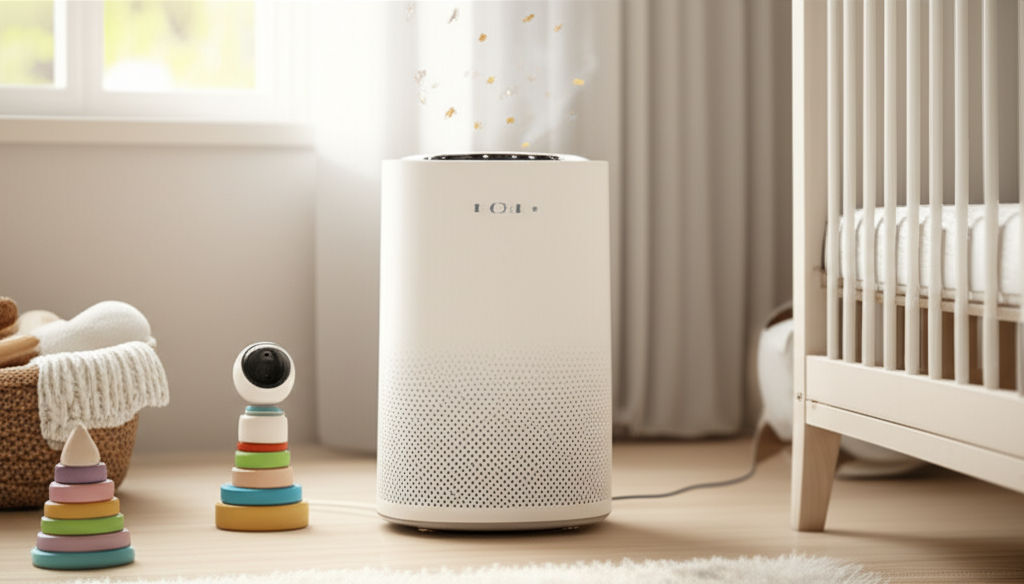
Even the cleanest-looking nursery can harbor invisible airborne particles that can affect your baby’s health. These microscopic threats are the primary reason why investing in an air purifier is a wise decision. They can trigger sneezes, coughs, and even more serious respiratory issues. Understanding these invisible threats is the first step to safeguarding your baby’s sensitive system.
Dust Mites and Allergens
Dust mites are microscopic creatures that thrive in warm, humid environments like bedding and carpets, common in nurseries. Their waste products are a common allergen that can irritate a baby’s developing respiratory system. An air purifier with a HEPA filter is highly effective at capturing these tiny allergens.
Pet Dander and Fur
If you have pets, their dander and fur can easily find their way into the nursery, even if pets aren’t allowed in the room. Pet dander is a potent allergen that can cause significant discomfort and allergic reactions in sensitive babies. HEPA filters are essential for trapping these microscopic particles.
Mold Spores and Mildew
Mold can grow in damp areas, and its spores can become airborne, posing a health risk. Babies with developing immune systems are particularly vulnerable to mold-related respiratory problems. Air purifiers help capture these spores, preventing them from circulating.
VOCs and Chemical Off-Gassing
New furniture, paints, and even some baby products can release Volatile Organic Compounds (VOCs). These chemicals can irritate the lungs and cause headaches. An air purifier with an activated carbon filter is crucial for adsorbing these gases and odors.
Key Features to Look for in the Best Air Purifier for Baby Nursery
When selecting the best air purifier for your baby nursery, safety, effectiveness, and ease of use are paramount. You want a unit that quietly and efficiently cleans the air without introducing new hazards. Focusing on specific features will ensure you make an informed choice that prioritizes your baby’s well-being and promotes restful sleep.
HEPA Filtration: The Gold Standard
A High-Efficiency Particulate Air (HEPA) filter is the most critical component of any air purifier, especially for a baby’s room. True HEPA filters are certified to capture at least 99.97% of airborne particles as small as 0.3 microns. This includes dust, pollen, pet dander, mold spores, and even some bacteria and viruses.
Activated Carbon Filter for Odors and Gases
Beyond particulate matter, an activated carbon filter is essential for tackling gases and odors. This type of filter adsorbs VOCs, smoke, and other chemical pollutants that a HEPA filter alone cannot remove. It ensures the air is not only particle-free but also free from unpleasant smells and harmful fumes.
Noise Level: The Sleep Factor
Babies are easily disturbed by noise, so choosing an air purifier with a low decibel (dB) rating is crucial. Look for models that offer a “sleep mode” or have very quiet operation at their lowest setting. Aim for a unit that operates below 30-40 dB on its lowest setting, which is comparable to a whisper.
Safety Certifications and Features
Safety is paramount when choosing appliances for a baby’s room. Look for certifications from reputable organizations like ENERGY STAR for energy efficiency and UL (Underwriters Laboratories) for electrical safety. Features like child locks and rounded edges also add to the safety profile.
Coverage Area and Room Size
Ensure the air purifier you choose is appropriately sized for your nursery. Check the manufacturer’s specifications for the recommended room size (often measured in square feet). An undersized unit won’t be effective, while an oversized one might be unnecessarily noisy or expensive.
Ease of Maintenance and Filter Replacement
Consider how easy it is to clean and replace the filters. Some units have indicator lights to remind you when it’s time for a change. Frequent and straightforward maintenance ensures the purifier continues to operate at peak efficiency.
Top Picks for the Best Air Purifier for Baby Nursery in 2024
After extensive research and considering the needs of parents and babies, I’ve identified a few top contenders for the best air purifier for a baby nursery. These models excel in filtration, quiet operation, safety, and overall value, ensuring a healthier sleep environment for your little one.
1. Levoit Core 300S Smart True HEPA Air Purifier
This popular choice offers a robust 3-stage filtration system, including a True HEPA filter, an activated carbon filter, and a pre-filter. Its compact design and quiet operation (as low as 22dB in sleep mode) make it ideal for nurseries. The smart features allow for app control and voice commands, adding convenience for busy parents.
Pros: Excellent filtration, very quiet, smart features, affordable.
Cons: Might be slightly small for larger nurseries.
2. Coway Airmega AP-1512HH Mighty Air Purifier
The Coway Mighty is a consistently top-rated air purifier known for its powerful performance and energy efficiency. It features a multi-stage filtration system, including a True HEPA filter and an ionizer (which can be turned off if preferred). Its auto mode adjusts fan speed based on air quality, and it’s relatively quiet on lower settings.
Pros: Powerful filtration, auto mode, good for medium to large rooms, energy-efficient.
Cons: Can be a bit louder on higher settings, slightly higher price point.
3. Blueair Blue Pure 411 Auto Air Purifier
Blueair is renowned for its efficient filtration and stylish design. The Blue Pure 411 Auto uses a combination of mechanical and electrostatic filtration to capture particles. It’s exceptionally quiet and features an auto mode that adjusts performance based on air quality. The simple, one-button operation is user-friendly.
Pros: Extremely quiet, effective filtration, stylish design, simple to use.
Cons: Uses proprietary filters, which can be more expensive.
4. Winix 5500-2 Air Purifier with True HEPA
The Winix 5500-2 is a solid all-around performer, featuring a True HEPA filter, an activated carbon filter, and PlasmaWave technology (which can also be deactivated). It’s effective at removing allergens and odors and includes an auto mode and sleep mode for quiet operation. It’s a great option for those seeking a balance of features and price.
Pros: Good value, effective multi-stage filtration, auto mode, quiet sleep mode.
Cons: PlasmaWave technology is a matter of personal preference.
Understanding Air Purifier Technologies for Baby Nurseries
Beyond the basic filters, air purifiers employ various technologies to clean the air. It’s important to understand these to choose the safest and most effective option for your baby’s sensitive environment. Some technologies are highly beneficial, while others may require caution.
HEPA vs. HEPA-Type Filters
It’s vital to distinguish between “True HEPA” and “HEPA-type” or “HEPA-like” filters. True HEPA filters meet the stringent standard of capturing 99.97% of 0.3-micron particles. HEPA-type filters may capture a similar percentage of larger particles but are not as effective against the smallest, most problematic ones. Always look for “True HEPA” for the best protection.
Activated Carbon Filters: Absorbing Gases
Activated carbon filters are made from charcoal that has been treated to be highly porous. This porosity allows it to trap gases, odors, and VOCs through a process called adsorption. They are essential for removing chemical pollutants from the air, which are common in new homes or from household products.
Ionizers and Ozone Production Concerns
Some air purifiers use ionizers to release charged ions into the air, which attach to particles, making them easier to capture. However, ionizers can sometimes produce ozone as a byproduct. Ozone is a lung irritant, and it’s best to avoid air purifiers with ionizers or ensure they have an option to turn this feature off, especially in a baby’s room. Reputable brands like Harvard Health Publishing advises caution with ozone-producing devices.
UV-C Light Technology
UV-C light is sometimes incorporated into air purifiers to kill airborne bacteria and viruses. While potentially effective, ensure the UV-C light is properly shielded and doesn’t pose a risk. For most nurseries, the primary concern is particulate matter and VOCs, making HEPA and carbon filtration the most critical components.
Placement and Usage Tips for Optimal Air Purification
Once you’ve chosen the best air purifier for your baby nursery, proper placement and usage are key to maximizing its effectiveness. Even the most advanced unit won’t perform optimally if it’s not set up correctly. Following these simple tips will help ensure your baby breathes the cleanest possible air.
Finding the Ideal Spot in the Nursery
Place the air purifier in a location where it can draw in air from all sides and circulate it effectively. Avoid placing it directly against a wall or furniture, which can obstruct airflow. A corner or the center of a wall, away from the crib, is usually a good spot. Ensure it’s out of reach of your baby as they grow.
Running the Air Purifier Continuously
For the best results, it’s recommended to run the air purifier continuously, especially when your baby is sleeping. This ensures that the air quality is consistently maintained and that newly introduced pollutants are captured quickly. Running it on its lowest, quietest setting overnight is ideal.
When to Use Higher Settings vs. Sleep Mode
Use the higher fan settings when you first introduce new furniture or after cleaning to quickly clear the air of any lingering particles or odors. For everyday use and during sleep, switch to the lowest setting or sleep mode to minimize noise and energy consumption. This balance ensures both effectiveness and a peaceful environment.
Monitoring Air Quality and Filter Life
Many modern air purifiers come with sensors that monitor air quality and indicator lights that signal when it’s time to clean or replace filters. Pay attention to these indicators. Regularly checking and replacing filters according to the manufacturer’s instructions is crucial for maintaining the purifier’s performance.
Common Nursery Pollutants and How Air Purifiers Combat Them
Understanding the specific pollutants that can affect your baby’s nursery helps you appreciate the role of an air purifier. These common culprits can significantly impact respiratory health and sleep quality. An effective air purifier acts as a shield against these invisible threats.
Dust and Dust Mites
Dust is a common allergen, and dust mites, microscopic creatures that feed on dust, are a primary source of allergens. A HEPA filter effectively captures dust particles and dust mite allergens, preventing them from being inhaled.
Pet Dander
Even if your pets don’t enter the nursery, their dander can be tracked in on clothes or furniture. HEPA filters are designed to trap these tiny protein-rich particles that can trigger allergies.
Pollen
Pollen can enter your home from outside and linger in the air. If your baby develops seasonal allergies, an air purifier can help reduce their exposure to pollen indoors.
Mold Spores
Mold thrives in damp conditions and releases spores into the air. Air purifiers with HEPA filters can capture these spores, helping to prevent mold-related respiratory issues.
VOCs from New Furniture and Products
New items like cribs, mattresses, and carpets can off-gas VOCs. An activated carbon filter is essential for adsorbing these harmful chemicals, improving air safety. The EPA highlights the importance of reducing VOC exposure.
Creating a Holistic Healthy Nursery Environment
While an air purifier is a crucial element, it’s part of a broader strategy for creating a healthy nursery. Combining air purification with other good practices will provide the most comprehensive protection for your baby. Think of it as a multi-layered approach to well-being.
Maintaining Optimal Humidity Levels
Too much humidity can encourage mold growth, while too little can dry out nasal passages, making babies more susceptible to illness. Aim for a humidity level between 40-60%. A hygrometer can help you monitor this, and a humidifier or dehumidifier may be needed in conjunction with your air purifier.
Regular Cleaning and Dusting
Consistent cleaning is fundamental. Dust surfaces with a damp cloth to trap dust rather than just spreading it. Vacuum carpets and upholstery regularly with a vacuum cleaner that has a HEPA filter. This reduces the amount of particulate matter the air purifier needs to handle.
Choosing Baby-Safe Products
Be mindful of the products you bring into the nursery. Opt for low-VOC paints, organic bedding, and natural cleaning supplies. This reduces the overall load of chemical pollutants in the air, making your air purifier’s job easier.
Ventilation: Fresh Air Exchange
Even with an air purifier, regular ventilation is important. Open windows for a short period each day (when outdoor air quality is good) to allow fresh air to circulate. This helps dilute indoor pollutants and brings in fresh oxygen.
Frequently Asked Questions About Baby Nursery Air Purifiers
Here are answers to some common questions parents have when considering an air purifier for their baby’s nursery.
What is the most important feature in a baby nursery air purifier?
The most crucial feature is a True HEPA filter to effectively capture 99.97% of airborne particles like dust, allergens, and dander.
Can an air purifier help with a baby’s congestion or allergies?
Yes, by removing allergens and irritants from the air, an air purifier can significantly help reduce congestion and alleviate symptoms associated with allergies in babies.
How quiet does an air purifier need to be for a nursery?
Ideally, the air purifier should operate at below 40 decibels (dB) on its lowest setting, similar to a quiet library or a soft whisper, to avoid disturbing sleep.
Should I use an air purifier with an ionizer in my baby’s room?
It’s generally recommended to avoid or ensure the ionizer can be turned off. Ionizers can produce ozone, a lung irritant, which is not ideal for a baby’s sensitive respiratory system.
How often should I replace the filters in my baby’s air purifier?
Filter replacement frequency varies by model and usage, but typically HEPA filters need replacing every 6-12 months, and carbon filters may need replacement more often. Always follow the manufacturer’s recommendations.
Do I need an air purifier if I don’t have pets or allergies?
Yes, even without pets or known allergies, nurseries can accumulate dust, mold spores, and VOCs from household items. An air purifier helps maintain consistently clean air.
Can an air purifier help with baby’s sleep?
Yes, by creating a cleaner, less irritating breathing environment, an air purifier can contribute to more comfortable and restful sleep for your baby, reducing awakenings due to discomfort.
Conclusion: Investing in Your Baby’s Breathable Future
Choosing the best air purifier for a baby nursery is a thoughtful investment in your child’s health, comfort, and ability to achieve safe, peaceful sleep. By focusing on True HEPA filtration, quiet operation, and safety features, you can create an environment that supports your baby’s delicate respiratory system. Remember to consider the room size, maintenance needs, and the specific pollutants you aim to combat. Implementing these strategies will help ensure your little one thrives in a clean, healthy nursery, allowing you both to rest easier.