Are Lab Charge Air Purifiers Good? Essential Guide

Yes, lab charge air purifiers can be good for specific applications, offering silent operation and low energy use, but their effectiveness varies greatly depending on the technology and the pollutants they target.
Are Lab Charge Air Purifiers Good? Your Essential Guide
Considering a lab charge air purifier for your home or office? You’re not alone. Many people wonder if these innovative devices truly deliver on their promise of cleaner air. With various air purification technologies available, it’s natural to feel a bit overwhelmed. This guide will demystify lab charge air purifiers, explaining how they work, their benefits, potential drawbacks, and helping you determine if they are the right choice for your specific needs. We’ll explore everything you need to know to make an informed decision.
What Exactly is a Lab Charge Air Purifier?
Lab charge air purifiers, often referred to as ionizers or electrostatic precipitators, use a different approach than traditional HEPA filters. They generate ions, which then attach to airborne particles like dust, pollen, and smoke. These charged particles are then attracted to collector plates within the unit or to surfaces in the room, effectively removing them from the air. This method can be highly effective for capturing very fine particles that might pass through some filters.
How Do Lab Charge Air Purifiers Work?
The core principle behind lab charge air purifiers involves ionization. The device has a series of electrodes that emit a high voltage, creating a corona discharge. This discharge releases a stream of negative ions into the air. As these negative ions travel, they collide with positively charged particles in the air, such as dust, mold spores, and bacteria, giving them a negative charge. These newly negatively charged particles are then drawn to positively charged collector plates or other grounded surfaces.
The Science Behind Ionization and Particle Capture
The scientific basis for lab charge air purifiers lies in electrostatics. By imparting a charge to airborne contaminants, the purifier leverages the fundamental principle that opposite charges attract. This attraction pulls the charged particles out of the air stream and onto collection surfaces. This process is similar to how static electricity works, but it’s carefully controlled within the device to efficiently capture pollutants. Understanding this science helps appreciate the unique mechanism of these purifiers.
Key Benefits of Lab Charge Air Purifiers
One of the most significant advantages of lab charge air purifiers is their silent operation. Unlike many fan-based purifiers, they don’t rely on noisy motors, making them ideal for bedrooms, nurseries, or quiet workspaces. Additionally, they typically consume very little energy, contributing to lower electricity bills. Their ability to capture ultra-fine particles, even those smaller than what some HEPA filters can trap, is another compelling benefit for those concerned about microscopic pollutants.
Silent Operation for Peaceful Environments
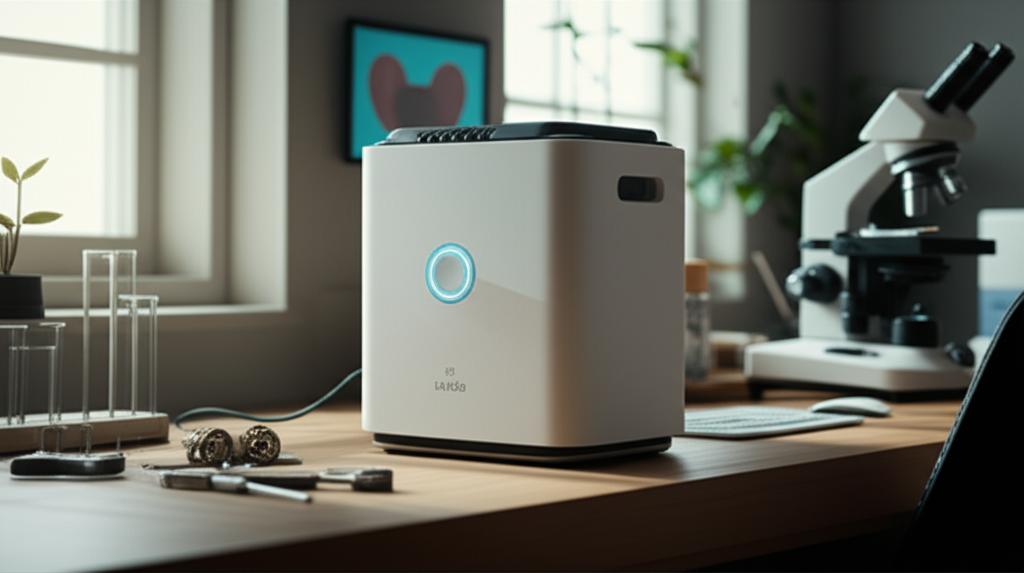
The absence of a fan is a game-changer for many users. This means you can enjoy cleaner air without the constant hum or whirring noise associated with conventional air purifiers. This makes them perfect for creating a tranquil atmosphere conducive to sleep, work, or relaxation. The quiet performance ensures that the air purification process doesn’t become a distraction or annoyance.
Energy Efficiency and Lower Running Costs
Lab charge air purifiers are remarkably energy-efficient. They require minimal electricity to operate, often consuming less power than a standard light bulb. This translates into noticeable savings on your energy bills over time. For those conscious of their environmental footprint and looking to reduce energy consumption, this efficiency is a major plus.
Effective Capture of Ultra-Fine Particles
These purifiers excel at trapping microscopic particles that can be problematic for respiratory health. This includes common allergens like dust mites, pollen, pet dander, and even smoke particles and bacteria. Their ionization process can effectively neutralize and capture particles as small as 0.01 microns, offering a level of purification that goes beyond many standard filtration systems.
Potential Drawbacks and Considerations
While lab charge air purifiers offer distinct advantages, it’s crucial to be aware of potential drawbacks. One of the primary concerns is the production of ozone. Ozone is a lung irritant, and some ionizers can release it as a byproduct. It’s essential to choose models that are certified as low or no-ozone producing. Another consideration is that they require regular cleaning of the collector plates to maintain optimal performance.
The Ozone Concern: Understanding the Risks
Ozone (O3) is a gas that, in the lower atmosphere, can be harmful to human health. Some ionization technologies can produce ozone as a byproduct of their operation. While ozone can neutralize odors and kill some airborne microbes, high concentrations can irritate the respiratory system, aggravate asthma, and damage lung tissue. Therefore, selecting an ozone-free or low-ozone emitting model is paramount. Organizations like the California Air Resources Board (CARB) have strict standards for ozone emissions from air purifiers.
Maintenance: Cleaning Collector Plates
Unlike HEPA filters that need replacement, lab charge air purifiers typically feature washable collector plates. These plates accumulate the charged particles removed from the air. Regular cleaning, often every few weeks, is necessary to ensure the unit functions efficiently. If the plates become too dirty, the purifier’s effectiveness will diminish, and it may even cease to work properly.
Limited Effectiveness Against Gases and Odors
While excellent at capturing particulate matter, lab charge air purifiers are generally less effective at removing gases and volatile organic compounds (VOCs) from the air. Technologies like activated carbon filters are better suited for adsorbing these types of pollutants. If your primary concern is chemical fumes, cooking odors, or pet smells, you might need a purifier with a combination of technologies.
Comparing Lab Charge Air Purifiers to Other Technologies
To truly assess if lab charge air purifiers are good, it’s helpful to compare them to other common air purification methods. Traditional HEPA filters are highly effective at trapping particles but require regular filter replacements and can be noisy. Activated carbon filters excel at adsorbing odors and gases but don’t remove particles. UV-C light purifiers can kill bacteria and viruses but are ineffective against non-living particles.
Lab Charge vs. HEPA Filters
HEPA (High-Efficiency Particulate Air) filters are the gold standard for capturing physical particles. They mechanically trap 99.97% of particles 0.3 microns in size. Lab charge purifiers, however, can capture even smaller particles and operate silently. The main difference lies in maintenance: HEPA filters need replacement, while ionizer plates are cleaned.
| Feature | Lab Charge Air Purifier | HEPA Filter Air Purifier |
|——————–|————————–|————————–|
| Particle Capture | Excellent (especially ultra-fine) | Excellent (0.3 microns) |
| Noise Level | Very Low/Silent | Moderate to High |
| Filter Replacement | No (plate cleaning) | Yes (regularly) |
| Ozone Production | Potential concern | Generally none |
| Gas/Odor Removal | Limited | Varies (often needs carbon) |
Lab Charge vs. Activated Carbon Filters
Activated carbon filters work by adsorption, where gases and odors stick to the porous surface of the carbon. They are ideal for tackling chemical pollutants, VOCs, and smells that ionizers miss. While some lab charge purifiers might incorporate a small carbon pre-filter, their primary strength is particle removal. For comprehensive air cleaning, a combination of technologies is often best.
Lab Charge vs. UV-C Light Purifiers
UV-C light purifiers use ultraviolet radiation to inactivate airborne pathogens like bacteria, viruses, and mold spores. They are effective against living microorganisms but do not remove dust, pollen, or other non-living particles. Lab charge purifiers, on the other hand, focus on capturing a wide range of particulate matter. Some advanced purifiers combine UV-C with ionization for broader air treatment.
Are Lab Charge Air Purifiers Good for Allergies?
For individuals suffering from allergies, lab charge air purifiers can be a beneficial addition to their air quality management strategy. They are highly effective at capturing common allergens like pollen, dust mites, pet dander, and mold spores, which are major triggers for allergic reactions. By reducing the concentration of these airborne irritants, they can provide significant relief and improve indoor air quality for allergy sufferers.
Choosing the Right Lab Charge Air Purifier
When selecting a lab charge air purifier, prioritize models that are certified by reputable organizations for low or no ozone production, such as CARB certification. Consider the size of the room the purifier will be used in and ensure the unit’s coverage area is adequate. Look for ease of cleaning for the collector plates and any additional features like pre-filters or odor-reducing capabilities. Reading user reviews can also provide valuable insights.
Key Features to Look For
When shopping, pay close attention to a few key features. Ensure the purifier has received certification for low or no ozone emissions, like from the California Air Resources Board (CARB). Check the recommended room size and compare it to your space. Simple-to-remove and clean collector plates are a must for hassle-free maintenance. Some models include washable pre-filters to catch larger particles, extending the life of the collector plates.
Understanding Certifications and Safety Standards
Safety certifications are crucial, especially regarding ozone production. Look for labels or documentation indicating compliance with standards set by bodies like the EPA or CARB. These certifications assure you that the device has been tested and meets specific safety benchmarks for ozone emissions. Always opt for purifiers from reputable brands that clearly state their safety compliance.
Maintaining Your Lab Charge Air Purifier for Peak Performance
Proper maintenance is key to ensuring your lab charge air purifier continues to perform optimally. This primarily involves regular cleaning of the collector plates. Depending on your environment and usage, you may need to clean them every two to four weeks. Some units also have washable pre-filters that should be cleaned at the same time. Always unplug the unit before cleaning and follow the manufacturer’s instructions carefully.
The Verdict: Are Lab Charge Air Purifiers Good for You?
So, are lab charge air purifiers good? For many, the answer is a resounding yes, especially if you prioritize silent operation, energy efficiency, and the capture of ultra-fine particles. They can be an excellent tool for managing allergies and improving overall indoor air quality without the noise and filter replacement costs of traditional purifiers. However, it’s essential to be mindful of potential ozone production and their limitations with gases and odors.
Final Thoughts on Ionizer Air Purifiers
In conclusion, lab charge air purifiers are a valuable technology for cleaner air, offering unique benefits like quietness and energy savings. By understanding their mechanism, advantages, and limitations, and by choosing certified, low-ozone models, you can effectively enhance the air quality in your home or workspace. They represent a smart, modern approach to tackling airborne pollutants, providing a breath of fresh air in more ways than one.
Frequently Asked Questions (FAQ)
Do lab charge air purifiers actually work?
Yes, lab charge air purifiers are effective at removing airborne particles like dust, pollen, and smoke by using ionization to attract them to collector plates. They are particularly good at capturing very fine particles.
Are lab charge air purifiers safe for pets?
Generally, yes, especially if they are certified low or no-ozone producing. Ozone can be harmful, so always choose a certified unit. They can help reduce pet dander and allergens in the air.
How often should I clean the collector plates?
You should typically clean the collector plates every two to four weeks, depending on the air quality in your home and how often the purifier is used. Check your manufacturer’s manual for specific recommendations.
Can lab charge air purifiers remove odors?
They have limited effectiveness against odors and gases. While they can neutralize some odor-causing particles, they are not as effective as activated carbon filters for tackling strong smells or chemical fumes.
Are there any health risks associated with lab charge air purifiers?
The main concern is ozone production. Opt for units certified as low or no-ozone emitters to avoid potential respiratory irritation. Always follow the manufacturer’s guidelines for safe operation.
Do lab charge air purifiers require replacement filters?
No, most lab charge air purifiers do not require replacement filters. Instead, they have washable collector plates that need to be cleaned regularly to maintain their effectiveness.
What is the difference between a lab charge air purifier and an ionizer?
The terms are often used interchangeably. “Lab charge air purifier” might refer to units designed for specific lab environments or those using a particular charging mechanism, while “ionizer” is a broader term for devices that produce ions to purify air.