
Air Purifier vs Humidifier vs Dehumidifier vs Diffuser: What Each One Does

Quick answer
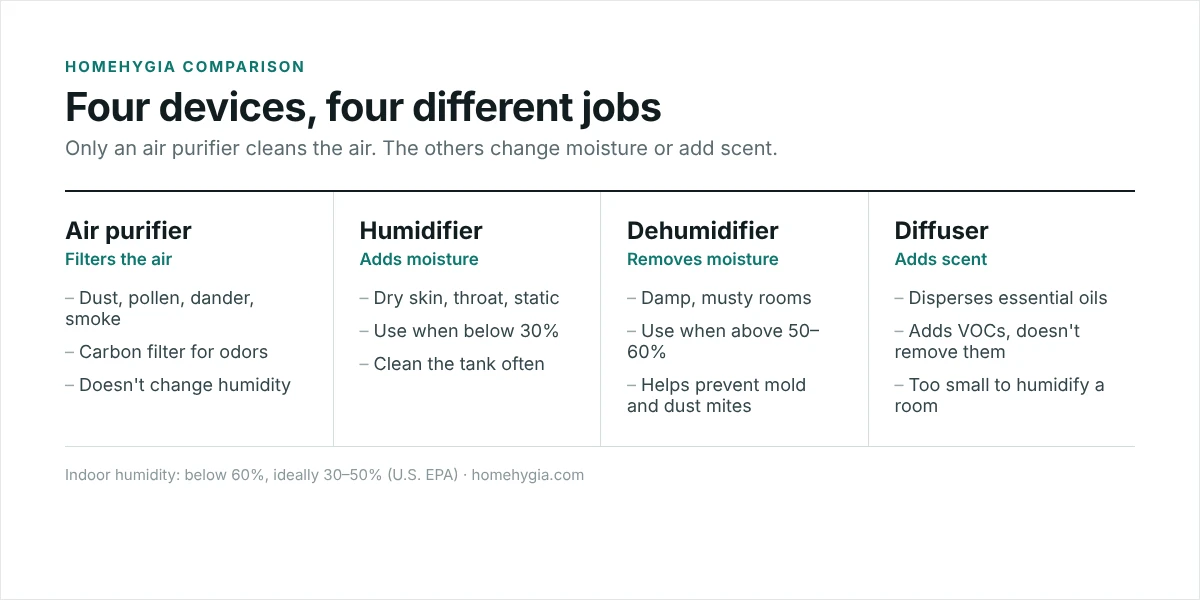
They do four different jobs. An air purifier filters particles such as dust, pollen, pet dander and smoke out of the air. A humidifier adds moisture to dry air, and a dehumidifier removes moisture from damp air. A diffuser spreads essential oil scent, and it doesn’t clean the air. If allergies or smoke are the problem, get an air purifier. If humidity is too low or too high, get a humidifier or a dehumidifier. A diffuser is for fragrance only, and it actually adds compounds to the air rather than removing them.
These four devices are often sold side by side and some even look alike, especially small ultrasonic humidifiers and diffusers. Buying the wrong one is a common mistake. This guide explains what each machine does, which problem it solves, and which combinations make sense.
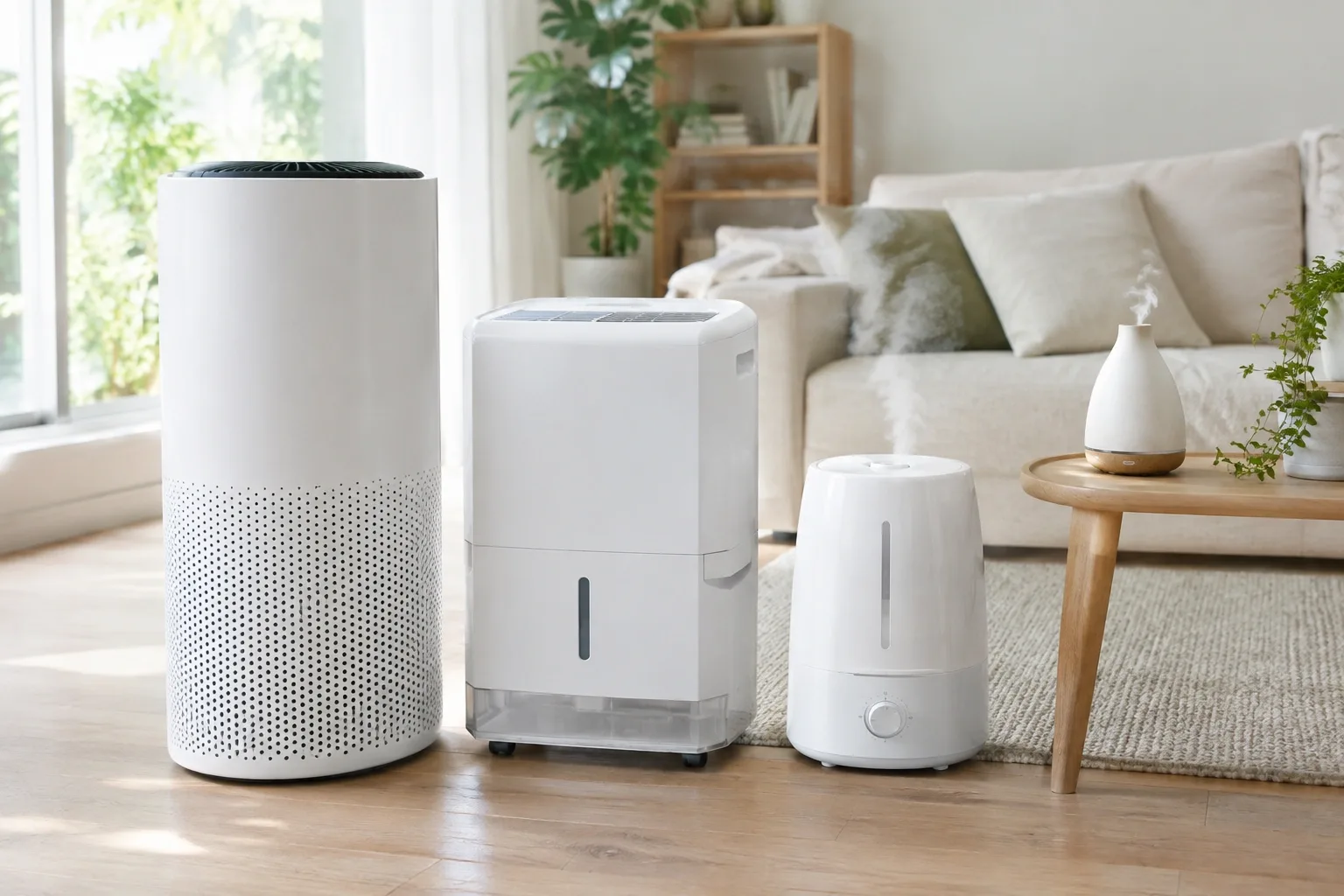
Quick comparison
| Air purifier | Humidifier | Dehumidifier | Diffuser | |
|---|---|---|---|---|
| Main job | Removes airborne particles (and odors with carbon) | Adds water vapor | Removes water vapor | Disperses essential oils for scent |
| Best for | Allergies, pets, smoke, dust | Dry winter air, dry skin and throat | Damp basements, musty smells, condensation | Fragrance and ambience |
| Changes humidity? | No | Raises it | Lowers it | Barely |
| Cleans the air? | Yes | No | No, but helps prevent mold | No |
| Main upkeep | Replace filters | Clean the tank often, change water daily | Empty the bucket, clean the filter | Rinse after use |
Air purifier: for particles and odors
An air purifier pulls room air through a filter. A True HEPA filter captures fine particles such as dust, pollen, pet dander and smoke, and an activated carbon layer reduces odors and some gases. It doesn’t change humidity. Choose one sized for your room. For a deeper look at the three main machines, see air purifier vs dehumidifier vs humidifier.
Humidifier: for dry air
A humidifier adds moisture when indoor air is dry, typically in winter with the heating on. It can ease dry skin, lips and throat, and reduce static. Too much moisture causes its own problems, so keep an eye on a humidity meter. The EPA notes that ultrasonic and cool-mist humidifiers can release minerals and microorganisms from the tank into the air, and recommends using low-mineral water such as distilled water and cleaning portable units every third day (EPA: Use and Care of Home Humidifiers). More in humidifier vs air purifier.
Dehumidifier: for damp air
A dehumidifier pulls moisture out of the air and collects it in a bucket or drains it away. It’s the right tool for basements, musty rooms, window condensation and homes in humid climates. The EPA recommends keeping indoor humidity below 60%, ideally between 30% and 50%, to limit mold growth (EPA: A Brief Guide to Mold, Moisture and Your Home). It doesn’t filter the air in a meaningful way; see does a dehumidifier purify the air.
Diffuser: for scent only
An essential oil diffuser, usually a small ultrasonic device, breaks water and oil into a fine mist to spread fragrance. It doesn’t remove dust, pollen or odors, it just masks them. It also adds volatile organic compounds (VOCs) to the air; the EPA lists air fresheners and scented products among indoor VOC sources (EPA: VOCs’ Impact on Indoor Air Quality). Its water tank is too small to humidify a room in any useful way.
If you have asthma, a baby at home, or pets, use diffusers sparingly and ventilate the room. Many essential oils can irritate airways, and some are toxic to cats and dogs, so check with your doctor or vet. Want fragrance with clean air? See how to add scent to an air purifier safely.
Which one do you need?
- Sneezing, allergies, pets, smoke or dust: air purifier.
- Dry skin, cracked lips, static shocks, humidity under 30%: humidifier.
- Musty smell, condensation, mold spots, humidity over 50–60%: dehumidifier.
- You just want the room to smell nice: diffuser, used in moderation.
A cheap humidity meter (hygrometer) settles the humidifier-or-dehumidifier question in minutes.
Can you use them together?
- Air purifier + humidifier: common in dry winters. Keep the humidifier a few feet away and use distilled water, because mineral mist from ultrasonic models can register as particles and load the purifier’s filter.
- Air purifier + dehumidifier: a good pair for damp, allergy-prone homes.
- Humidifier + dehumidifier in the same room: they cancel each other out; pick one based on the humidity reading.
- Diffuser + air purifier: works, but the purifier’s carbon filter will absorb some of the scent and wear out a little faster.
Frequently asked questions
Is a diffuser the same as a humidifier?
No. Both can make mist, but a diffuser is built to spread small amounts of oil for scent and holds very little water. A humidifier is designed to add enough moisture to change a room’s humidity.
Is a diffuser the same as an air purifier?
No. A diffuser adds fragrance and compounds to the air. An air purifier removes particles with a filter.
Does an air purifier remove diffuser scent?
Partly. A purifier with an activated carbon filter absorbs some of the scent, so the fragrance fades faster when it runs.
Should I use a diffuser or a dehumidifier for damp, musty air?
A dehumidifier. A diffuser only covers the smell, while a dehumidifier removes the moisture that lets mold and mildew grow.
Can I put essential oils in a humidifier?
Only if the manufacturer says it’s designed for oils. Oils can damage plastic tanks and parts in standard humidifiers.
Sources
- U.S. EPA: Use and Care of Home Humidifiers
- U.S. EPA: A Brief Guide to Mold, Moisture and Your Home
- U.S. EPA: Volatile Organic Compounds’ Impact on Indoor Air Quality