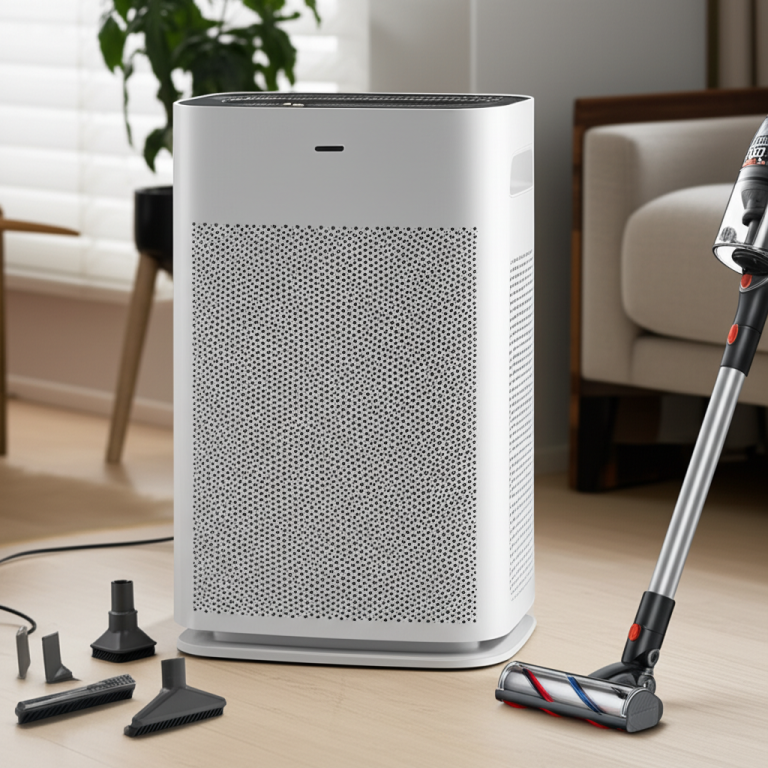
Air Purifier vs House Plants: Essential Health Boost

Air purifier vs house plants: Discover which is best for boosting your home’s air quality and health, offering a clear path to a cleaner, fresher living space.
When it comes to improving the air you breathe at home, two popular options often come up: air purifiers and house plants. Both promise a healthier environment, but which one truly delivers the essential health boost you’re looking for? It’s a common dilemma for those seeking cleaner indoor air. This article will break down the science, the benefits, and the practicalities of each, helping you make an informed decision for your well-being. Get ready to understand the real difference and find the perfect solution for your home.
Air Purifier vs House Plants: The Ultimate Showdown for Cleaner Air
Air purifiers and house plants both contribute to better indoor air quality, but they operate through distinct mechanisms and offer different levels of effectiveness for specific pollutants. Understanding these differences is key to choosing the right solution for your health needs. This comparison will illuminate their strengths and weaknesses, guiding you toward a healthier home environment.
How Air Purifiers Work to Clean Your Air
Air purifiers actively remove airborne particles from your home using various filtration technologies. They draw in air, pass it through filters like HEPA or activated carbon, and release cleaner air back into the room. This process is highly effective at capturing microscopic contaminants that plants cannot easily address.
This mechanical filtration is crucial for trapping allergens like dust mites, pet dander, and pollen. Additionally, activated carbon filters can absorb odors and volatile organic compounds (VOCs) released from everyday household items. The efficiency of an air purifier is often measured by its Clean Air Delivery Rate (CADR), indicating how quickly it can filter a room.
The Natural Power of House Plants for Air Quality
House plants are renowned for their aesthetic appeal and ability to bring a touch of nature indoors. Beyond their visual charm, certain plants can absorb some airborne toxins, contributing to a more natural air purification process. Their role is more subtle but can be beneficial in specific ways.
While plants do absorb CO2 and release oxygen through photosynthesis, their ability to significantly reduce common indoor air pollutants is often overstated. Studies, including a famous one from NASA, have highlighted their potential, but real-world effectiveness in a typical home setting is debated. They are best viewed as a complementary addition rather than a primary air cleaning solution.
Key Differences in Air Purification Mechanisms
The fundamental difference lies in their approach: air purifiers actively remove pollutants, while plants absorb certain compounds. Air purifiers employ physical filters to trap particles, whereas plants rely on biological processes within their leaves and roots. This distinction impacts their effectiveness against different types of contaminants.
Air purifiers excel at capturing particulate matter like dust, mold spores, and bacteria. Plants, on the other hand, are more effective at breaking down certain VOCs, but often require very high plant densities to achieve noticeable results. For immediate and comprehensive air cleaning, purifiers generally have a significant advantage.
Pollutant Types: Where Each Shines
Particulate Matter (PM): Air purifiers, especially those with HEPA filters, are far superior at removing fine particulate matter like dust, pollen, pet dander, and mold spores. Plants have a negligible impact on these airborne particles.
Volatile Organic Compounds (VOCs): While plants can absorb some VOCs, their impact is often minimal in typical home environments. High-efficiency air purifiers with activated carbon filters are much more effective at removing a wider range of VOCs, including those from paints, cleaning products, and furniture.
Carbon Dioxide (CO2) & Oxygen: Plants naturally convert CO2 into oxygen through photosynthesis, a process vital for life. Air purifiers do not directly impact CO2 levels or oxygen production; their focus is on removing harmful contaminants.
Odors: Activated carbon filters in air purifiers are highly effective at neutralizing odors from cooking, pets, or smoke. Plants can sometimes absorb mild odors, but their capability is limited compared to a dedicated filter.
Effectiveness: Quantifying the Health Boost
When it comes to quantifiable health benefits, air purifiers often demonstrate more immediate and significant improvements in indoor air quality. Studies consistently show that air purifiers can dramatically reduce the concentration of allergens and pollutants, leading to relief for individuals with allergies and asthma. The U.S. Environmental Protection Agency (EPA) recommends using air cleaners to improve indoor air quality.
While plants contribute to a sense of well-being and can offer minor air quality improvements, their impact is generally less pronounced than that of a well-maintained air purifier. For individuals suffering from respiratory issues, the direct removal of allergens and irritants by an air purifier provides a more tangible health benefit.
Cost and Maintenance: A Practical Comparison
The cost of an air purifier involves an initial purchase price, plus ongoing expenses for replacement filters. These filters typically need to be replaced every 6-12 months, depending on usage and the specific model. The electricity consumption of an air purifier is also a factor to consider.
House plants have a lower initial cost, but they require ongoing care such as watering, repotting, and occasional pest control. While they don’t have filter replacement costs, the investment in soil, pots, and potentially plant food adds up. Their maintenance is more about nurturing living organisms.
| Feature | Air Purifier | House Plants |
| :————— | :———————————————— | :———————————————— |
| Primary Function | Active removal of airborne pollutants | Absorption of some VOCs, CO2 conversion |
| Effectiveness | High for PM, VOCs, odors | Moderate for some VOCs, CO2; negligible for PM |
| Initial Cost | Moderate to High | Low to Moderate |
| Ongoing Cost | Filter replacement, electricity | Water, soil, pots, occasional plant food |
| Maintenance | Filter changes, occasional cleaning | Watering, sunlight, pruning, pest control |
| Aesthetic | Varies by design; functional | Natural beauty, enhances decor |
| Noise | Can produce fan noise | Silent |
| Energy Use | Consumes electricity | Minimal (sunlight, natural processes) |
Which is Right for Your Home? Factors to Consider
Your decision between an air purifier vs house plants depends on your specific needs and priorities. If you have significant allergy or asthma concerns, or live in an area with high outdoor pollution, an air purifier will likely offer more substantial benefits. Consider room size and the types of pollutants you’re most concerned about.
If your primary goal is to add a touch of nature, improve mood, and achieve minor improvements in air freshness, house plants can be a wonderful addition. They work best in conjunction with other air quality measures, rather than as a standalone solution for serious air purification needs. Think about your lifestyle and the amount of time you can dedicate to plant care.
Synergistic Solutions: The Best of Both Worlds
For optimal indoor air quality and a comprehensive health boost, the most effective strategy often involves using both air purifiers and house plants. This approach leverages the strengths of each, creating a more robust system for a healthier living environment. You don’t have to choose one over the other; they can complement each other beautifully.
Imagine an air purifier diligently removing allergens and fine particles from your bedroom, while a few strategically placed snake plants or spider plants in your living room contribute to a sense of calm and help absorb trace amounts of VOCs. This combined approach offers both powerful pollutant removal and the natural benefits of greenery.
Expert Recommendations and Scientific Insights
Leading health organizations, such as the American Lung Association, emphasize the importance of reducing indoor air pollutants. While they acknowledge the aesthetic and psychological benefits of plants, their primary recommendations for significant air quality improvement often point towards mechanical filtration systems. For instance, the EPA’s guide on improving indoor air quality highlights ventilation and air cleaning devices as key strategies.
Research from institutions like the University of Georgia has explored the air-purifying capabilities of plants, suggesting that while plants can remove certain pollutants, it would take an impractical number of plants to achieve significant air quality improvements in a standard home. This underscores the complementary role plants play rather than a primary one.
Frequently Asked Questions About Air Purifiers and House Plants
Can house plants really purify the air?
Yes, house plants can absorb certain volatile organic compounds (VOCs) from the air. However, the extent to which they purify air in a typical home is often debated, and it would require a very large number of plants to significantly impact overall air quality compared to an air purifier.
Are air purifiers more effective than plants?
Generally, yes. Air purifiers, especially those with HEPA filters, are much more effective at removing a wide range of airborne pollutants like dust, pollen, pet dander, mold spores, and even some VOCs and odors. They actively filter the air, providing a more direct health benefit for allergy and asthma sufferers.
How many plants do I need to see an effect on my air quality?
Studies suggest you would need an impractically large number of plants, potentially dozens, in a single room to achieve a noticeable reduction in common indoor air pollutants. Their impact is subtle and best considered supplementary.
What are the best air-purifying plants?
Popular choices often cited include the Snake Plant, Spider Plant, Peace Lily, and Areca Palm. These are known for their ability to absorb some common household toxins like formaldehyde and benzene.
What are the best air purifiers for allergies?
For allergies, look for air purifiers with a True HEPA filter, which can capture at least 99.97% of airborne particles down to 0.3 microns. Models with an activated carbon filter are also beneficial for removing odors and VOCs. Brands like Coway, Blueair, and Levoit are often recommended.
Can I use both an air purifier and house plants?
Absolutely! Using both an air purifier and house plants is an excellent strategy for a comprehensive approach to improving indoor air quality. The air purifier handles active pollutant removal, while plants add natural beauty and contribute to a healthier atmosphere.
Do air purifiers use a lot of electricity?
Modern air purifiers are designed to be energy-efficient. The amount of electricity they consume varies by model and fan speed, but it’s generally comparable to running a small appliance. Many models have energy-saving modes.
Conclusion: Your Healthiest Air Awaits
In the air purifier vs house plants debate, the answer isn’t about choosing one over the other, but understanding their distinct roles in creating a healthier home. Air purifiers offer powerful, active removal of allergens and pollutants, providing essential relief for those with respiratory sensitivities. House plants, while charming and beneficial for mood and minor toxin absorption, are less potent as standalone air cleaners. For the most significant health boost, I recommend a dual approach: invest in a quality air purifier for robust filtration and complement it with a selection of beautiful, air-loving plants. This synergistic strategy ensures you’re breathing cleaner, fresher air, supporting both your physical well-being and your home’s aesthetic appeal. Your journey to a healthier indoor environment starts with informed choices, and combining these solutions is a proven path to success.