
Are Air Purifiers Bad For Birds? Essential Safety Guide

Are air purifiers bad for birds? While many air purifiers are safe, certain types and features can pose serious risks to avian respiratory health. This guide provides essential safety tips for bird owners to ensure a healthy environment for their feathered companions.
The thought of improving your home’s air quality is commendable, especially if you share your space with a beloved bird. Many pet owners wonder, “Are air purifiers bad for birds?” It’s a valid concern, as birds have incredibly sensitive respiratory systems. The wrong air purifier can introduce harmful particles or gases, leading to serious health issues for your feathered friend. This guide will walk you through everything you need to know to choose and use an air purifier safely, ensuring your bird thrives.
Understanding Bird Respiratory Systems and Air Quality
Birds possess a unique and highly efficient respiratory system, designed for flight. Unlike humans who have lungs that expand and contract, birds have a series of air sacs that allow for a continuous flow of oxygen. This efficiency, however, makes them exceptionally vulnerable to airborne irritants and pollutants. Even small amounts of certain chemicals or fine particles can overwhelm their delicate system, causing inflammation, infection, and potentially fatal respiratory distress.
Key Takeaway: Birds’ specialized respiratory systems make them highly susceptible to air pollutants, necessitating careful consideration of air purification methods.
The Potential Dangers of Air Purifiers for Birds
When considering air purifiers for a home with birds, the primary concern revolves around the types of filtration and the byproducts they might release. Some air purification technologies, particularly those that generate ozone or use volatile organic compounds (VOCs) in their filters, can be extremely toxic to birds. Ozone, even in small concentrations, can damage lung tissue, while VOCs can be released from certain filter materials or cleaning agents, irritating a bird’s sensitive airways.
Key Takeaway: Certain air purifier technologies, like ozone generators and those using VOC-releasing filters, pose significant risks to birds.
Ozone Generators and Birds: A Dangerous Combination
Ozone generators are often marketed for their ability to neutralize odors and kill bacteria. However, ozone (O3) is a powerful oxidant that is highly irritating to the respiratory tracts of all animals, but especially birds. Even low levels of ozone can cause symptoms like coughing, wheezing, and shortness of breath in birds. Prolonged exposure can lead to permanent lung damage and can be fatal.
Key Takeaway: Ozone generators should be strictly avoided in homes with birds due to the severe respiratory damage ozone can cause.
Ionizers and Their Impact on Avian Health
Ionizers work by releasing negatively charged ions into the air, which attach to airborne particles, causing them to clump together and fall to the ground or stick to surfaces. While this can reduce airborne dust, some ionizers also produce ozone as a byproduct. Furthermore, the charged particles that settle on surfaces can be re-suspended into the air when disturbed, and birds, with their constant preening and movement, can easily inhale these particles.
Key Takeaway: Be cautious with ionizers, as some produce ozone, and settled particles can be re-aerosolized, posing a risk to birds.
Activated Carbon Filters: Generally Safe, But With Caveats
Activated carbon filters are excellent at adsorbing odors and volatile organic compounds (VOCs). They are generally considered safe for use in homes with birds, as they trap pollutants rather than creating them. However, it’s crucial to ensure the carbon filter itself doesn’t contain any added chemicals or binders that could off-gas. Regular replacement of activated carbon filters is also important to maintain their effectiveness and prevent them from becoming a source of trapped, stale air.
Key Takeaway: Activated carbon filters are a safe and effective option, provided they are high-quality and regularly replaced.
HEPA Filters: The Gold Standard for Bird Safety
High-Efficiency Particulate Air (HEPA) filters are designed to capture at least 99.97% of airborne particles 0.3 microns in size. This includes common allergens, dust, dander, and mold spores, which can all be irritants for birds. HEPA filters do not produce ozone or other harmful byproducts, making them the safest and most recommended type of filtration for bird owners. Look for True HEPA filters to ensure maximum particle capture.
Key Takeaway: True HEPA filters are the safest and most effective choice for bird owners, capturing the vast majority of airborne particles without producing harmful byproducts.
Choosing the Right Air Purifier for Your Bird
When selecting an air purifier for a bird-friendly home, prioritize models that utilize True HEPA filtration and activated carbon. Avoid any unit that explicitly states it generates ozone or uses ionizer technology. Look for purifiers with multiple stages of filtration, ensuring HEPA and activated carbon are primary components. Consider the size of the room the purifier will be in and choose a unit with an appropriate Clean Air Delivery Rate (CADR) for that space.
Key Takeaway: Opt for purifiers with True HEPA and activated carbon filters, avoiding ozone-generating technologies, and match the unit’s capacity to your room size.
Safe Placement and Operation of Air Purifiers
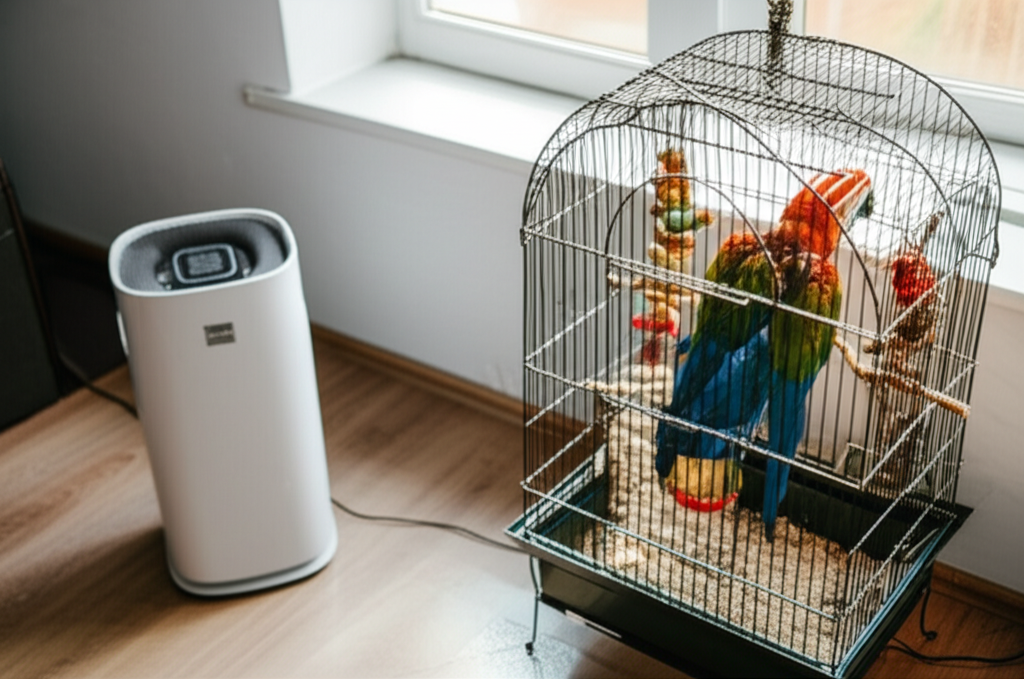
Where you place your air purifier is just as important as the type you choose. Never place an air purifier directly in or directly next to your bird’s cage. The airflow from the purifier can be too strong for your bird, causing stress or drying out their respiratory passages. It can also blow dust and dander directly onto your bird. A good rule of thumb is to place the purifier in the same room, but at a distance from the cage, allowing air to circulate naturally.
Key Takeaway: Position the air purifier away from the bird’s cage to avoid direct airflow and potential stress.
Maintaining Your Air Purifier for Bird Safety
Regular maintenance is crucial for ensuring your air purifier continues to operate safely and effectively. This primarily involves cleaning or replacing the filters according to the manufacturer’s instructions. Clogged filters can reduce the purifier’s efficiency and may even become a source of dust and allergens themselves. Always ensure you are using manufacturer-approved replacement filters to avoid introducing new chemicals into your air.
Key Takeaway: Consistent filter maintenance and replacement are vital for the safe and effective operation of your air purifier.
Signs Your Air Purifier Might Be Harming Your Bird
It’s essential to monitor your bird for any changes in behavior or health after introducing an air purifier. Signs that your air purifier might be causing problems include increased sneezing, coughing, or wheezing. You might also notice lethargy, changes in vocalization, or ruffled feathers. If your bird suddenly starts breathing with its mouth open or appears distressed, turn off the air purifier immediately and consult with an avian veterinarian.
Key Takeaway: Watch for respiratory distress, lethargy, or behavioral changes in your bird as indicators of potential air purifier harm.
Air Purifier Features to Avoid for Bird Owners
Beyond ozone and ionizers, other features can be problematic. Some purifiers use UV-C light for sterilization. While UV-C can be effective, it can also produce ozone. If a unit has UV-C, ensure it is certified as ozone-free. Additionally, avoid purifiers with scented filters or those that require frequent use of chemical cleaning solutions, as these can also release harmful VOCs.
Key Takeaway: Steer clear of air purifiers with UV-C light (unless ozone-free certified), scented filters, or those requiring chemical cleaning agents.
Alternative and Complementary Air Quality Solutions
While air purifiers are a valuable tool, they are not the only way to improve air quality for your bird. Regular cleaning of your bird’s cage and surrounding area is paramount. Using a vacuum cleaner with a HEPA filter can help capture dust and dander without re-suspending it. Good ventilation, such as opening windows when weather permits and it’s safe for your bird, can also help circulate fresh air.
Key Takeaway: Combine air purifiers with diligent cleaning, HEPA-filtered vacuums, and proper ventilation for optimal air quality.
Frequently Asked Questions About Air Purifiers and Birds
Q1: Can I use an air purifier in the same room as my bird?
Yes, you can, but it’s crucial to place it at a safe distance from the cage and ensure it’s a bird-safe model, ideally with True HEPA and activated carbon filters.
Q2: Are portable or personal air purifiers safe for birds?
This depends entirely on the technology used. Many small, portable units still employ ozone or ionizers, which are dangerous. Always check the specifications carefully for bird-safe features.
Q3: How often should I replace the filters in my air purifier?
Filter replacement frequency varies by model and usage. Consult your air purifier’s manual, but generally, HEPA filters should be replaced every 6-12 months, and carbon filters every 3-6 months.
Q4: My air purifier has an “air ionizer” function. Can I use it?
It’s best to avoid using the ionizer function, and ideally, choose a purifier without this feature altogether, as it can produce harmful ozone.
Q5: Can air purifiers help with bird dander and dust?
Absolutely. HEPA filters are highly effective at capturing fine particles like bird dander and dust, significantly improving air quality.
Q6: What are the symptoms of respiratory problems in birds caused by air purifiers?
Symptoms include sneezing, wheezing, coughing, open-mouth breathing, lethargy, and ruffled feathers. Seek veterinary advice if you notice these.
Q7: Are humidifiers bad for birds if I also use an air purifier?
While not directly related to air purifiers, excessive humidity can promote mold growth, which is bad for birds. Ensure humidity levels are appropriate and that any humidifier used is clean and doesn’t release minerals into the air.
Conclusion: Prioritizing Your Bird’s Respiratory Health
Ultimately, the question “are air purifiers bad for birds?” has a nuanced answer. While many air purifiers can be beneficial, certain types and operating methods pose significant risks. By understanding the delicate nature of avian respiratory systems and choosing purifiers equipped with True HEPA and activated carbon filters, while avoiding ozone and ionizers, you can create a healthier environment for your feathered companion. Always prioritize safety, monitor your bird’s well-being, and consult with an avian veterinarian if you have any concerns.
Key Takeaway: With careful selection and placement, air purifiers can be a safe and beneficial addition to a bird owner’s home, enhancing respiratory health.