
Why Is My Shop Vacuum Not Working? 7 Fixes

Quick Answer
If your shop vacuum is not working, first identify whether it will not start, runs without suction, overheats, or blows dust from the exhaust. Check the power supply, tank, filter, hose, and connections before suspecting motor failure. Always unplug the vacuum before opening it or clearing blockages, and stop using it if you notice burning smells, sparks, damaged wiring, or repeated breaker trips.
A shop vacuum can stop working for several reasons, and the right fix depends on what the machine is doing. A vacuum that makes no sound needs different checks from one whose motor runs but cannot pick up debris.
Start with the symptom rather than taking the machine apart. Most basic troubleshooting involves checking accessible parts, restoring airflow, and confirming that the power supply is safe.
1. Why Won’t Your Shop Vacuum Turn On?
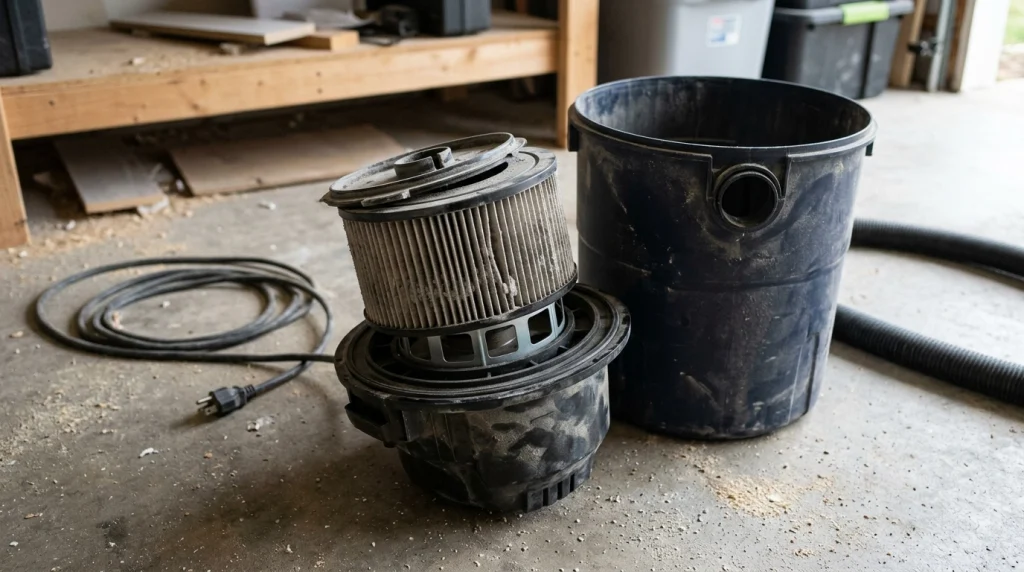
If your shop vacuum does not start, check the outlet, plug, power cord, and any model-specific reset or thermal protection before assuming the motor has failed. A defective switch or motor is possible, but external power problems should be ruled out first.
Check the power supply
- Switch the vacuum off. Make sure the switch is in the off position before handling the plug.
- Check the outlet. If the plug and cord look undamaged, test the outlet with a small appliance that you know works.
- Inspect the plug and cord. Look for cuts, crushed sections, discoloration, melted plastic, or loose connections. Do not use a damaged cord.
- Check the circuit breaker. If the breaker or ground-fault circuit interrupter (GFCI) has tripped, investigate why before resetting it. Never repeatedly reset a circuit that trips again.
- Check the manual. Some models have a reset button or thermal protection that prevents immediate restarting after overheating.
If the outlet works but the vacuum remains completely silent, the switch, internal wiring, or motor may need service. Do not open the motor housing or attempt live electrical testing unless you are qualified to perform that work safely.
2. Why Does Your Shop Vacuum Run but Have Weak or No Suction?
Weak suction usually indicates restricted airflow, an air leak, a full collection tank, or a filter problem. If the motor runs normally, inspect these accessible parts before considering an internal mechanical failure.
- Empty the tank. Remove collected debris and check whether a collection bag is full. During wet pickup, a full tank may activate the automatic float shutoff.
- Inspect the filter. Dust-packed or damaged filter media can reduce airflow. Clean or replace it according to the manufacturer’s instructions.
- Clear the hose. Disconnect the vacuum from power, remove the hose, and inspect it for compacted dust, wood chips, paper, or other obstructions.
- Check the attachments. Look inside the nozzle, wand, and hose fittings for blockages that may be difficult to see from the outside.
- Inspect the seals. Make sure the motor head is seated correctly, the latches are secure, and any tank drain cap is closed.
- Look for hose damage. Cracks, splits, or loose fittings allow air to enter before it reaches the pickup opening, reducing useful suction.
Shop-Vac’s official troubleshooting guide identifies a loose hose connection, clogged filter, full tank, and damaged hose as common reasons for suction loss.
If the vacuum has weak suction at the hose opening even after these checks, consult the manual for model-specific restrictions and service guidance. Do not run the machine with its required filter removed just to test whether suction improves.
3. What If the Shop Vacuum Keeps Overheating or Shutting Off?
A shop vacuum that runs for a while and then stops may be overheating or activating a protective shutdown. Restricted airflow, a heavy debris load, or an electrical problem can contribute, but the exact cause depends on the model and circumstances.
Turn the vacuum off, unplug it, and let it cool completely before inspecting it. Check the filter, tank, hose, and attachments for blockages, then remove any obstruction using the method permitted by the manual.
If the machine restarts after cooling, that does not prove the problem is solved. A blocked filter or hose may cause the shutdown to happen again. Correct the underlying restriction before resuming work.
- It stops after extended use: Check for restricted airflow, heavy loading, or a thermal shutdown.
- It stops shortly after starting: Inspect the power supply and airflow path; an internal electrical fault is also possible.
- It trips the breaker or GFCI repeatedly: Stop using the vacuum and arrange an appropriate electrical inspection.
- It smells burnt, smokes, or makes grinding noises: Disconnect power if safe to do so and do not restart it.
Never bypass a thermal protector or keep restarting a vacuum that repeatedly shuts itself off. If cleaning the accessible airflow path does not resolve the issue, contact the manufacturer or a qualified repair service.
4. Why Is Your Shop Vacuum Blowing Dust Instead of Collecting It?
Dust escaping from the exhaust usually points to a missing, incorrectly installed, damaged, clogged, or unsuitable filter. Very fine particles may also pass through a filtration setup that is not designed to capture them.
Switch off and unplug the vacuum before inspecting the collection system. Check that the filter is present, correctly seated, and compatible with the debris you are collecting. Replace damaged filter media rather than trying to patch holes or gaps.
For fine dust, use the filter and collection bag combination specified for your model and the material involved. Ordinary shop vacuums are not automatically suitable for hazardous dust, including asbestos or lead-containing debris. Do not assume that adding a high-efficiency filter makes an otherwise unsuitable machine safe for hazardous cleanup.
Shop-Vac explains the relationship between filter condition, fine dust, and exhaust emissions in its wet/dry vacuum troubleshooting answers.
5. Why Is Your Shop Vacuum Blowing Air Out Instead of Sucking It In?
If air is blowing from the hose rather than being drawn into it, the hose may be connected to the blower port instead of the vacuum inlet. Some wet/dry vacuums have a dedicated exhaust or blower connection for blowing leaves and other suitable debris.
- Switch the vacuum off and unplug it.
- Locate the suction inlet on the collection tank.
- Move the hose from the blower connection to the correct inlet.
- Check that the hose and fittings are secure before restarting the machine.
If the hose is already connected to the suction inlet, check your model’s manual for the correct port locations and operating configuration. Do not assume that every opening on the housing serves the same purpose.
6. What Should You Check After Wet Pickup?
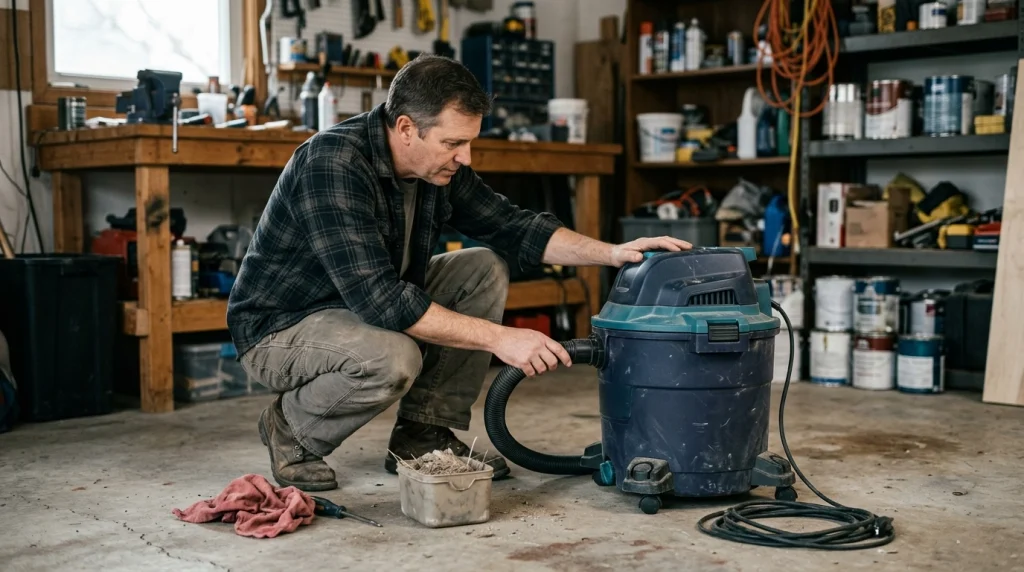
If the problem began after vacuuming water, check whether the tank is full, the float shutoff has engaged, or the filter setup is unsuitable for wet pickup. The correct configuration varies by model.
- Check the tank level. Empty it if it has reached the permitted fill level or triggered the float mechanism.
- Inspect the float. With the vacuum unplugged, check whether the float moves freely as described in the manual. Do not force it.
- Check the filter type. Some models require a foam sleeve or another approved wet-pickup arrangement. Do not assume a dry-use paper filter can remain installed during wet pickup.
- Dry the components as directed. Follow the manufacturer’s instructions for cleaning and drying the tank and reusable components before storing or switching back to dry debris.
If water has entered the motor housing or reached electrical components, do not power the vacuum on to see whether it still works. Have it inspected before reuse.
7. When Should You Stop Troubleshooting and Get Repairs?
Stop using your shop vacuum if you find damaged electrical components, smoke, a burning smell, severe sparking, grinding noises, or repeated circuit trips. These signs can indicate an electrical or mechanical fault that routine cleaning will not safely fix.
Basic maintenance is reasonable when the problem is a full tank, an accessible hose blockage, or a filter that needs approved cleaning or replacement. Internal motor, switch, and wiring repairs are different: they may expose hazardous electrical parts and require qualified service.
Before requesting service, note the model number, the symptom, when the problem occurs, and any checks you have completed. This information can help the manufacturer or technician narrow down the fault without unnecessary disassembly.
Tip
Troubleshoot in a consistent order: power supply, tank, filter, hose, attachments, seals, and then professional diagnosis. This helps you identify simple faults without unnecessarily opening the motor housing.
Related Product
Maintenance Accessory
Replacement Shop Vacuum Filter
If inspection reveals a damaged or worn filter, look for a compatible replacement that matches your vacuum model and the material you collect. Replacing a filter will not fix electrical faults or blocked hoses.
As an Amazon Associate, we earn from qualifying purchases.
Frequently Asked Questions
Why does my shop vacuum suddenly stop working?
A shop vacuum may stop because of a power interruption, overheating, a tripped protective device, or an internal electrical fault. Let it cool if appropriate, inspect the accessible airflow path, and investigate repeated electrical trips rather than continually restarting it.
Can a clogged filter stop a shop vacuum from working?
Yes. A heavily clogged filter can restrict airflow, reduce suction, and contribute to overheating on some models. Clean or replace it only as directed by the manufacturer.
Why does my shop vacuum make noise but not pick up dirt?
A running motor with poor pickup often indicates a blocked hose, full tank, clogged filter, loose connection, or damaged hose. Check the airflow path with the vacuum unplugged before considering motor or fan damage.
Why does my shop vacuum trip the breaker?
A breaker may trip because of an electrical fault, excessive current, or a problem with the supply circuit. Stop using the vacuum if the breaker trips repeatedly, and have the appliance and circuit checked by a qualified person.
Should I remove the filter to test shop vacuum suction?
Do not run the vacuum without its required filter unless the manufacturer explicitly permits that test for your model. Removing filtration can release debris into the exhaust or expose internal components to contamination.
How do I know whether my shop vacuum motor is bad?
A failed motor is possible if the vacuum remains silent despite a confirmed power supply, or if unusual noises or burning smells occur. However, those symptoms do not prove the motor has failed; a damaged switch, wiring fault, or protective shutdown can produce similar behavior.
Conclusion
When your shop vacuum stops working, identify the symptom before replacing parts. A vacuum that will not start needs power and electrical checks, while weak suction usually calls for an inspection of the tank, filter, hose, attachments, and seals. Overheating and dust escaping from the exhaust also deserve attention before you resume cleaning.
Always disconnect power before maintenance, use the correct filter configuration, and follow your model’s manual. If the vacuum has damaged wiring, produces a burning smell, repeatedly trips a breaker, or continues to malfunction after basic checks, stop using it and arrange qualified service.